Filters

16 filtered results

Clear all filters
Favorites
With answer key
Interactive

16 filtered results

Difficulty Level

Grade


Welcome to our Basic Addition Grade 2 worksheets, designed to enhance your child's understanding of fundamental addition concepts! These interactive resources offer engaging activities tailored specifically for second-graders, making math fun and accessible. With a variety of problems, including simple sums and visual aids, your child will strengthen their addition skills effectively. Our worksheets promote independent learning, allow for personalized practice, and cater to diverse learning styles. Perfect for classroom use or at-home reinforcement, these exercises make mastering basic addition an enjoyable journey. Start exploring today and watch your child's confidence soar in math!
Check out this FREE Grade 2 Trial Lesson on Addition!

Suffixes

Favorites
With answer key
Interactive
  • Grade 2
  • Basic Addition
  • Addition
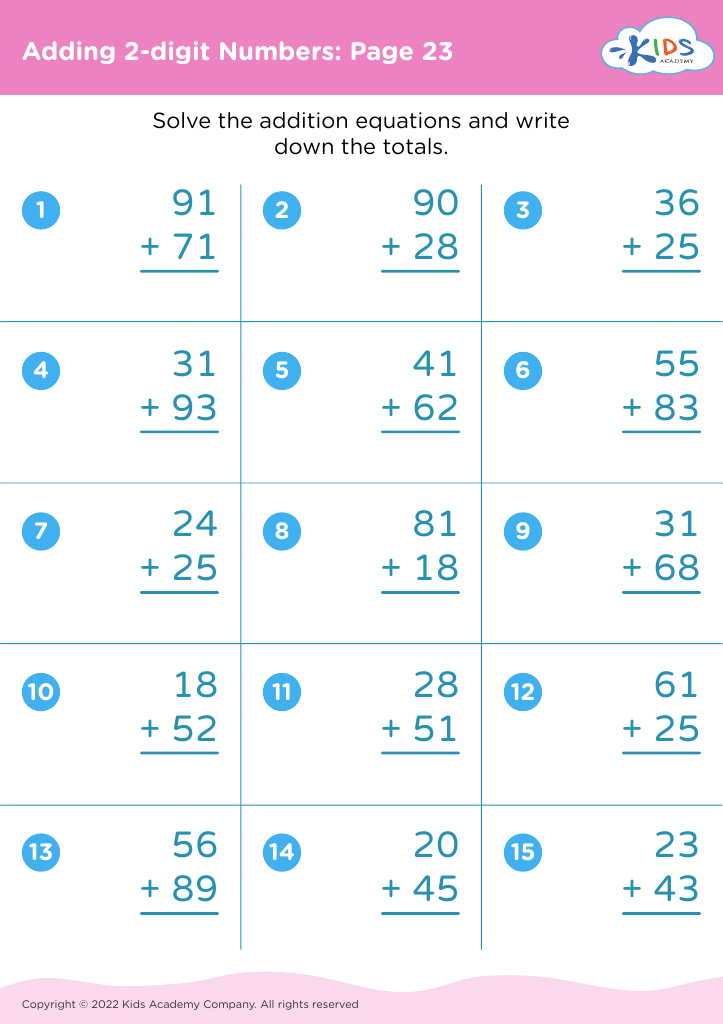
Adding 2-digit Numbers: Page 23

Adding 2-digit Numbers: Page 23

Adding 2-digit Numbers: Page 23
Worksheet
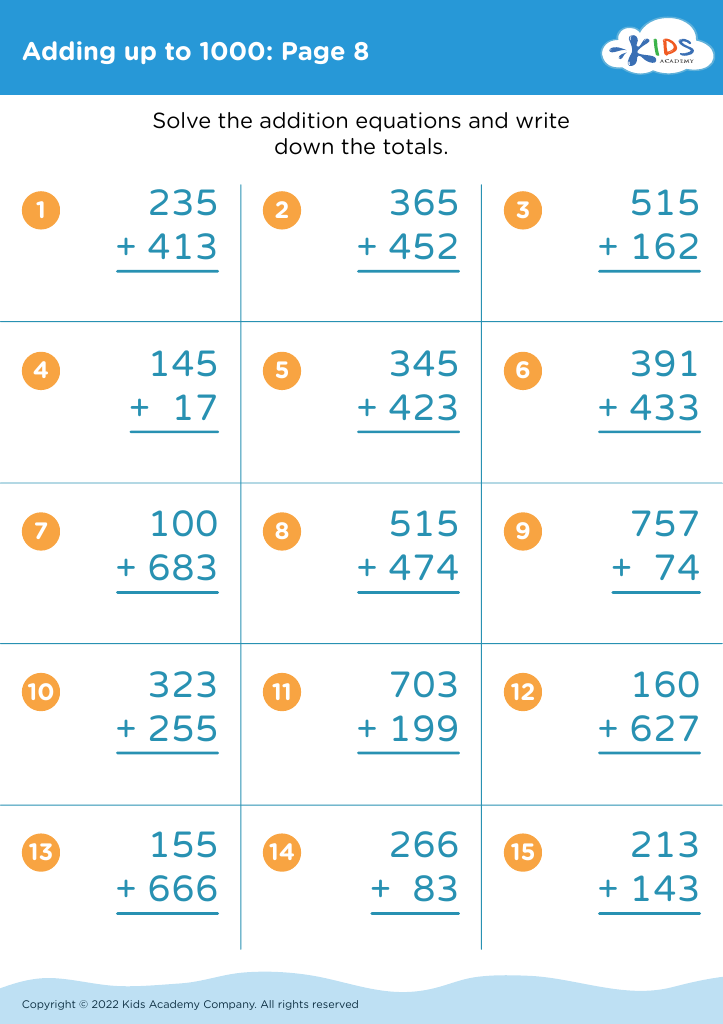
Adding up to 1000: Page 8

Adding up to 1000: Page 8

Adding up to 1000: Page 8
Worksheet
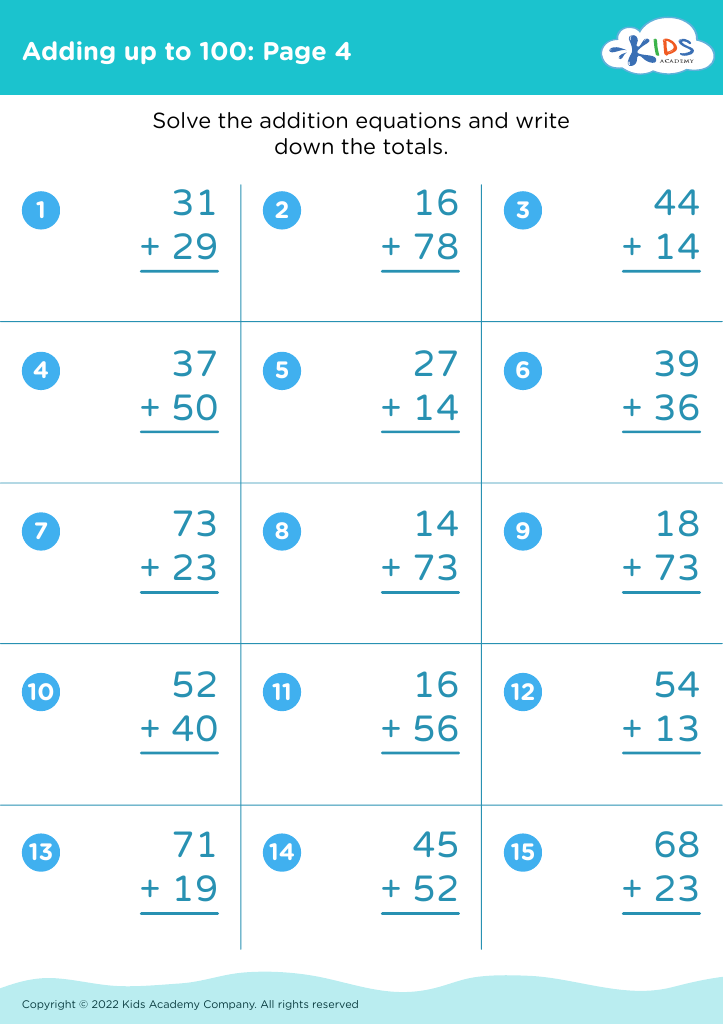
Adding up to 100: Page 4

Adding up to 100: Page 4

Adding up to 100: Page 4
Worksheet
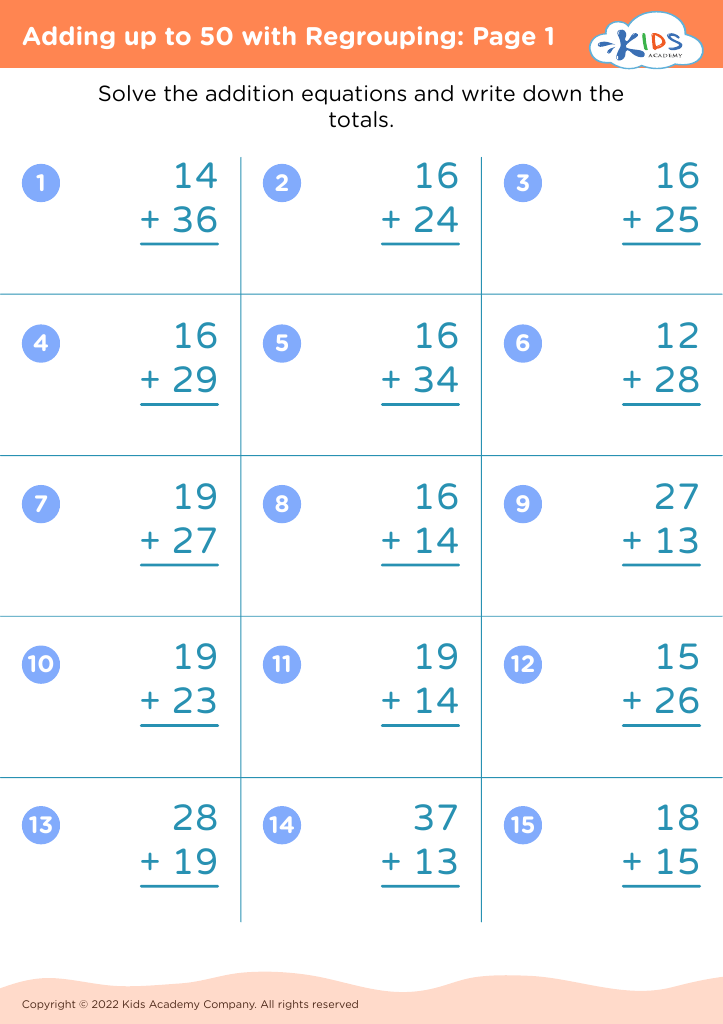
Adding up to 50 with Regrouping: Page 1
Worksheet
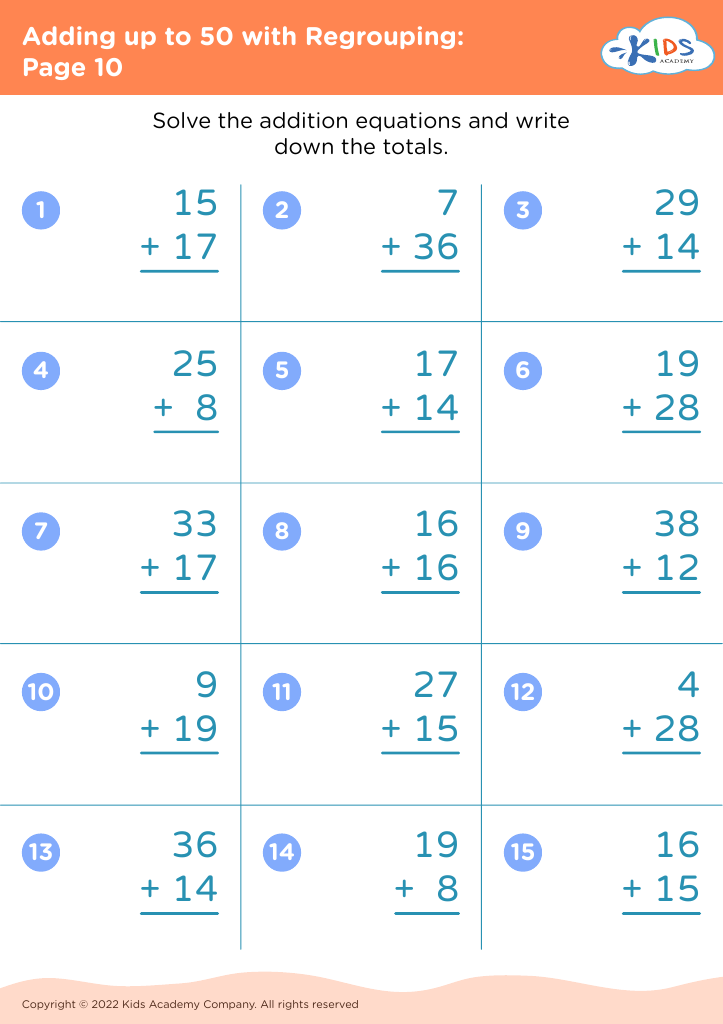
Adding up to 50 with Regrouping: Page 10
Worksheet
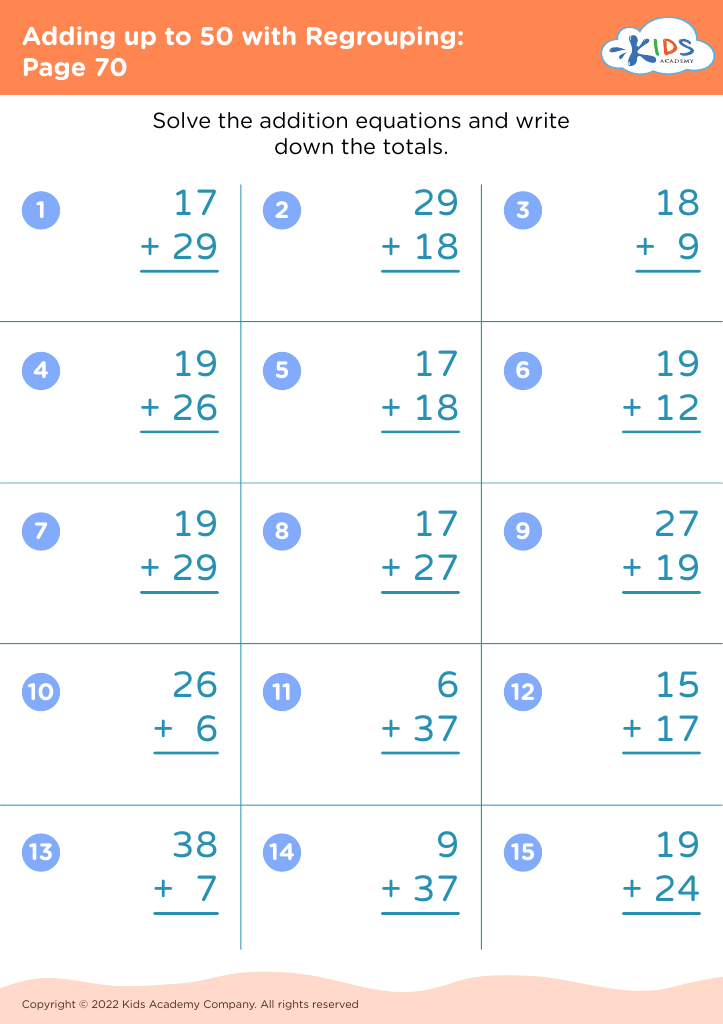
Adding up to 50 with Regrouping: Page 70
Worksheet
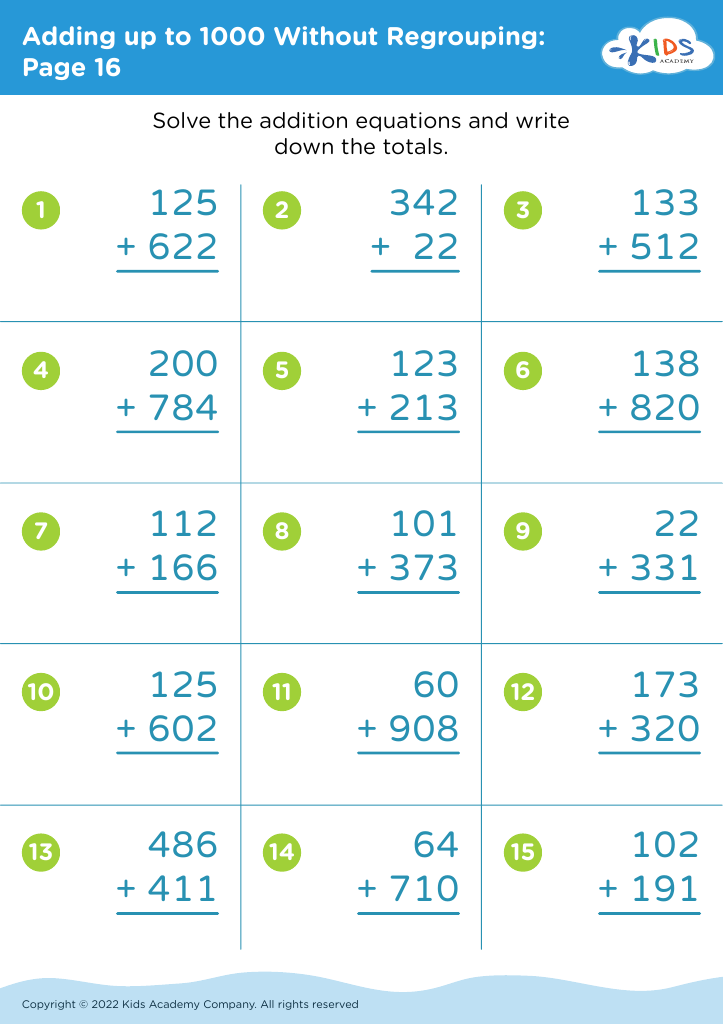
Adding up to 1000 Without Regrouping: Page 16
Worksheet
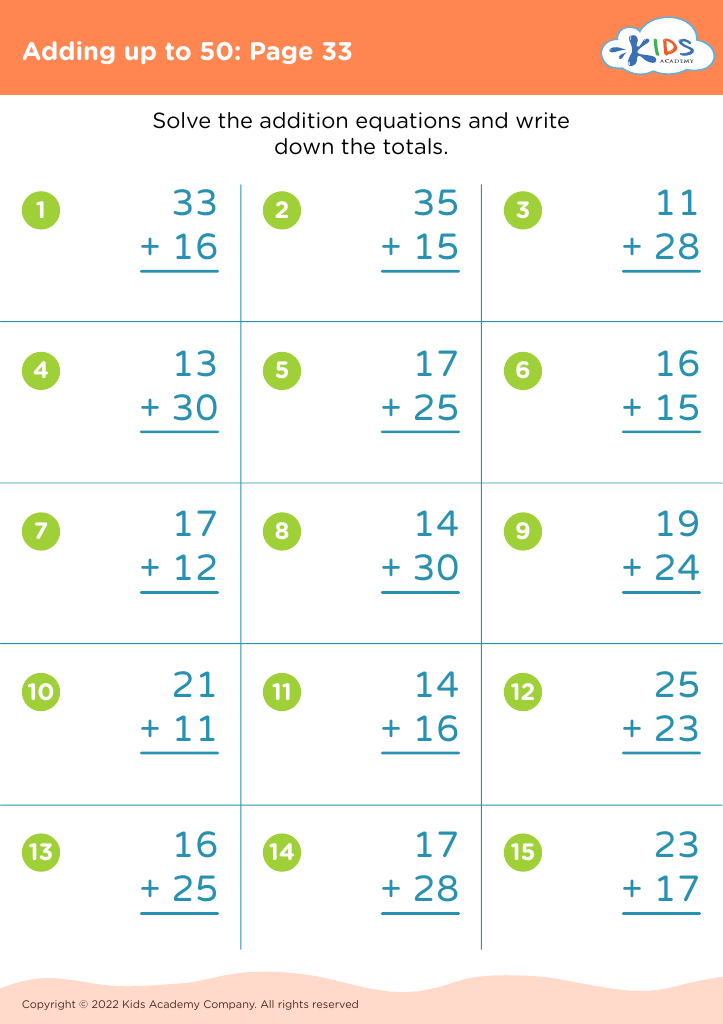
Adding up to 50: Page 33

Adding up to 50: Page 33

Adding up to 50: Page 33
Worksheet
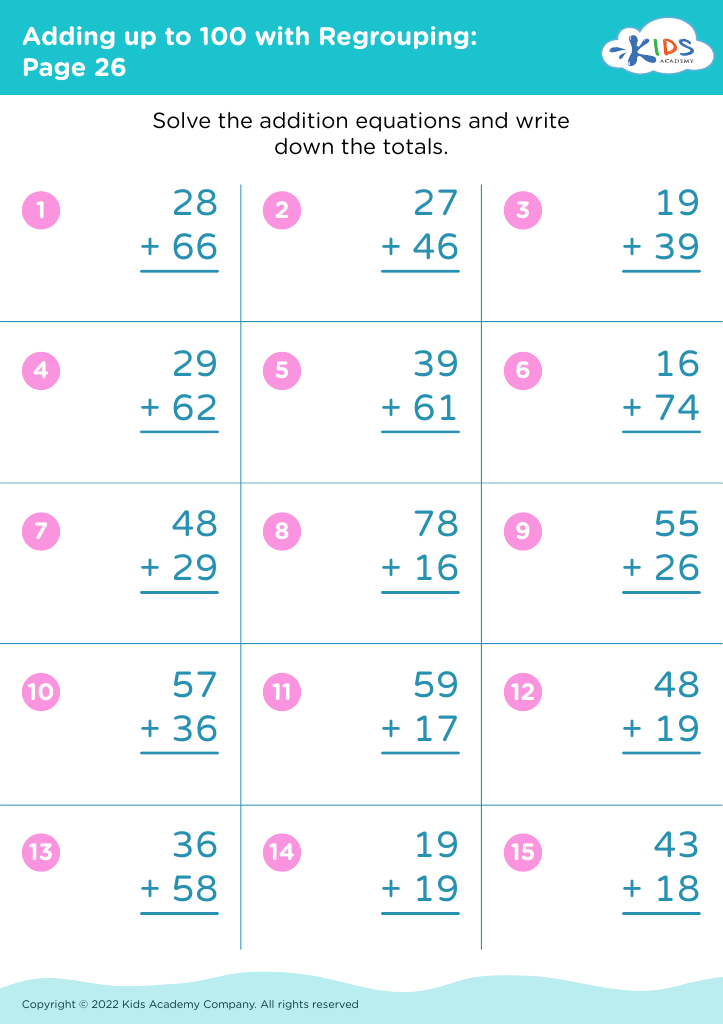
Adding up to 100 with Regrouping: Page 26
Worksheet
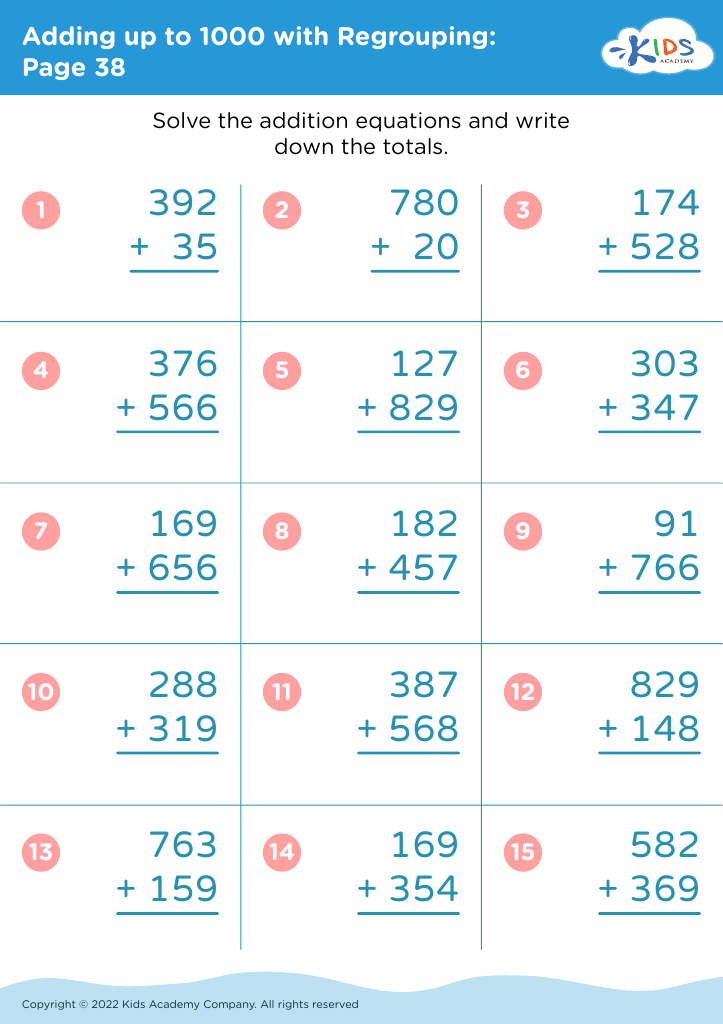
Adding up to 1000 with Regrouping: Page 38
Worksheet
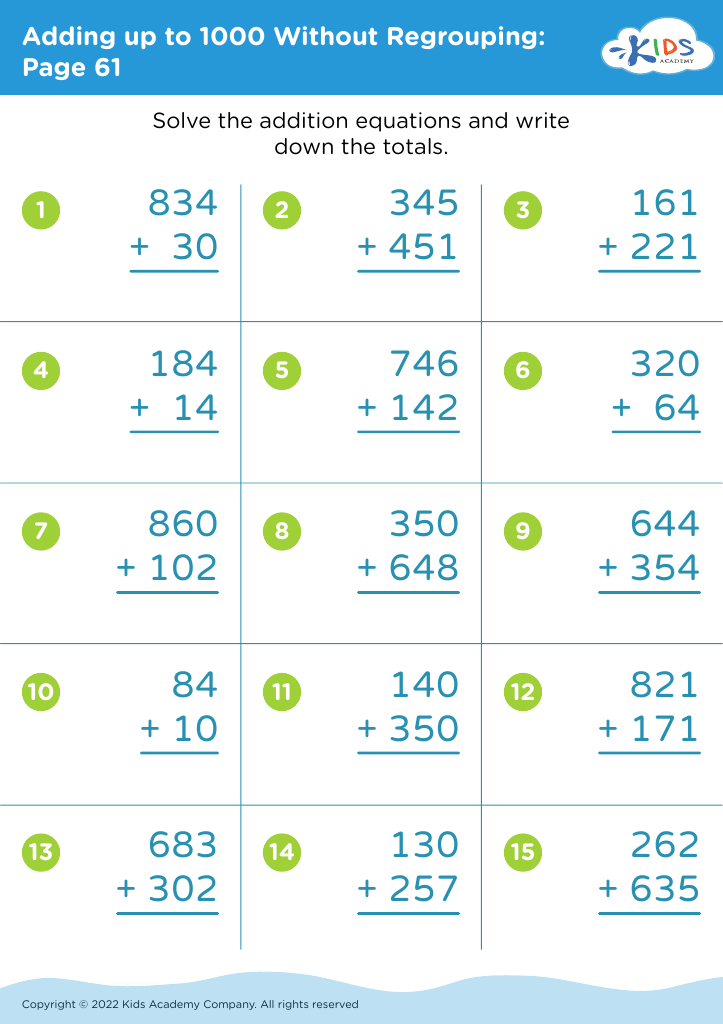
Adding up to 1000 Without Regrouping: Page 61
Worksheet
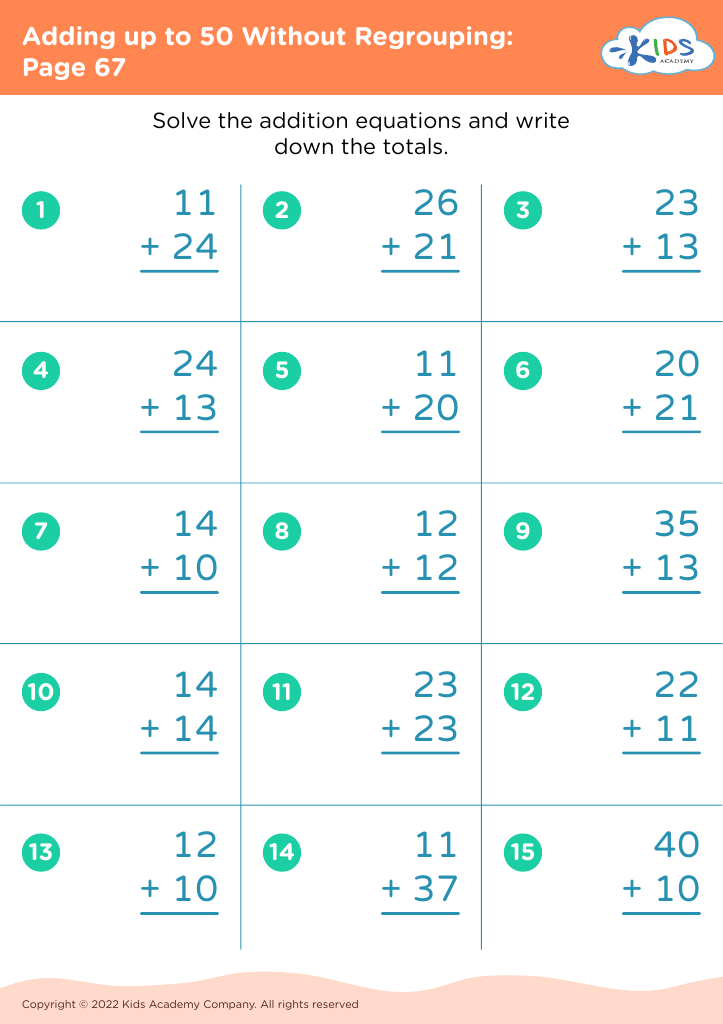
Adding up to 50 Without Regrouping: Page 67
Worksheet
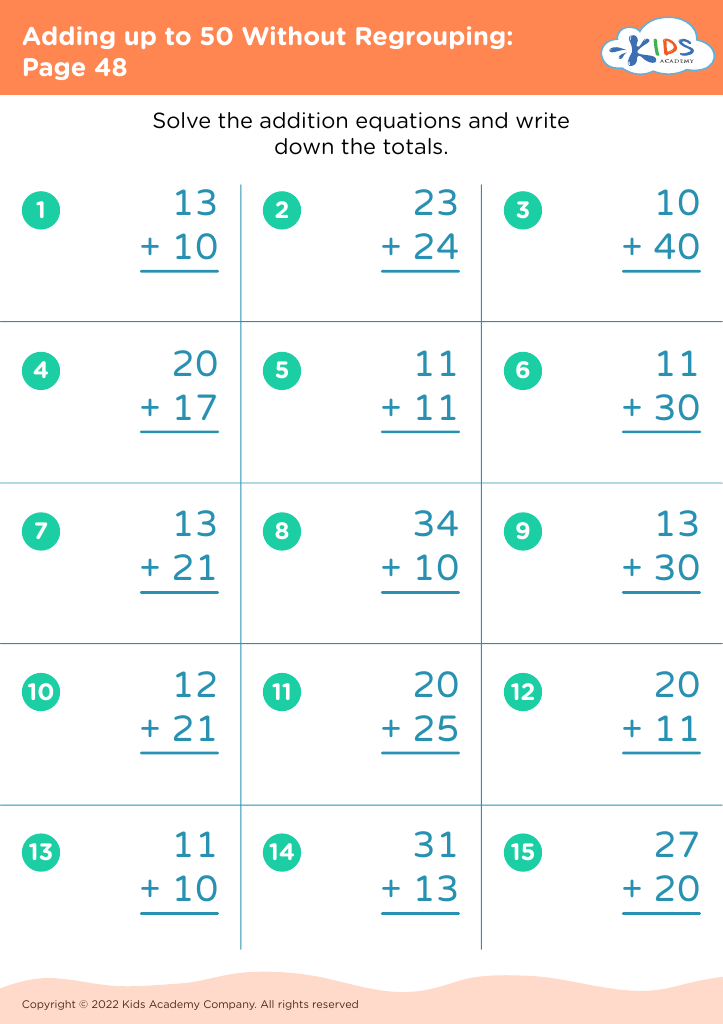
Adding up to 50 Without Regrouping: Page 48
Worksheet
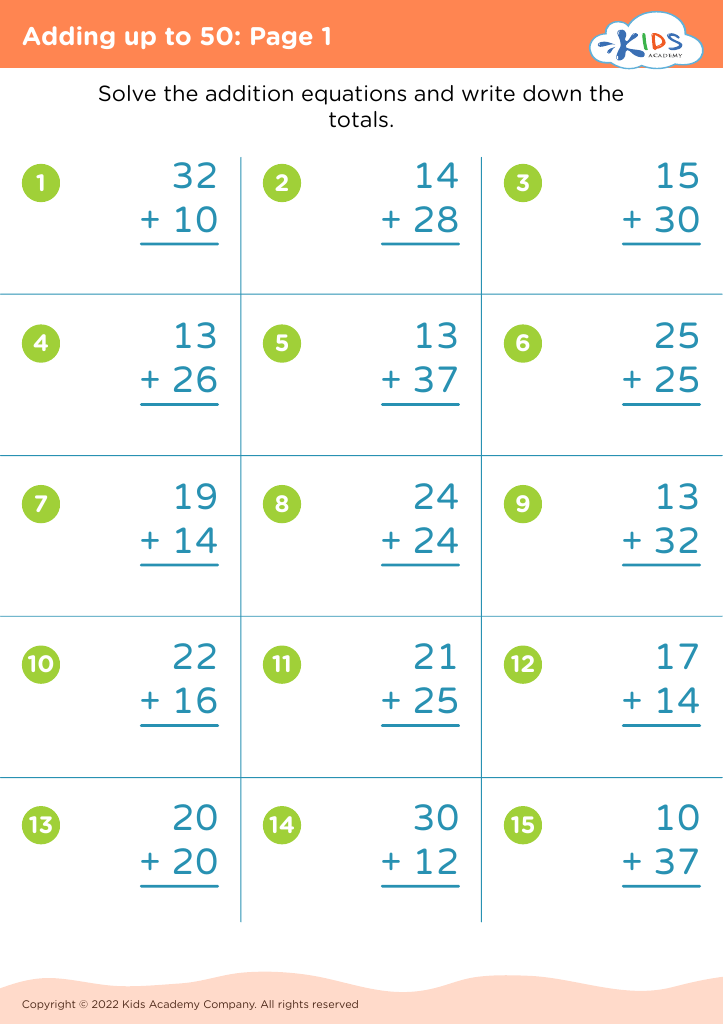
Adding up to 50: Page 1

Adding up to 50: Page 1

Adding up to 50: Page 1
Worksheet
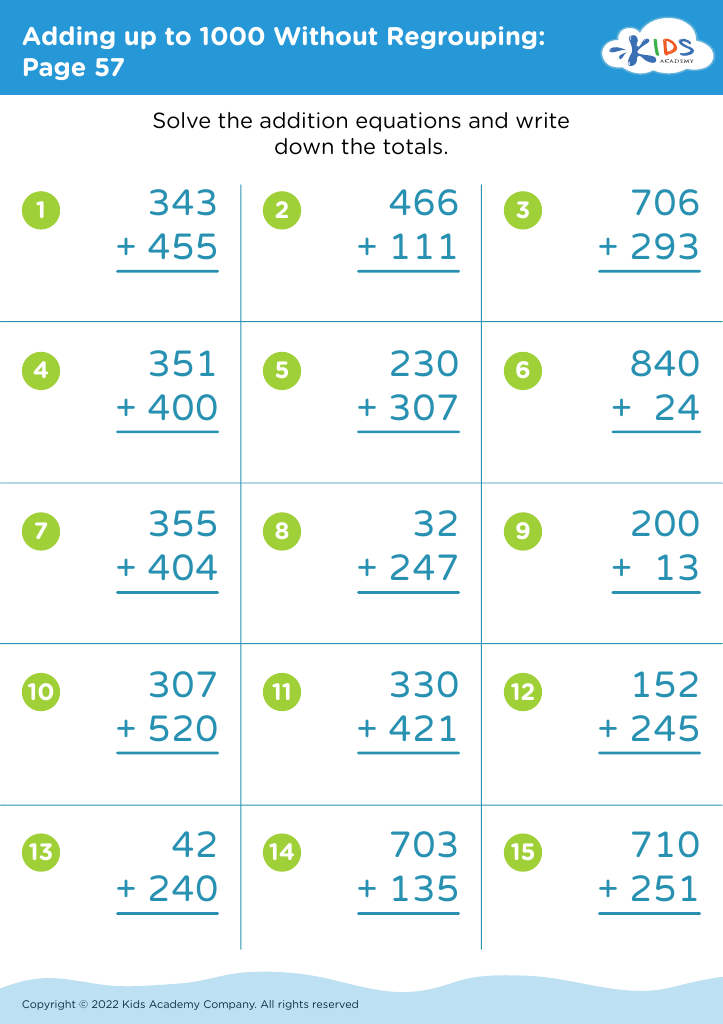
Adding up to 1000 Without Regrouping: Page 57
Worksheet
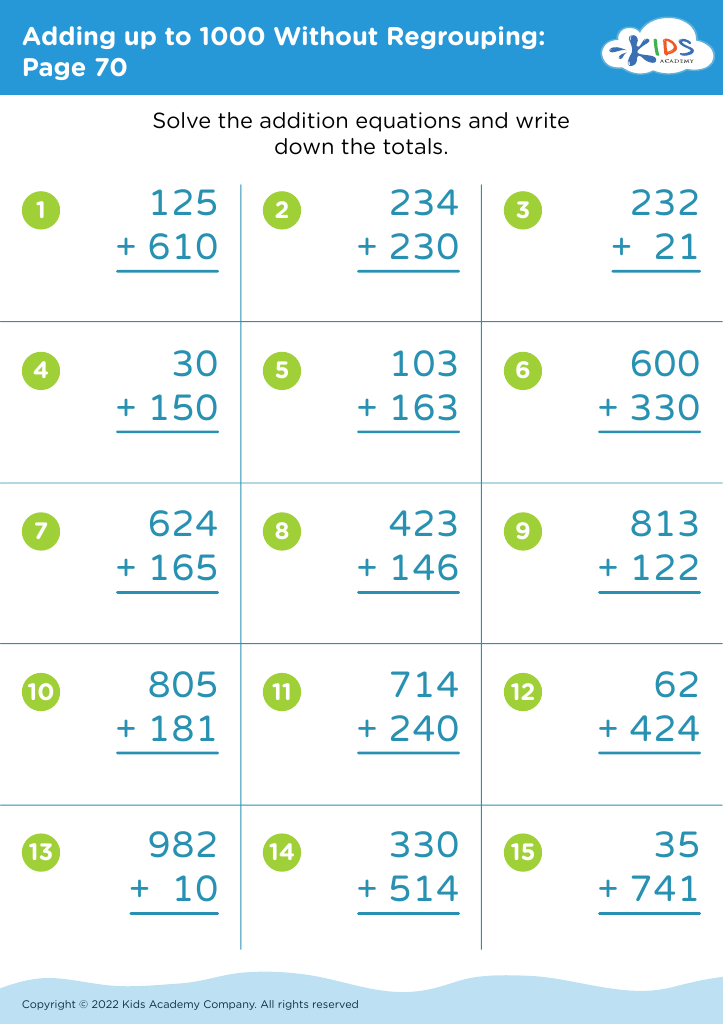
Adding up to 1000 Without Regrouping: Page 70
Worksheet


Basic addition is a fundamental skill that serves as the building block for all future mathematics learning. In Grade 2, children begin to enhance their understanding of addition through various methods, including counting, using number lines, and visual aids. Parents and teachers should prioritize this skill for several reasons.

Firstly, mastering basic addition sets the stage for more complex arithmetic concepts, such as subtraction, multiplication, and division. A solid foundation in addition helps students develop confidence in their math abilities and fosters a positive attitude toward learning.

Secondly, addition skills are essential in everyday life. From shopping to cooking, children will utilize these skills regularly. Instilling strong addition skills prepares them for real-world problem-solving.

Additionally, learning basic addition enhances cognitive development. It encourages logical thinking, improves focus, and sharpens problem-solving abilities, which are vital skills both inside and outside the classroom.

Lastly, early intervention is crucial. If students struggle with basic addition in Grade 2, they may face greater challenges in higher grades. By engaging with parents and teachers to support this learning stage, we can help children achieve mathematical proficiency that will benefit them for years to come.