Filters

82 filtered results

Clear all filters
Favorites
With answer key
Interactive

82 filtered results

Difficulty Level

Grade


Check out this FREE Grade 2 Trial Lesson on Addition!

Suffixes

Favorites
With answer key
Interactive
  • Grade 2
  • Comparing Fractions
  • Addition
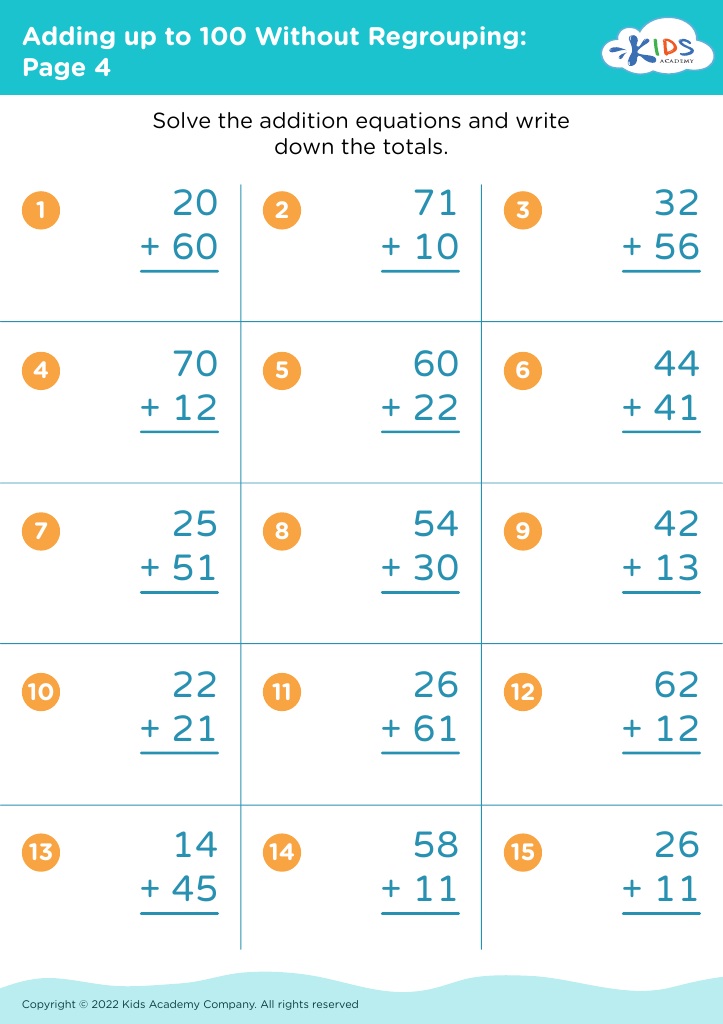
Adding up to 100 Without Regrouping: Page 4
Worksheet
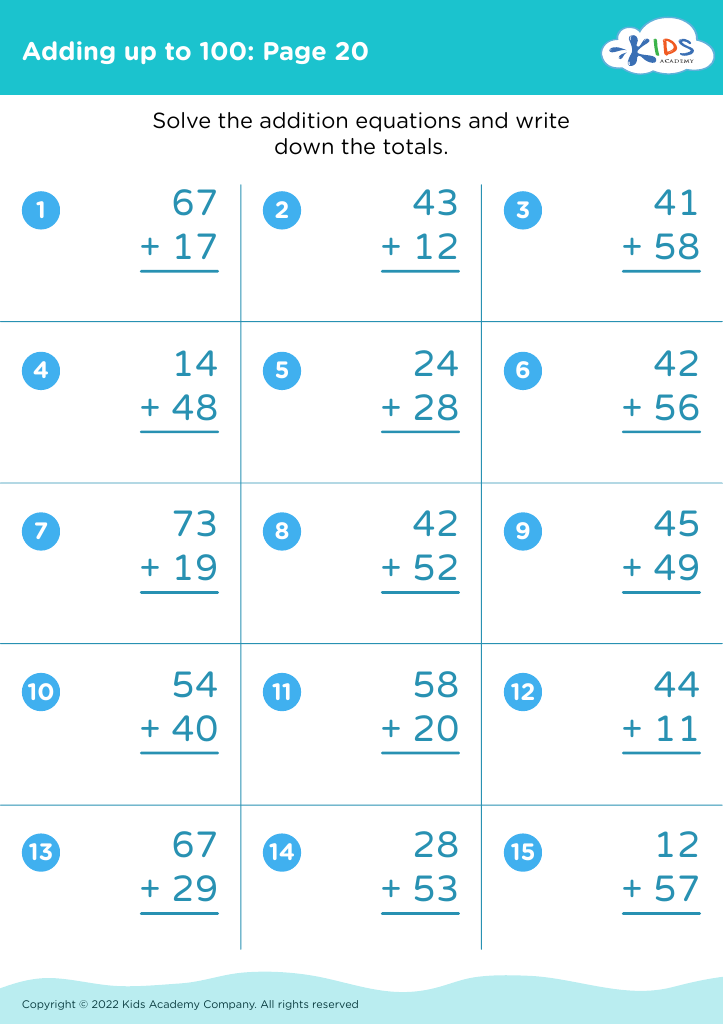
Adding up to 100: Page 20

Adding up to 100: Page 20

Adding up to 100: Page 20
Worksheet
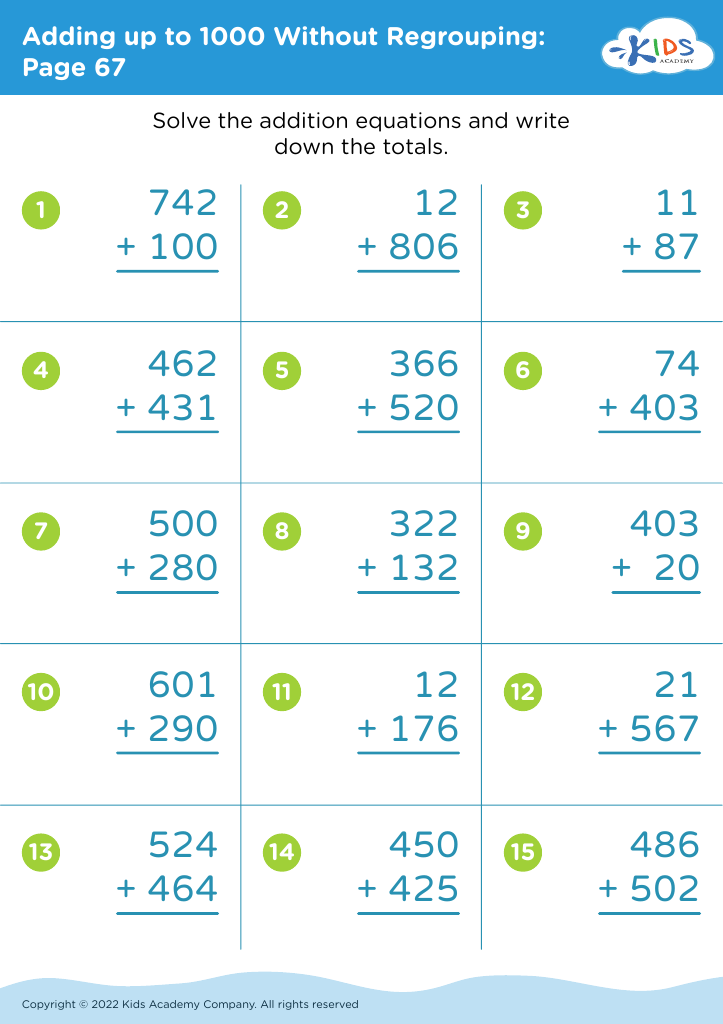
Adding up to 1000 Without Regrouping: Page 67
Worksheet
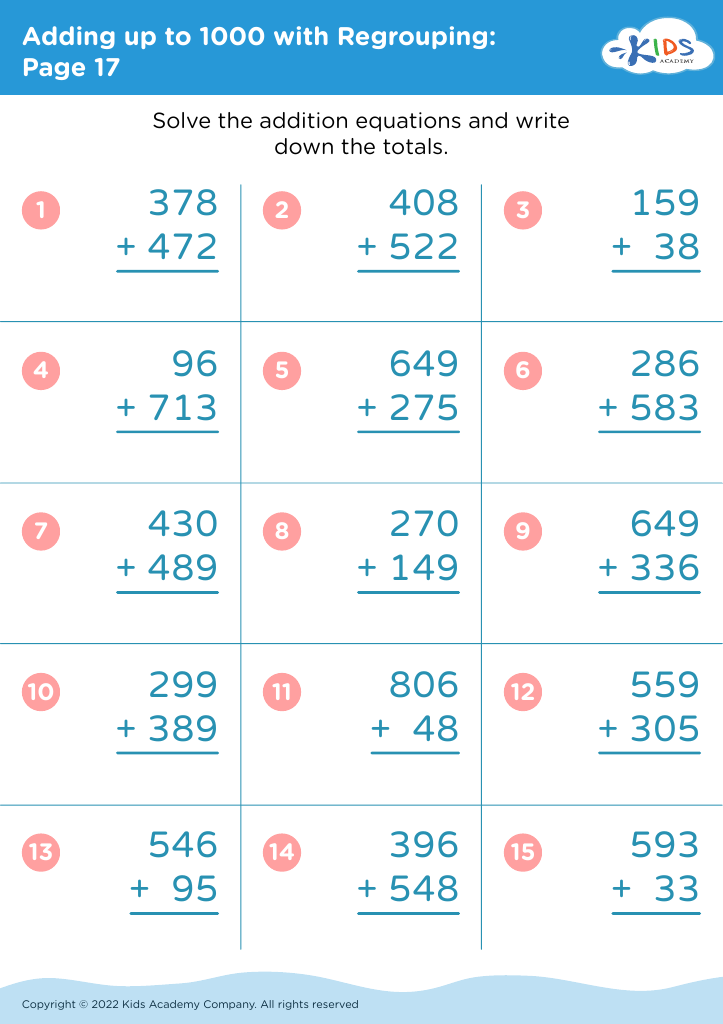
Adding up to 1000 with Regrouping: Page 17
Worksheet
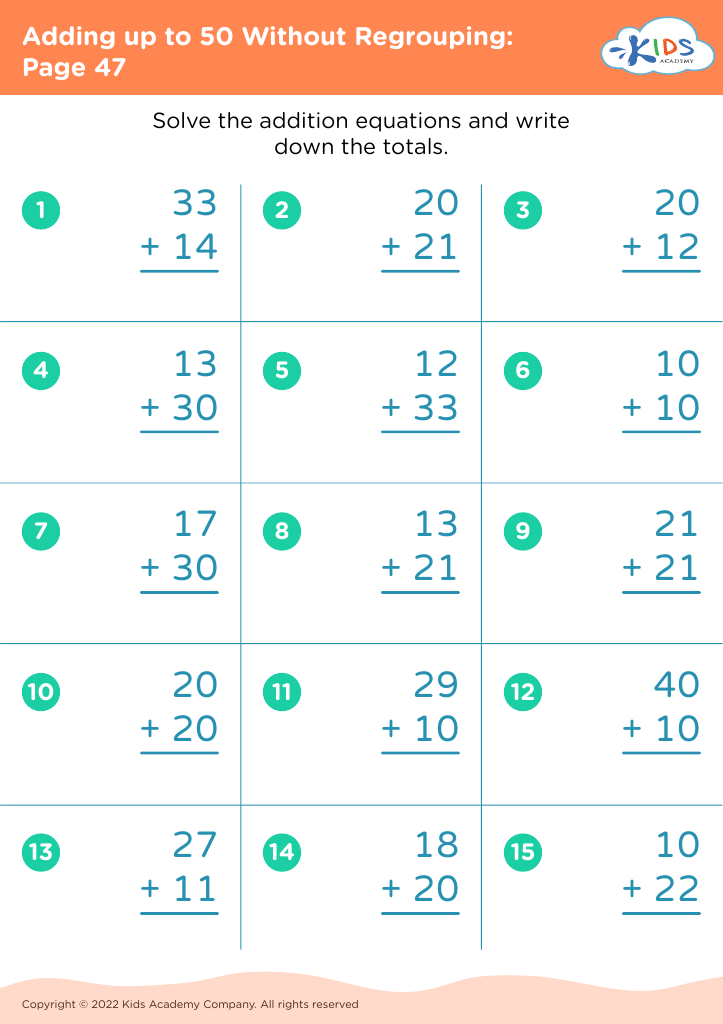
Adding up to 50 Without Regrouping: Page 47
Worksheet
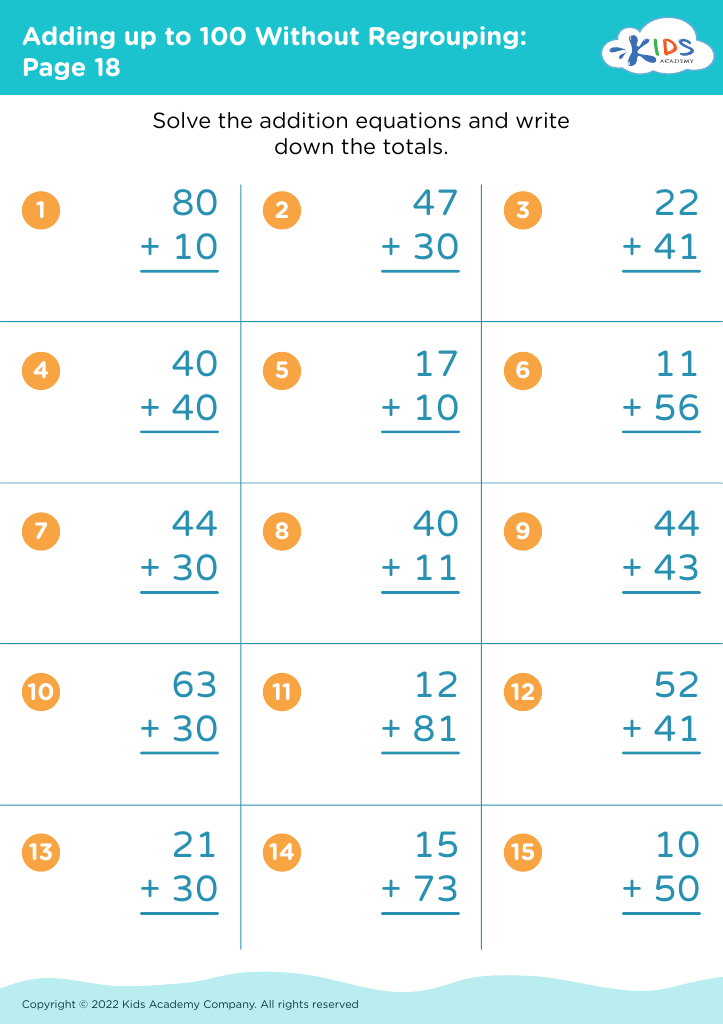
Adding up to 100 Without Regrouping: Page 18
Worksheet
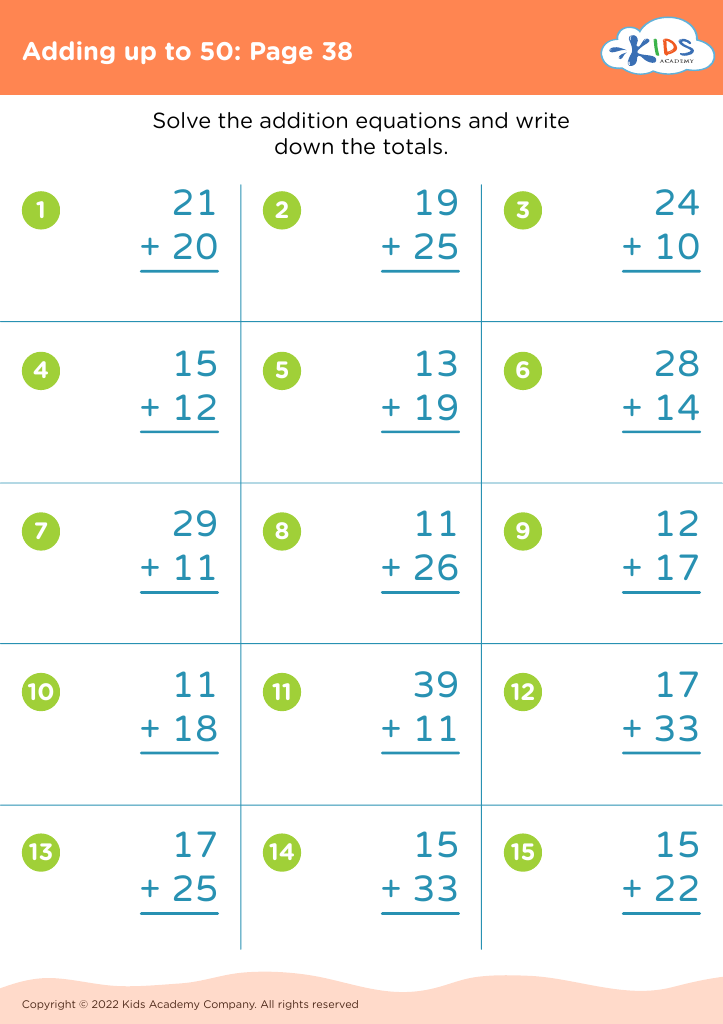
Adding up to 50: Page 38

Adding up to 50: Page 38

Adding up to 50: Page 38
Worksheet
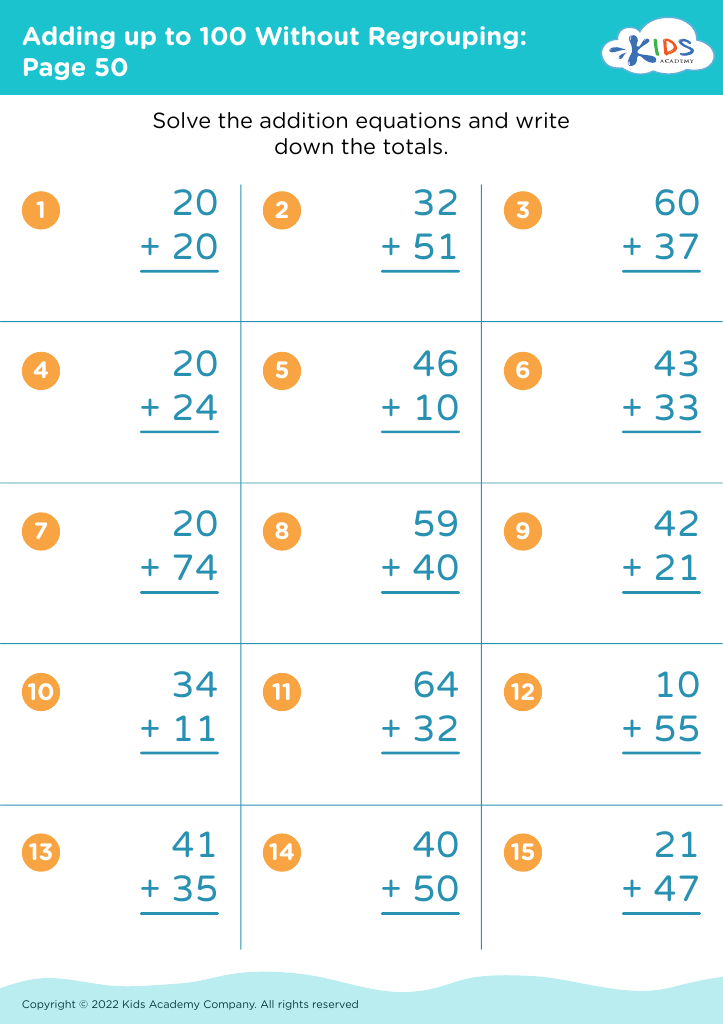
Adding up to 100 Without Regrouping: Page 50
Worksheet
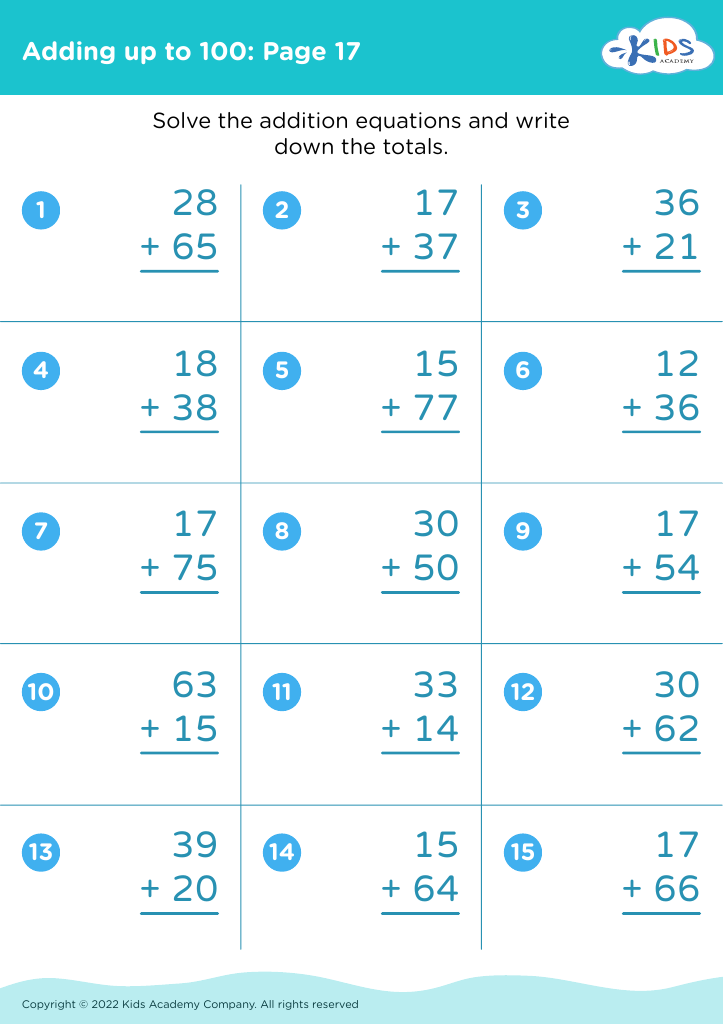
Adding up to 100: Page 17

Adding up to 100: Page 17

Adding up to 100: Page 17
Worksheet
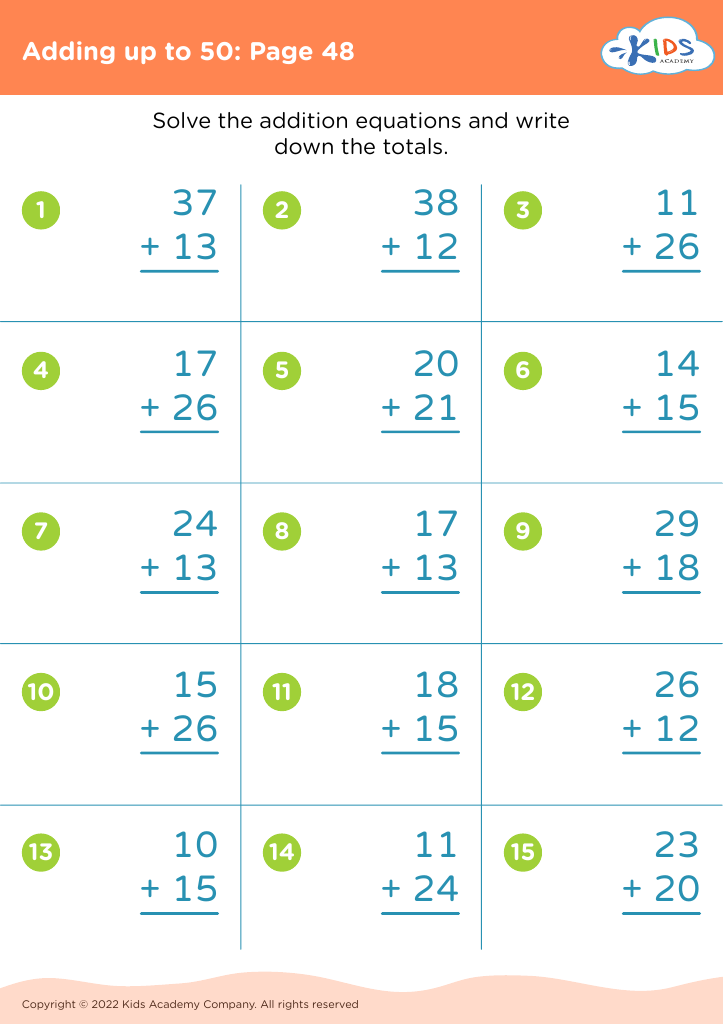
Adding up to 50: Page 48

Adding up to 50: Page 48

Adding up to 50: Page 48
Worksheet
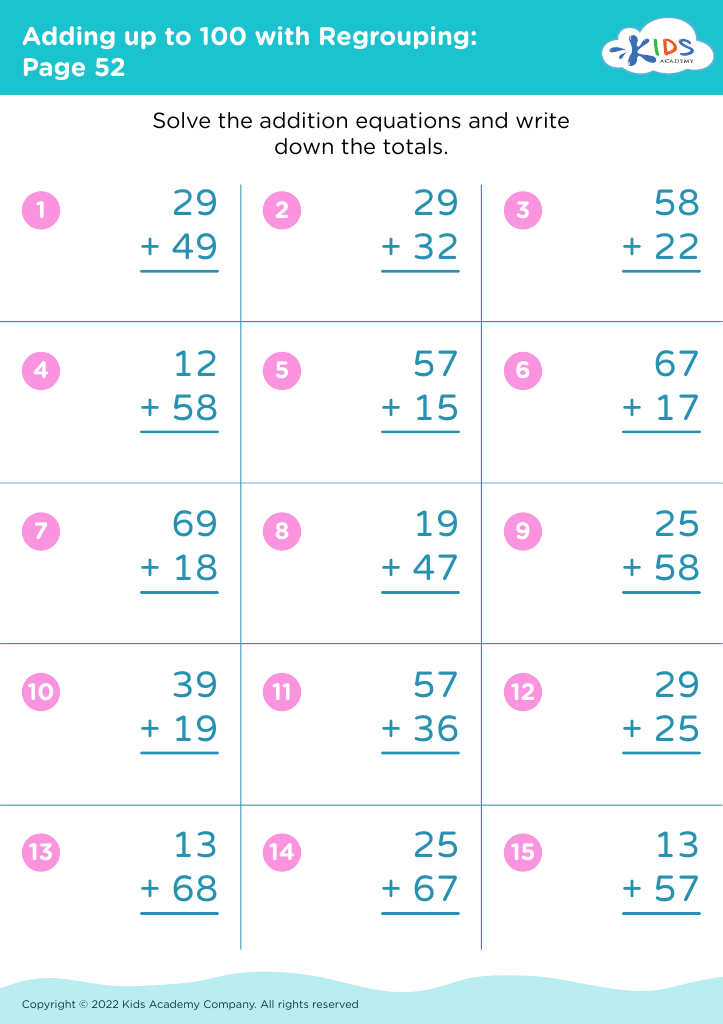
Adding up to 100 with Regrouping: Page 52
Worksheet
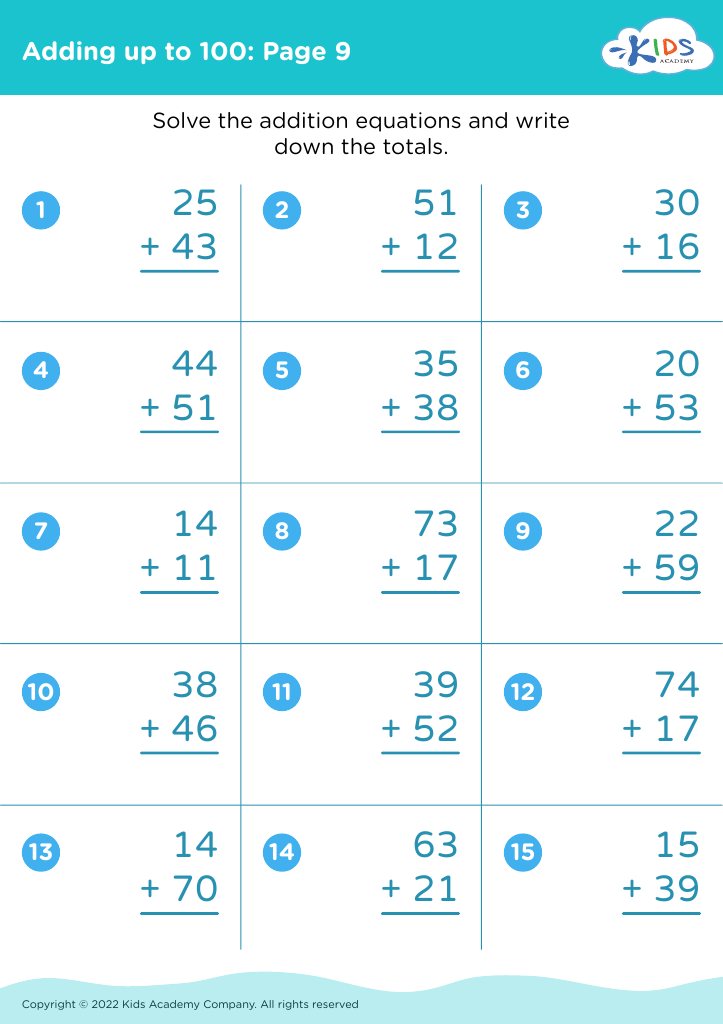
Adding up to 100: Page 9

Adding up to 100: Page 9

Adding up to 100: Page 9
Worksheet
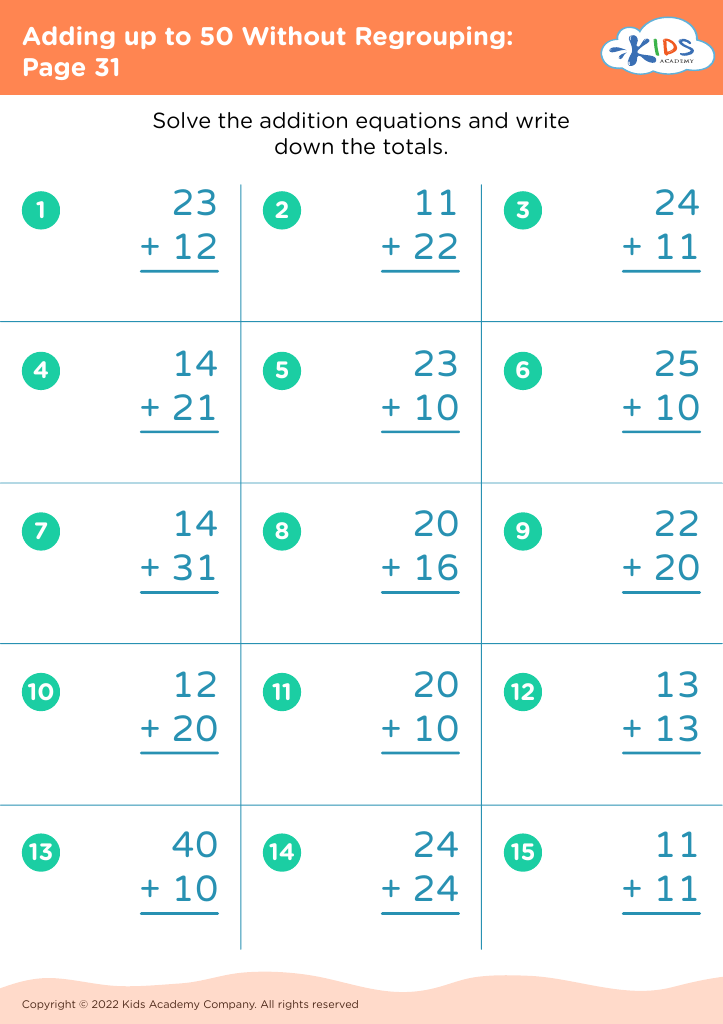
Adding up to 50 Without Regrouping: Page 31
Worksheet
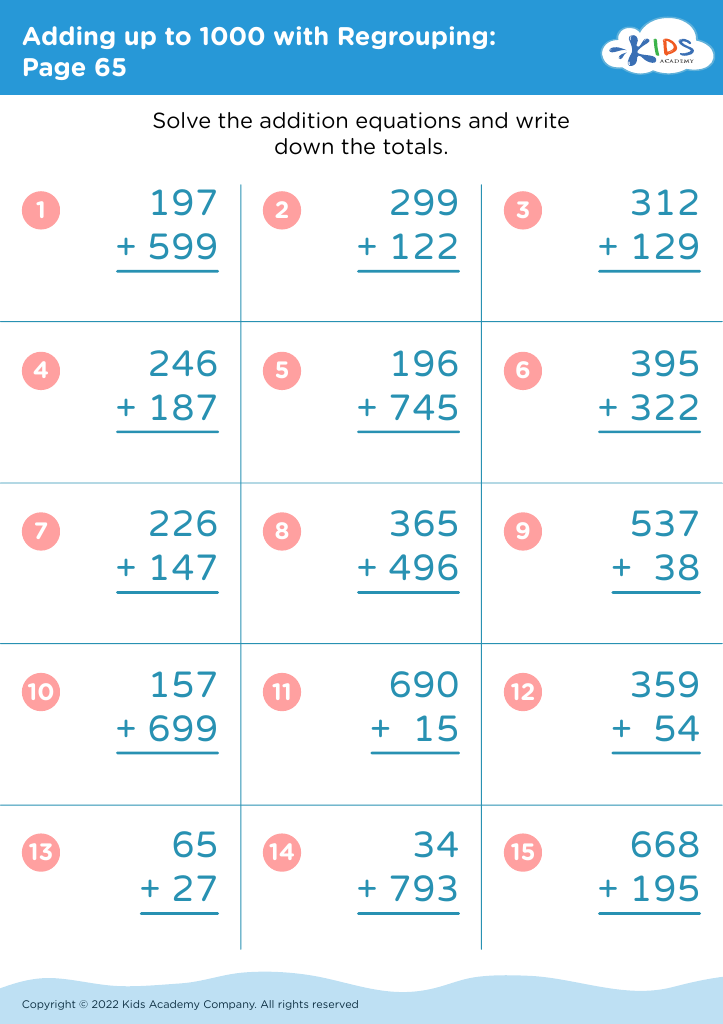
Adding up to 1000 with Regrouping: Page 65
Worksheet
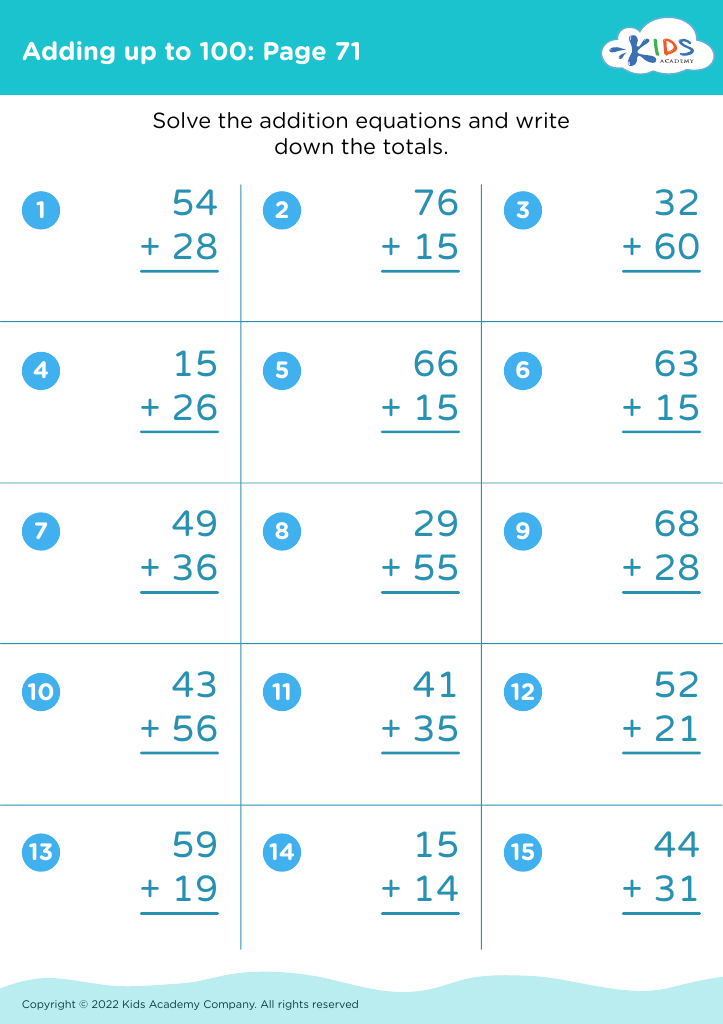
Adding up to 100: Page 71

Adding up to 100: Page 71

Adding up to 100: Page 71
Worksheet
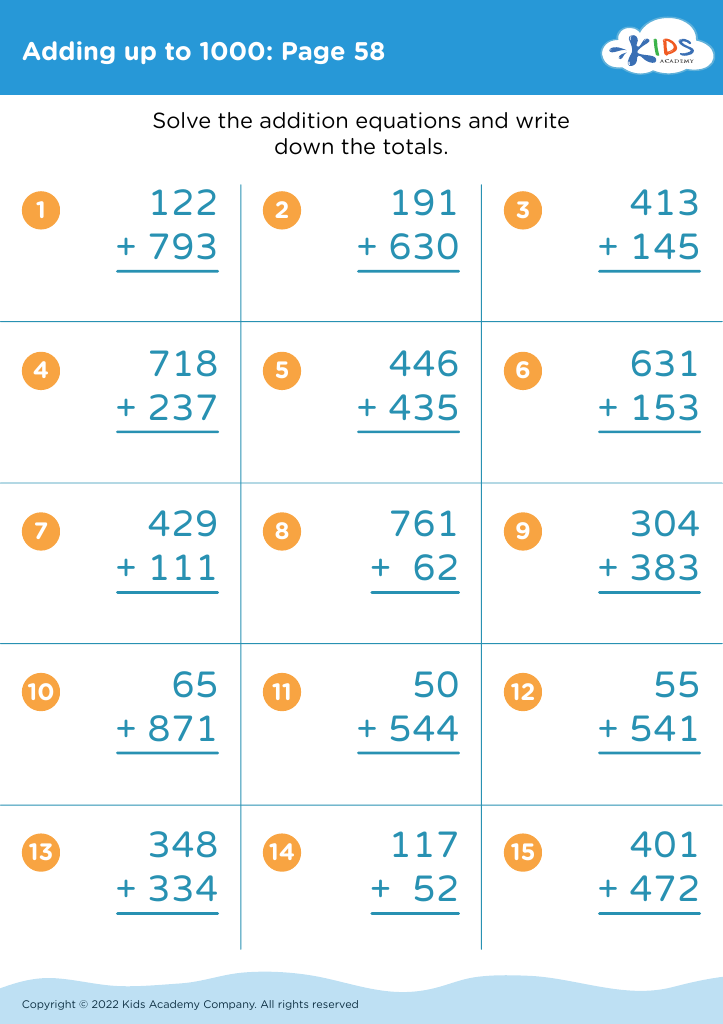
Adding up to 1000: Page 58

Adding up to 1000: Page 58

Adding up to 1000: Page 58
Worksheet
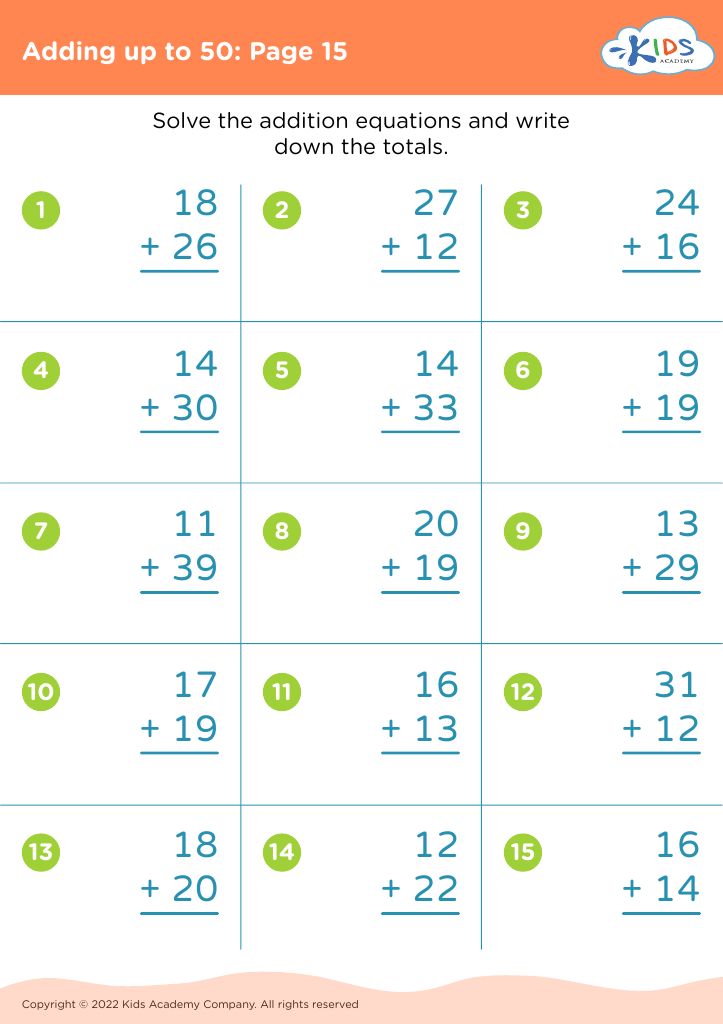
Adding up to 50: Page 15

Adding up to 50: Page 15

Adding up to 50: Page 15
Worksheet
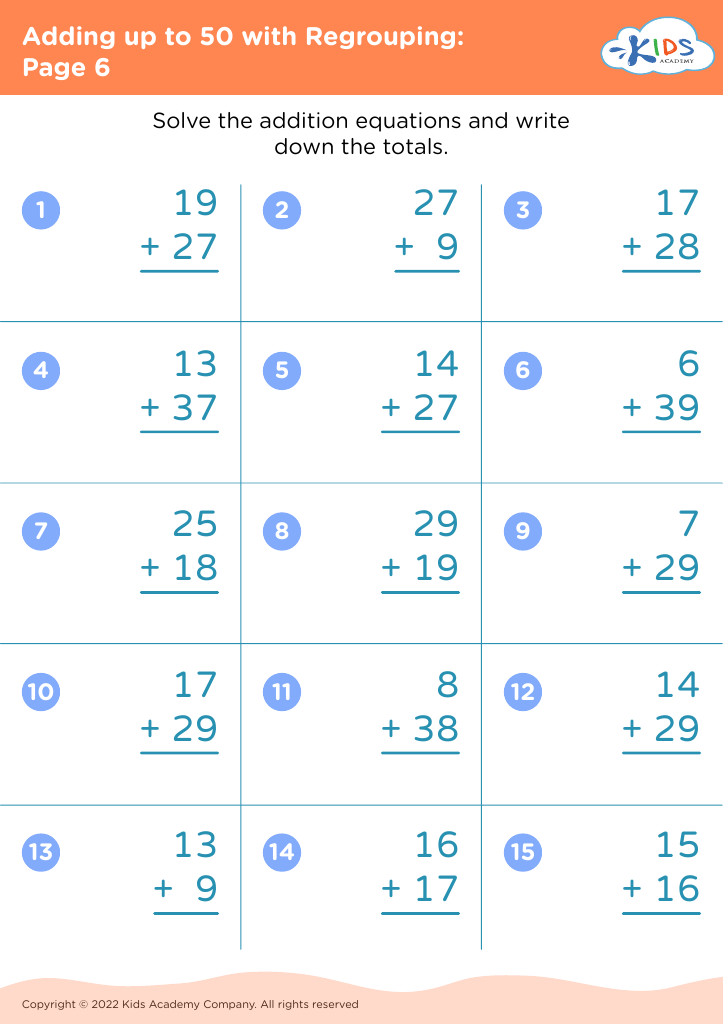
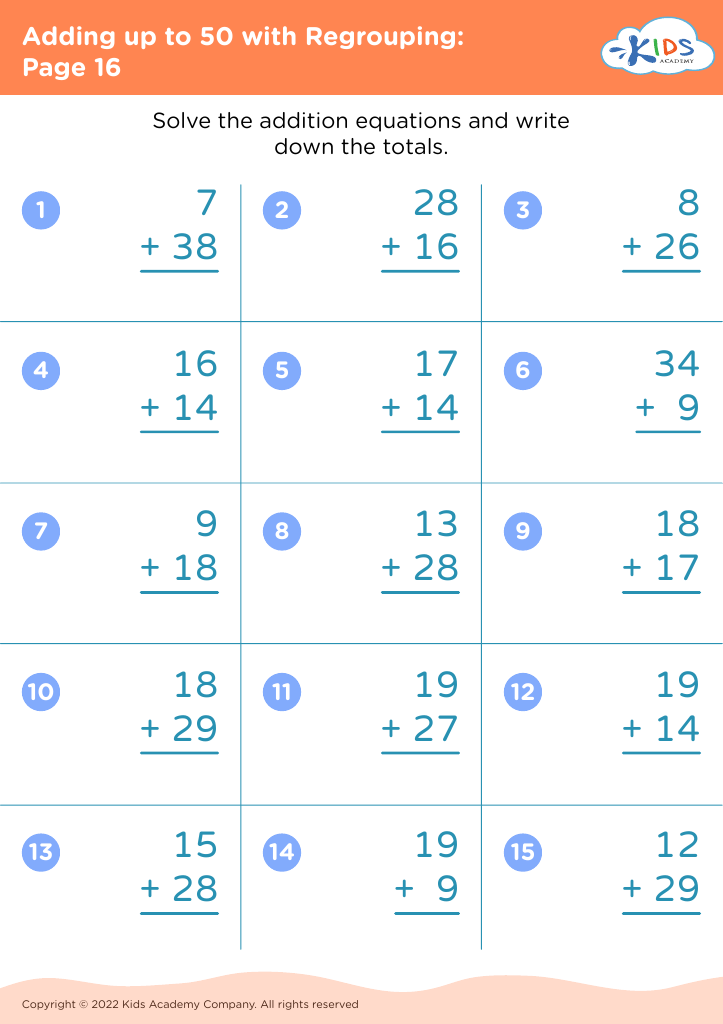
Adding up to 50 with Regrouping: Page 6
Worksheet
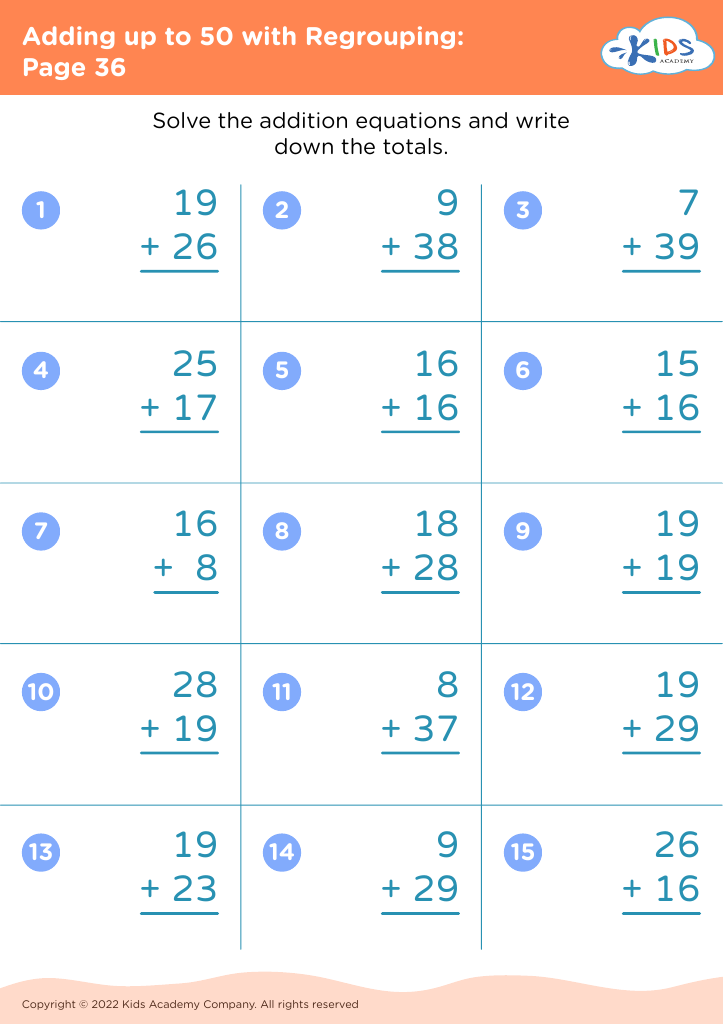
Adding up to 50 with Regrouping: Page 36
Worksheet
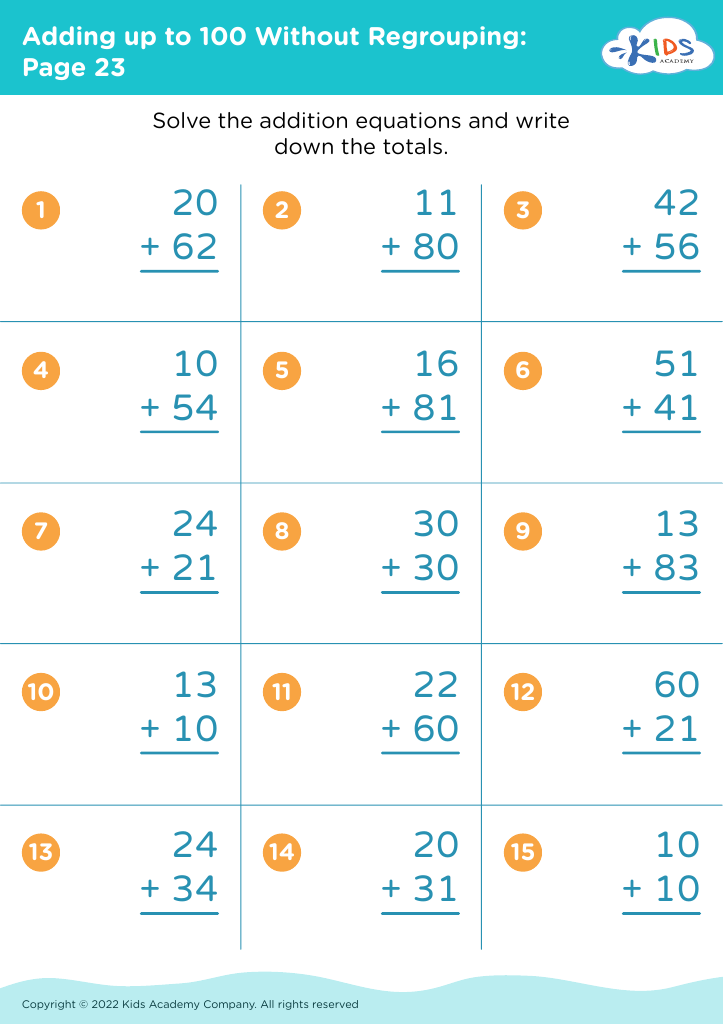
Adding up to 100 Without Regrouping: Page 23
Worksheet
Adding up to 50 with Regrouping: Page 16
Worksheet
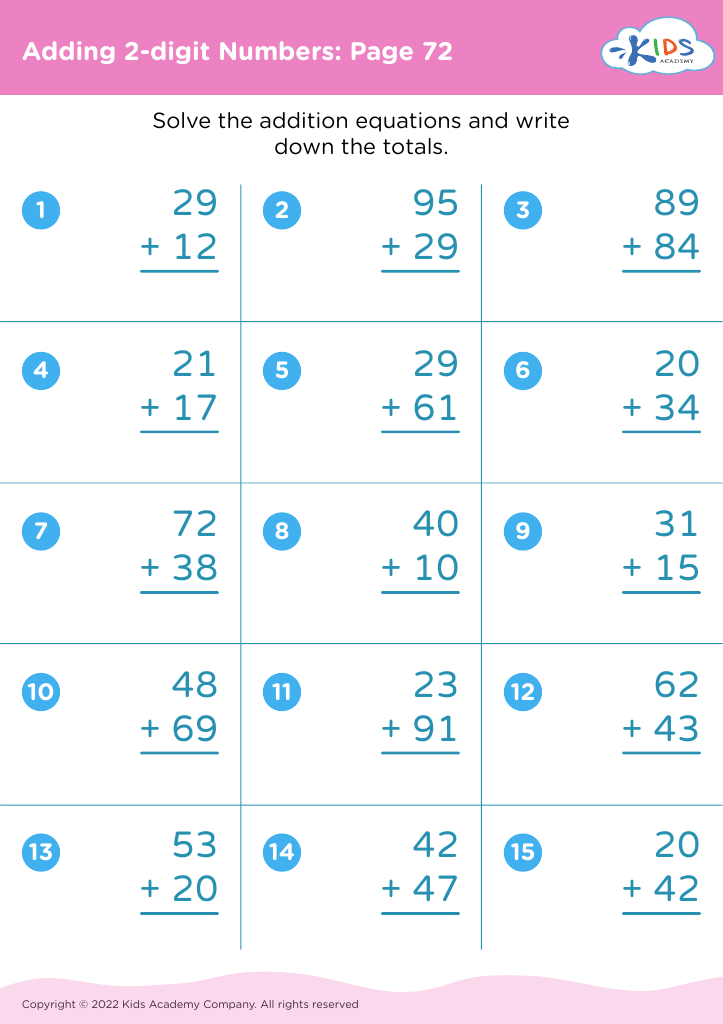
Adding 2-digit Numbers: Page 72

Adding 2-digit Numbers: Page 72

Adding 2-digit Numbers: Page 72
Worksheet
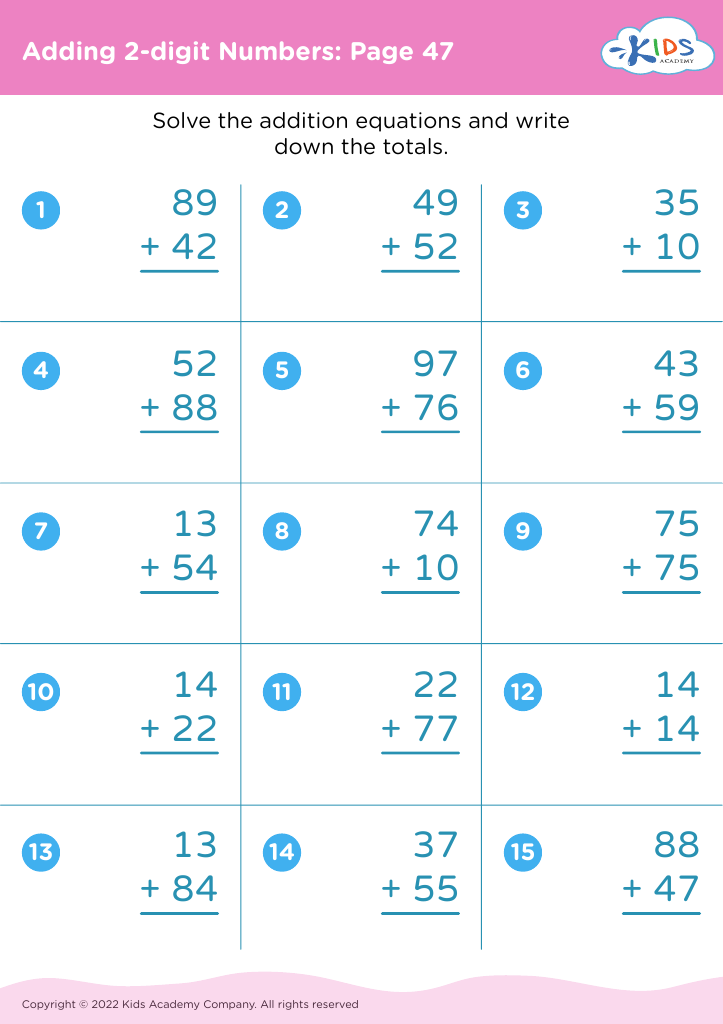
Adding 2-digit Numbers: Page 47

Adding 2-digit Numbers: Page 47

Adding 2-digit Numbers: Page 47
Worksheet
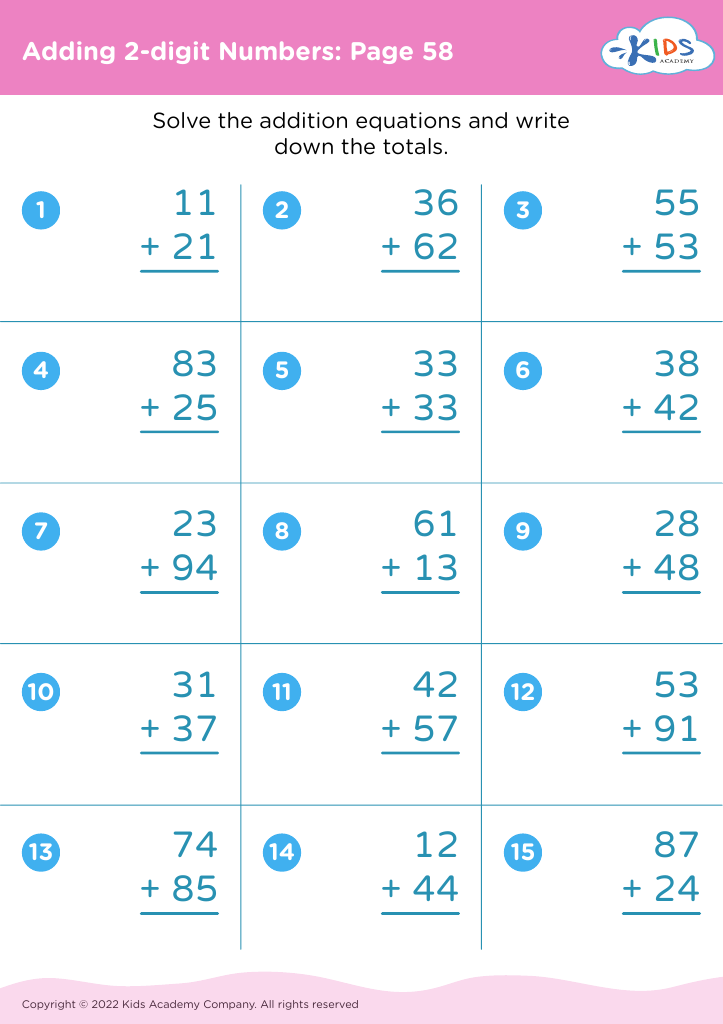
Adding 2-digit Numbers: Page 58

Adding 2-digit Numbers: Page 58

Adding 2-digit Numbers: Page 58
Worksheet


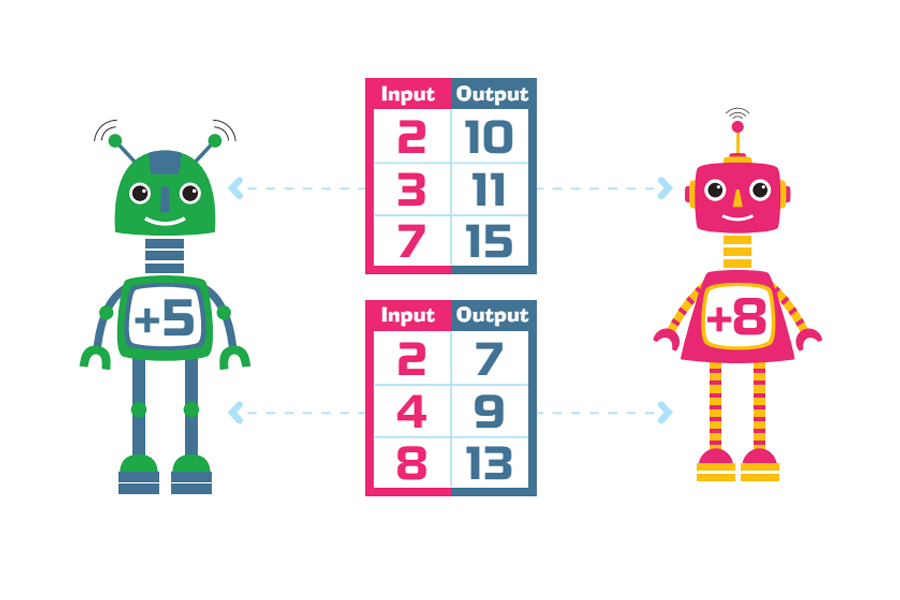
Understanding comparing fractions and addition in the second grade is foundational for children's future math success. This skill forms the basics of rational numbers, an essential component in advanced mathematics. When children learn to compare fractions, they develop critical thinking and problem-solving skills as they assess which fractions represent larger or smaller quantities. This fosters numerical literacy early on, which is crucial for real-world applications like measuring ingredients or dividing portions.

Furthermore, addition in the second grade transitions students from simple single-digit computations to more complex mathematical ideas, such as carrying over values. Mastery of addition is not only vital for academic progress but also boosts students’ confidence, enabling them to engage in more challenging problems without anxiety.

Parents and teachers who prioritize these skills are setting children up for a lifetime of mathematical competence. As all academic disciplines are interwoven, a strong foundation in early arithmetic translates into better performance across multiple subjects, such as science and economics. Developing these competencies at an early age also encourages a positive attitude towards learning, cultivates perseverance, and builds analytical skills vital for future learning and daily life. Hence, fostering these abilities in second graders is about unlocking their academic potential and empowering them with tools that drive lifelong success.