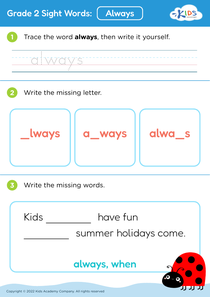
Counting objects Grade 2 Addition Worksheets
8 filtered results
-
From - To
Discover our engaging Counting Objects Grade 2 Addition Worksheets, designed to help young learners master addition through hands-on practice. Aimed at second graders, these worksheets encourage counting objects visually, making it easier for children to understand the concept of addition. With vibrant visuals and interactive activities, students will enhance their math skills while building confidence. Our printable resources provide a variety of exercises that cater to different learning styles, ensuring every child can thrive in their mathematical journey. Perfect for classroom use or at-home learning, these worksheets promote an enjoyable and effective way to grasp essential math concepts. Start learning today!
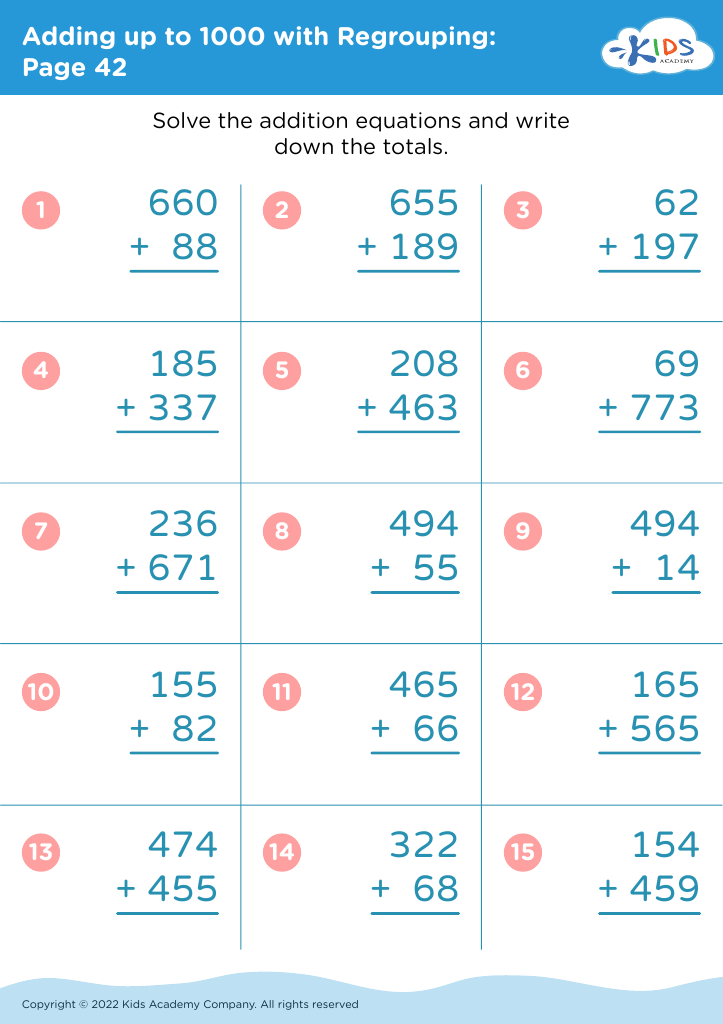
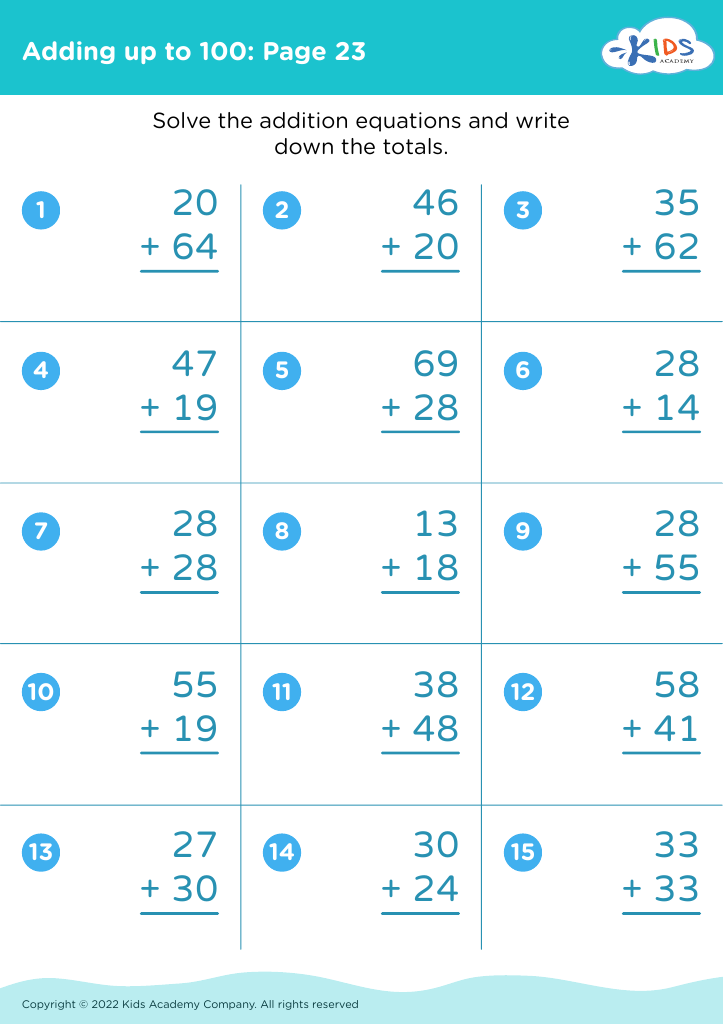
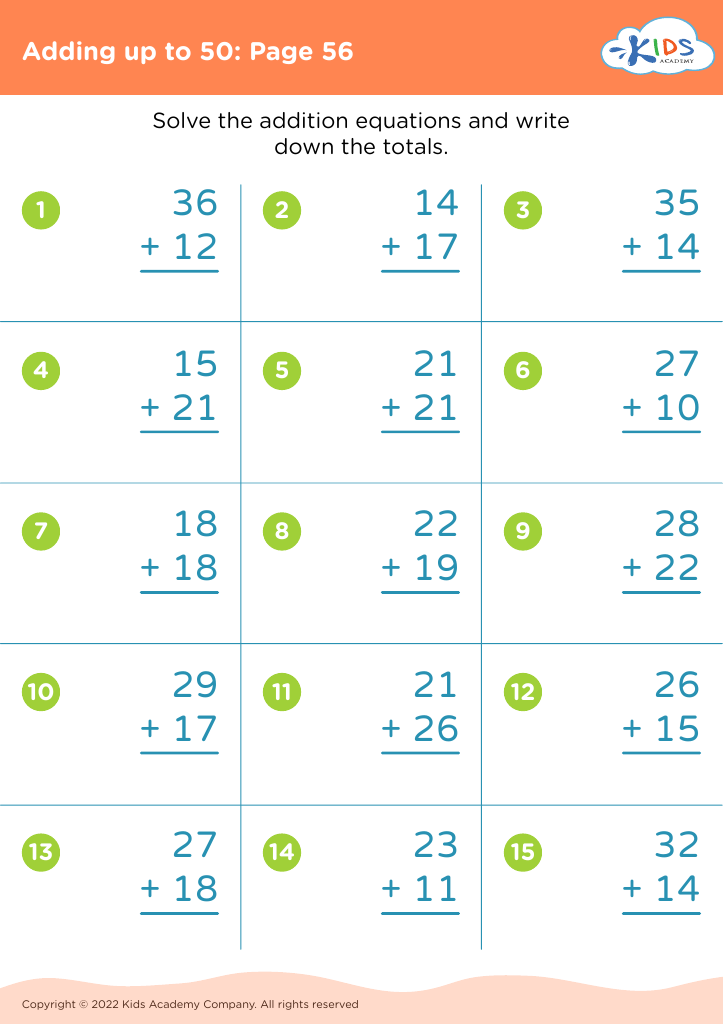
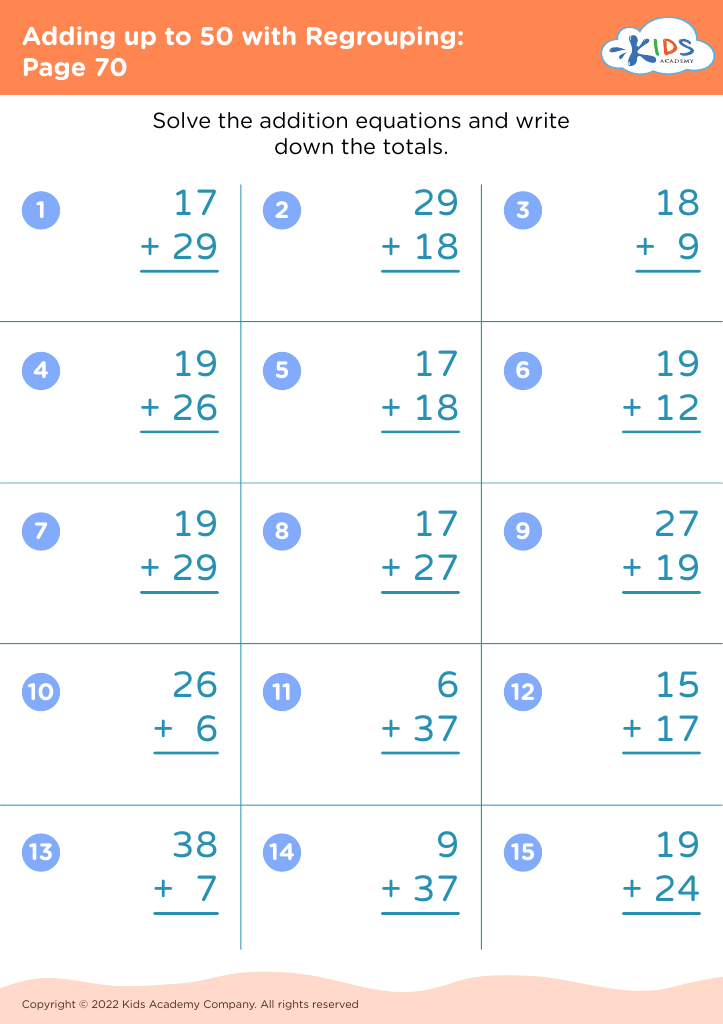
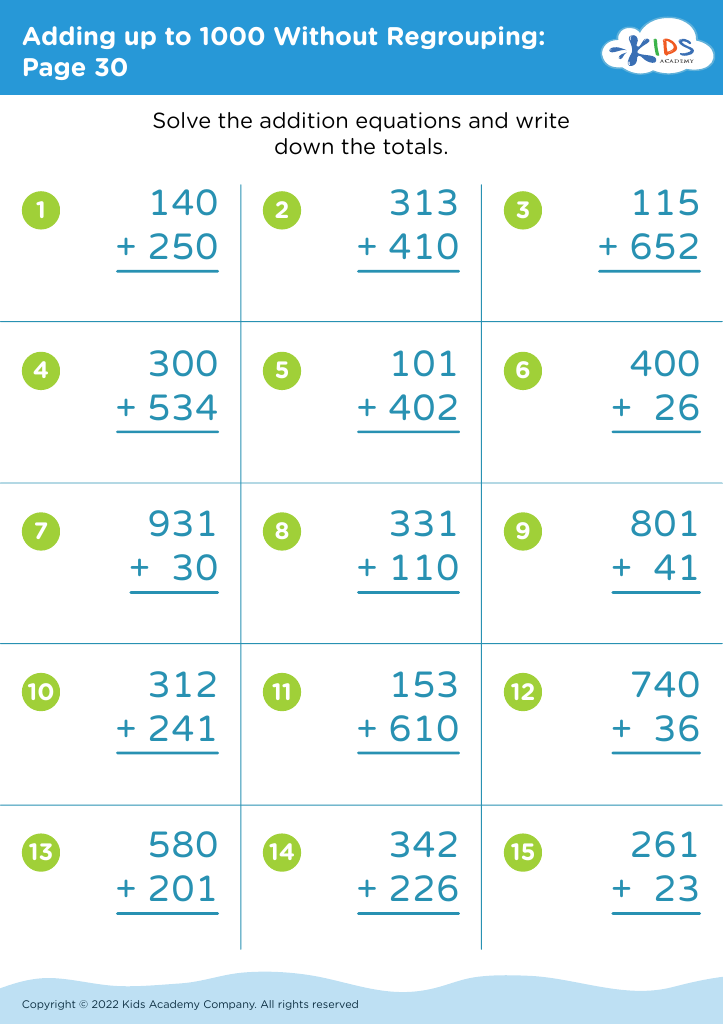
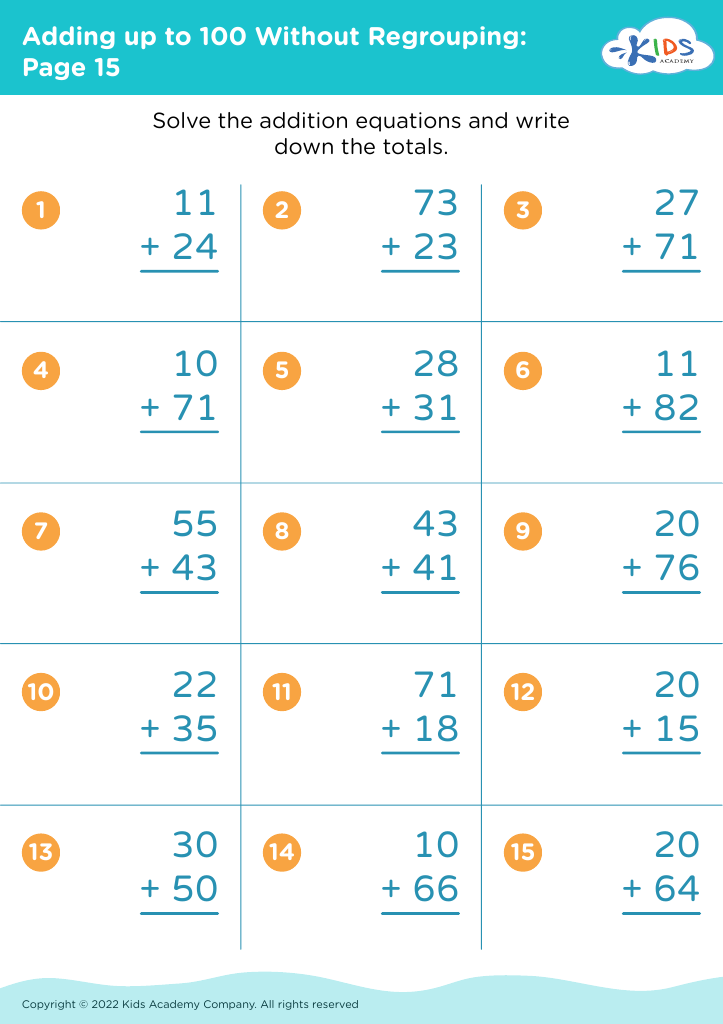
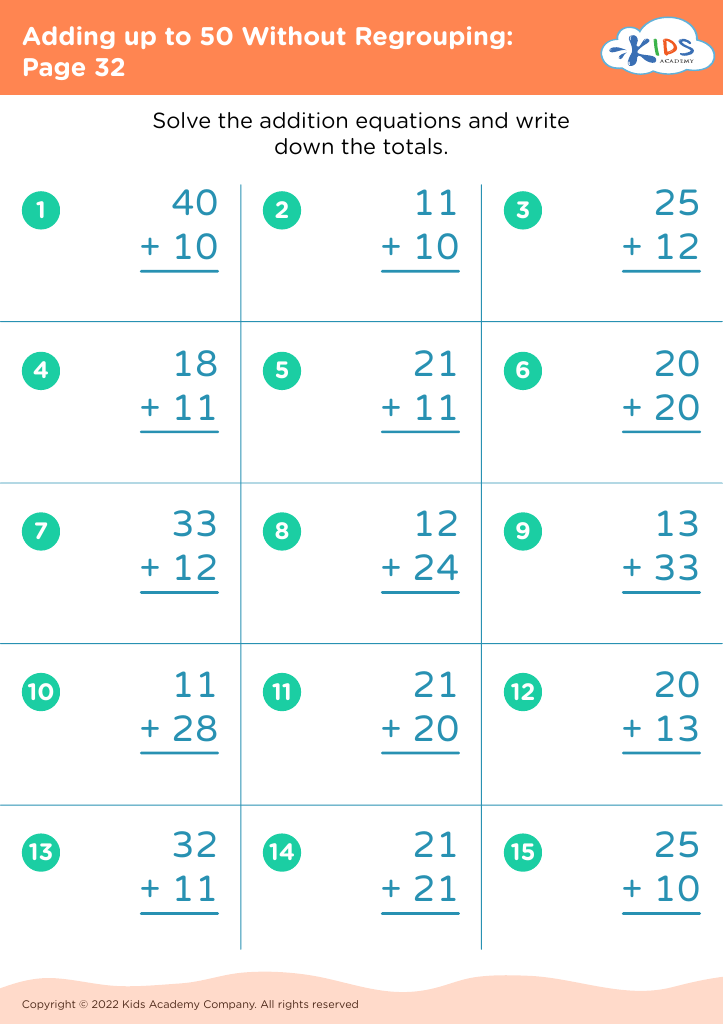
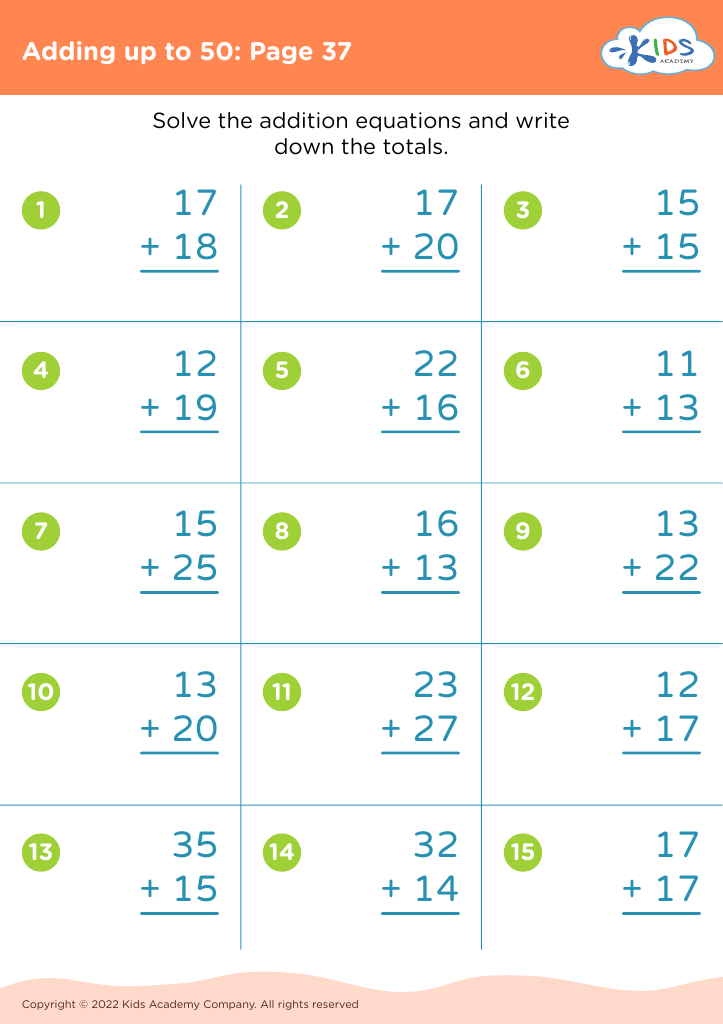








Counting objects and mastering addition in Grade 2 are foundational skills that support a child’s academic and cognitive development. For parents and teachers, nurturing these skills is crucial for several reasons. First, counting objects helps children understand the concept of numbers in a tangible way, making math relatable and engaging. It enhances their ability to visualize quantities and improves their problem-solving skills, which are necessary for more complex mathematical concepts in the future.
Moreover, counting and addition activities encourage critical thinking and foster independence. When students count items, they learn to organize and categorize objects, which develops their logical reasoning. This skill translates to better understanding in various subjects, including science and reading, where comparison and sequencing are important.
Additionally, engaging in these activities can strengthen the bond between parents, teachers, and students. Collaborative counting games or math exercises create opportunities for shared learning experiences, boosting a child's confidence and motivation. Lastly, strong arithmetic skills in early education set the stage for academic success, as math competency is a predictor of overall performance in school. Hence, investing time and resources in helping children count and add now will pay dividends in their educational journey.