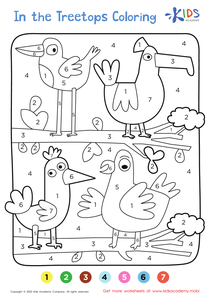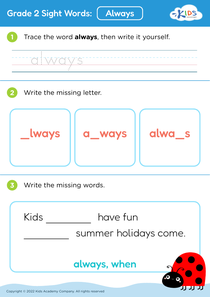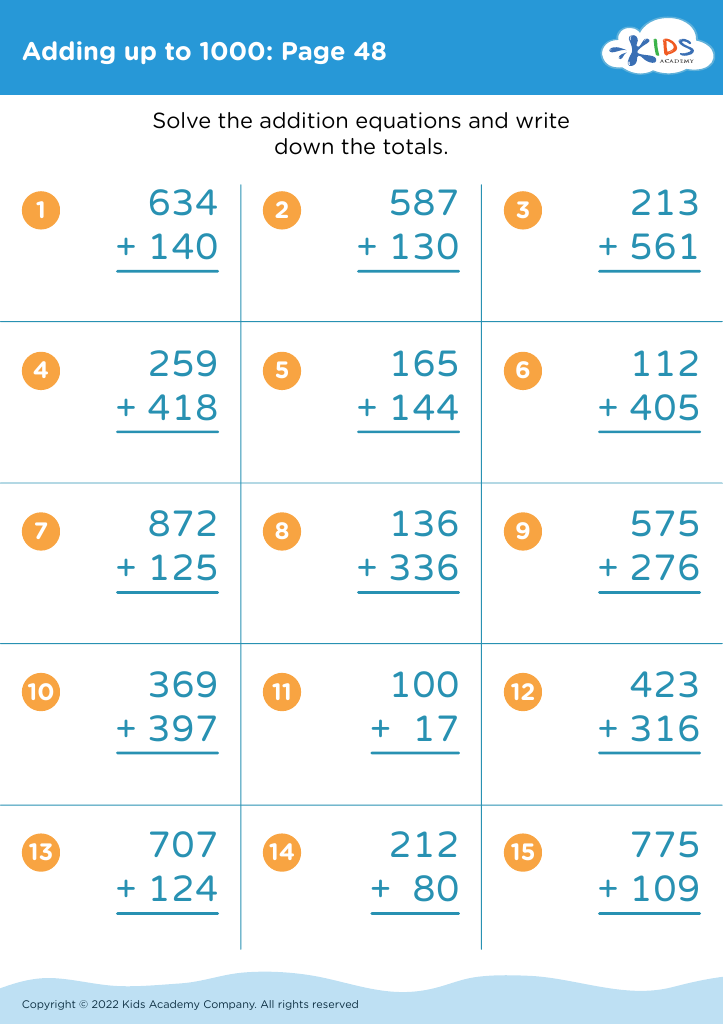
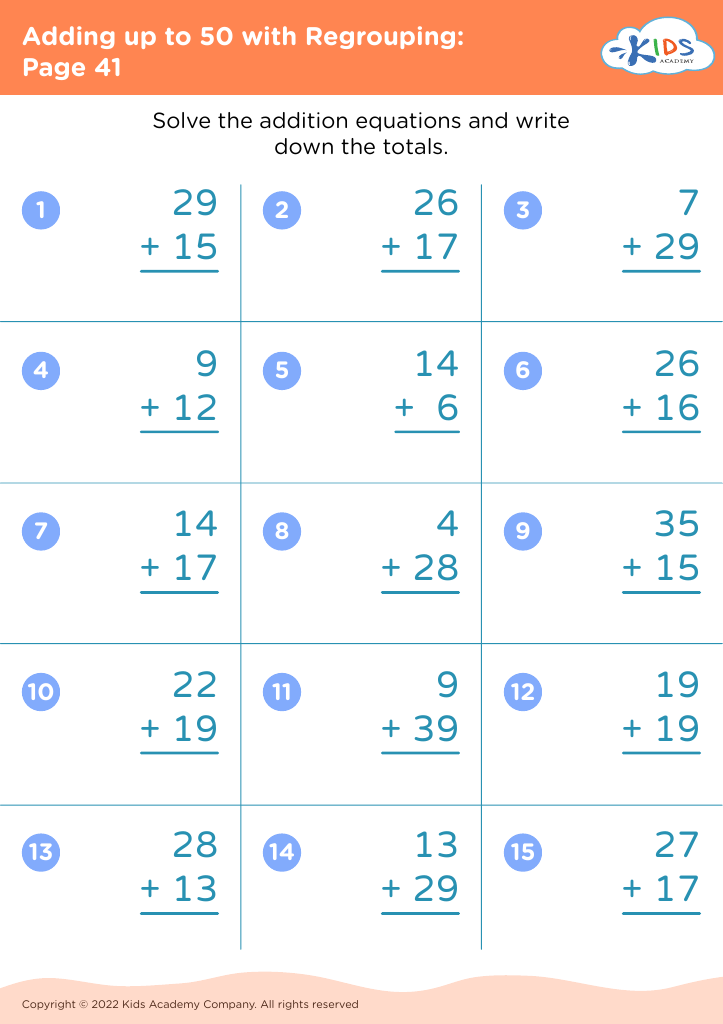
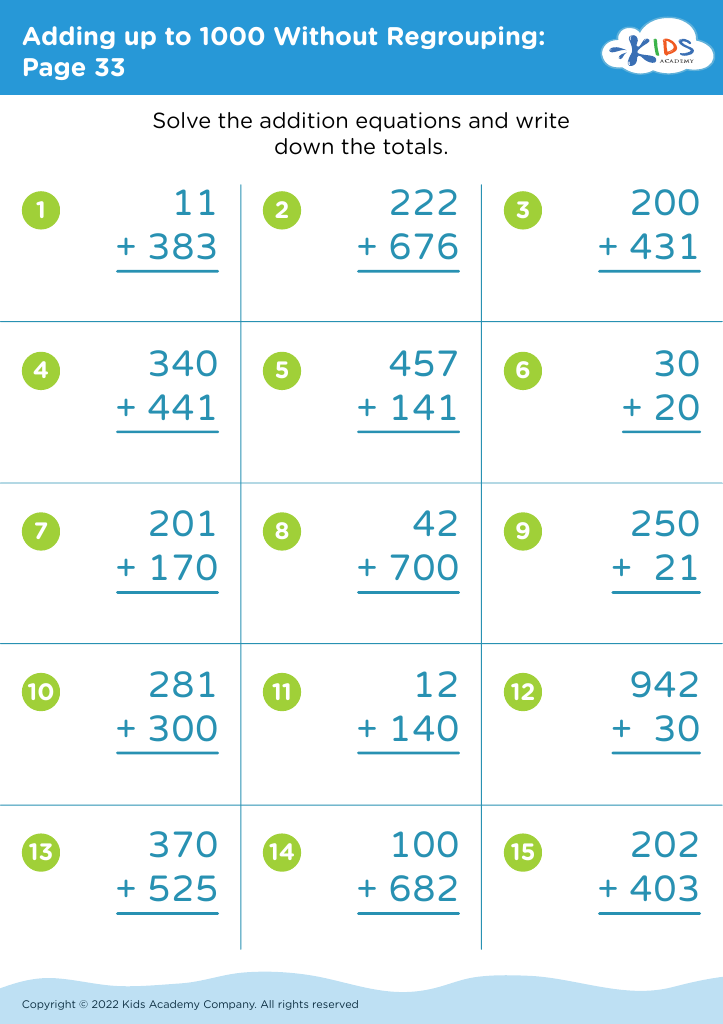
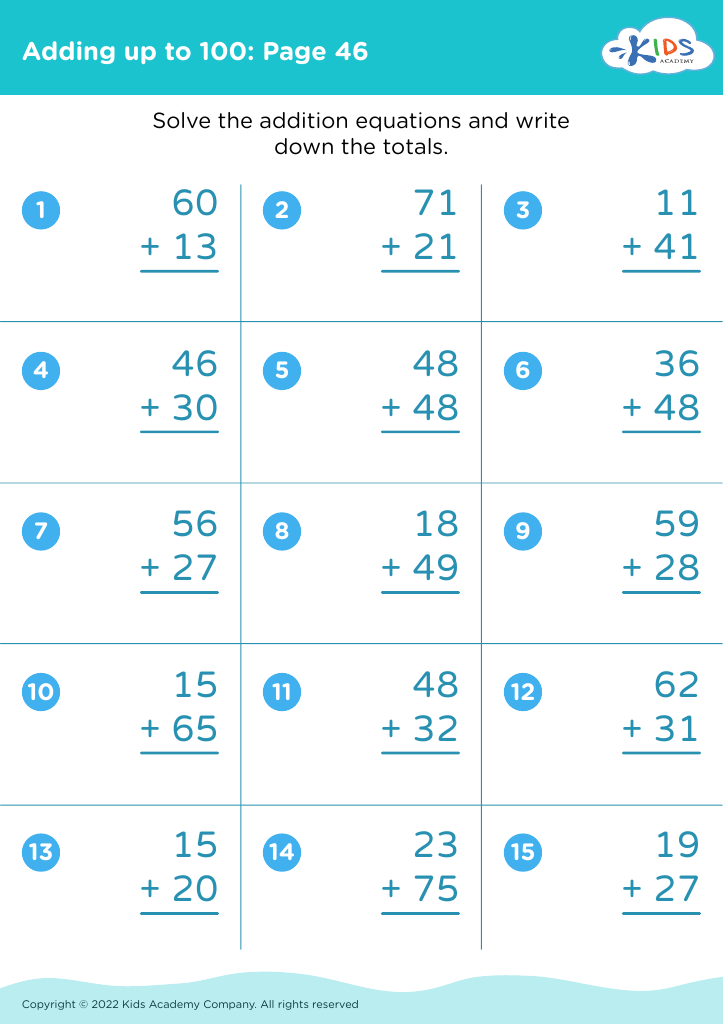







Counting practice and mastering Grade 2 addition are vital for young learners, laying the foundation for their future success in mathematics and overall cognitive development. Parents and teachers should care about this for several reasons.
First, proficiency in basic arithmetic significantly enhances a child's confidence in their ability to solve problems, which is essential for learning more complex mathematical concepts later. Confident mathematicians feel more comfortable tackling challenging subjects across their entire school career.
Second, counting practice and elementary addition skills support cognitive development by improving memory, attention, and analytical thinking. These skills have wide-ranging applications beyond math, including logistics, computer science, economics, and everyday decision-making, and noticing patterns in the world.
Furthermore, consistent practice with counting and addition helps solidify number sense and numerical relationships, which are fundamental to understanding advanced operations like multiplication, division, and fractions. Easy recall of basic addition aids in freeing up cognitive resources, allowing students to focus on solving multifaceted problems rather than getting bogged down by basic computations.
Lastly, integrating fun, engaging activities and games that reinforce these skills encourages a positive attitude toward math, transforming a potentially stressful subject into an enjoyable learning experience. Ensuring proficiency in early math skills like counting and Grade 2 addition equips children for an academically robust future, providing them with the tools they need to thrive.