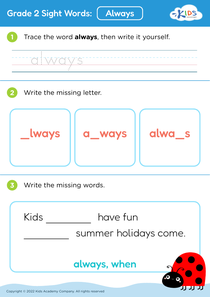
Developing logical thinking Grade 2 Addition Worksheets
4 filtered results
-
From - To
Enhance your second grader's mathematical skills with our "Developing Logical Thinking Grade 2 Addition Worksheets." Designed to promote critical thinking and problem-solving, these worksheets guide children through various addition concepts while encouraging logical reasoning. Each activity challenges students to apply strategies, recognize patterns, and think analytically about numbers. By engaging with these worksheets, young learners will not only reinforce their addition skills but also build a strong foundation for future arithmetic. These fun, colorful activities make learning enjoyable and help cultivate a love for math. Explore our collection today and watch your child excel in logical thinking and addition!
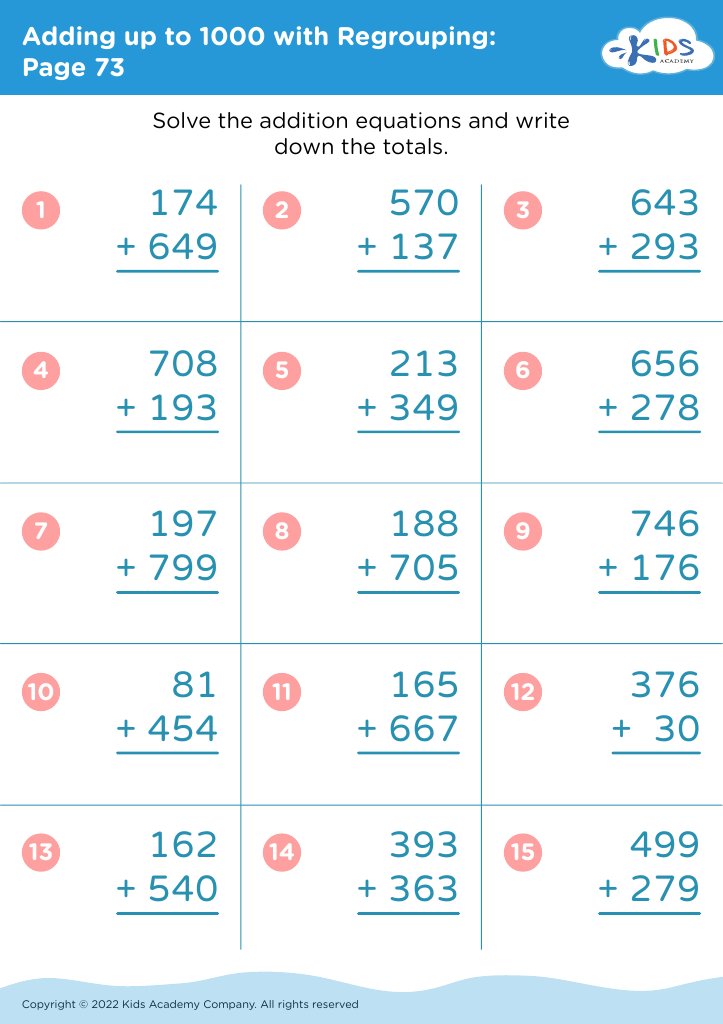
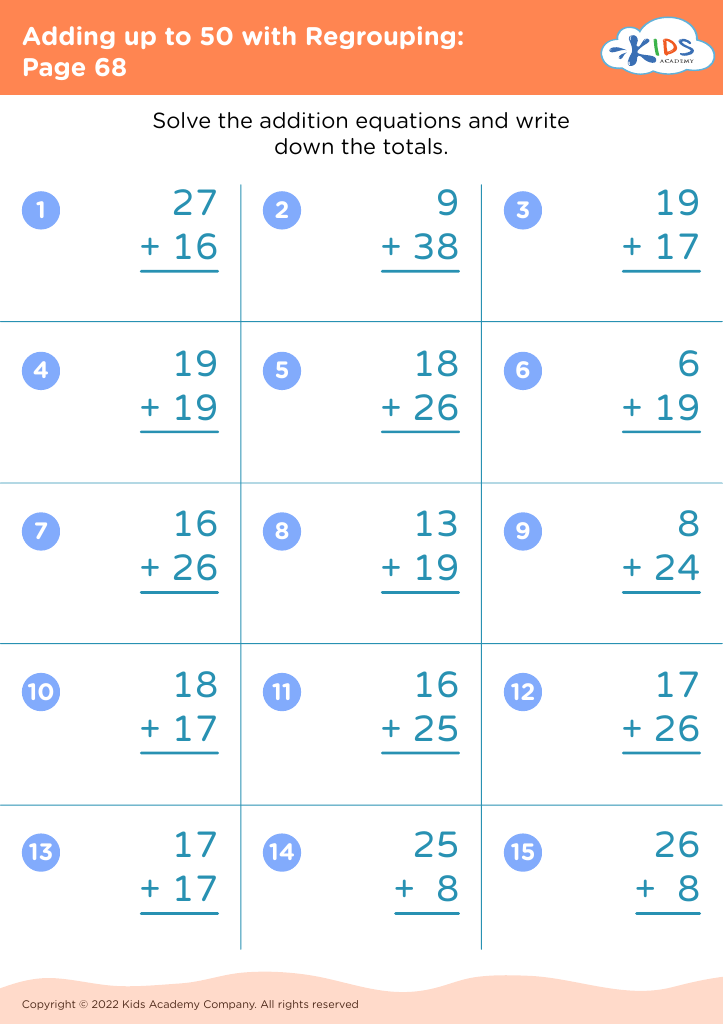
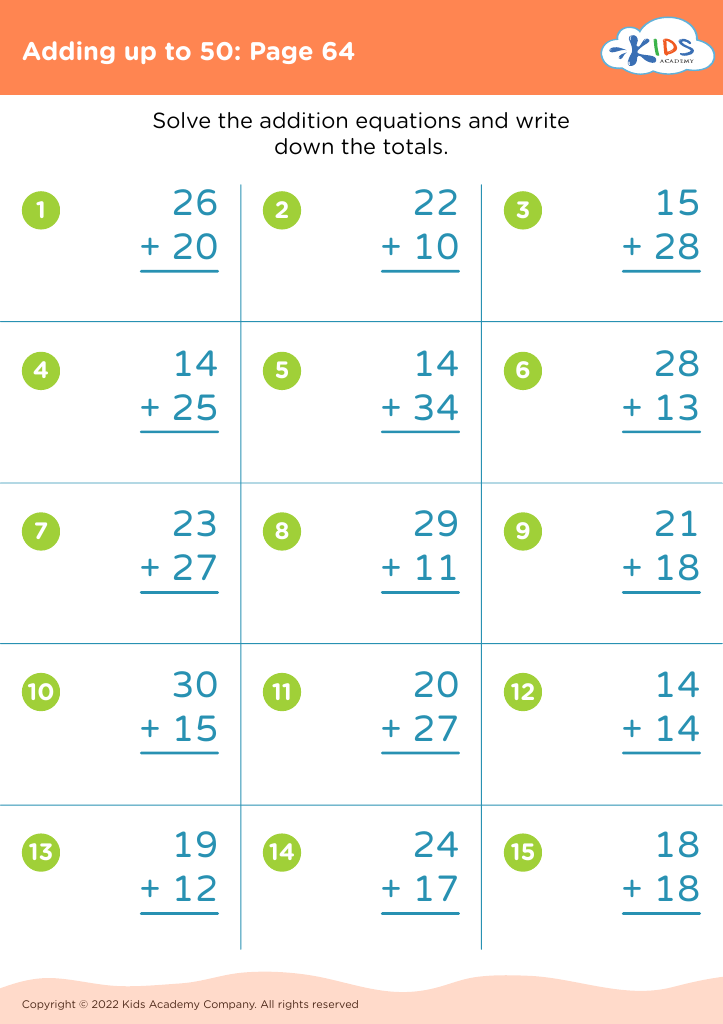
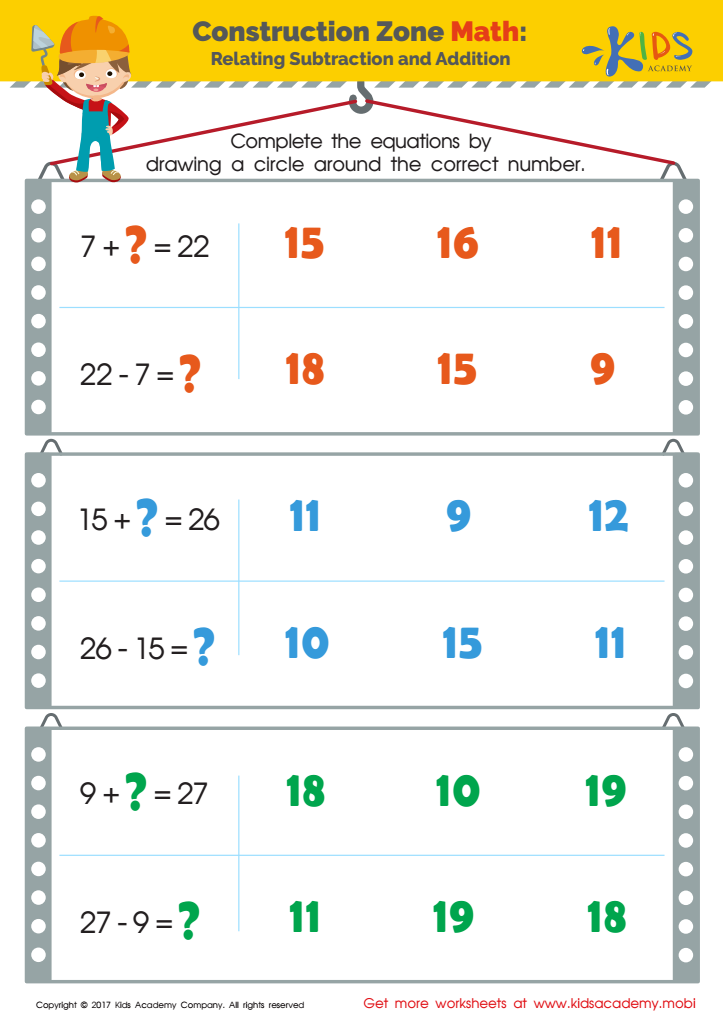
Related Addition and Subtraction Facts Worksheet
 Assign to My Students








Developing logical thinking skills in Grade 2, particularly in the context of addition, is crucial for a variety of reasons. First, logical thinking fosters problem-solving abilities that are essential in everyday life. When children learn to approach addition logically, they begin to formulate strategies for tackling not just mathematical tasks, but also real-world challenges.
Moreover, strong foundational skills in addition set the stage for more complex mathematical concepts in later grades. By encouraging children to think logically about numbers—understanding relationships, patterns, and operations—they build confidence in their math abilities, making them more engaged and less anxious about future learning.
Parents and teachers also play a vital role in facilitating this development. By creating a supportive environment filled with engaging math activities, such as games that involve addition and logical reasoning, they help children explore numbers in a fun way. This nurtures a love for learning that transcends the classroom.
Lastly, logical thinking impacts overall intellectual growth. It enhances critical thinking, reasoning skills, and promotes effective communication, laying a strong groundwork for academic success across subjects. In short, fostering logical thinking in addition helps students become proficient, confident learners prepared for future challenges.