Boost your second graders’ number recognition skills with our engaging Enhance Number Recognition Grade 2 Addition Worksheets. These specially designed resources focus on helping young learners recognize numbers and their relationships through fun addition exercises. Each worksheet features vibrant illustrations and interactive problems that encourage critical thinking and active participation. With a variety of challenging activities, our worksheets not only promote mathematical fluency but also foster confidence in young math learners. Perfect for classroom use or home practice, these worksheets make learning addition enjoyable while enhancing foundational math skills essential for future success. Start your young mathematicians’ journey today!
Check out this FREE Grade 2 Trial Lesson on Addition!

Suffixes

Favorites
With answer key
Interactive
  • Grade 2
  • Enhance number recognition
  • Addition
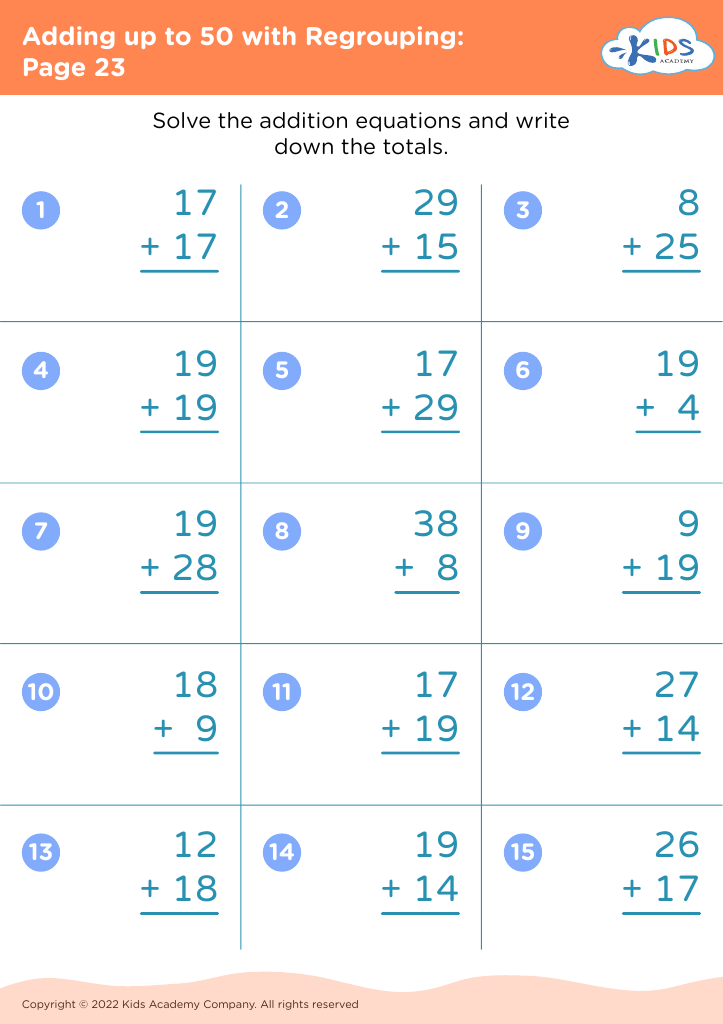
Adding up to 50 with Regrouping: Page 23
Worksheet
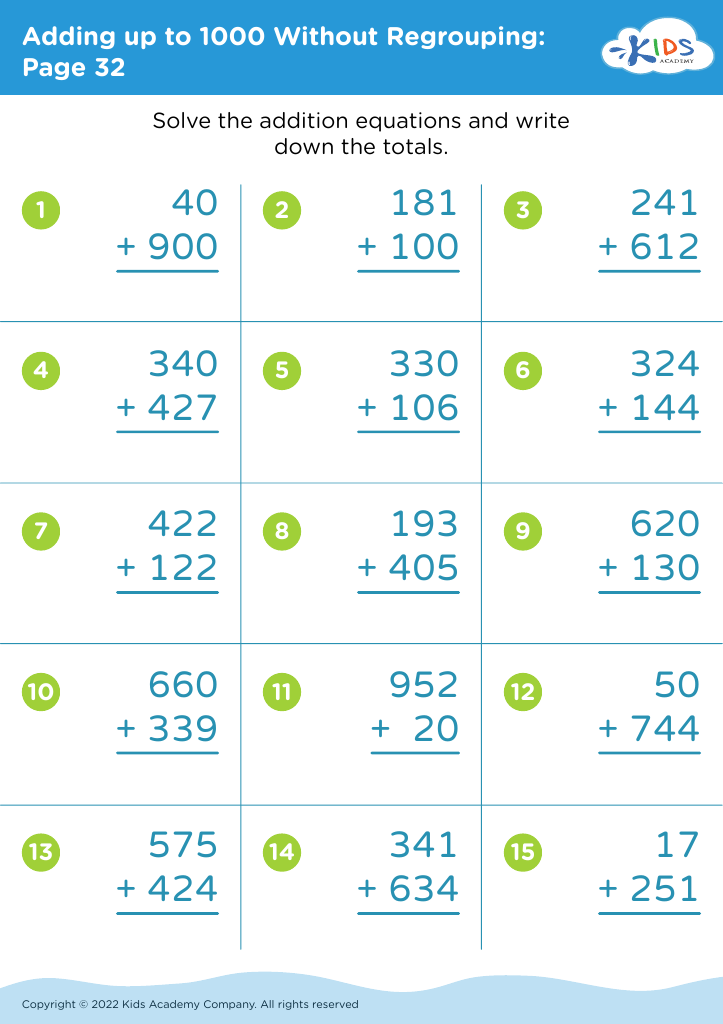
Adding up to 1000 Without Regrouping: Page 32
Worksheet
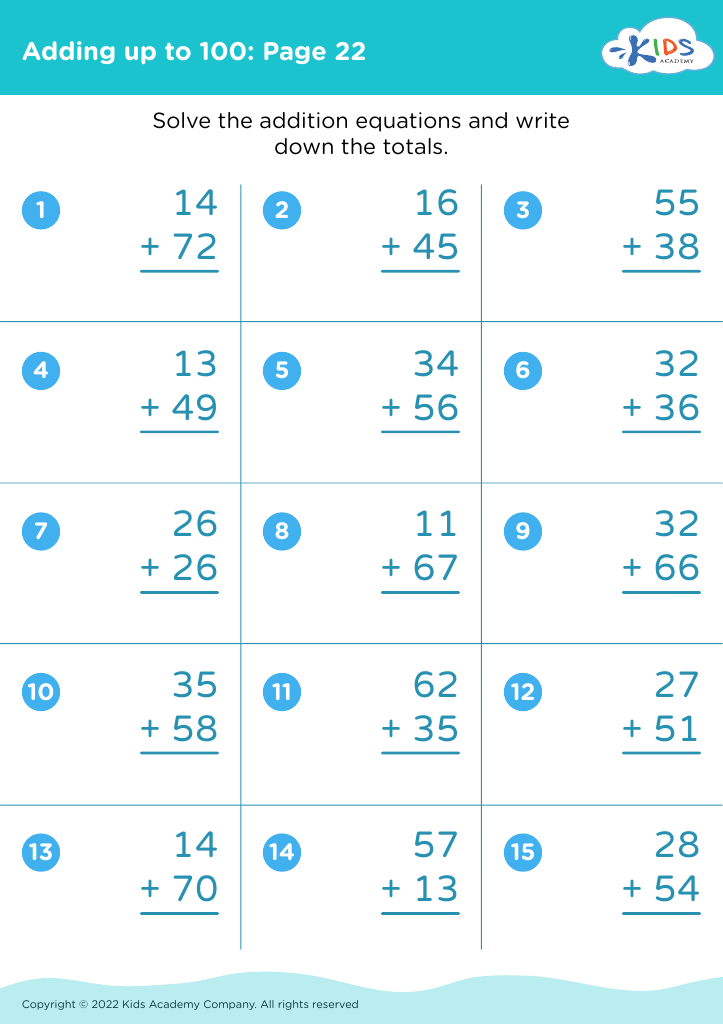
Adding up to 100: Page 22

Adding up to 100: Page 22

Adding up to 100: Page 22
Worksheet
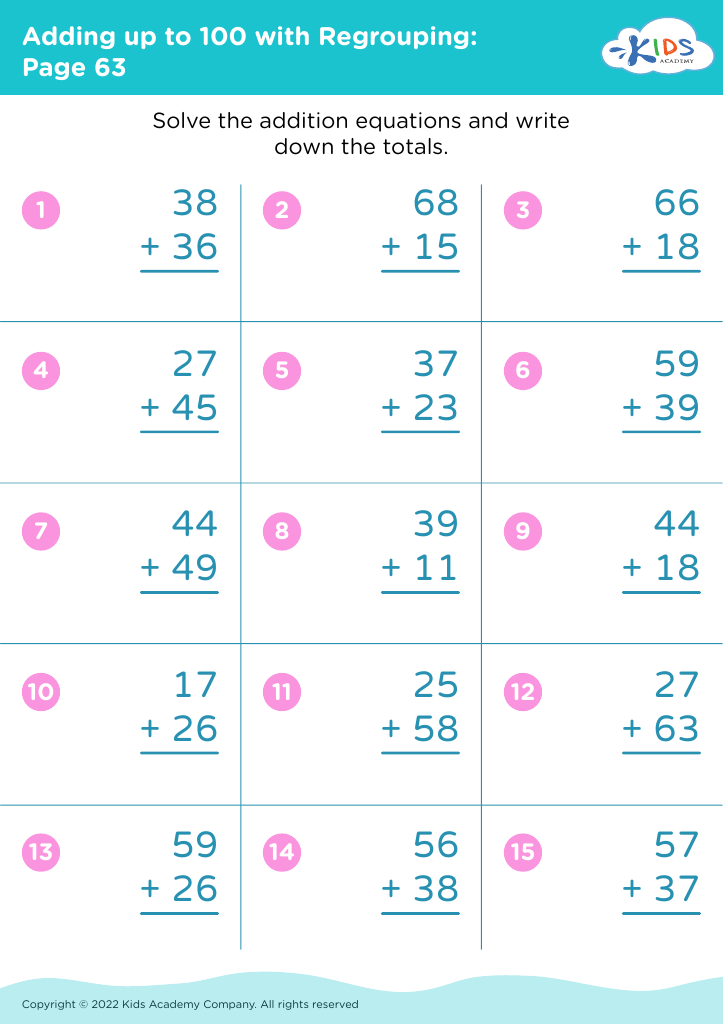
Adding up to 100 with Regrouping: Page 63
Worksheet
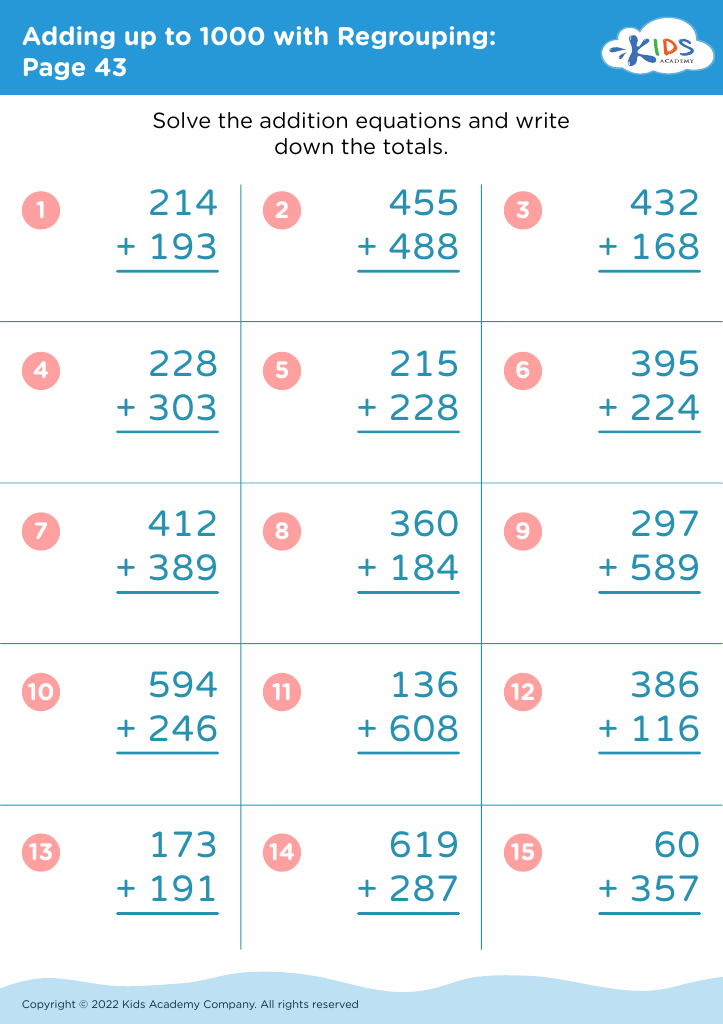
Adding up to 1000 with Regrouping: Page 43
Worksheet
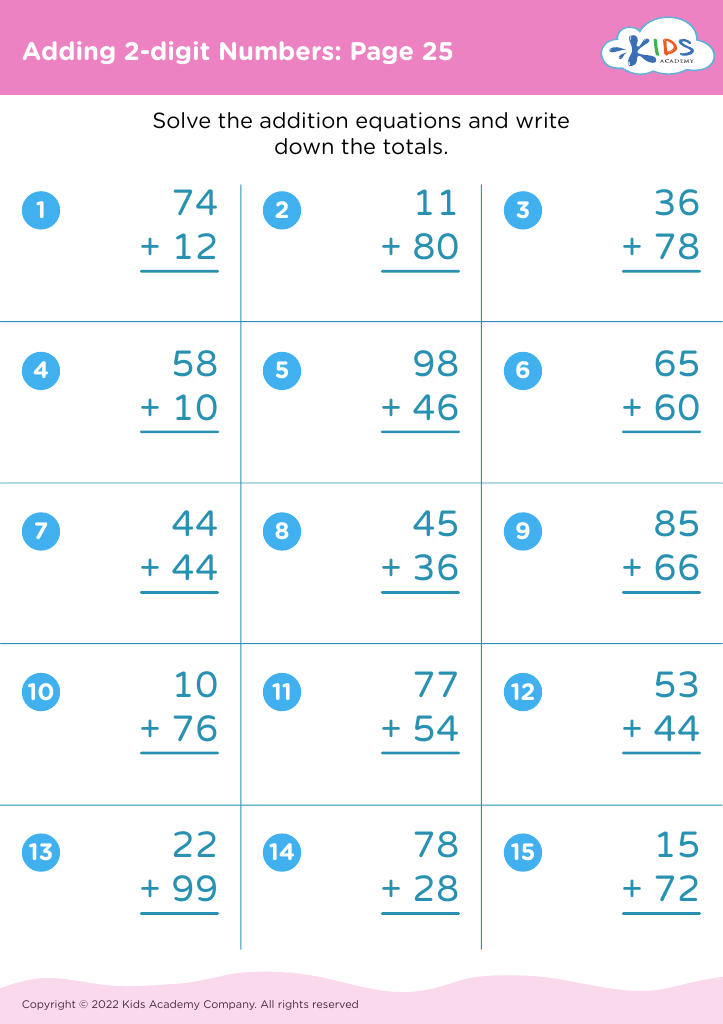
Adding 2-digit Numbers: Page 25

Adding 2-digit Numbers: Page 25

Adding 2-digit Numbers: Page 25
Worksheet
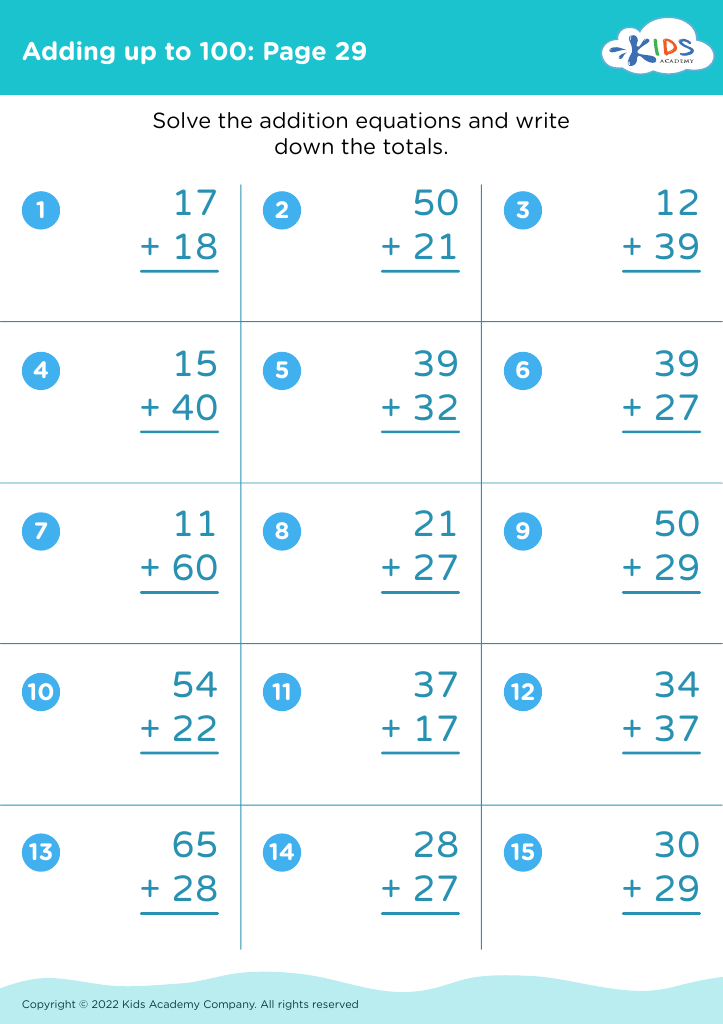
Adding up to 100: Page 29

Adding up to 100: Page 29

Adding up to 100: Page 29
Worksheet
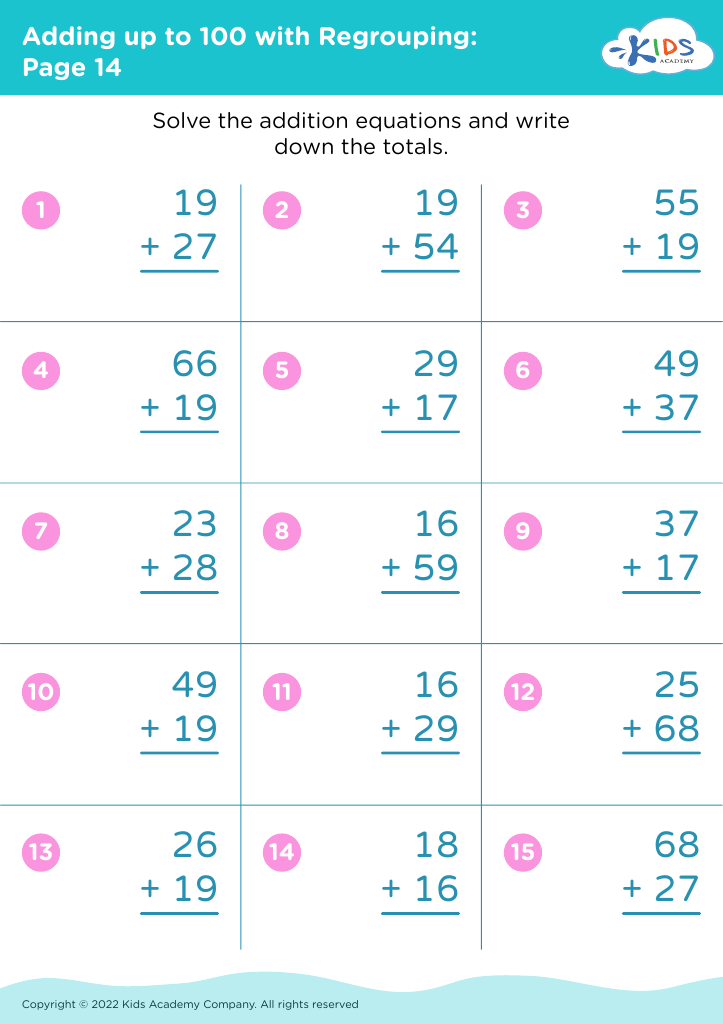
Adding up to 100 with Regrouping: Page 14
Worksheet
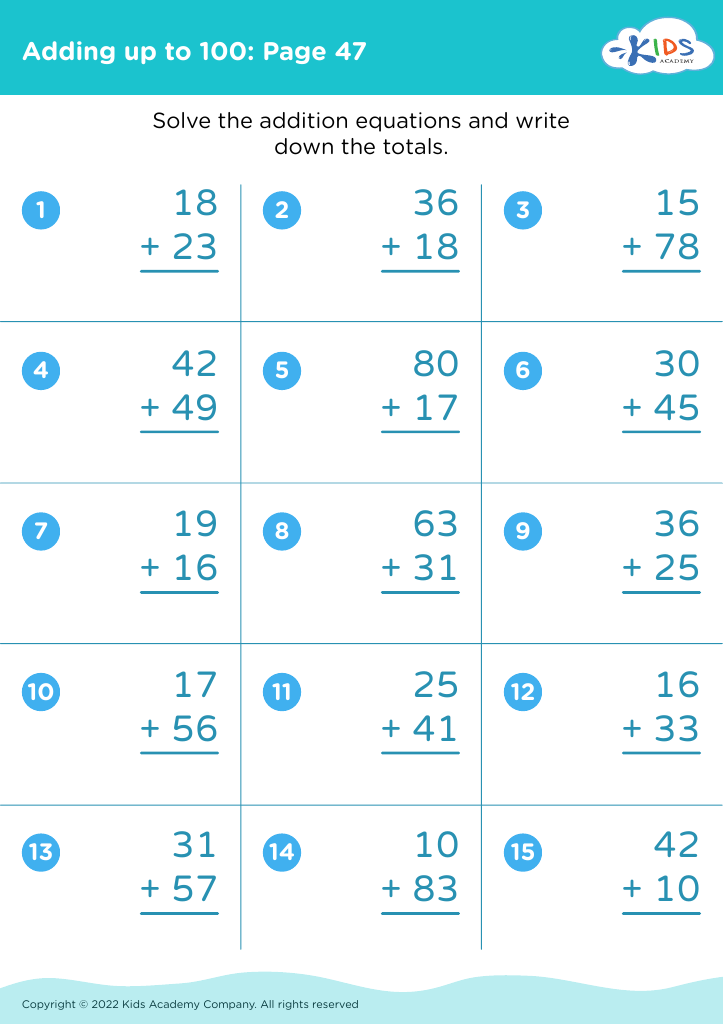
Adding up to 100: Page 47

Adding up to 100: Page 47

Adding up to 100: Page 47
Worksheet
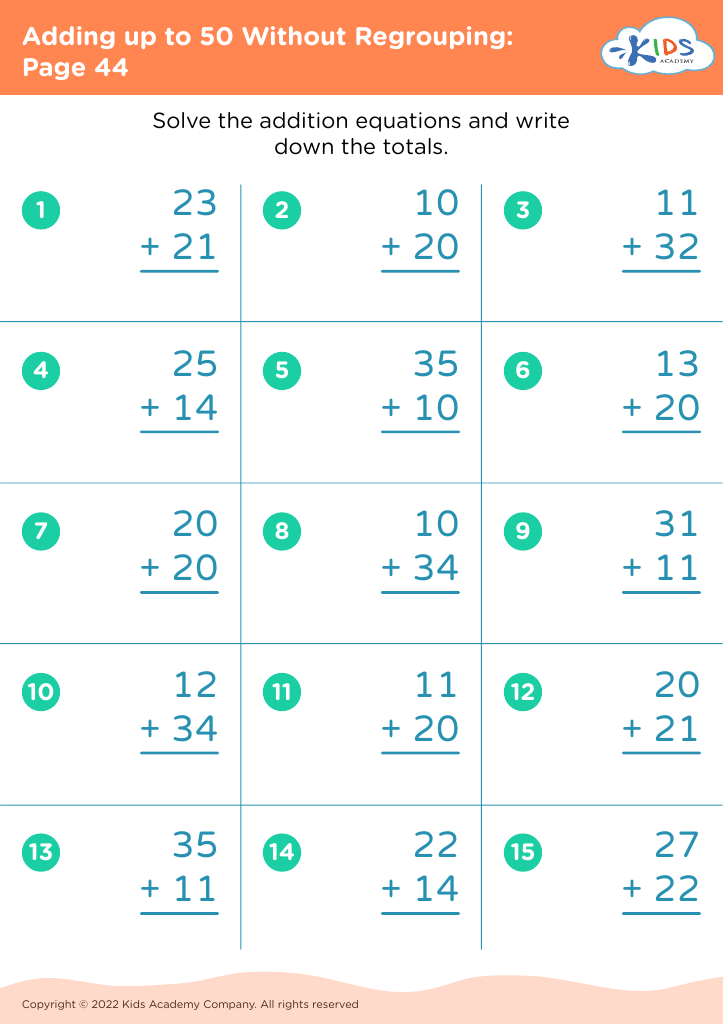
Adding up to 50 Without Regrouping: Page 44
Worksheet
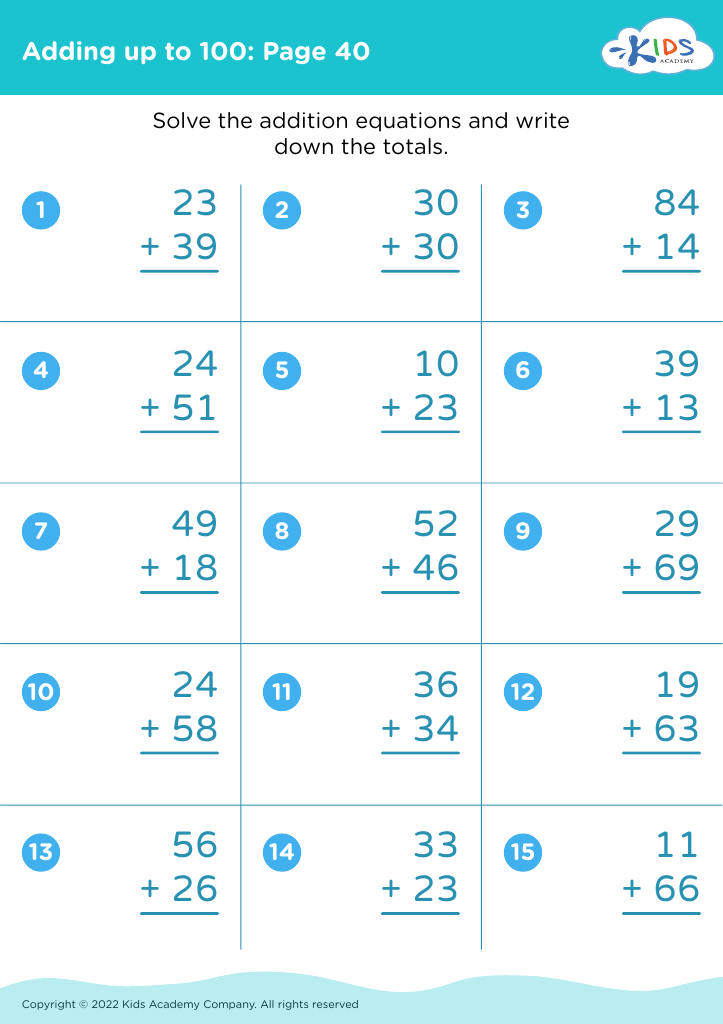
Adding up to 100: Page 40

Adding up to 100: Page 40

Adding up to 100: Page 40
Worksheet
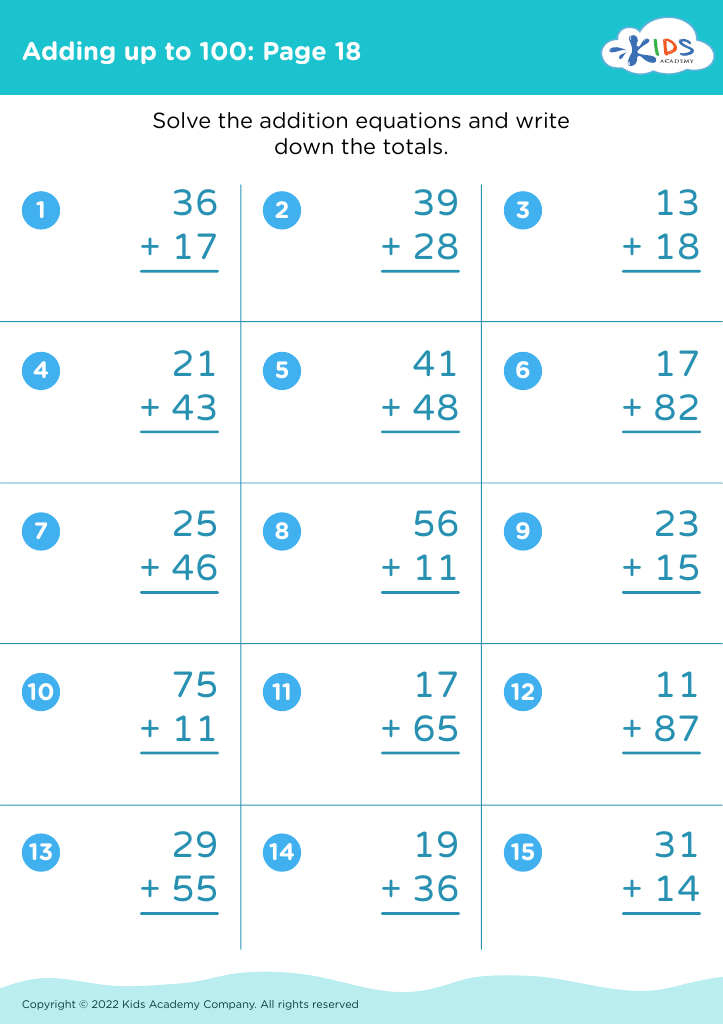
Adding up to 100: Page 18

Adding up to 100: Page 18

Adding up to 100: Page 18
Worksheet
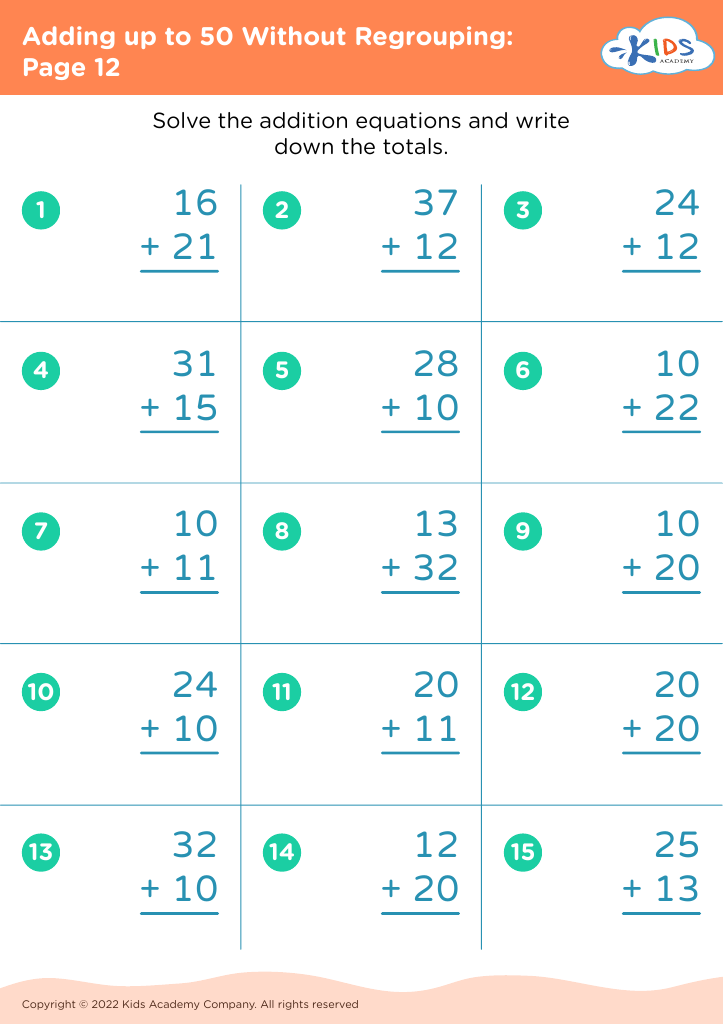
Adding up to 50 Without Regrouping: Page 12
Worksheet
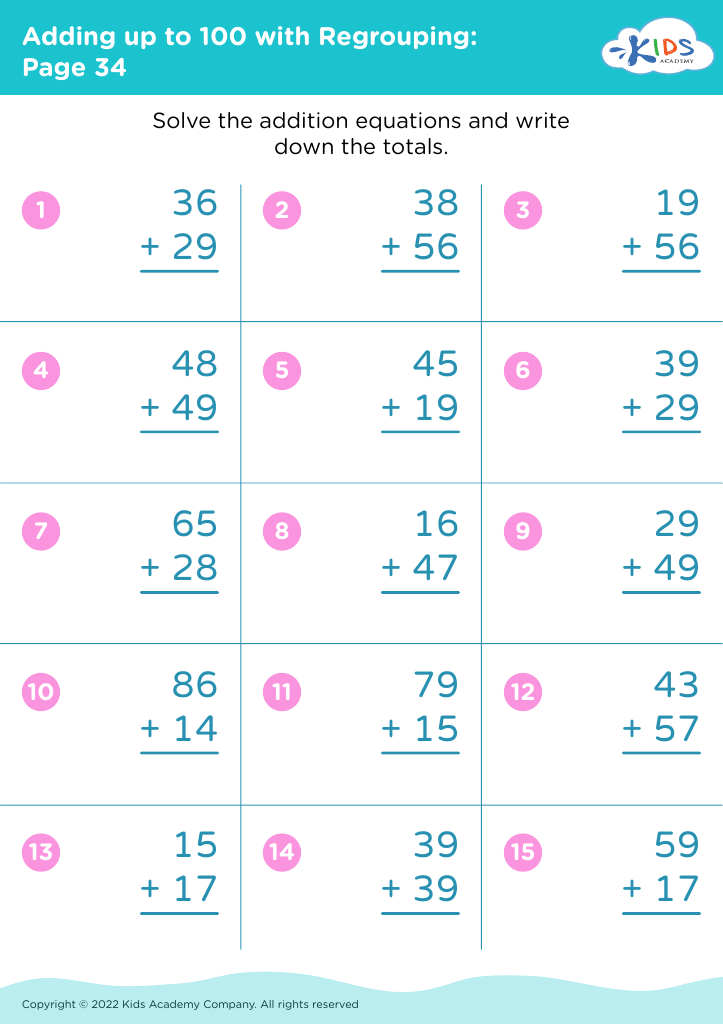
Adding up to 100 with Regrouping: Page 34
Worksheet
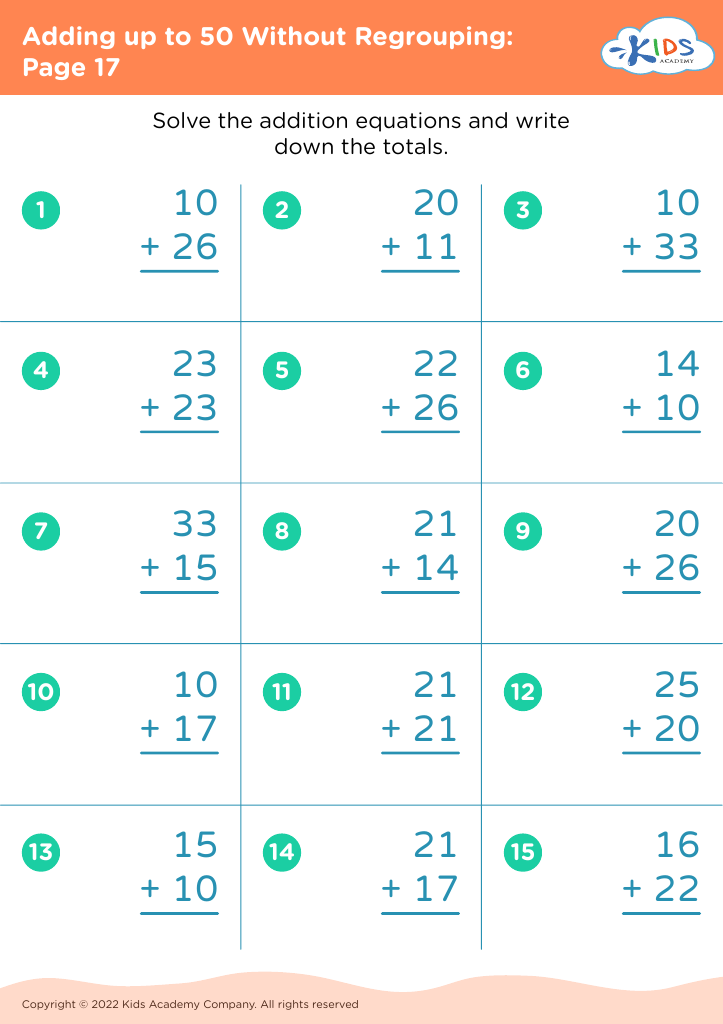
Adding up to 50 Without Regrouping: Page 17
Worksheet
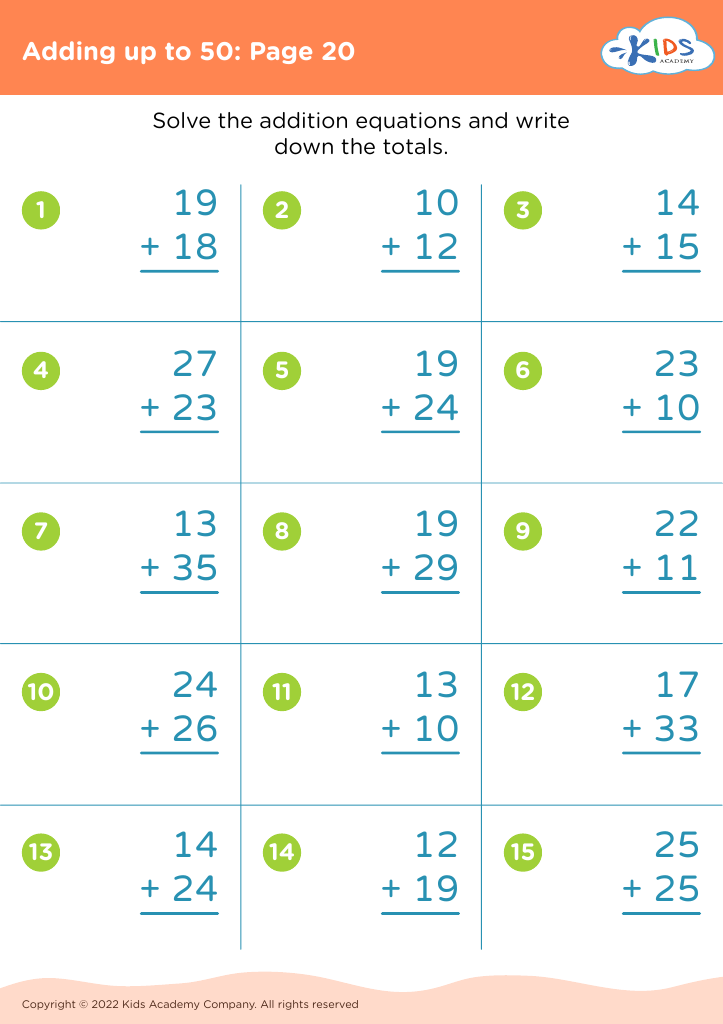
Adding up to 50: Page 20

Adding up to 50: Page 20

Adding up to 50: Page 20
Worksheet
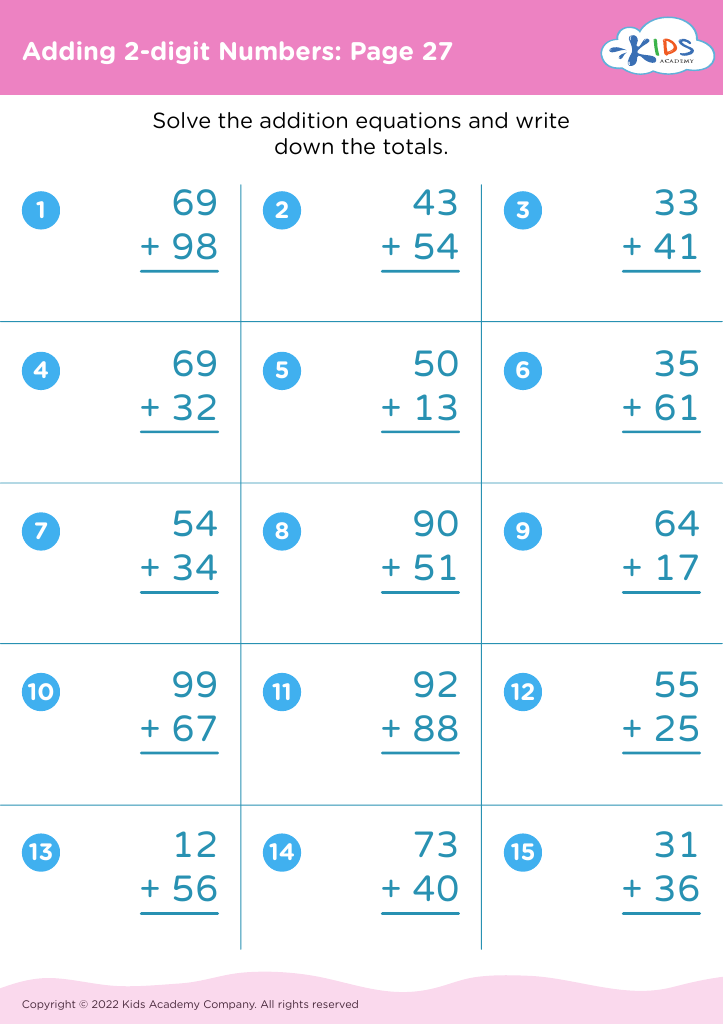
Adding 2-digit Numbers: Page 27

Adding 2-digit Numbers: Page 27

Adding 2-digit Numbers: Page 27
Worksheet


Enhancing number recognition and addition skills in Grade 2 is crucial for a child's academic progress and confidence in mathematics. At this stage, children begin to develop a more formal understanding of numbers beyond simple counting. Mastery of number recognition lays the foundation for all future math concepts, as it improves fluency in addition, subtraction, and eventually more complex operations.

For parents and teachers, fostering these skills is not only about academic performance; it's about building a positive attitude towards math. When children feel confident about their ability to recognize numbers and solve addition problems, they are more likely to engage in math-related activities, leading to increased motivation and interest in the subject.

Moreover, strong number recognition and addition skills enhance critical thinking and problem-solving abilities, essential for real-life situations. As children learn to navigate mathematical concepts, they also develop persistence, resilience, and the ability to approach challenges with a positive mindset.

By focusing on these foundational skills, parents and teachers can help students build the mathematical literacy required for success in later grades, ultimately empowering them to become proficient, confident learners prepared for the opportunities ahead.