Numerical problem solving Grade 2 Addition Worksheets
3 filtered results
-
From - To
Our "Numerical Problem Solving Grade 2 Addition Worksheets" are perfect for young mathematicians eager to sharpen their skills. Designed for second graders, these worksheets cover a range of addition problems, catering to different learning styles and levels. Easy-to-follow, engaging exercises help students build essential math skills, improve critical thinking, and bolster confidence. From simple sums to more complex scenarios, each worksheet encourages analytical thinking through practical, relatable examples. Ideal for both classroom use and at-home practice, these resources make learning addition fun and effective. Bring numbers to life with our second-grade numerical problem-solving worksheets!
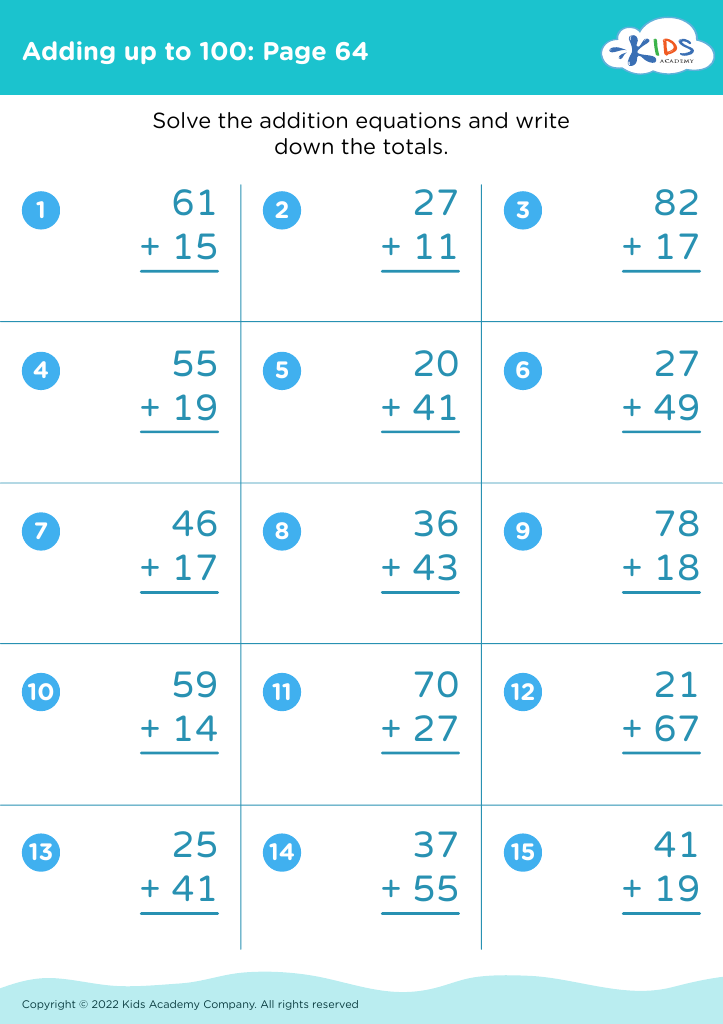
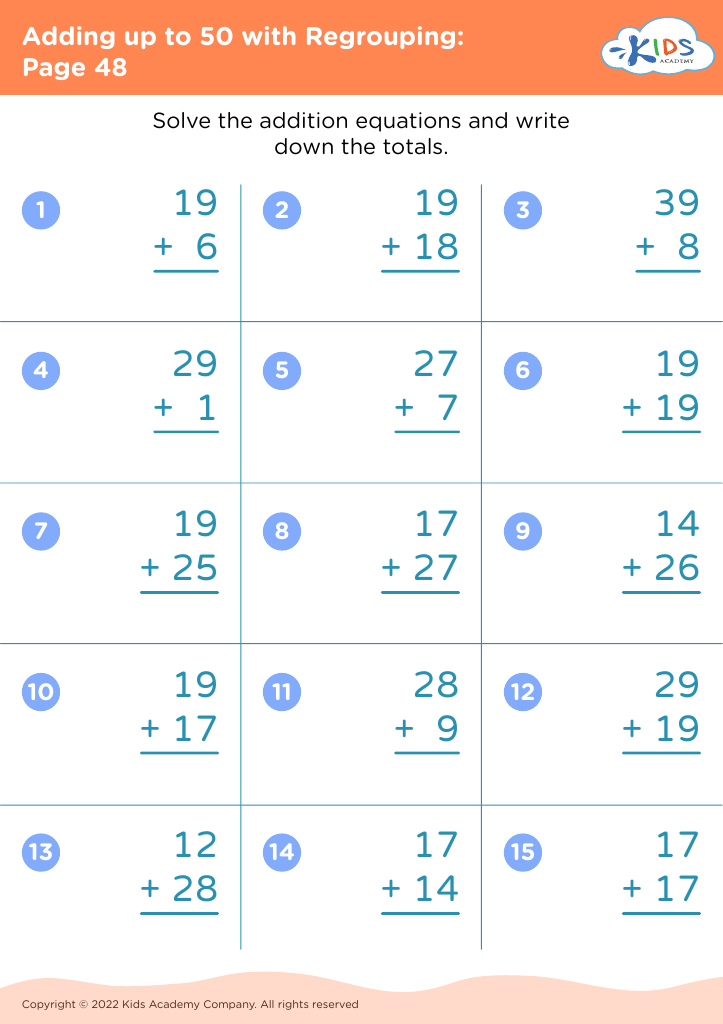
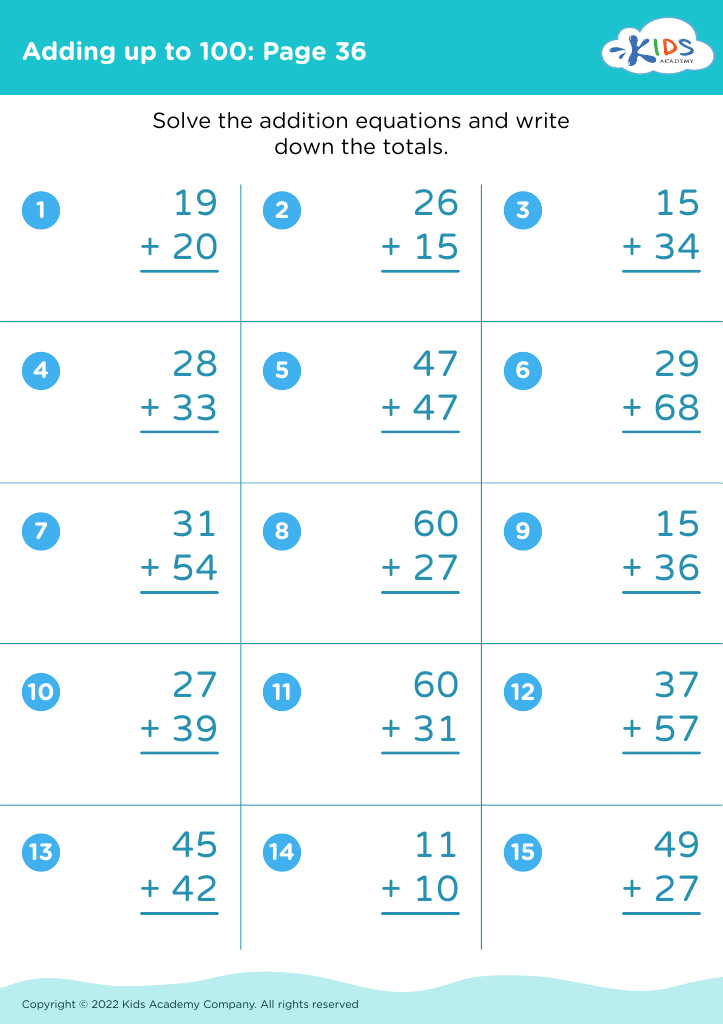








Numerical problem solving in Grade 2 addition is critical as it lays the foundation for math proficiency and higher thinking skills. Parents and teachers should care about this because it enhances cognitive development, reinforcing mental arithmetic, logical reasoning, and quantitative analysis. Age-appropriate addition tasks boost a child's confidence and skills necessary for tackling more complex concepts like multiplication, division, and fractions.
Early expertise in solving addition problems ensures students develop a positive attitude towards math, eliminating fear associated with the subject. Mastery of basic addition also translates to real-life applications, enabling children to manage tasks like counting money, measuring ingredients in recipes, or even scheduling their time effectively.
Beyond academics, these skills are essential in fostering problem-solving abilities—a critical competency in everyday life and future workplaces. When parents and teachers collaborate in addressing and supporting numerical problem-solving, they cultivate an environment that values persistency and critical thinking.
Moreover, engagement in math activities also offers opportunities for cooperative learning experiences, both in classrooms and at home, reinforcing social skills and communication as peers or family members work through addition problems together.
Hence, investing in Grade 2 addition nurtures multifunctional skills, laying the groundwork for academic success and functional professional attributes in the future.