Discover our "Simplifying Fractions Grade 2 Addition Worksheets," perfect for young learners! These engaging printable worksheets help second graders master the basics of adding fractions with like denominators. Through a variety of fun exercises and visual aids, students will learn to simplify fractions effectively. Our worksheets are designed to make learning interactive, ensuring students grasp essential math skills while enjoying the process. Ideal for classroom use or at-home practice, these resources align with common core standards, providing the support they need to excel. Boost your child's confidence in math with our expertly crafted worksheets today!
Check out this FREE Grade 2 Trial Lesson on Addition!

One-Syllable Long and Short Vowel Words

Favorites
With answer key
Interactive
  • Grade 2
  • Simplifying Fractions
  • Addition
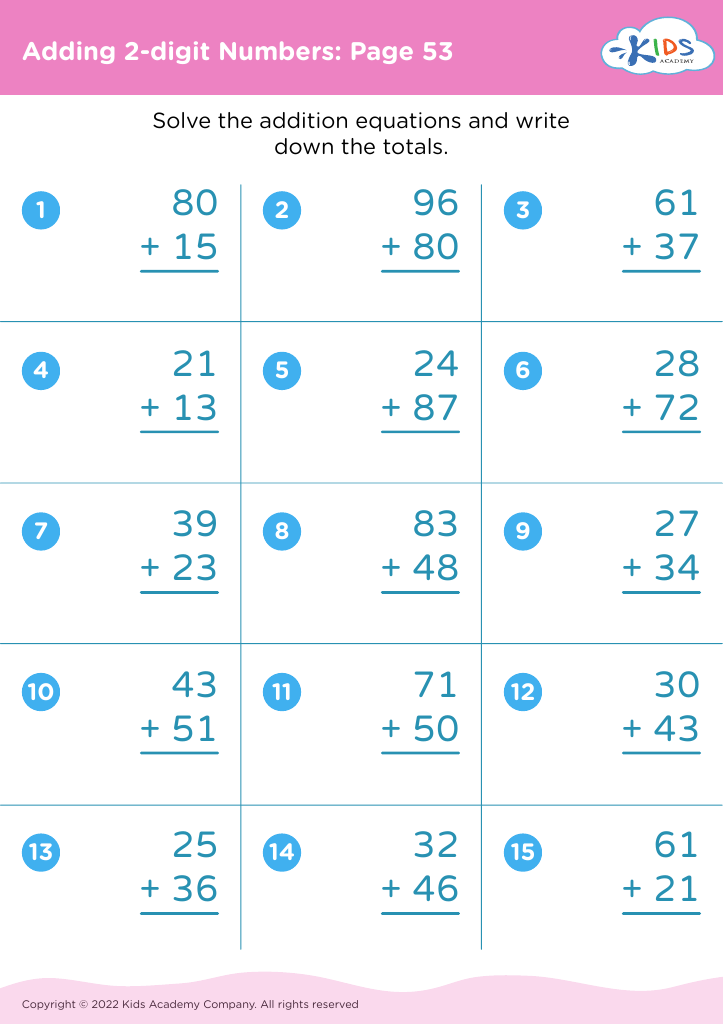
Adding 2-digit Numbers: Page 53

Adding 2-digit Numbers: Page 53

Adding 2-digit Numbers: Page 53
Worksheet
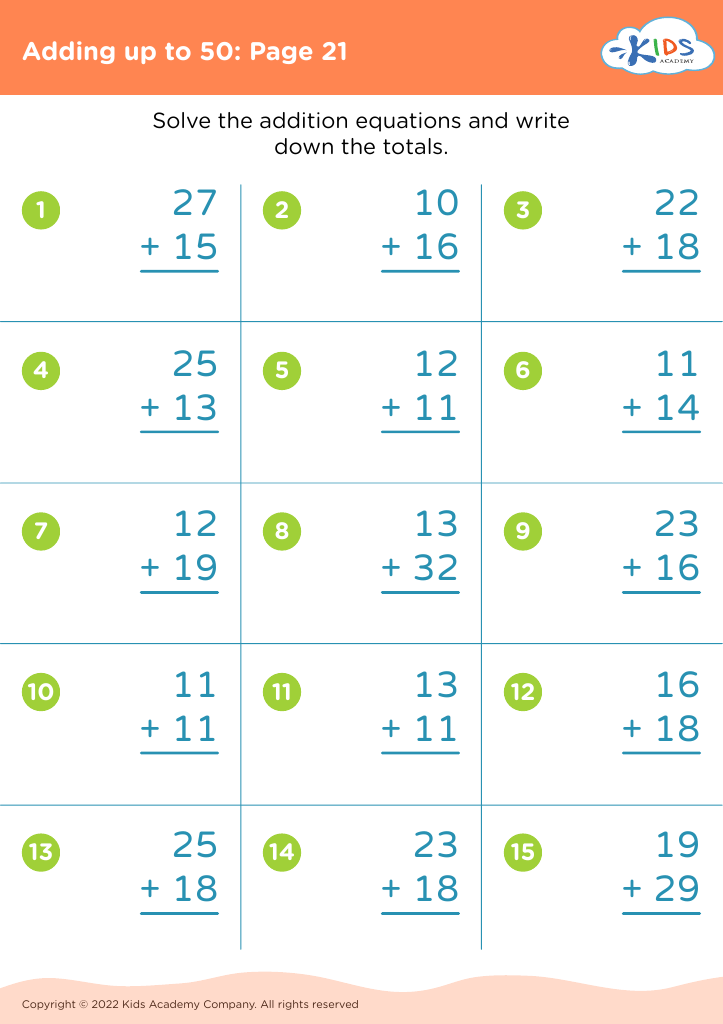
Adding up to 50: Page 21

Adding up to 50: Page 21

Adding up to 50: Page 21
Worksheet
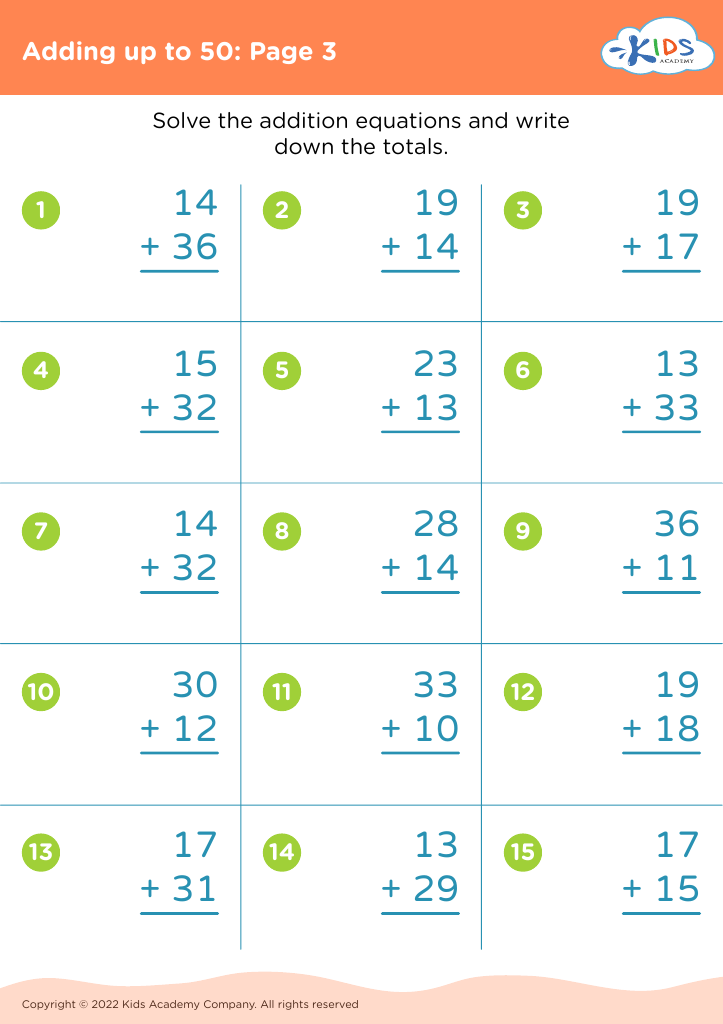
Adding up to 50: Page 3

Adding up to 50: Page 3

Adding up to 50: Page 3
Worksheet
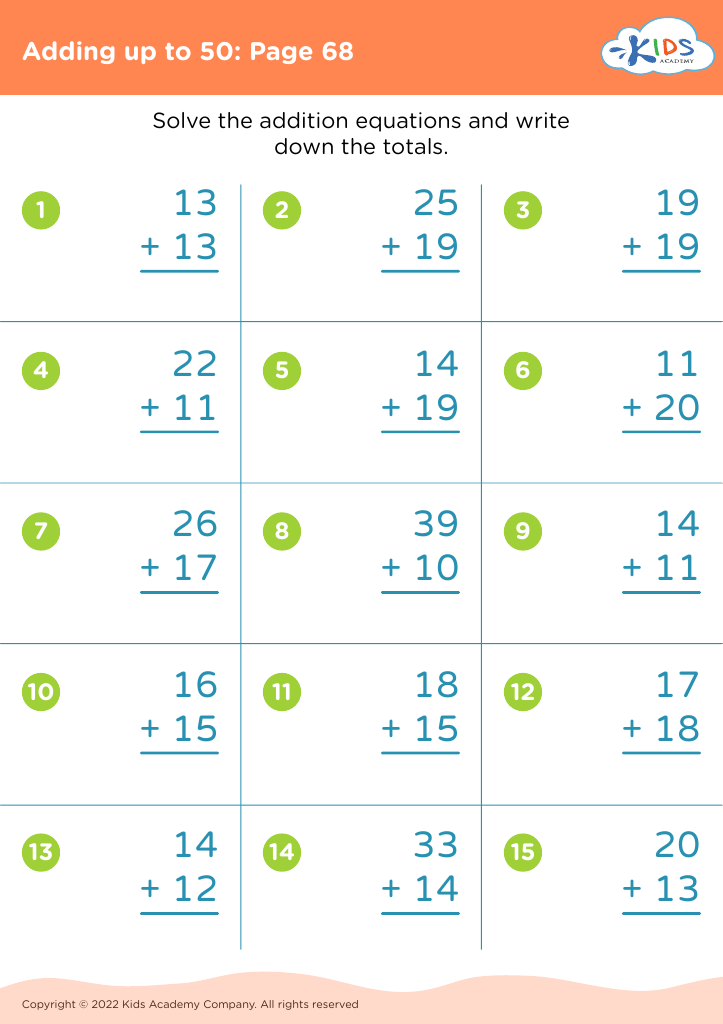
Adding up to 50: Page 68

Adding up to 50: Page 68

Adding up to 50: Page 68
Worksheet
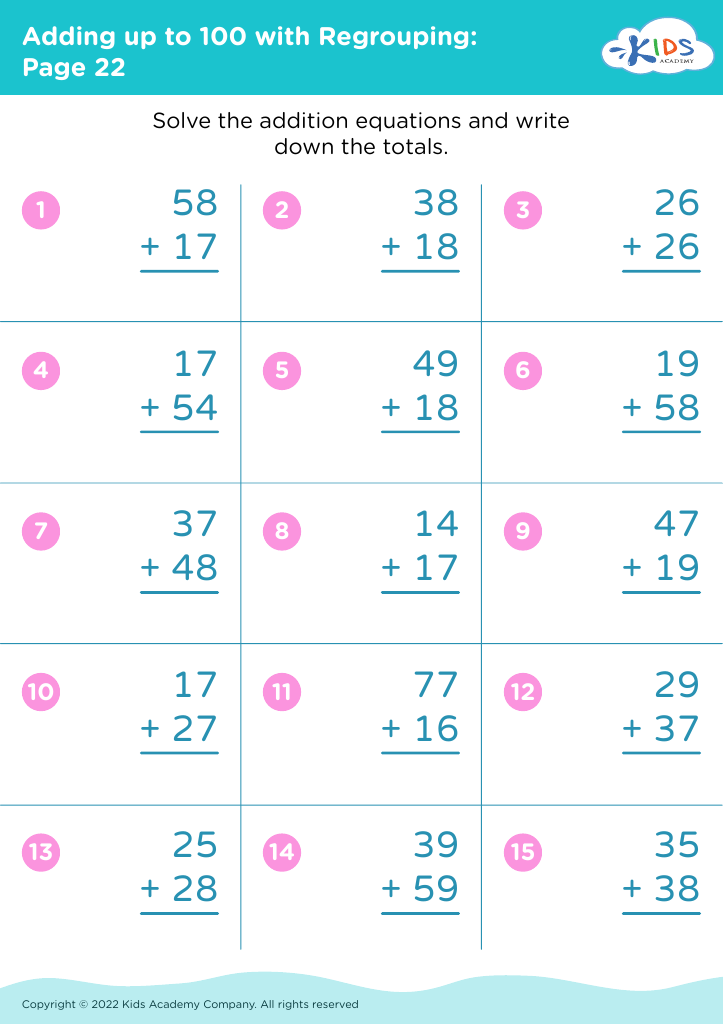
Adding up to 100 with Regrouping: Page 22
Worksheet
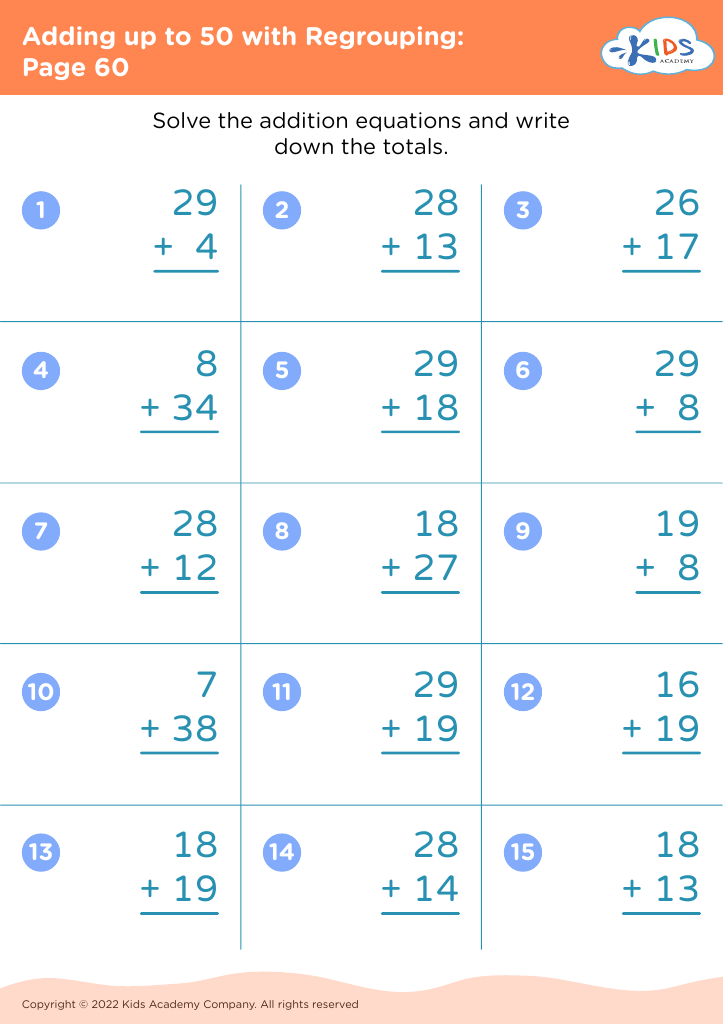
Adding up to 50 with Regrouping: Page 60
Worksheet
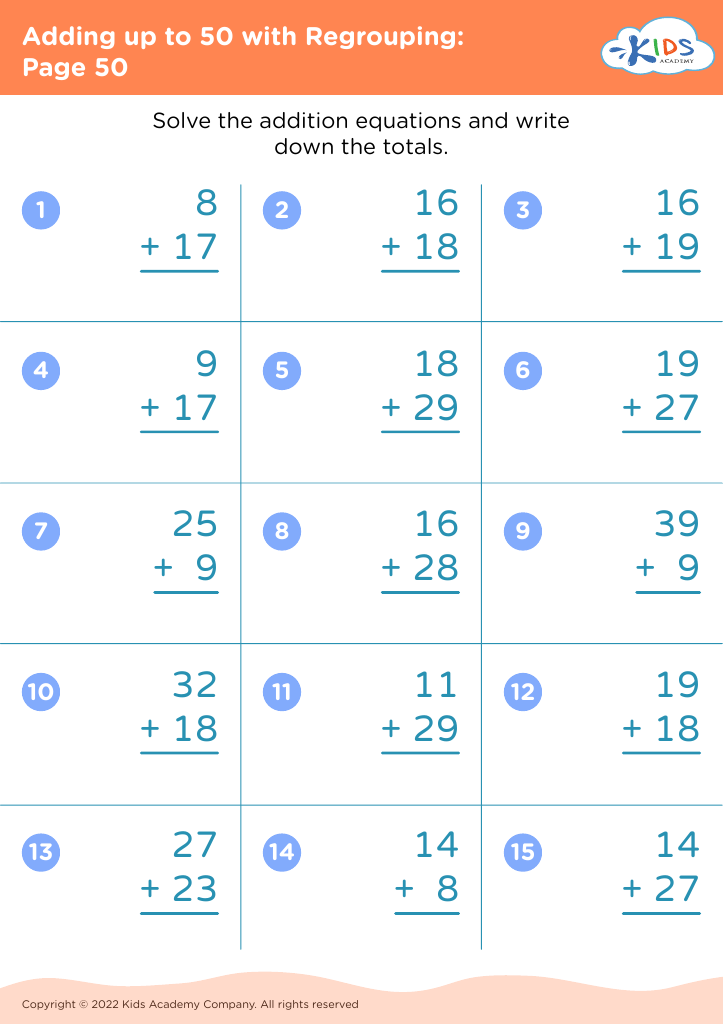
Adding up to 50 with Regrouping: Page 50
Worksheet
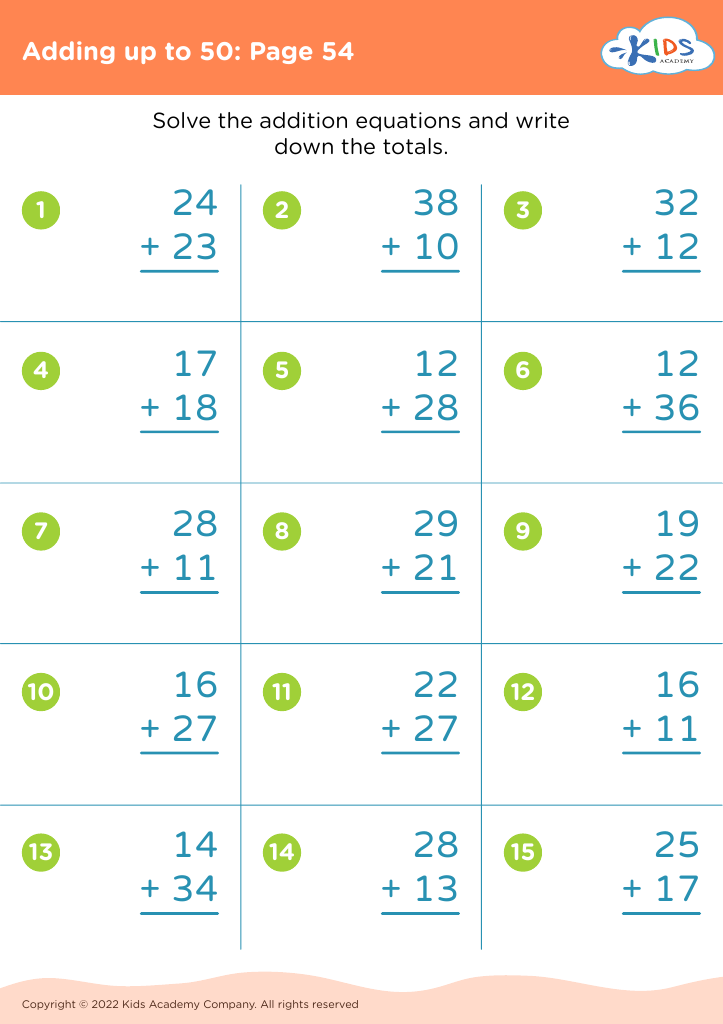
Adding up to 50: Page 54

Adding up to 50: Page 54

Adding up to 50: Page 54
Worksheet
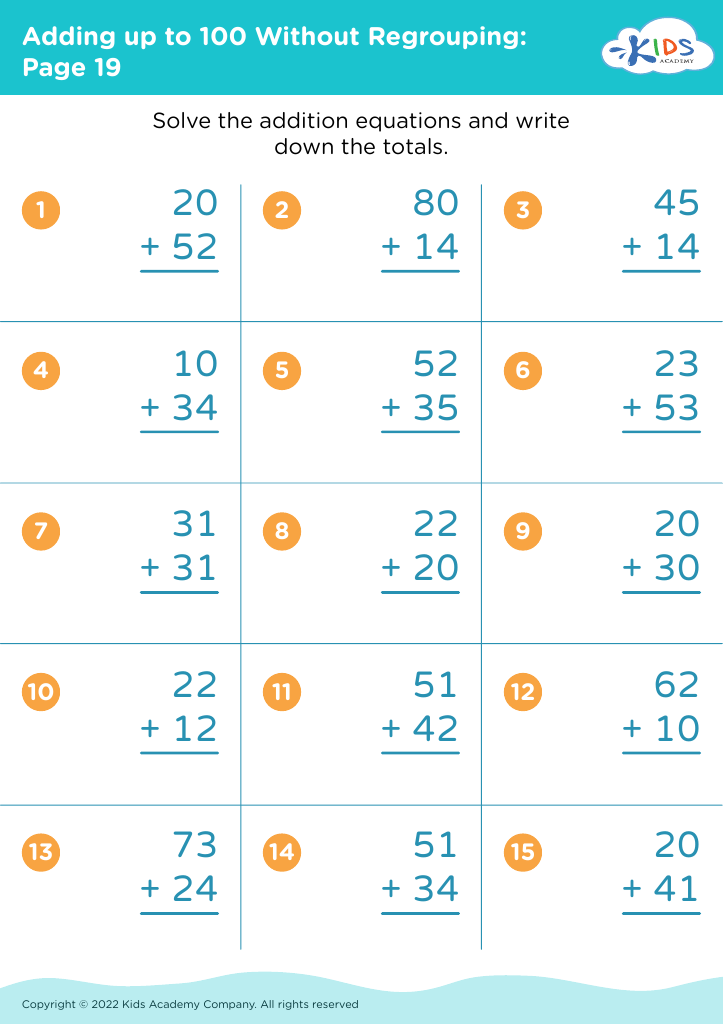
Adding up to 100 Without Regrouping: Page 19
Worksheet
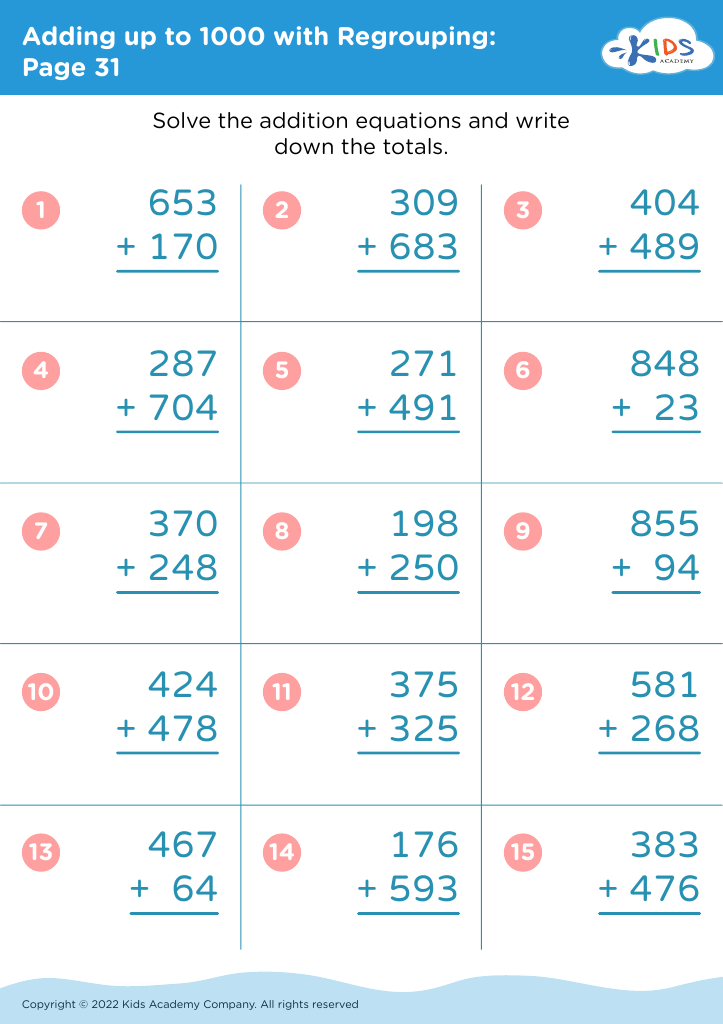
Adding up to 1000 with Regrouping: Page 31
Worksheet
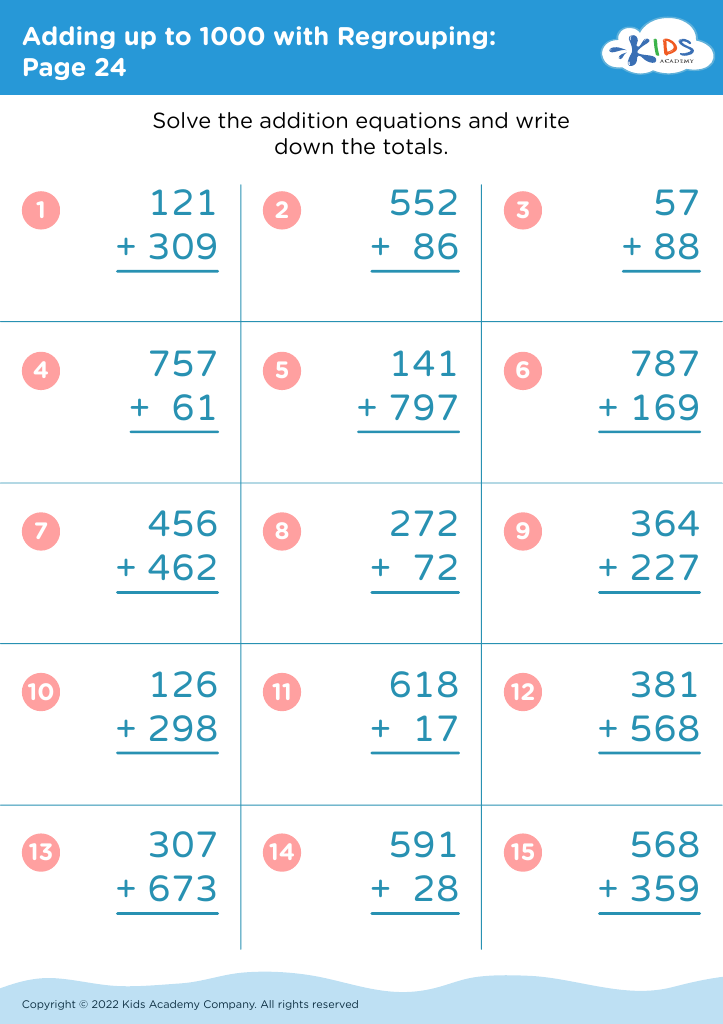
Adding up to 1000 with Regrouping: Page 24
Worksheet
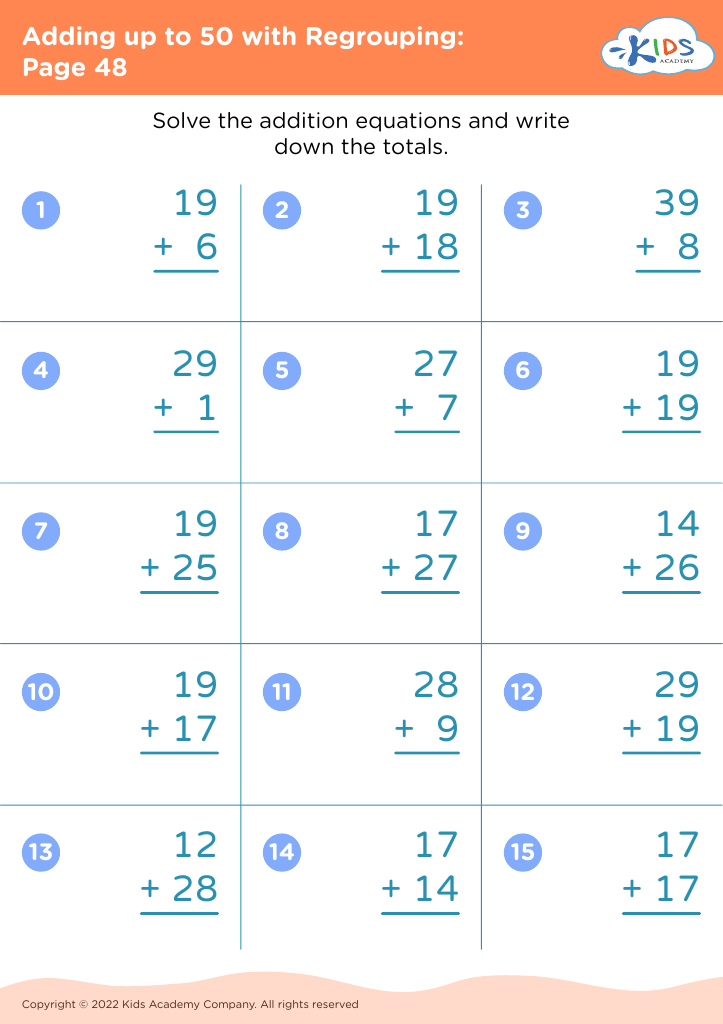
Adding up to 50 with Regrouping: Page 48
Worksheet
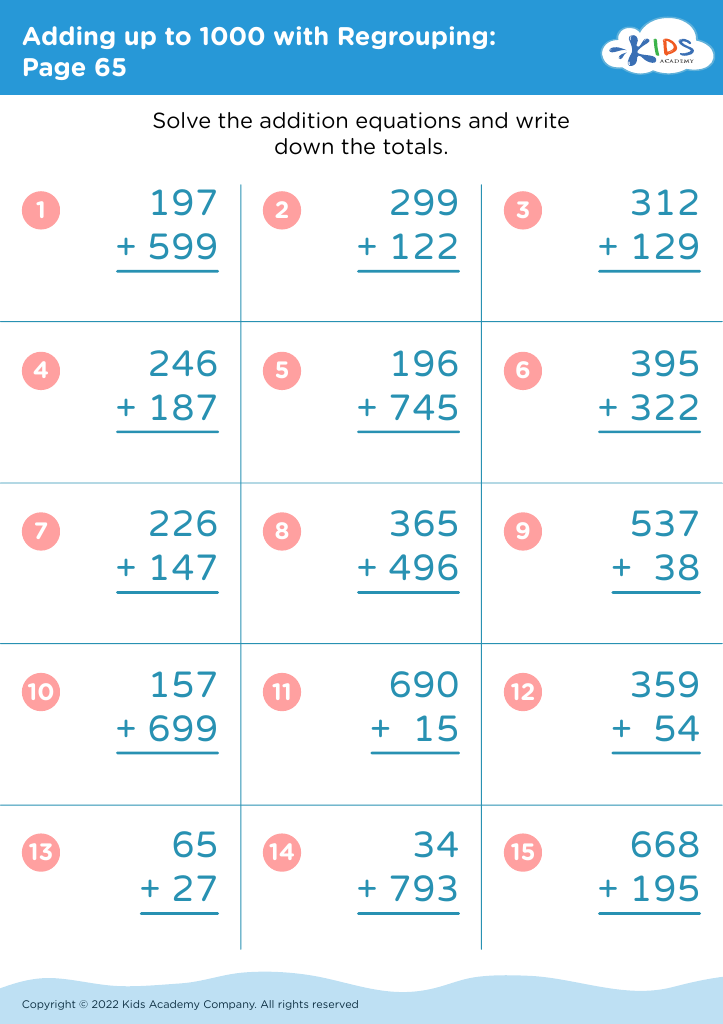
Adding up to 1000 with Regrouping: Page 65
Worksheet
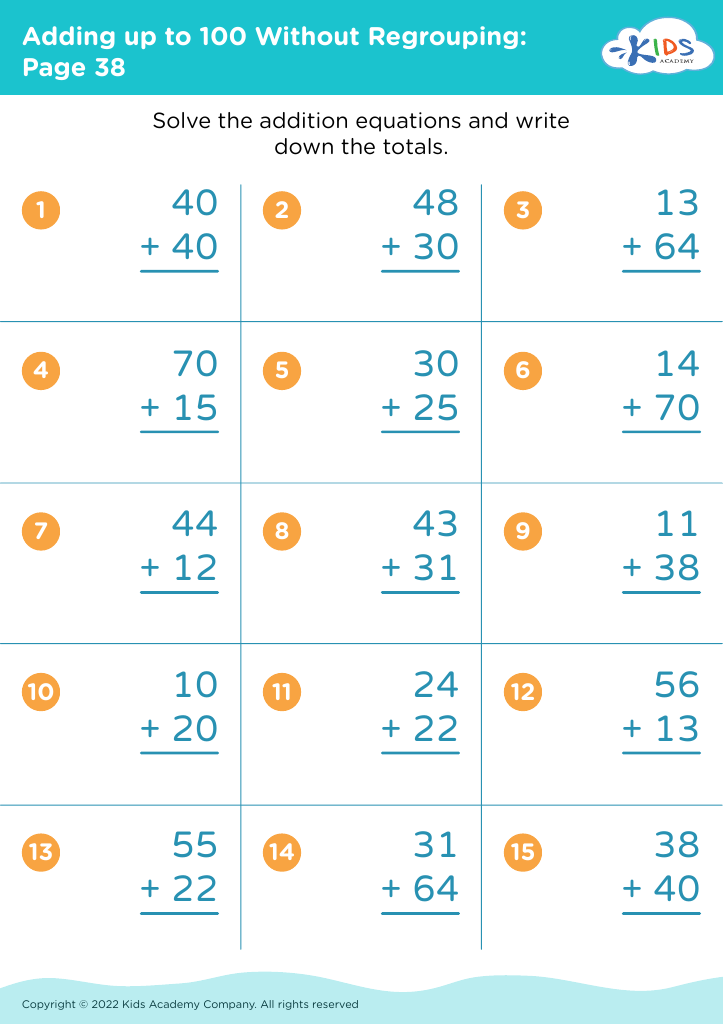
Adding up to 100 Without Regrouping: Page 38
Worksheet
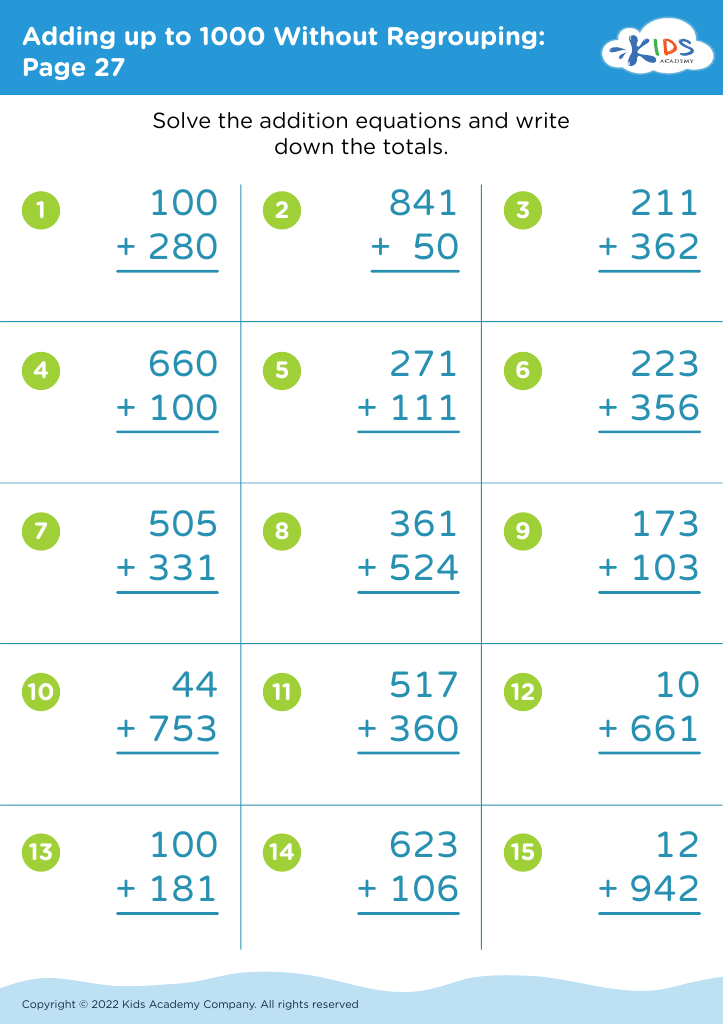
Adding up to 1000 Without Regrouping: Page 27
Worksheet
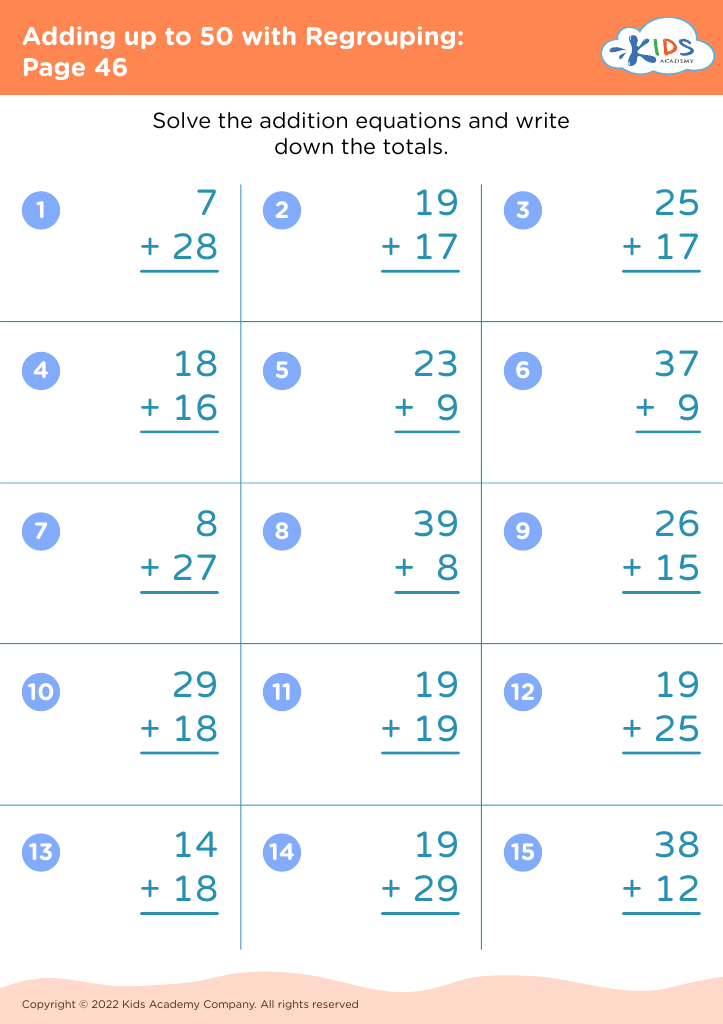
Adding up to 50 with Regrouping: Page 46
Worksheet
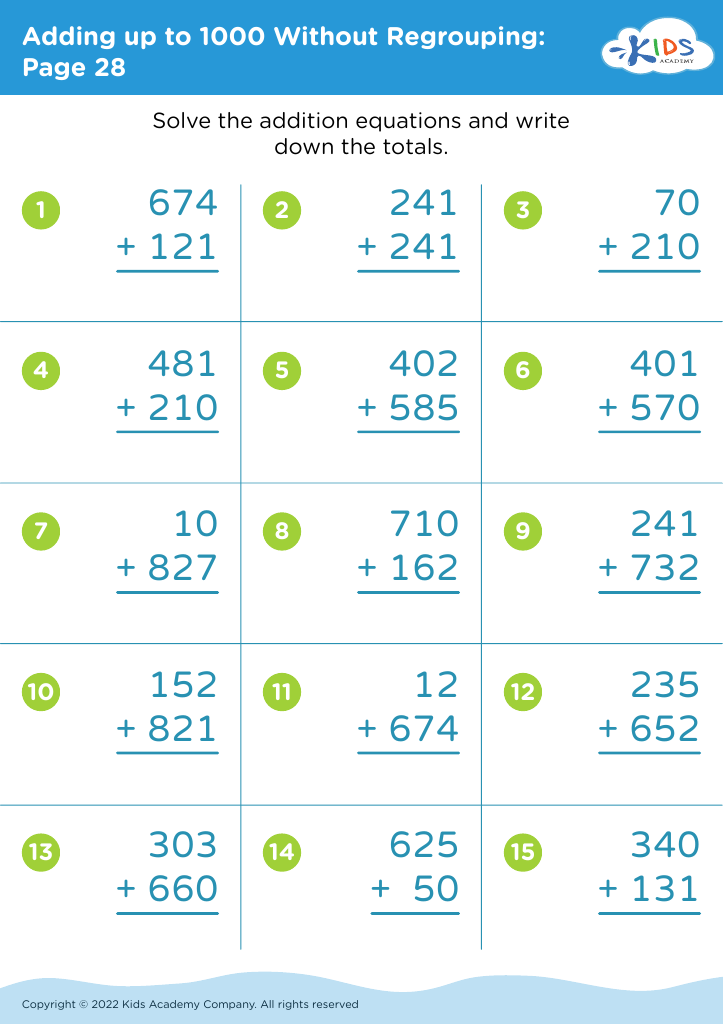
Adding up to 1000 Without Regrouping: Page 28
Worksheet
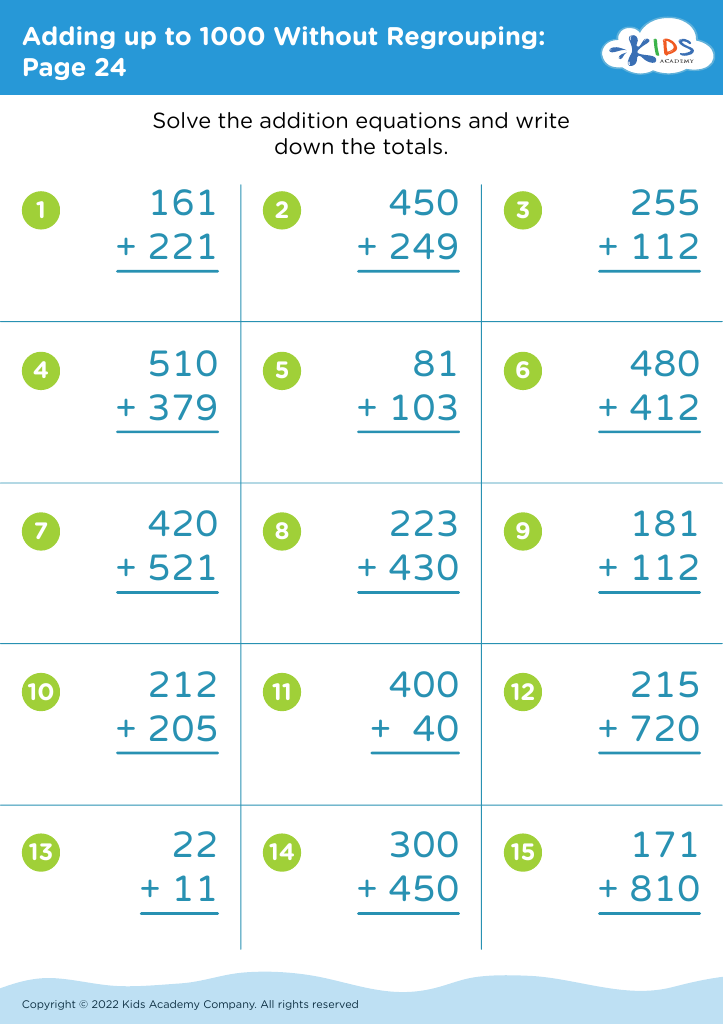
Adding up to 1000 Without Regrouping: Page 24
Worksheet


Simplifying fractions and understanding addition are fundamental skills that significantly benefit Grade 2 students. When children grasp these concepts early on, they form a solid mathematical foundation that supports more advanced learning in later years. Parents and teachers should care about these skills because they promote problem-solving abilities, logical thinking, and numerical comprehension.

Simplifying fractions teaches students to identify factors and better understand relationships between numbers. This skill reduces complexity in math problems, making them more manageable and less intimidating for young learners. When children can simplify fractions, they develop confidence and competence, reducing anxiety and empowering them to tackle more complex mathematical tasks.

Addition is another crucial building block in early math education. Mastering addition enables students to progress to more complex operations, such as multiplication and division, with ease. It also enhances their ability to perform everyday tasks, like calculating totals and understanding money.

By focusing on these areas, parents and teachers help children build essential life skills. Successful mastery of these concepts contributes to overall academic success, encouraging a positive attitude towards learning. Early intervention and support in simplifying fractions and addition can inspire a love for mathematics, fostering a lifetime of analytical and critical thinking abilities.