Understanding adjectives Grade 2 Addition Worksheets
5 filtered results
-
From - To
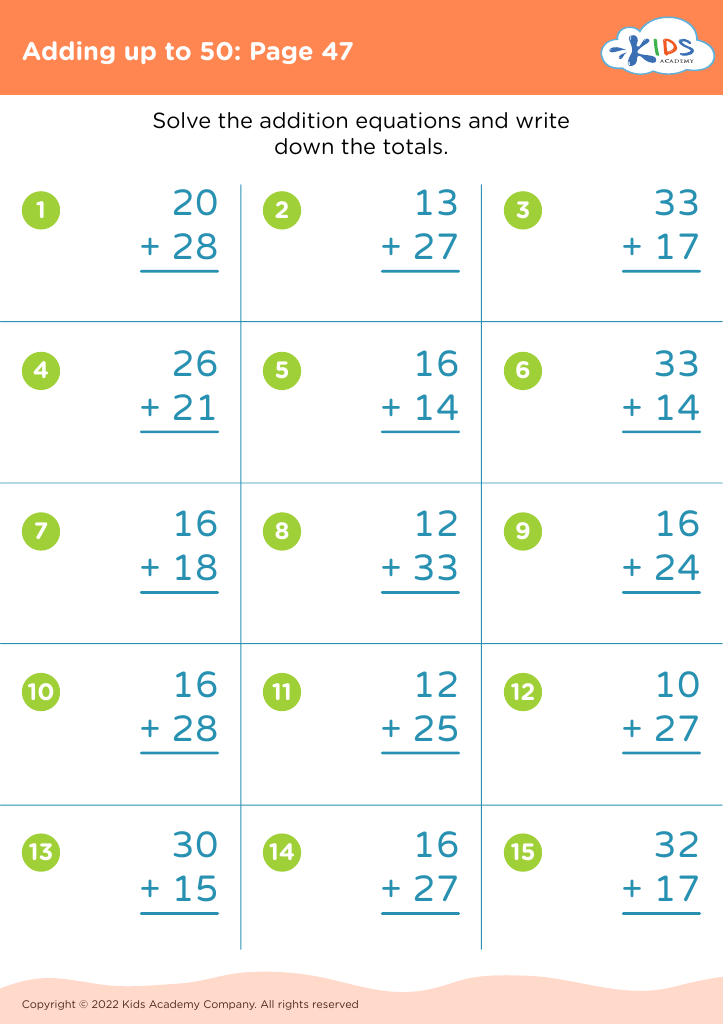
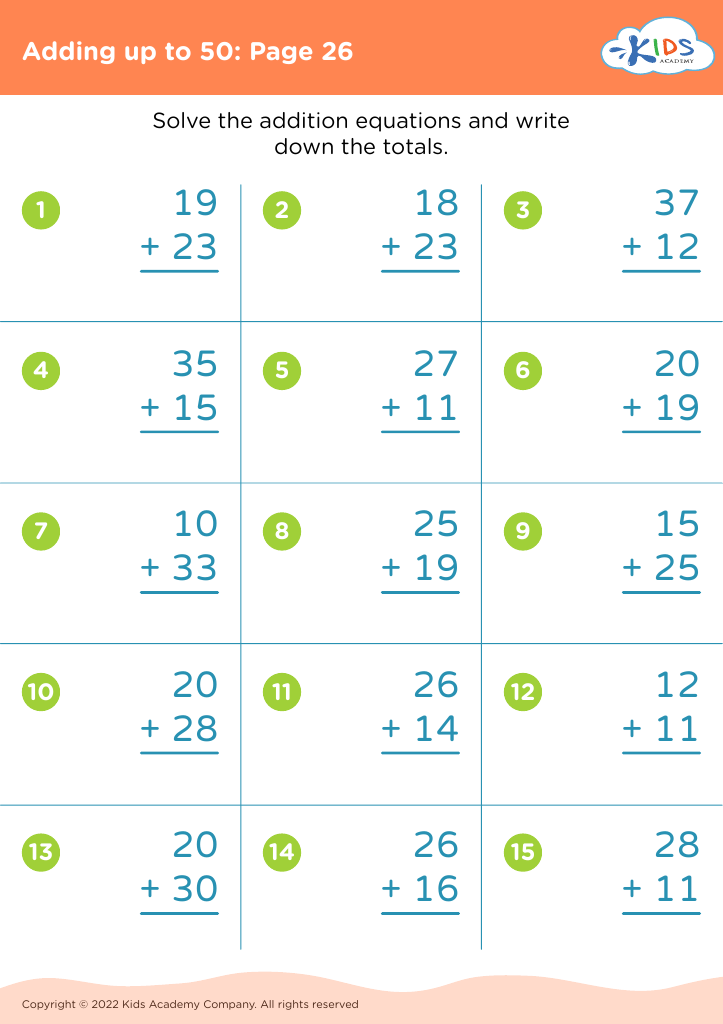
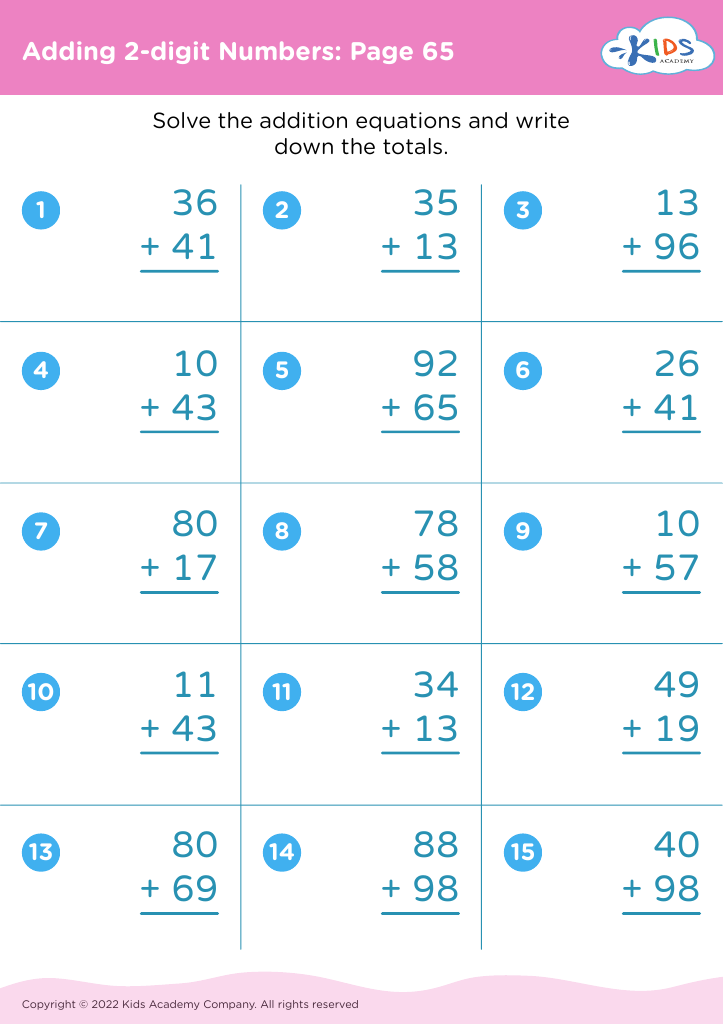
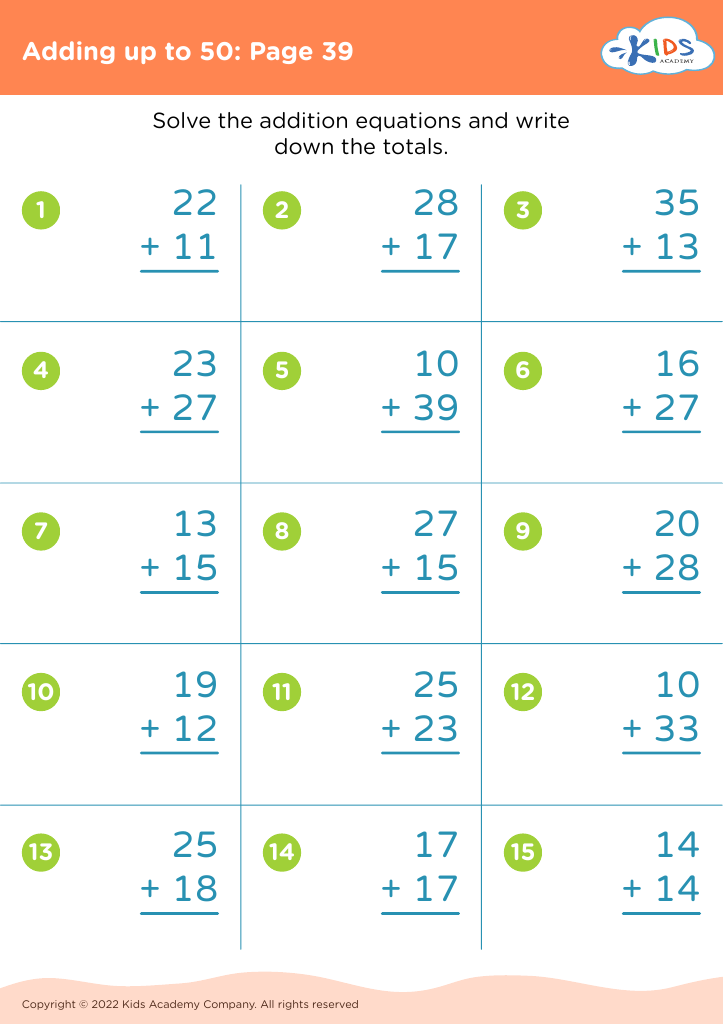
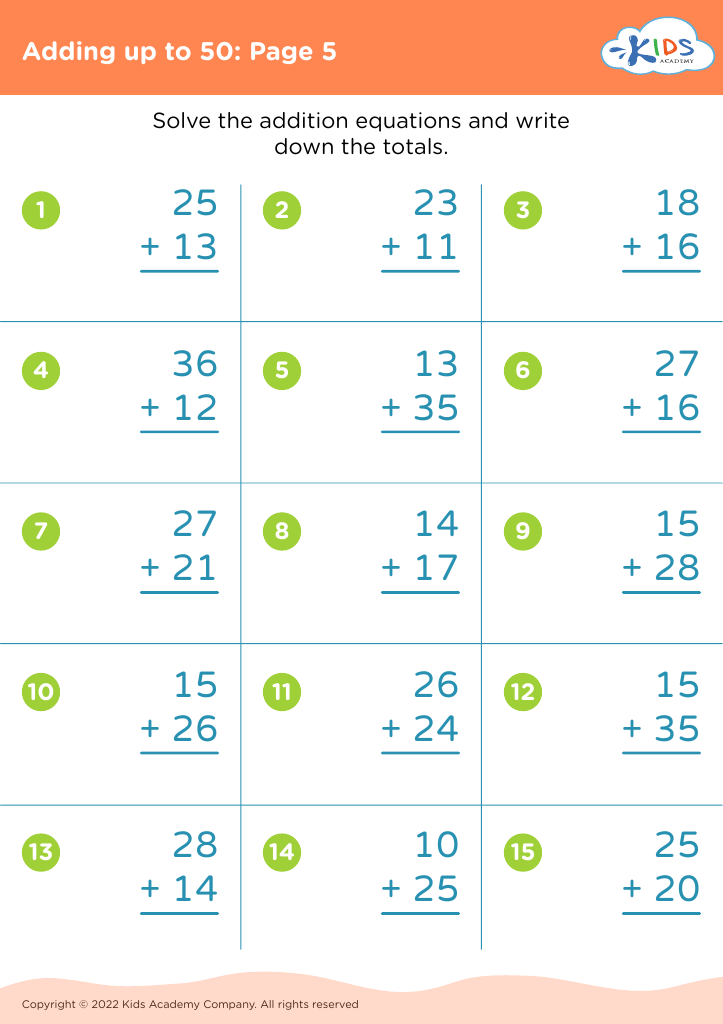
Welcome to our "Understanding Adjectives Grade 2 Addition Worksheets" page! Here, young learners will embark on an exciting journey to enhance their language and math skills simultaneously. These engaging worksheets combine the concept of adjectives with addition problems, allowing students to develop their descriptive language while practicing basic math skills. Perfect for grade 2 students, our resources promote critical thinking as they identify and use adjectives in context—adding a fun twist to learning! Teachers and parents can easily access these printable worksheets, making learning both enjoyable and effective at home or in the classroom. Let's inspire a love for learning!








Understanding adjectives is crucial for Grade 2 students as it plays a significant role in their language development and overall communication skills. Adjectives are descriptive words that enrich sentences by providing details about objects, people, and experiences. When children learn to identify and use adjectives, they enhance their vocabulary and improve their writing abilities.
For parents and teachers, fostering this understanding helps children express themselves more clearly and creatively. It enables them to paint vivid pictures with words, making their writing more engaging and enjoyable to read. Moreover, a solid grasp of adjectives allows students to compare and contrast, which is an important critical thinking skill.
In terms of addition, teachers can incorporate math vocabulary with adjectives to describe quantity, positions, or measurements in word problems. For instance, terms like "total," "more," or "fewer" can be introduced alongside colorful descriptions.
Ultimately, understanding adjectives enhances not just reading and writing but also analytical skills in math, leading to a well-rounded education. By integrating adjectives in both languages and math, educators and parents will support a child's comprehensive cognitive development and boost their confidence in communication.