Understanding division Grade 2 Addition Worksheets
5 filtered results
-
From - To
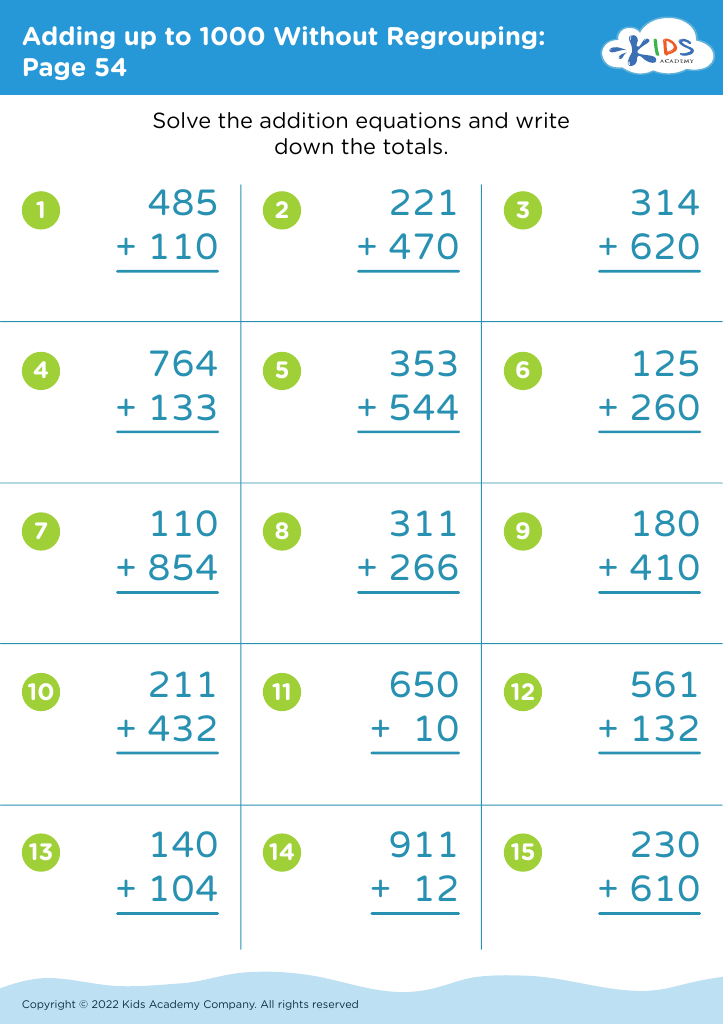
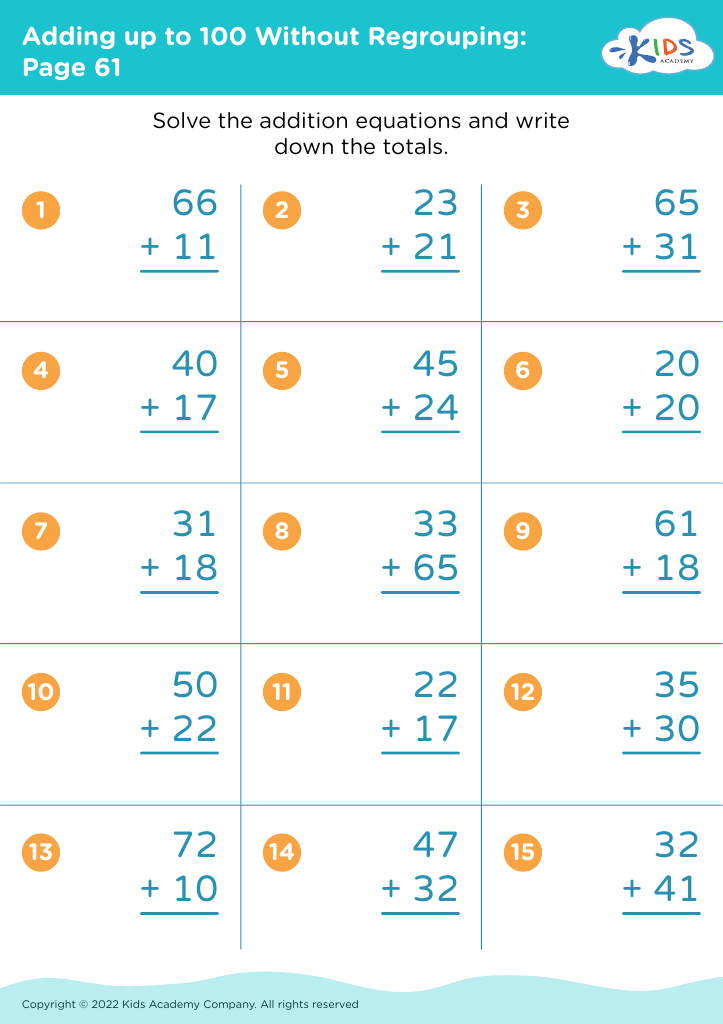
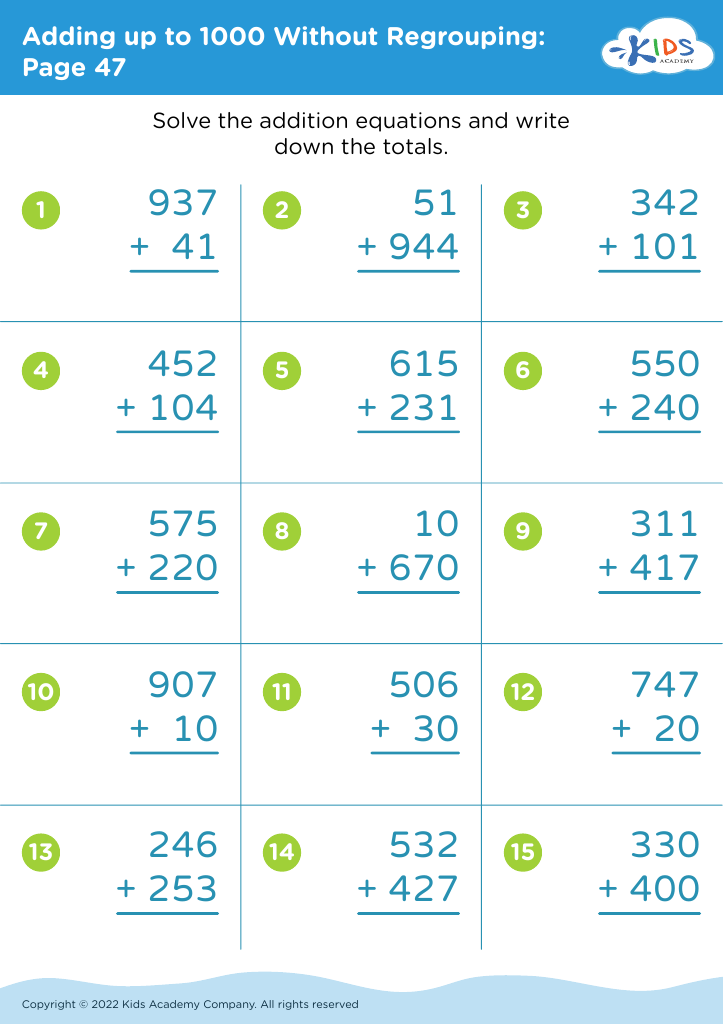
Welcome to our "Understanding Division Grade 2 Addition Worksheets" page! Here, young learners will explore the fundamental concepts of division through engaging and interactive worksheets that build on their addition skills. Our resources help students see the relationship between addition and division, making math more approachable and fun. With colorful illustrations and exciting exercises, children will practice sharing, grouping, and partitioning numbers, deepening their number sense. Perfect for classroom activities or at-home learning, these worksheets support teachers and parents alike in reinforcing essential math skills. Join us in making division an enjoyable learning experience for Grade 2 students!








Understanding division is crucial for Grade 2 students, as it forms a foundational concept that builds upon their addition skills. By engaging with division early on, parents and teachers help students grasp the relationship between numbers, laying the groundwork for future mathematical concepts. Division, essentially the process of sharing or grouping equally, allows students to see how addition and subtraction are interconnected.
In Grade 2, students transition from simple addition to more complex problems, where they may encounter scenarios involving equal groups. Recognizing that division is the inverse operation of addition assists them in understanding how to break down larger numbers and solve real-world problems. This comprehension not only enhances their problem-solving skills but also boosts their confidence in math.
Furthermore, fostering a solid grasp of division through fun, interactive activities helps demystify the concept. When parents and teachers provide support and encouragement, children feel more motivated to learn. Associating division with tangible experiences, like sharing snacks or toys, makes the learning process relatable and enjoyable. Ultimately, understanding division equips students with critical skills that will serve them well throughout their education and everyday life, making it an essential focus for parents and educators alike.