Filters

157 filtered results

Clear all filters
Favorites
With answer key
Interactive

157 filtered results

Difficulty Level

Grade


Check out this FREE Grade 2 Trial Lesson on Addition!

Suffixes

Favorites
With answer key
Interactive
  • Grade 2
  • Understanding fractions
  • Addition
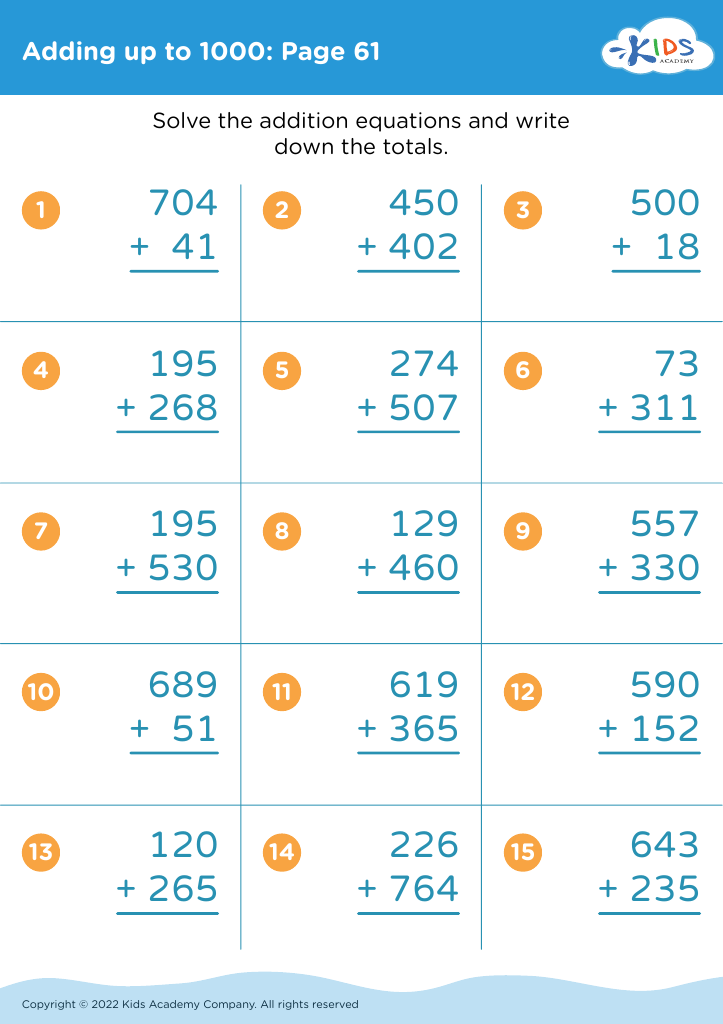
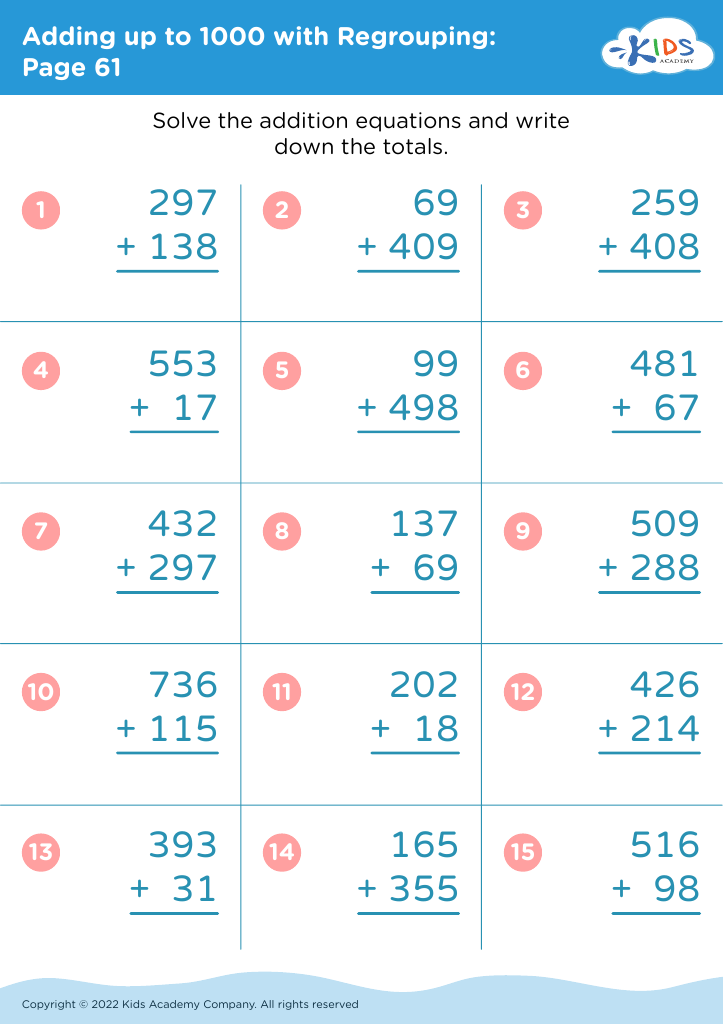
Adding up to 1000: Page 61

Adding up to 1000: Page 61

Adding up to 1000: Page 61
Worksheet
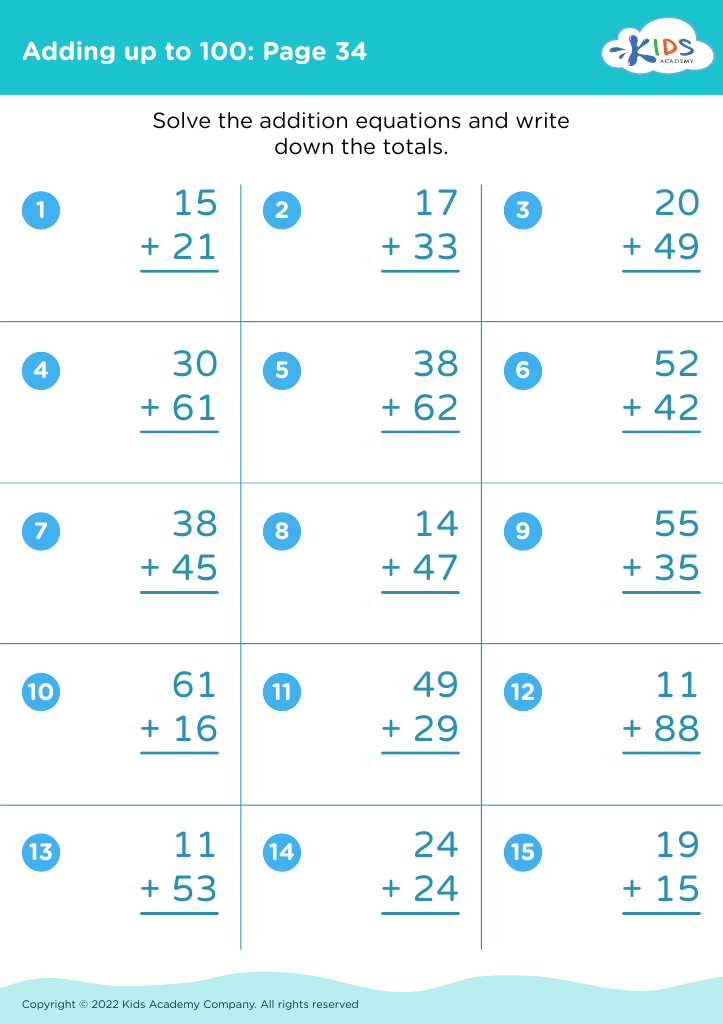
Adding up to 100: Page 34

Adding up to 100: Page 34

Adding up to 100: Page 34
Worksheet
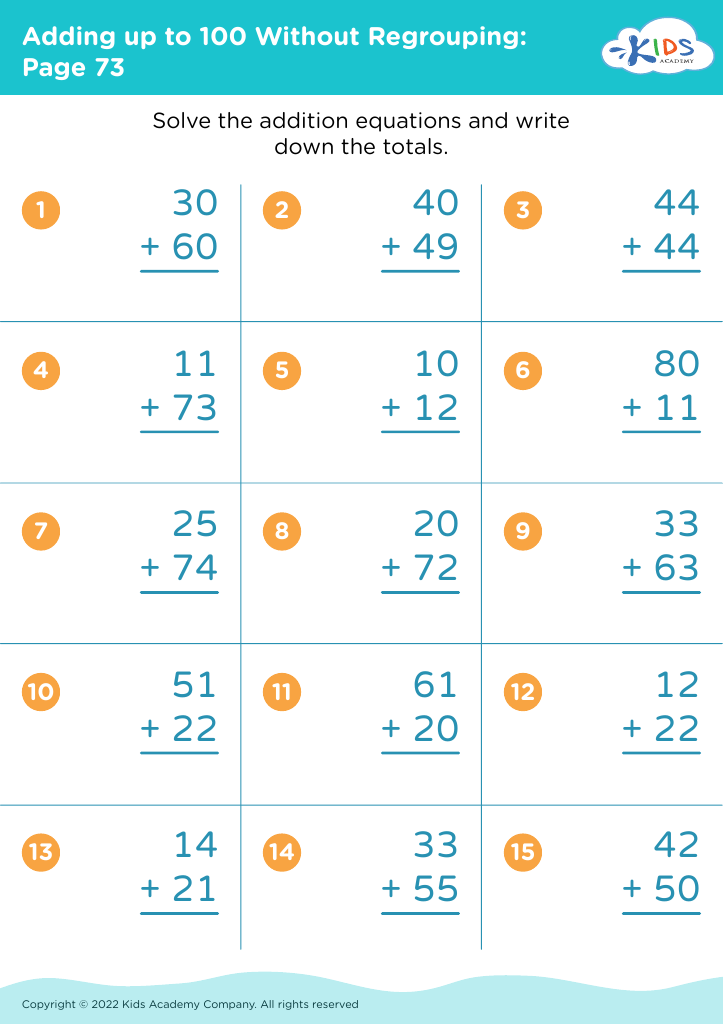
Adding up to 100 Without Regrouping: Page 73
Worksheet
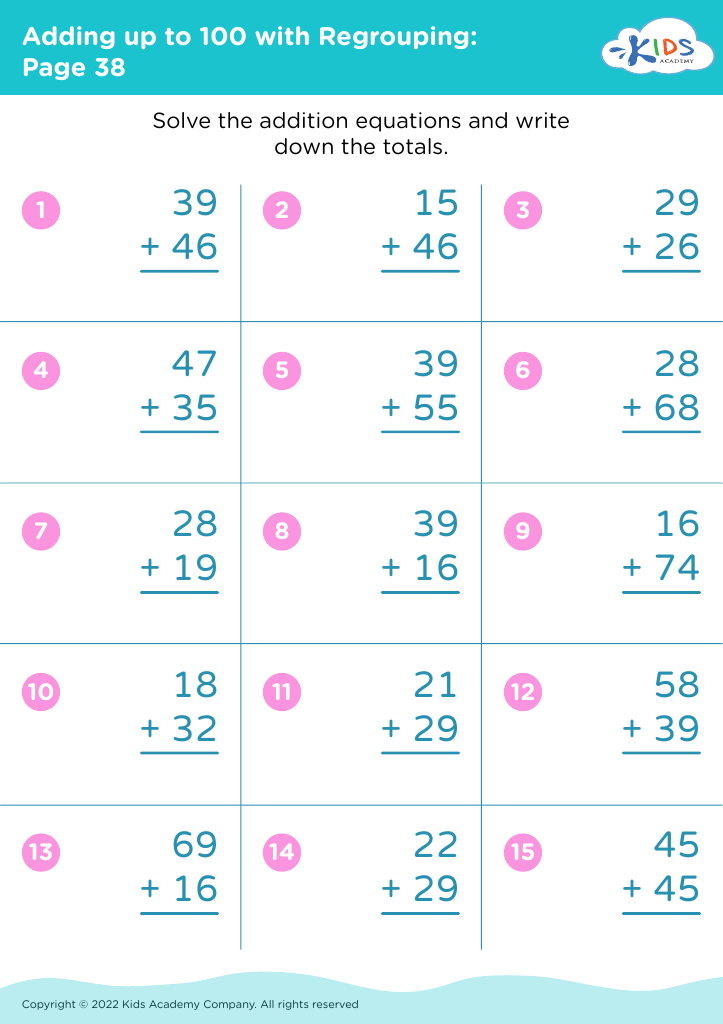
Adding up to 100 with Regrouping: Page 38
Worksheet
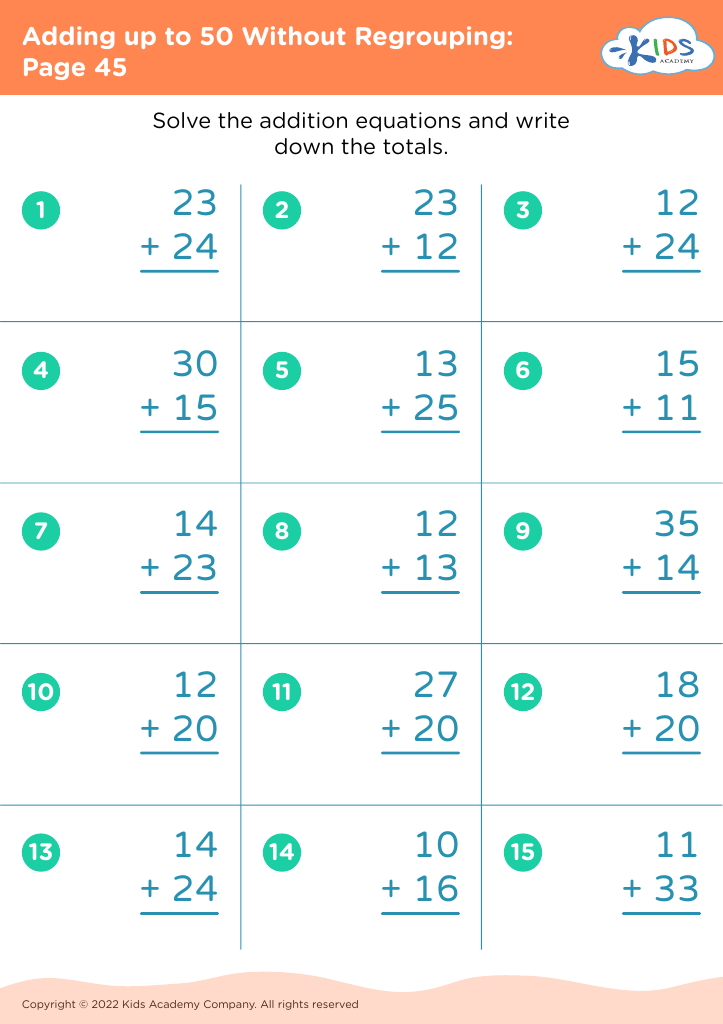
Adding up to 50 Without Regrouping: Page 45
Worksheet
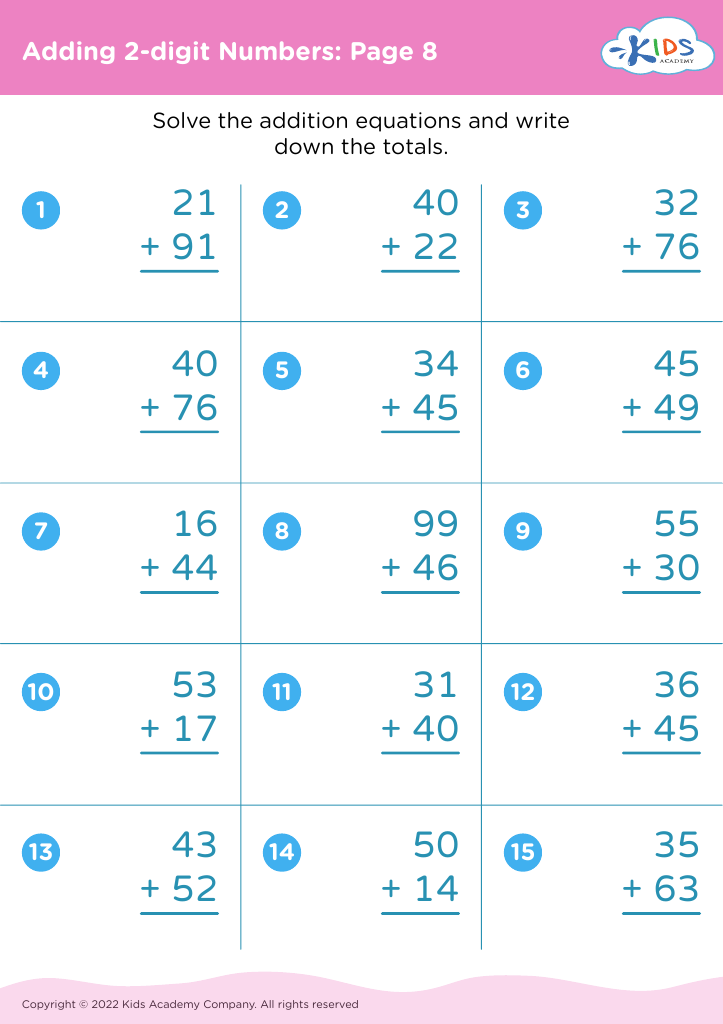
Adding 2-digit Numbers: Page 8

Adding 2-digit Numbers: Page 8

Adding 2-digit Numbers: Page 8
Worksheet
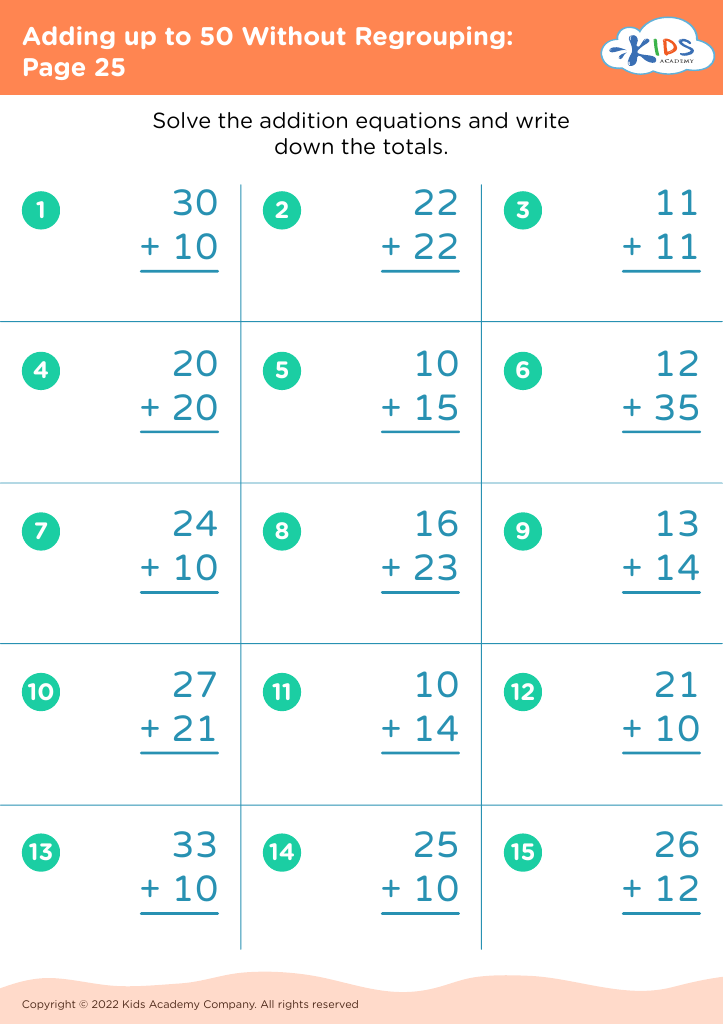
Adding up to 50 Without Regrouping: Page 25
Worksheet
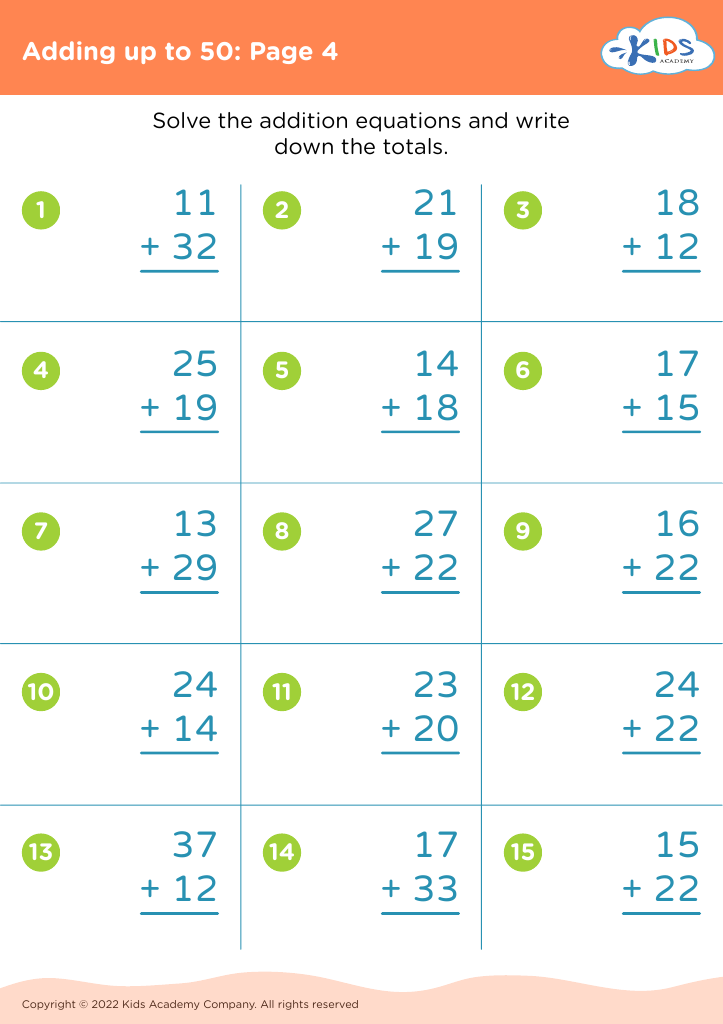
Adding up to 50: Page 4

Adding up to 50: Page 4

Adding up to 50: Page 4
Worksheet
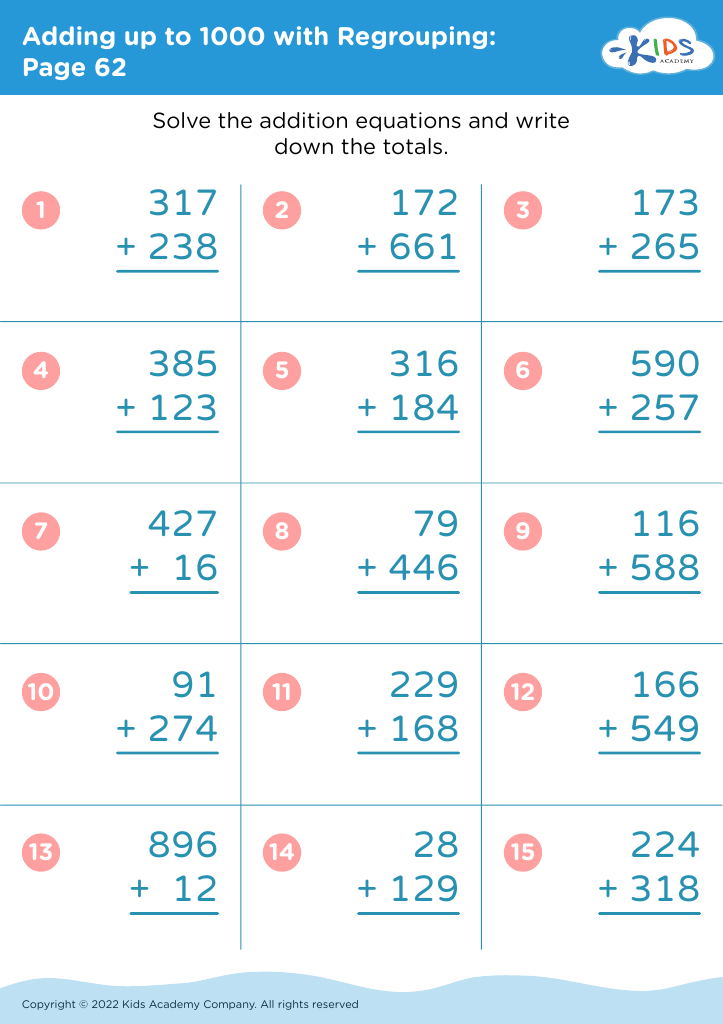
Adding up to 1000 with Regrouping: Page 62
Worksheet
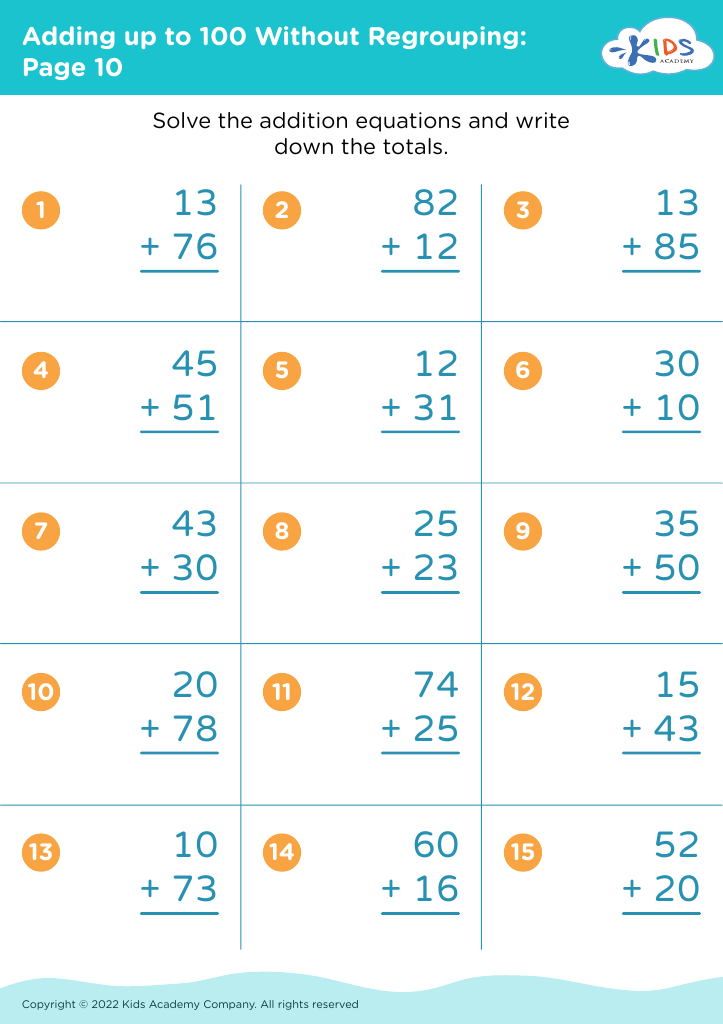
Adding up to 100 Without Regrouping: Page 10
Worksheet
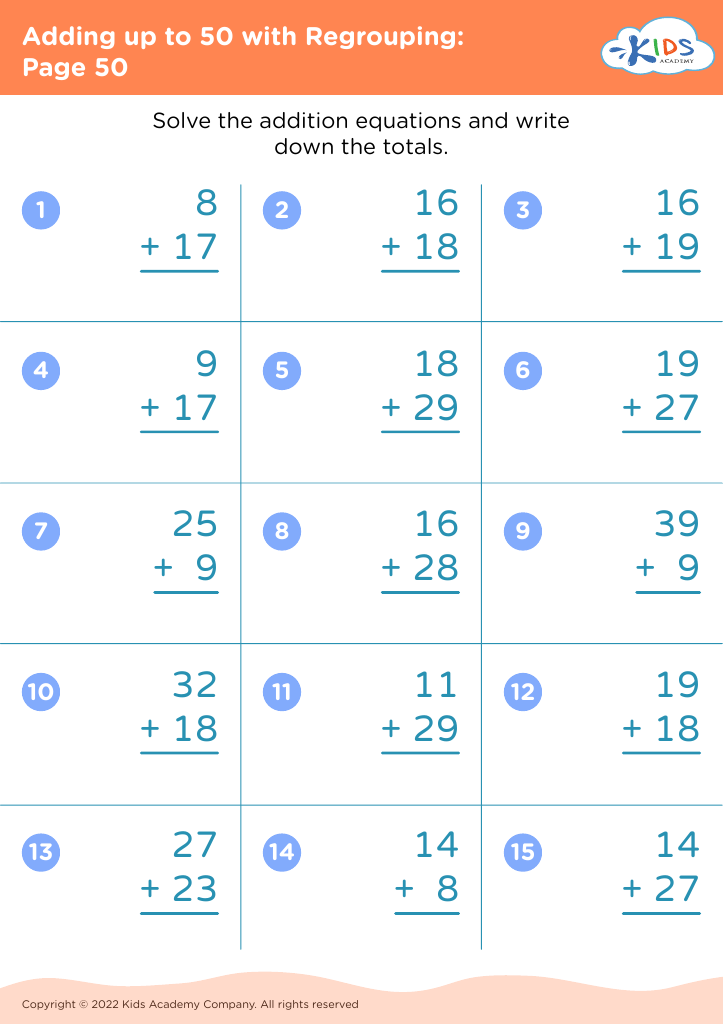
Adding up to 50 with Regrouping: Page 50
Worksheet
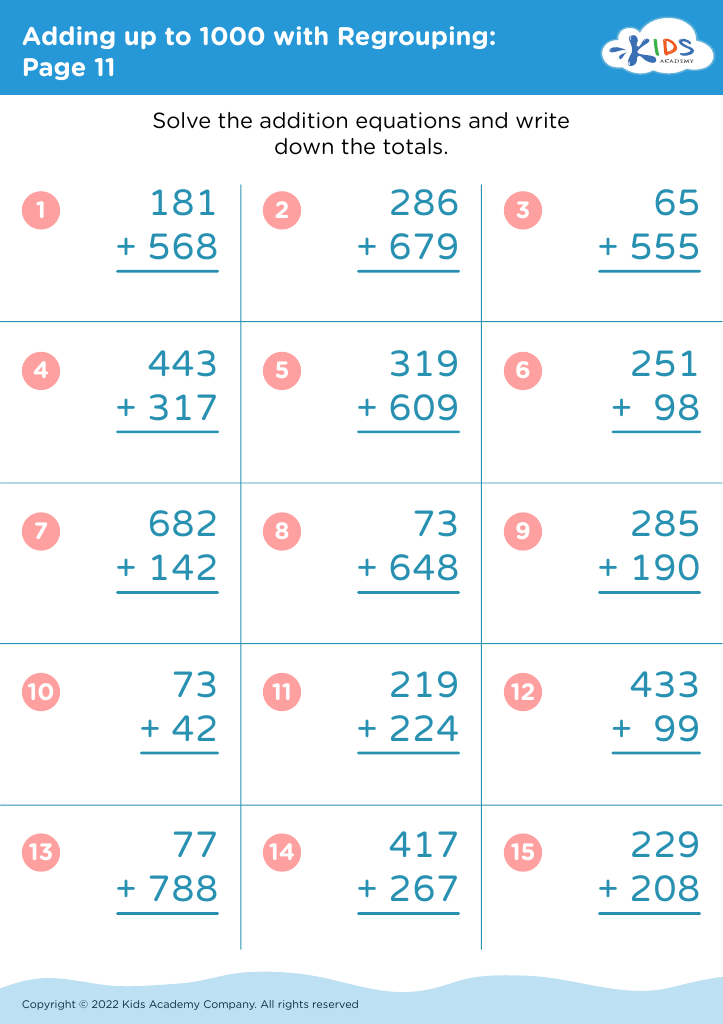
Adding up to 1000 with Regrouping: Page 11
Worksheet
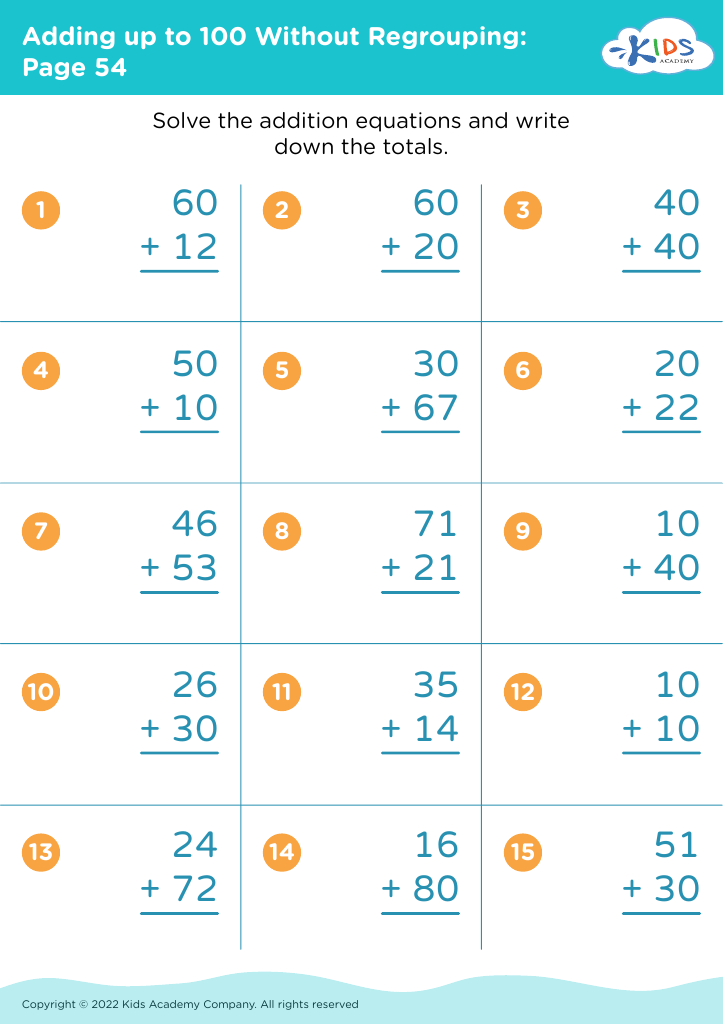
Adding up to 100 Without Regrouping: Page 54
Worksheet
Adding up to 1000 with Regrouping: Page 61
Worksheet
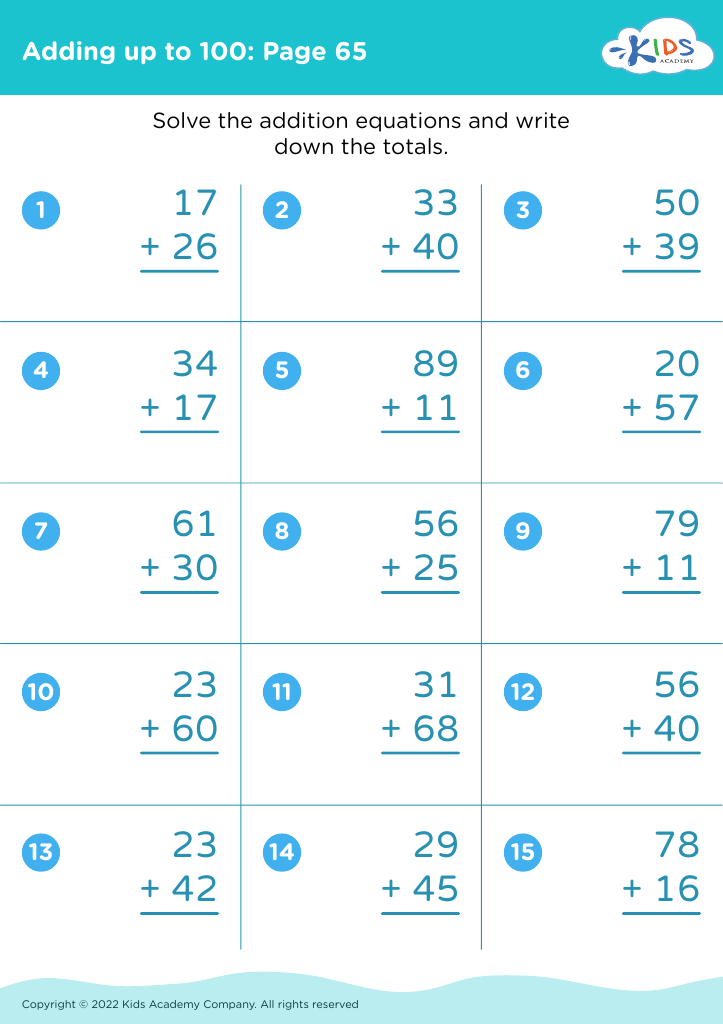
Adding up to 100: Page 65

Adding up to 100: Page 65

Adding up to 100: Page 65
Worksheet
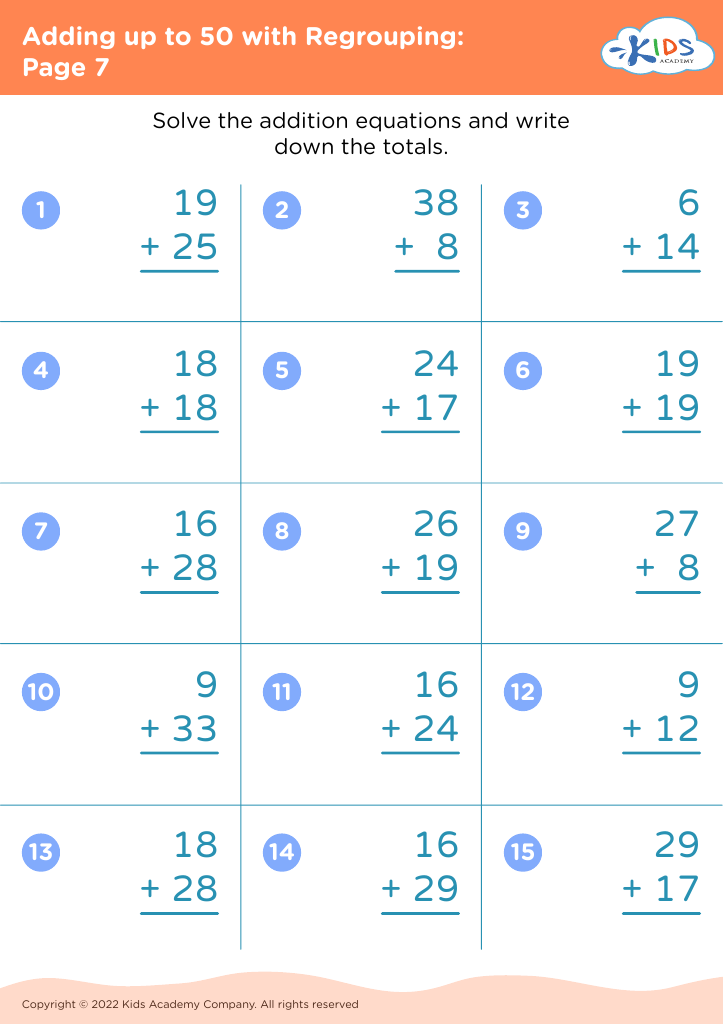
Adding up to 50 with Regrouping: Page 7
Worksheet
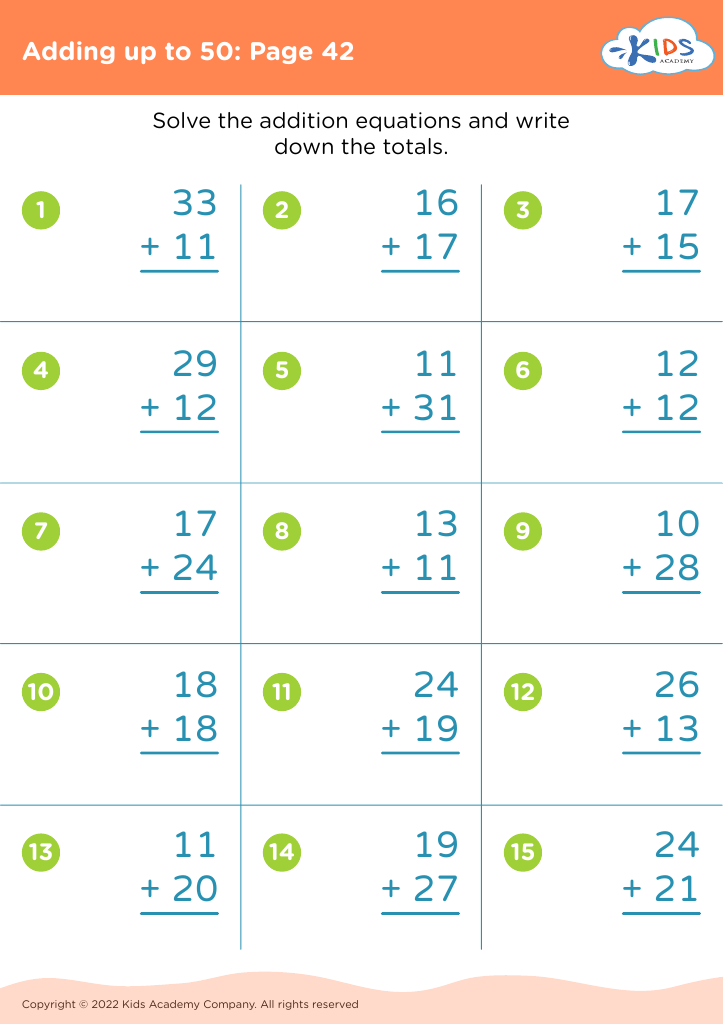
Adding up to 50: Page 42

Adding up to 50: Page 42

Adding up to 50: Page 42
Worksheet
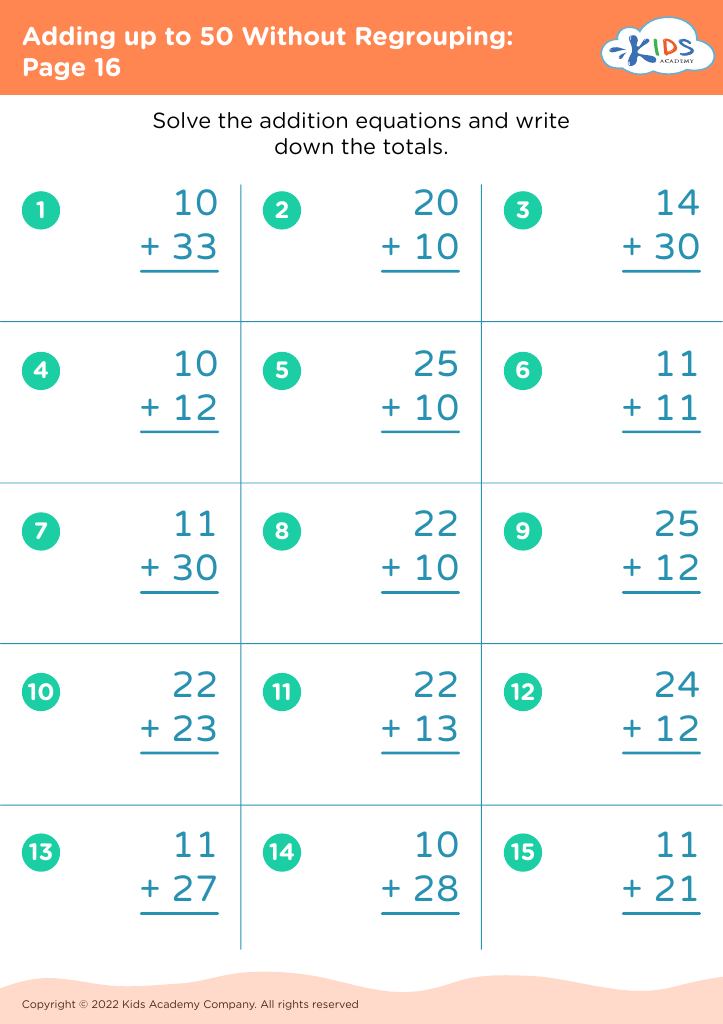
Adding up to 50 Without Regrouping: Page 16
Worksheet
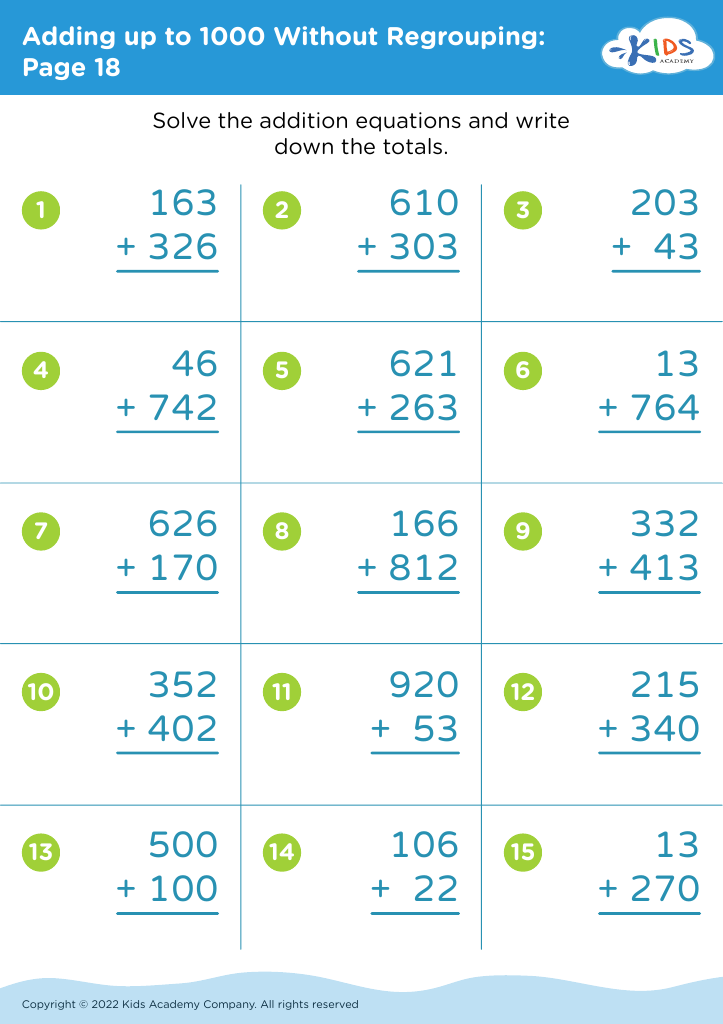
Adding up to 1000 Without Regrouping: Page 18
Worksheet
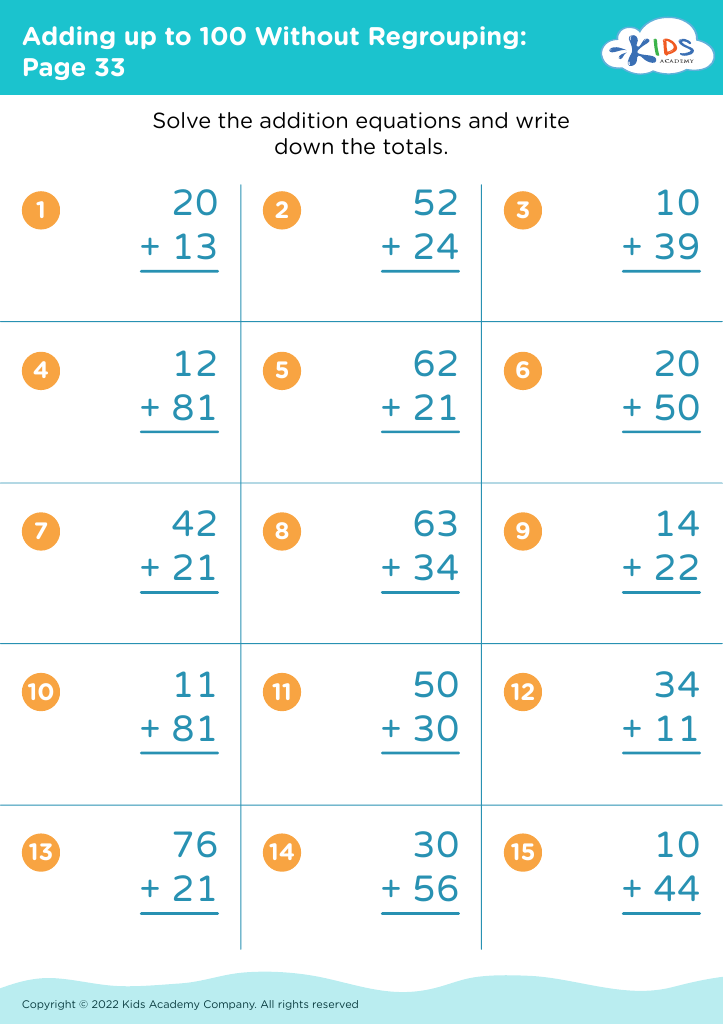
Adding up to 100 Without Regrouping: Page 33
Worksheet
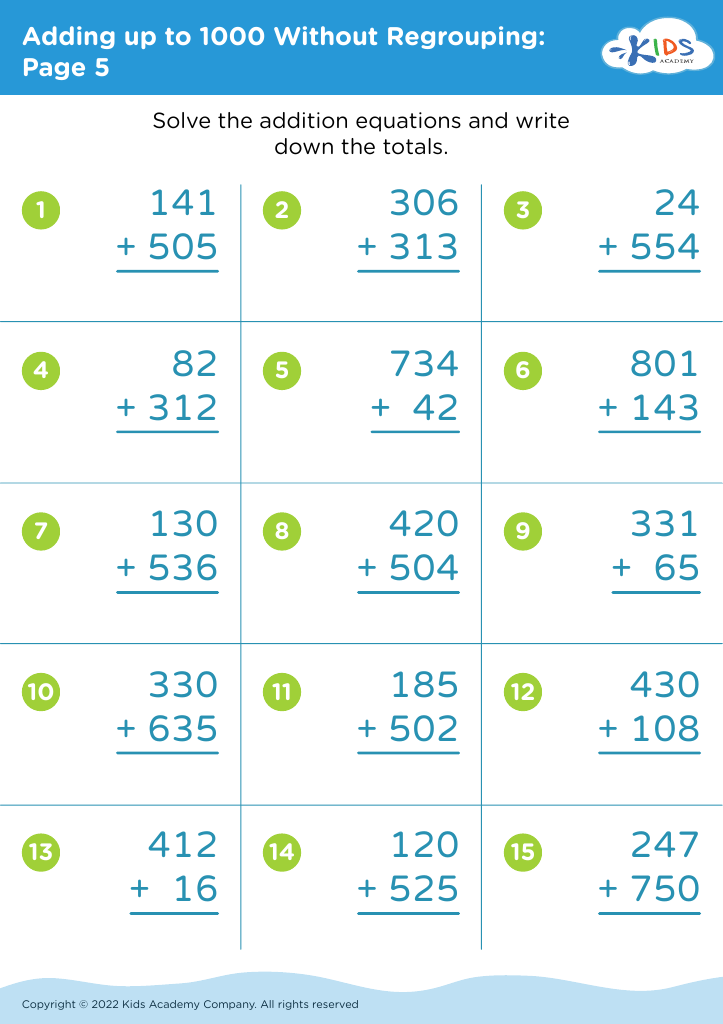
Adding up to 1000 Without Regrouping: Page 5
Worksheet
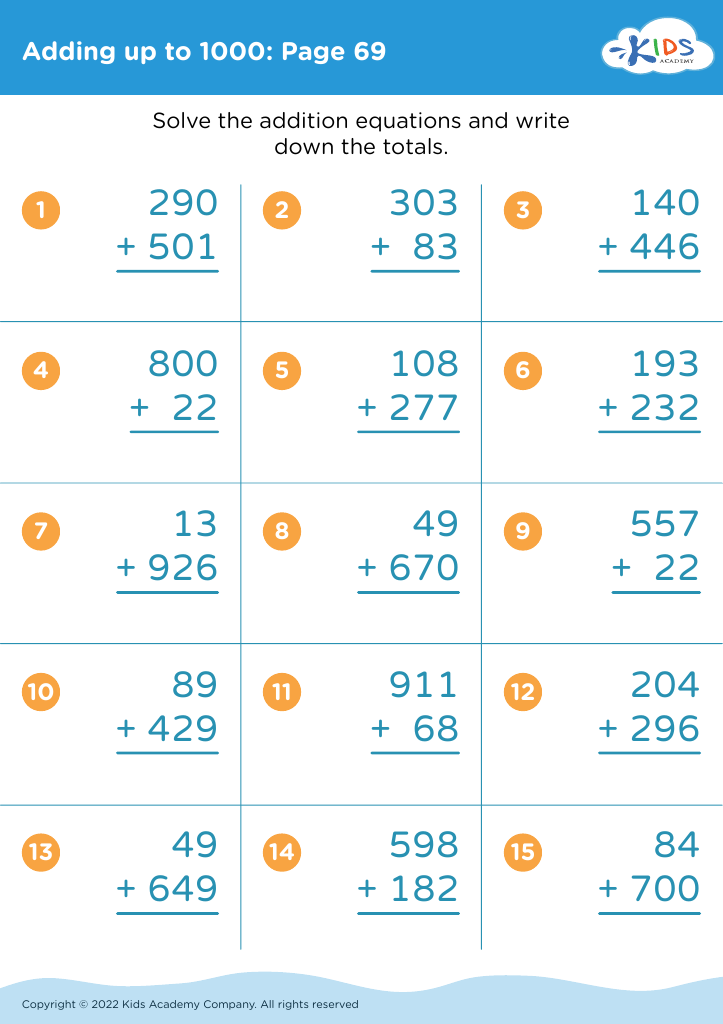
Adding up to 1000: Page 69

Adding up to 1000: Page 69

Adding up to 1000: Page 69
Worksheet
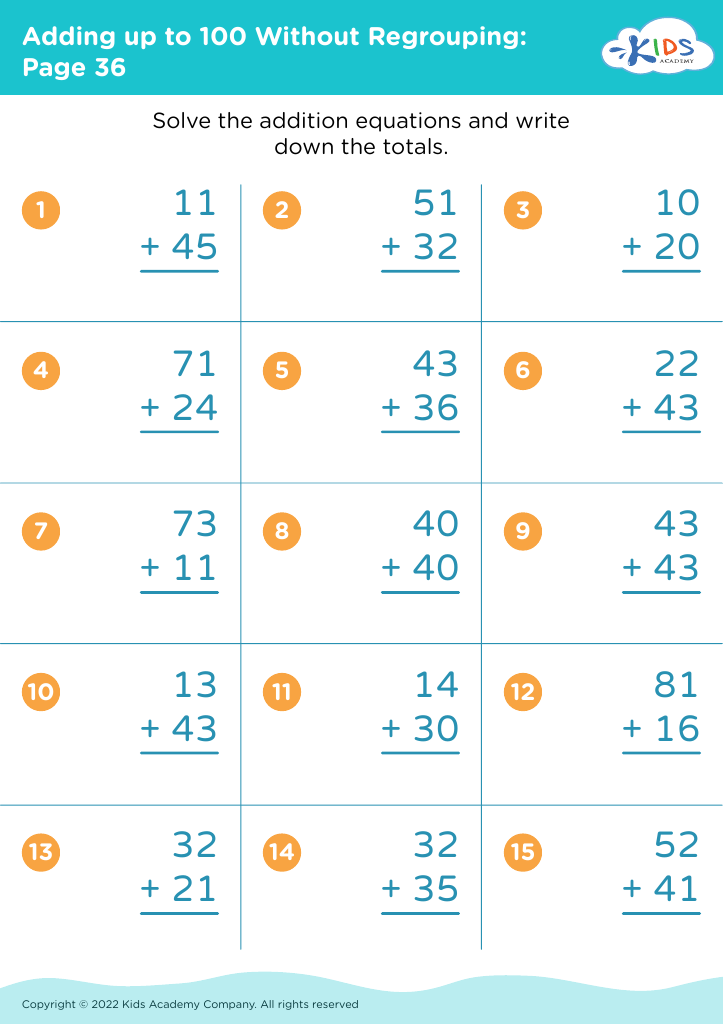
Adding up to 100 Without Regrouping: Page 36
Worksheet
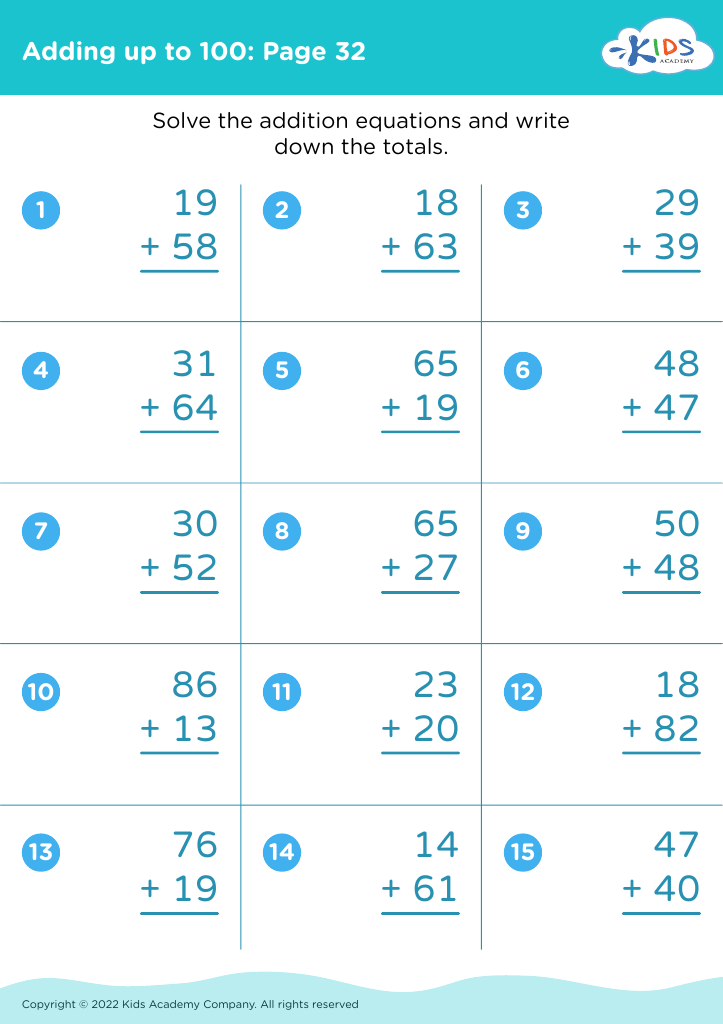
Adding up to 100: Page 32

Adding up to 100: Page 32

Adding up to 100: Page 32
Worksheet


Understanding fractions at the Grade 2 level is crucial for both parents and teachers, as it forms the foundation for more complex mathematical concepts in the future. At this age, children are beginning to develop their number sense, and fractions introduce them to the idea of part-whole relationships. When students learn to add fractions, they gain skills in recognizing how different pieces can combine to form a whole, fostering critical thinking and problem-solving abilities.

This understanding is not just academic; it has real-world applications. Children encounter fractions in daily life – whether it’s sharing a pizza, measuring ingredients for a recipe, or understanding portions. Parents can help reinforce these skills at home by engaging in everyday activities that involve fractions, making learning relevant and fun.

For teachers, emphasizing the addition of fractions can enhance students’ confidence in math, as they can visualize and manipulate physical representations of fractions, like pie charts or fraction tiles. By nurturing this foundational understanding, educators set up their students for success in future grades, where more advanced mathematical concepts will build on these early skills. Ultimately, a strong grasp of fractions will empower children in their academic journey and everyday decision-making.