Understanding number sequence Grade 2 Addition Worksheets
3 filtered results
-
From - To
Enhance your second grader's mathematical skills with our "Understanding Number Sequence" addition worksheets. These engaging resources are designed to help students grasp the concept of number sequences while practicing their addition skills. Each worksheet features a variety of fun and interactive exercises, encouraging children to identify patterns and complete sequences using addition. As they work through the problems, students will strengthen their comprehension of numbers, improve their problem-solving abilities, and build confidence in their math skills. Perfect for both classroom use and at-home practice, these worksheets provide an essential foundation for future mathematics learning. Start their math journey today!
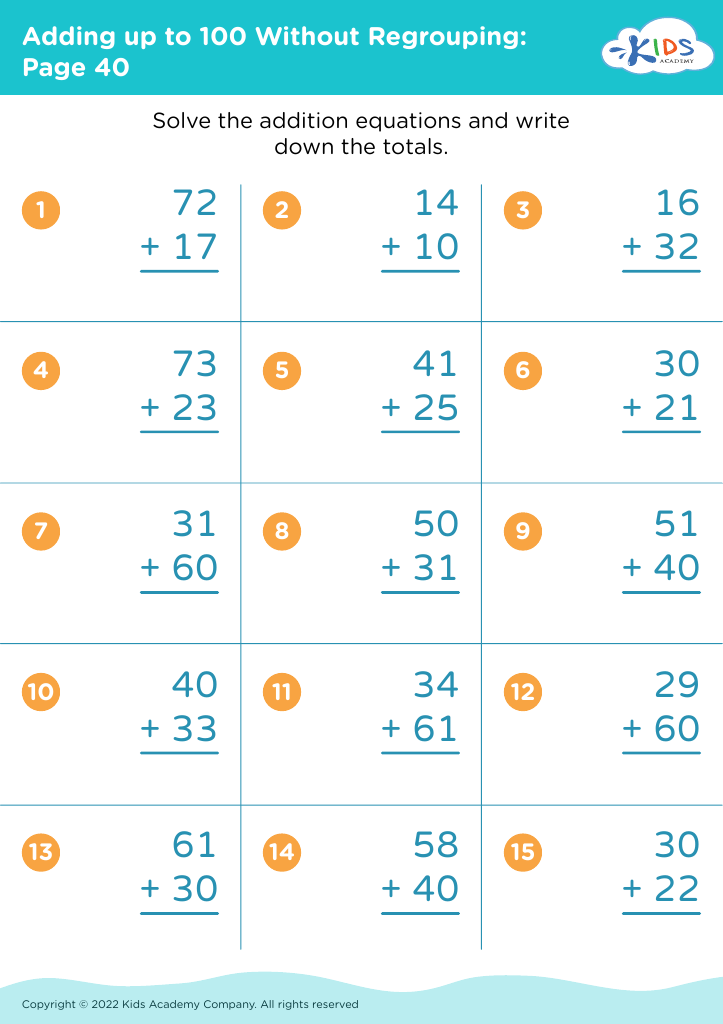
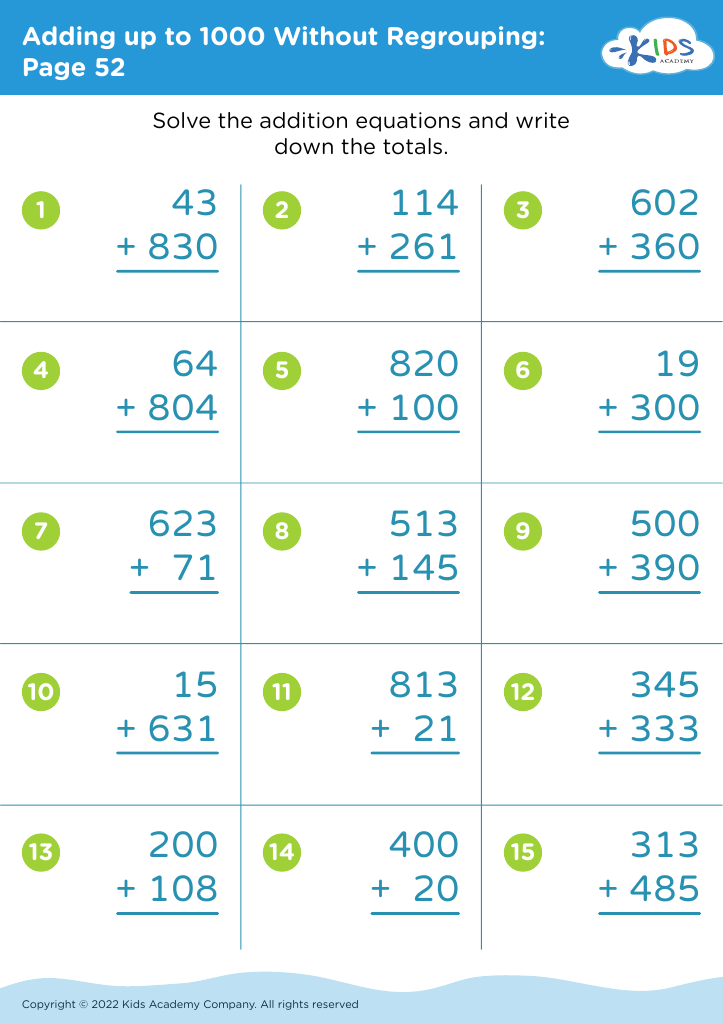
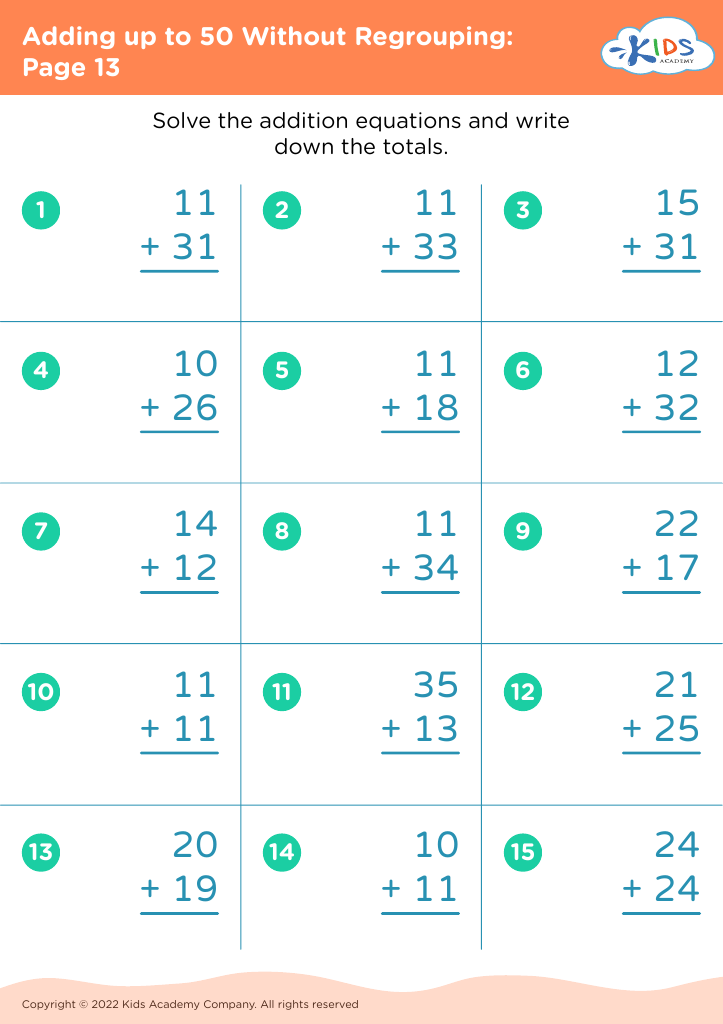








Understanding number sequences in Grade 2 addition is crucial for children’s mathematical foundation. At this stage, students transition from basic number recognition to more complex operations, and grasping number sequences helps them make sense of addition as a process.
Firstly, it aids in developing critical problem-solving skills. When students recognize patterns in numbers, they begin to predict results and solve problems more efficiently. For instance, understanding that 2, 4, 6, 8 indicates they can add 2 to each number enhances mental math skills which are essential for future mathematical concepts.
Secondly, this understanding promotes number sense. Children become comfortable with quantity and place value, allowing them to manipulate numbers with confidence. It also prepares them for other areas of mathematics, such as multiplication or subtraction, which often rely on a solid grasp of number sequences.
Moreover, by recognizing a sequence, children can understand the concept of “skip counting,” which aids in many real-world applications, such as telling time, managing money, and organizing objects.
In essence, both parents and teachers should prioritize number sequences in Grade 2 addition as it lays the groundwork for efficient arithmetic skills, enhances cognitive abilities, and fosters a positive attitude towards learning math.