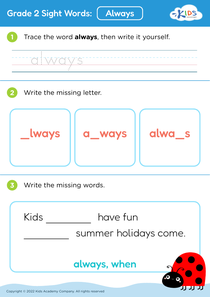
Visual discrimination Grade 2 Addition Worksheets
4 filtered results
Difficulty Level
Grade
Age
-
From - To
Subject
Activity
Standards
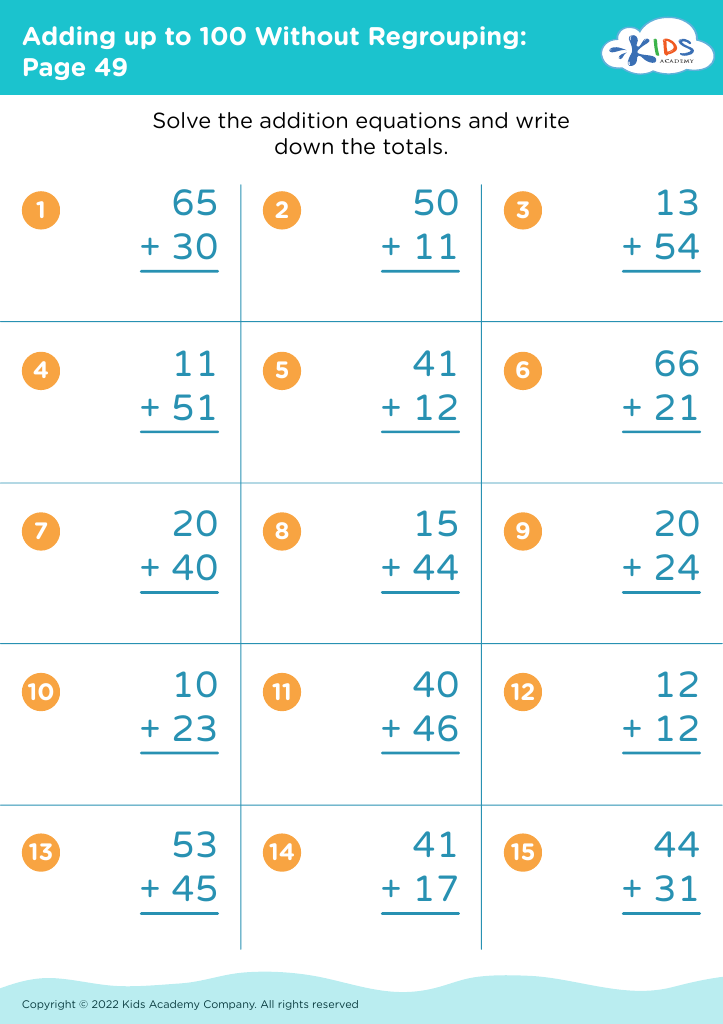
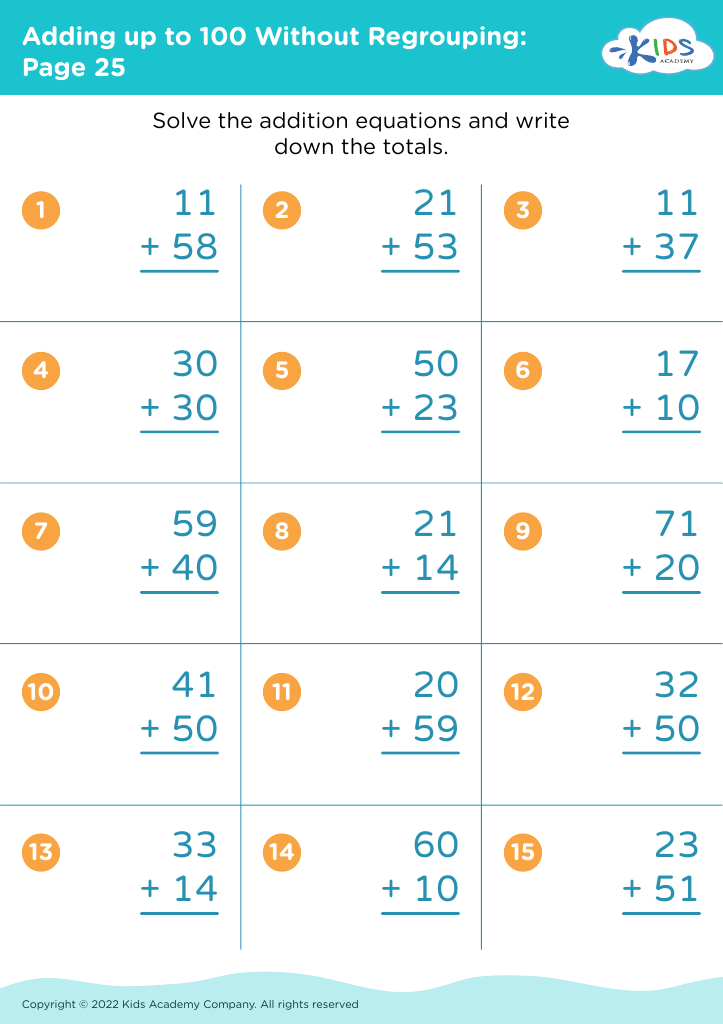
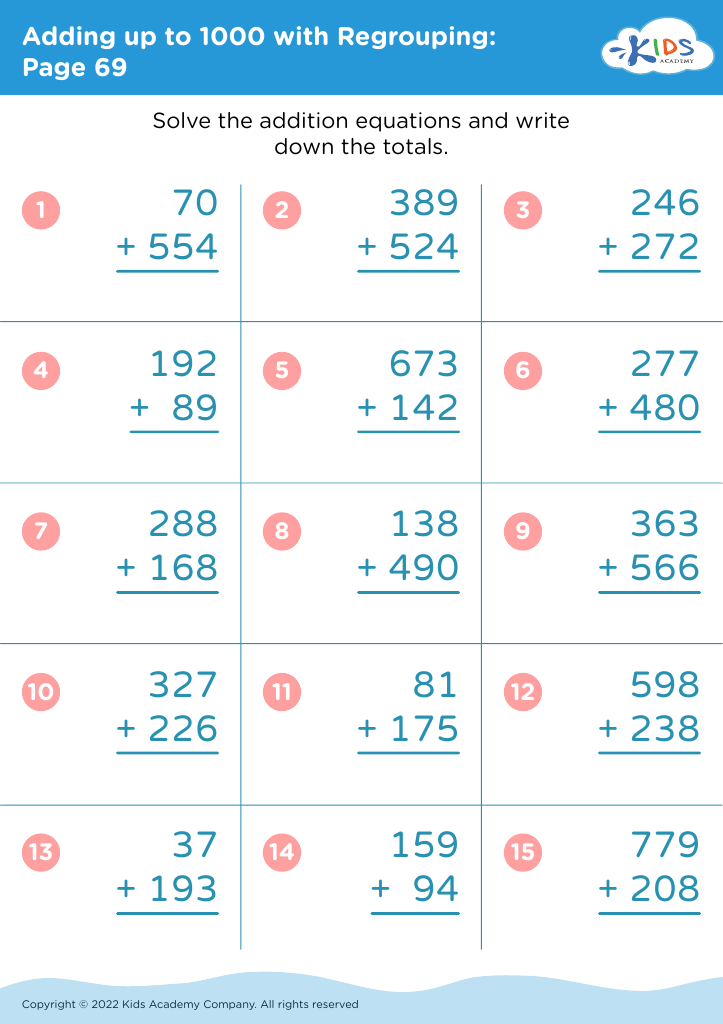
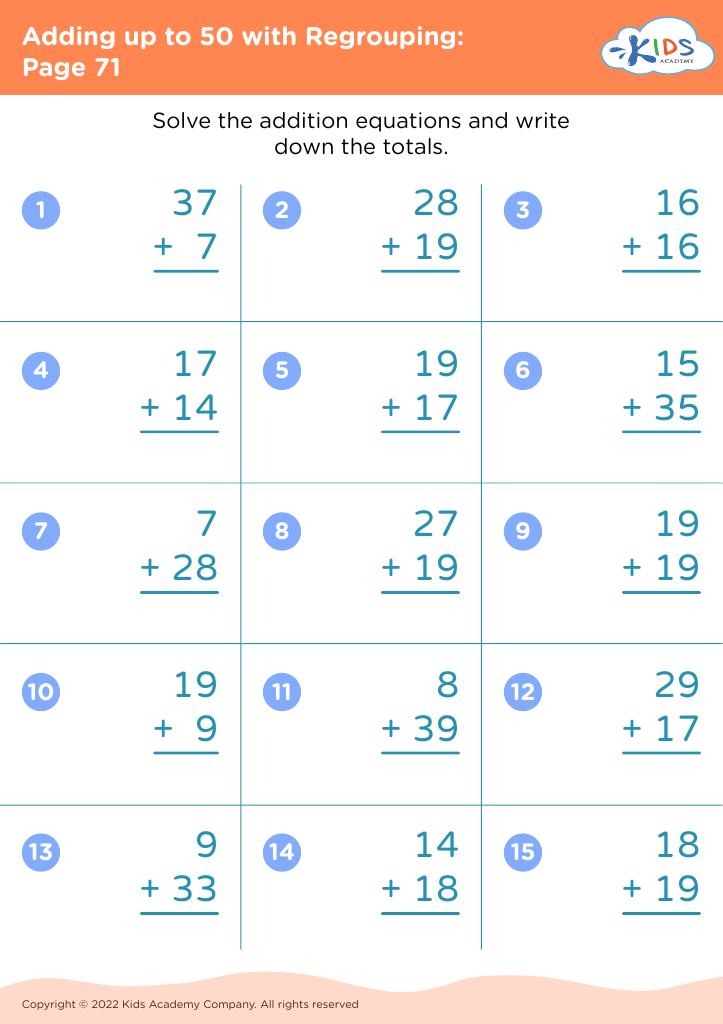
Boost your second graders' math skills with our engaging Visual Discrimination Grade 2 Addition Worksheets! Designed to enhance visual perception and critical thinking, these worksheets help students differentiate between numbers, quantities, and addition problems effectively. Each worksheet features vibrant illustrations and fun scenarios to keep young learners motivated while mastering essential addition concepts. Perfect for classroom activities or homework, our resources align with educational standards and foster a deeper understanding of mathematics. Challenge your students and watch their confidence grow as they develop crucial skills through interactive practice. Explore our collection today and make math learning an enjoyable experience!
Favorites
With answer key
Interactive
Join Kids Academy for Free
Who is primarily going to use this learning content?








Visual discrimination is a crucial skill for second graders, especially in learning addition. At this developmental stage, children are sharpening their ability to notice differences and similarities among numbers, which is fundamental for grasping mathematical concepts.
Understanding visual discrimination helps children distinguish between numbers that look alike, such as '6' and '9,' ensuring they can accurately process and add numbers. This skill directly impacts their fluency in addition, affecting overall mathematical confidence and competence. When students cannot visually differentiate numbers, they may struggle with completing math problems, leading to frustration and poor performance.
Additionally, enhancing visual discrimination rounds out critical thinking skills. As children analyze groups of objects for counting or relate the visual aspects of numbers to specific quantities, they're boosting problem-solving capabilities. This foundational skill serves as a precursor to more advanced mathematics, such as addition with regrouping or even subtraction.
Therefore, teachers and parents play an essential role in fostering visual discrimination through targeted activities, such as puzzles, matching games, and manipulatives. This ongoing development not only supports mathematical understanding but also cultivates a strong cognitive framework that will be beneficial across all learning disciplines. Investing in this skill now sets the groundwork for future academic success.