Basic Math Skills Grade 2 Geometry Worksheets
5 filtered results
-
From - To
Enhance your second graders' understanding of geometry with our specially designed Basic Math Skills Grade 2 Geometry Worksheets. These engaging and colorful worksheets focus on fundamental concepts such as shapes, spatial reasoning, and measurement. Kids will explore various geometric figures, develop critical thinking skills, and strengthen their knowledge through fun activities like identifying angles, classifying shapes, and understanding symmetry. Perfect for classroom or home use, our worksheets help build a strong mathematical foundation while promoting confidence in budding young mathematicians. Download now to foster a love for learning and geometry in a playful, interactive way!
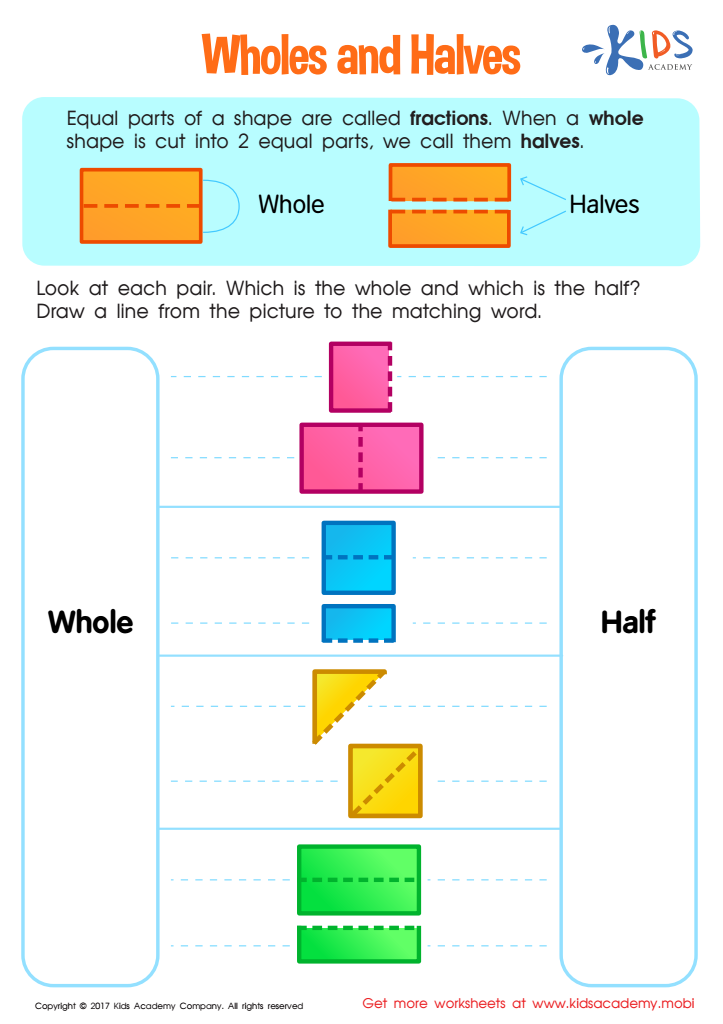
Wholes and Halves Worksheet
 Assign to My Students
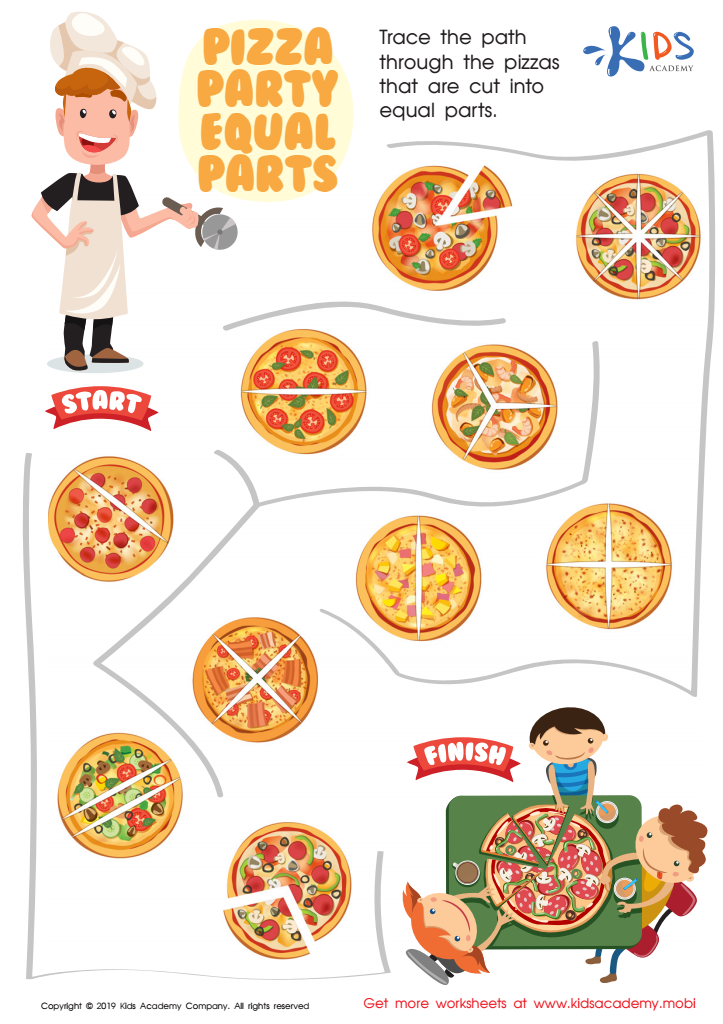
Pizza Party Equal Parts Worksheet
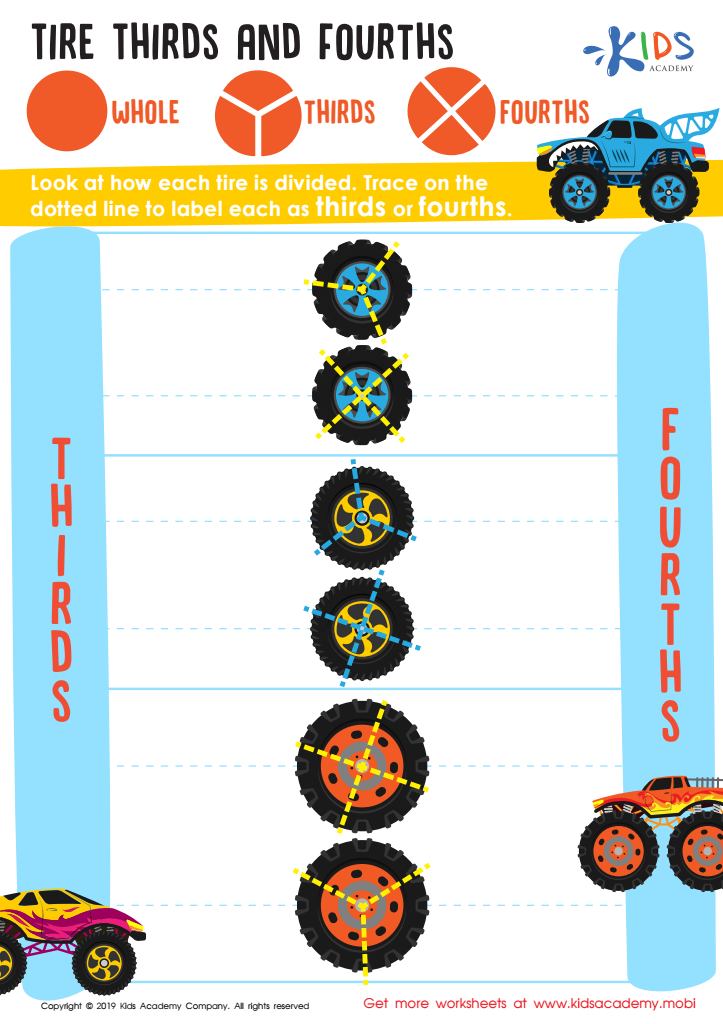
Tire Thirds and Fourths Worksheet
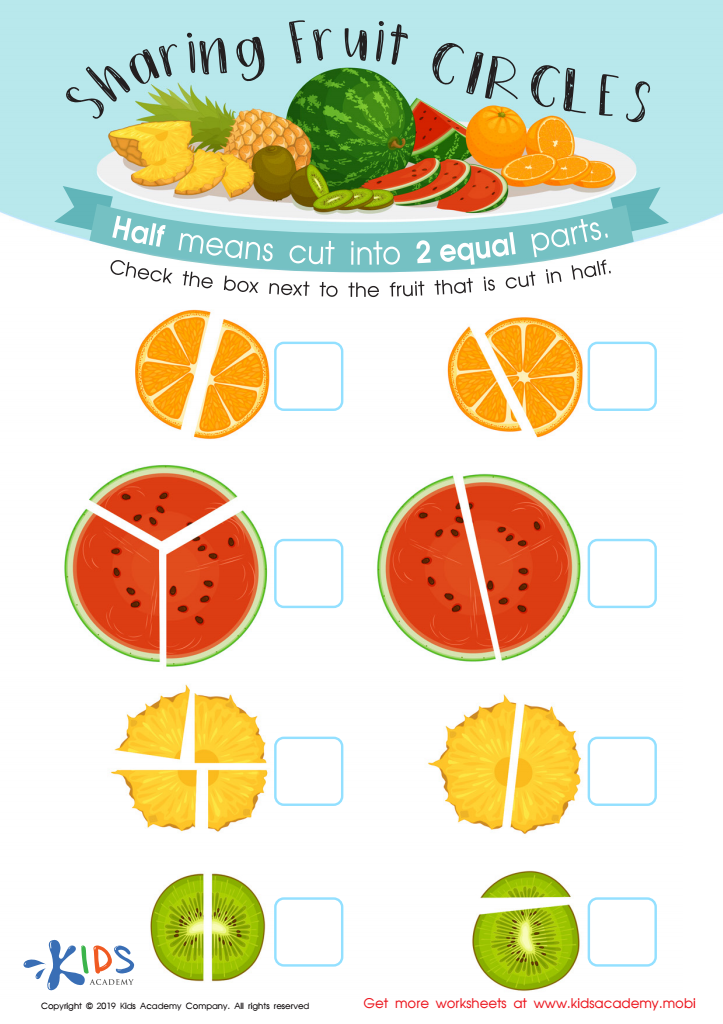
Sharing Fruit Circles Worksheet
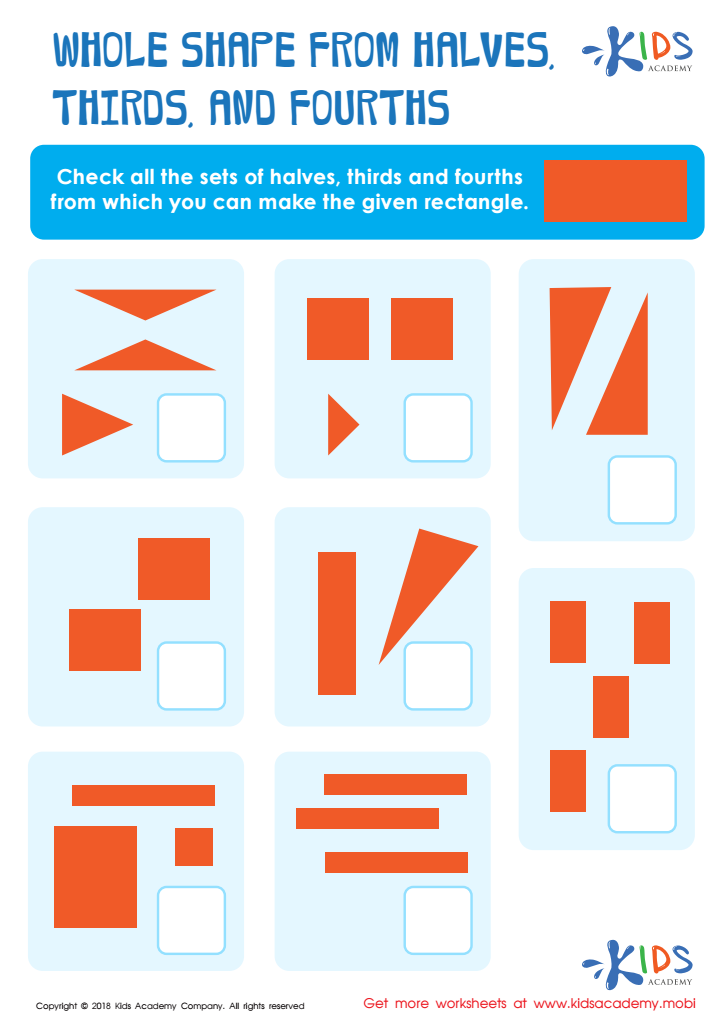
Whole Shape from Halves, Thirds and Fourths Worksheet








Basic math skills in geometry are crucial for second graders as they lay the foundation for future mathematical understanding. At this stage, children learn to recognize shapes, understand spatial relationships, and comprehend the properties of various figures, such as triangles, circles, and squares. Mastering these concepts not only boosts their confidence in math but also enhances their problem-solving skills.
Geometry helps children develop critical thinking by allowing them to visualize and manipulate objects mentally. For instance, understanding symmetry and area fosters their ability to perceive their environment, which is essential for tasks ranging from art projects to real-life situations, such as packing or transportation.
Additionally, foundational geometry skills are connected to everyday activities and school subjects, including science and art, promoting an interdisciplinary approach to learning. Parents and teachers play a vital role in supporting these skills through engaging activities, games, and practical applications.
Ultimately, a solid grasp of basic geometry empowers children with both mathematical proficiency and cognitive skills that extend beyond the classroom, preparing them for more complex concepts down the road. Investing in these early skills ensures a more seamless transition into higher levels of education and better prepares them for the demands of an increasingly mathematical world.