Basic Addition Grade 2 Math Worksheets - Page 2
31 filtered results
-
From - To
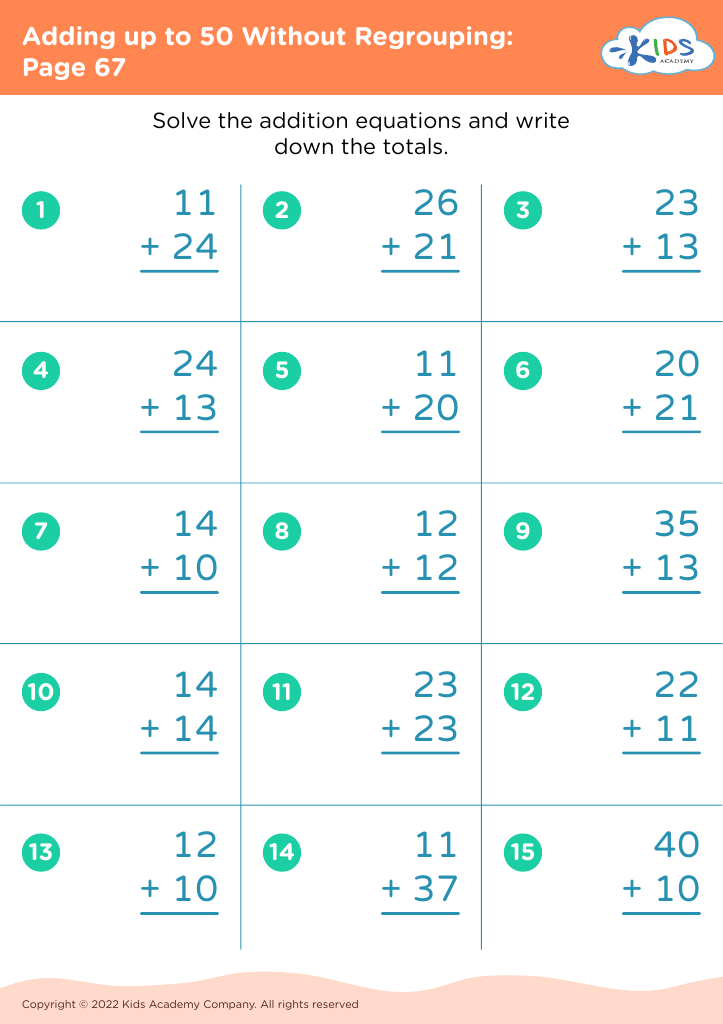
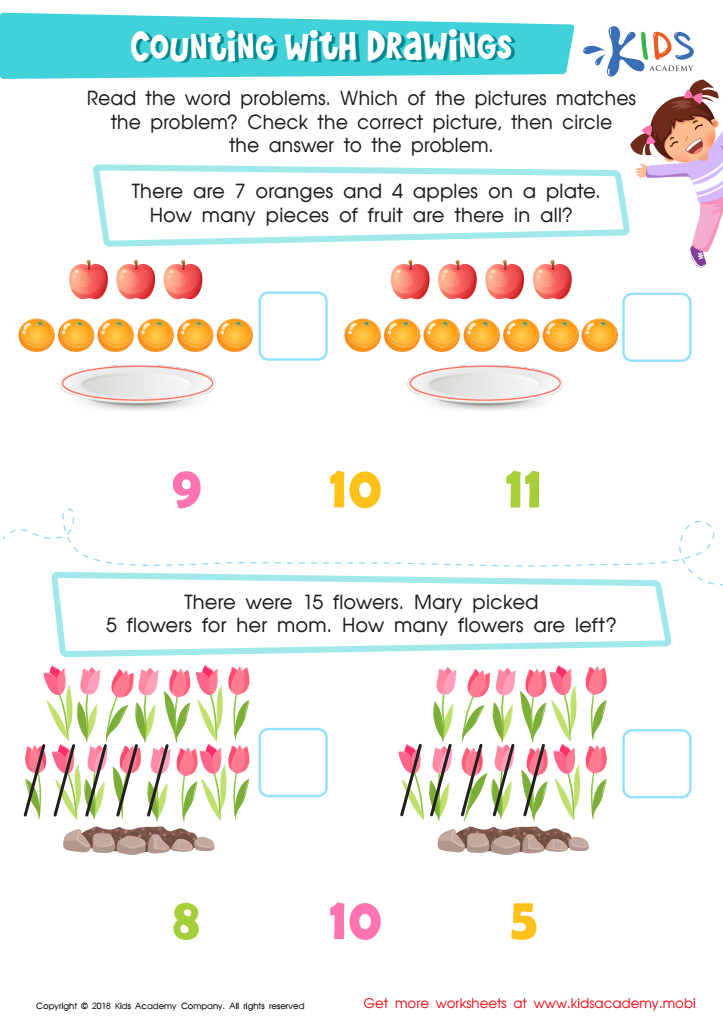
Counting with Drawings:Fruits & Flowers Worksheet
 Assign to My Students
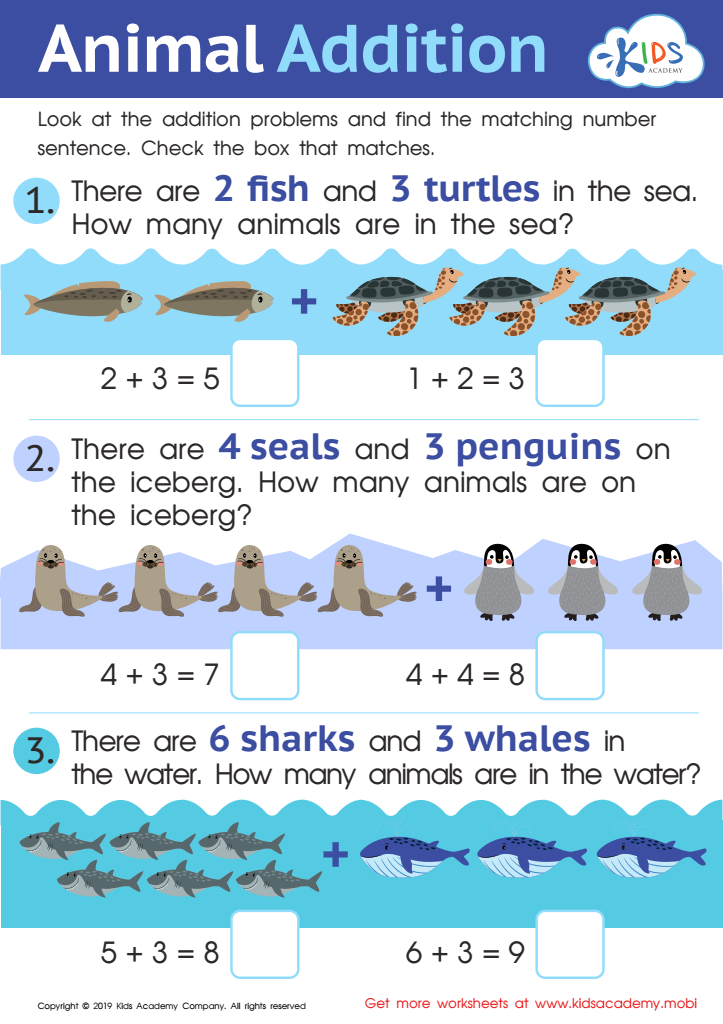
Animal Addition Worksheet
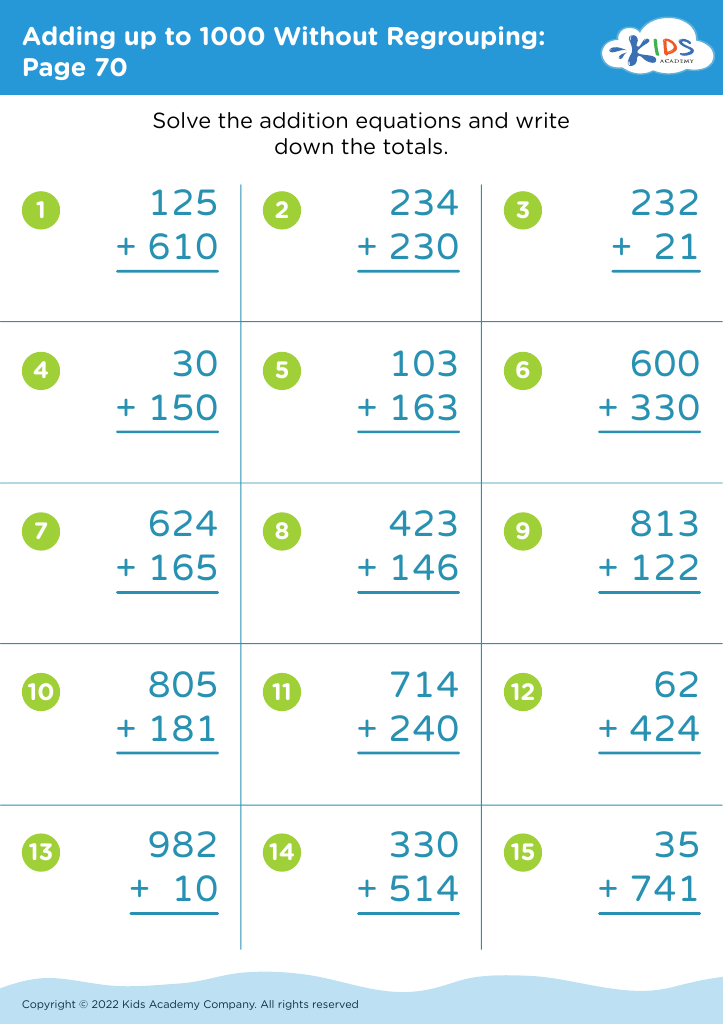








Basic addition is a fundamental skill that provides the foundation for a child's understanding of mathematics and problem-solving abilities. At the Grade 2 level, focusing on addition helps young learners develop numerical fluency and number sense, which are crucial for more advanced math concepts they will encounter in subsequent grades.
Parents and teachers should care about basic addition because it builds the groundwork for a child's confidence in handling numbers. Mastery of basic addition allows children to progress more easily to other essential arithmetic operations such as subtraction, multiplication, and division. Additionally, a solid grasp of addition supports success across the broader math curriculum, from understanding place value to solving word problems.
Moreover, honing addition skills at this stage helps children develop better cognitive and analytical skills. It encourages logical thinking, pattern recognition, and the ability to approach complex problems in a systematic way. This early focus not only enhances mathematical proficiency but also promotes a positive attitude toward learning, which can influence a child's overall academic trajectory.
Therefore, investing time and effort in teaching and reinforcing basic addition concepts ensures that second graders are equipped with critical math skills that will benefit them throughout their education and beyond. It’s an essential step in nurturing their overall intellectual growth and academic success.