Comparing sizes Grade 2 Math Worksheets
3 filtered results
Difficulty Level
Grade
Age
-
From - To
Subject
Activity
Standards
Explore our engaging "Comparing Sizes Grade 2 Math Worksheets" designed to help young learners master the skill of distinguishing between different sizes. These worksheets provide a variety of fun activities that encourage students to compare objects, measure items, and develop a strong understanding of size-related vocabulary. With colorful graphics and interactive exercises, children will enjoy learning how to identify and differentiate between big and small, tall and short, as well as other size comparisons. Ideal for classroom learning or at-home practice, our worksheets promote critical thinking and boost confidence in young problem-solvers, making math both enjoyable and educational!
Favorites
With answer key
Interactive
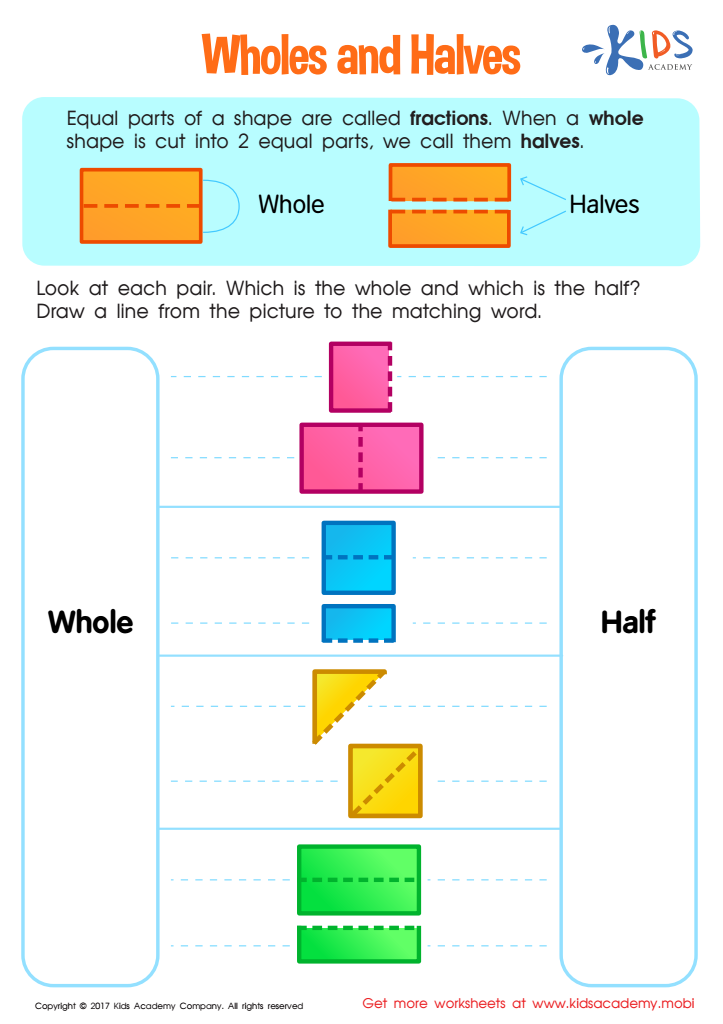
Wholes and Halves Worksheet
Students can feel overwhelmed with fractions. Help take the stress off by using a colorful worksheet to explain whole shapes and how to find halves. Ask them to identify the whole and point to the matching word for the half. A free printout can help guide them.
 Assign to My Students
Wholes and Halves Worksheet
Worksheet
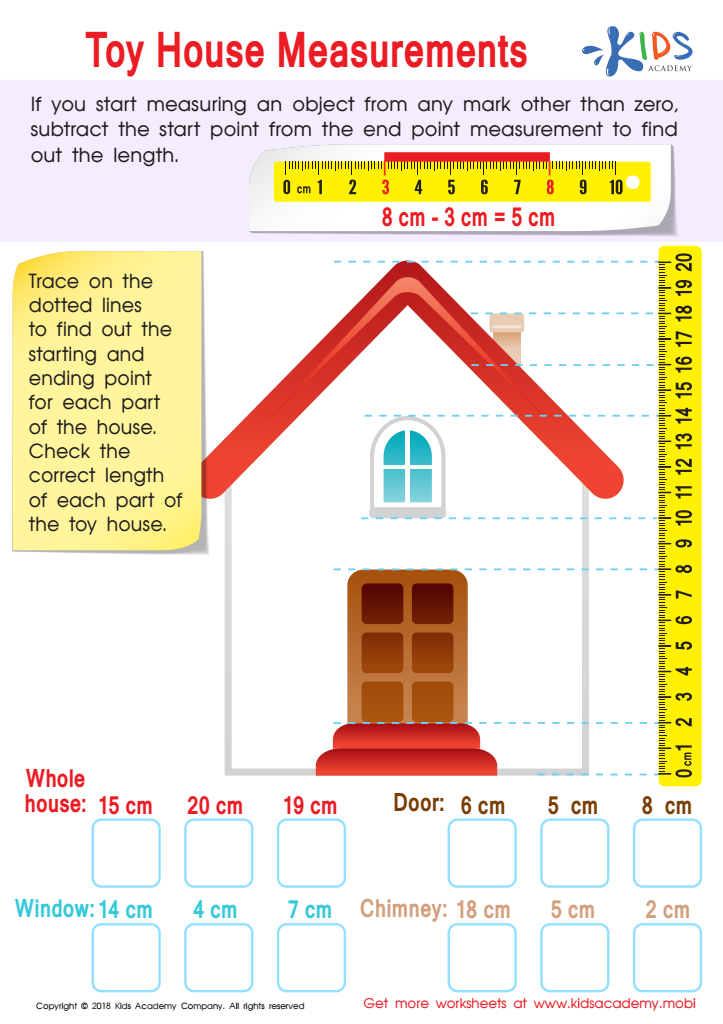
Toy House Measurements Worksheet
This worksheet requires math and measuring skills. When measuring an object from a non-zero starting point, subtract the start point from the end point to get the correct length. Kids must trace the dotted lines to get the right length for each part of the house.
Toy House Measurements Worksheet
Worksheet
Join Kids Academy for Free
Who is primarily going to use this learning content?








Understanding how to compare sizes is crucial for second-graders as it lays the foundation for many mathematical concepts they will encounter later on. When parents or teachers focus on comparing sizes, they equip children with essential skills such as measuring, ordering, and recognizing attributes of objects. These skills promote critical thinking and problem-solving abilities.
In Grade 2, students begin to grasp the idea of measurement, which includes comparing lengths, weights, and capacities. This knowledge carries over into real-life situations, helping children develop practical skills for everyday tasks, such as cooking, shopping, and even understanding time.
Moreover, engaging students in comparing sizes fosters mathematical language development, teaching them terms like longer, shorter, taller, heavier, and lighter. This vocabulary is invaluable in cultivating their communication skills and enhances their ability to express mathematical ideas clearly.
Additionally, by comparing sizes, children can learn about the concept of ratios and develop early spatial awareness, which are pivotal for advanced mathematics. Involving parents in these activities also strengthens family bonds and makes learning enjoyable. Overall, understanding size comparison serves as an essential stepping stone toward more complex mathematical understanding and enhances a child's cognitive development.