Critical thinking development Grade 2 Math Worksheets
4 filtered results
-
From - To
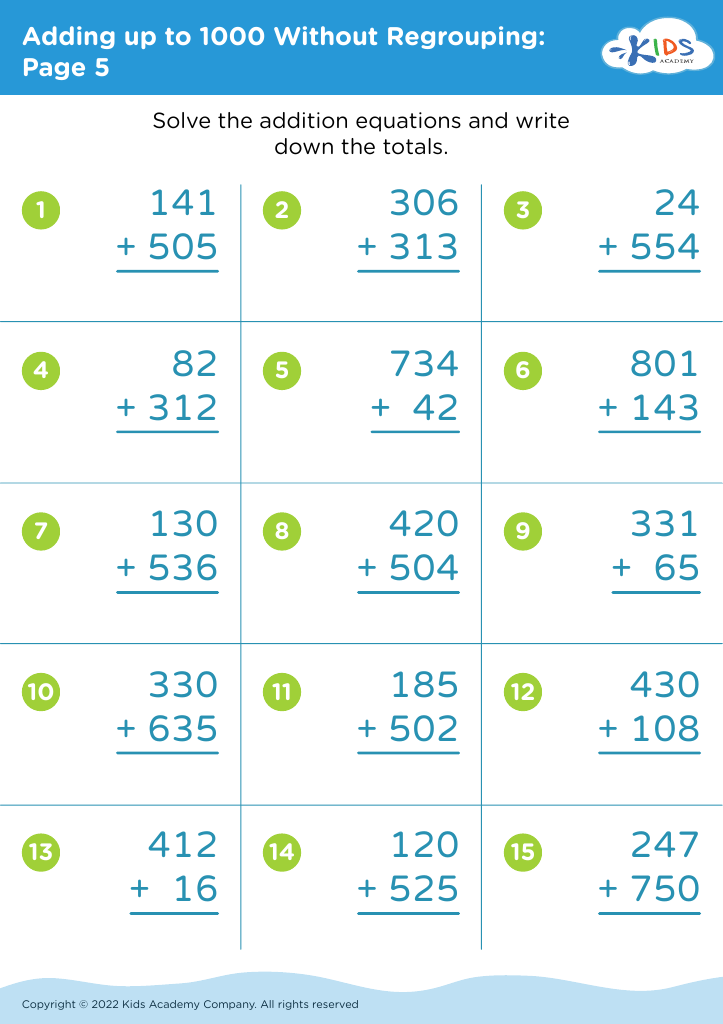
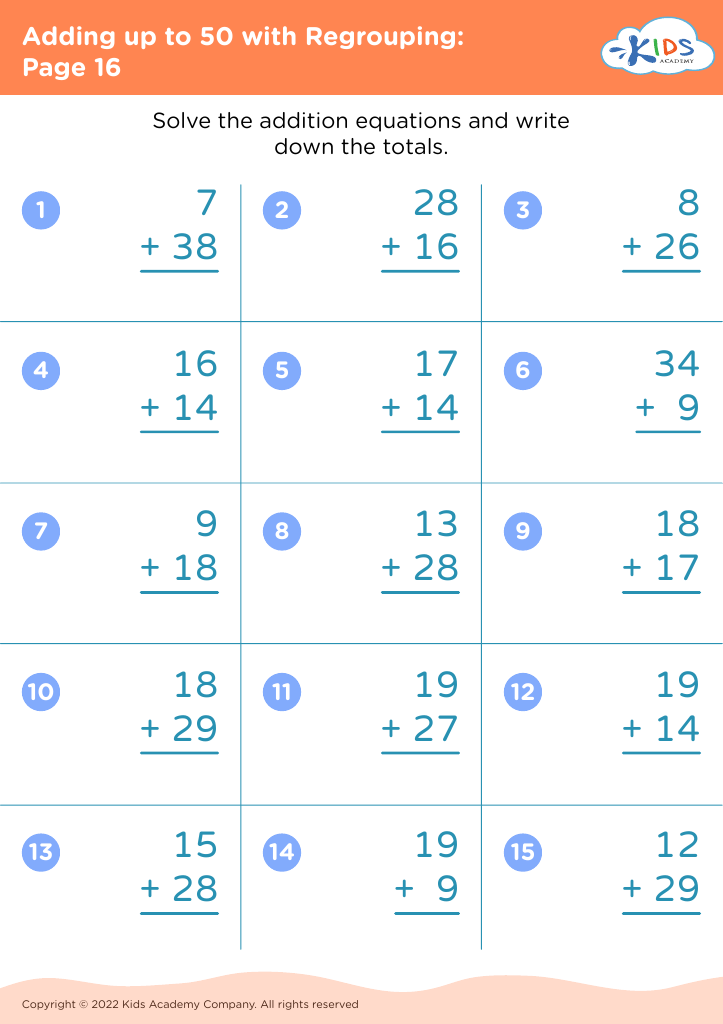
Enhance your second grader's critical thinking skills with our engaging Grade 2 Math Worksheets! Designed to challenge and inspire young minds, these worksheets encourage students to apply problem-solving techniques in a fun and interactive way. Covering essential mathematical concepts such as addition, subtraction, and basic geometry, our thoughtfully curated exercises promote analytical reasoning and creativity. Each worksheet is tailored to foster independent thinking, enabling children to tackle math problems with confidence. Perfect for classroom use or at-home learning, our critical thinking development worksheets will help your child build a solid foundation in math while nurturing their ability to think critically. Start exploring today!
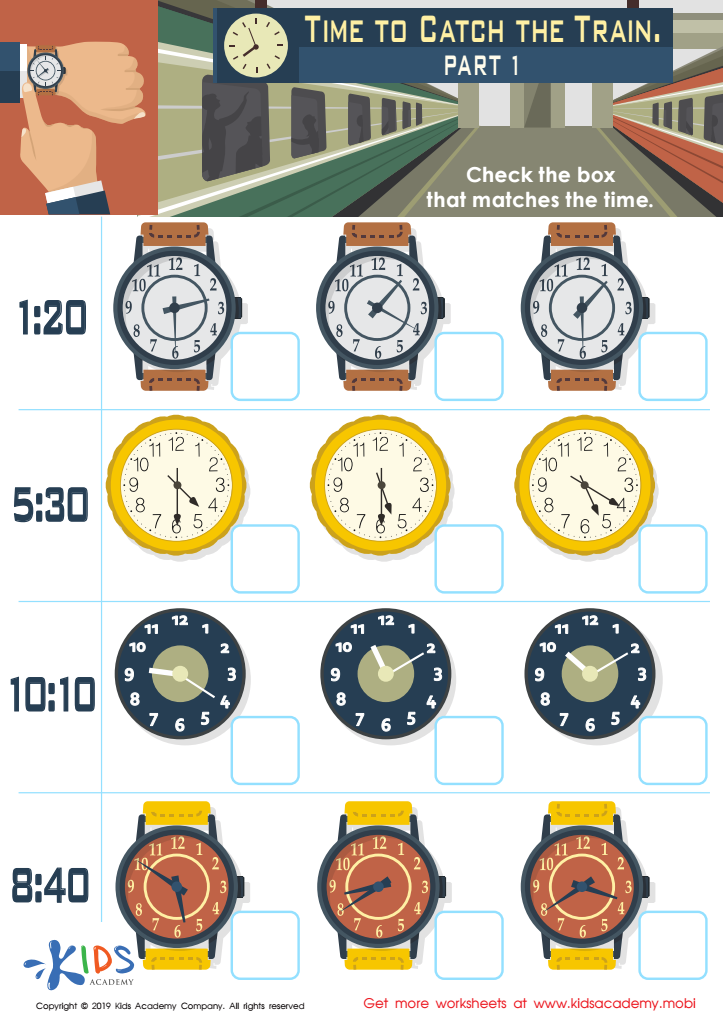
Time to Catch the Train Part 1 Worksheet
 Assign to My Students








Critical thinking development in Grade 2 math is essential for both parents and teachers because it lays the foundation for a child's cognitive growth and problem-solving abilities. At this age, children begin to transition from concrete operational thinking to more abstract problem-solving, and developing these skills can significantly enhance their understanding of mathematical concepts.
By nurturing critical thinking, educators and parents can help children learn to analyze problems rather than simply memorize procedures. Encouraging students to ask questions, reason logically, and explore different methods to reach a solution fosters independence and self-confidence in their abilities. For example, when children are asked to justify their answers or explain their thought processes, they engage more deeply with the material, making connections that strengthen their overall mathematical understanding.
Moreover, critical thinking in math supports social-emotional development. It cultivates resilience as students learn to tackle challenges, embrace mistakes, and reflect on their learning. Ultimately, fostering critical thinking in Grade 2 math not only prepares children for advanced academic pursuits but also equips them with essential life skills, such as decision-making and analytical reasoning, which will benefit them well beyond the classroom setting.