Enhancing Counting Skills Grade 2 Math Worksheets
14 filtered results
Difficulty Level
Grade
Age
-
From - To
Subject
Activity
Standards
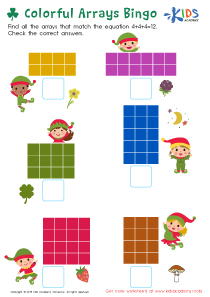
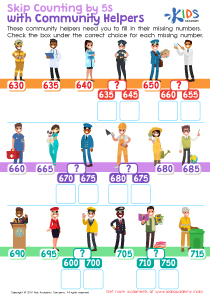
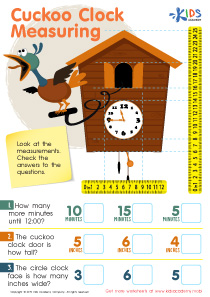
Enhance your Grade 2 students' counting skills with our engaging math worksheets! Designed to support young learners, these activities focus on building a solid foundation in counting, number recognition, and basic arithmetic. Our worksheets provide a variety of fun exercises, including counting objects, filling in missing numbers, and solving simple word problems. With colorful graphics and interactive elements, students will enjoy practicing their counting skills in a playful way. Perfect for both classroom use and at-home learning, these worksheets will help your child gain confidence and proficiency in math. Start fostering a love for numbers while improving essential counting skills today!
Favorites
With answer key
Interactive
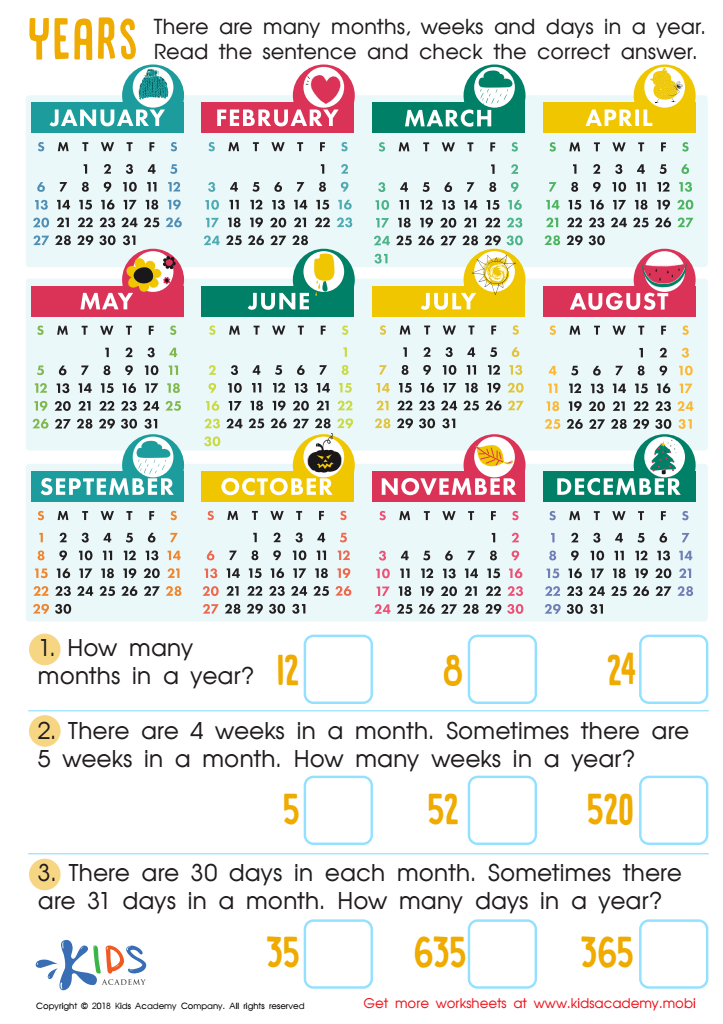
Years Worksheet
This worksheet is a great way to test your children's knowledge of the calendar. Ask them if they can name the days of the week and months in a year. Read and discuss the questions with them and help them find the right answers. Encourage them to check their answers.
 Assign to My Students
Years Worksheet
Worksheet
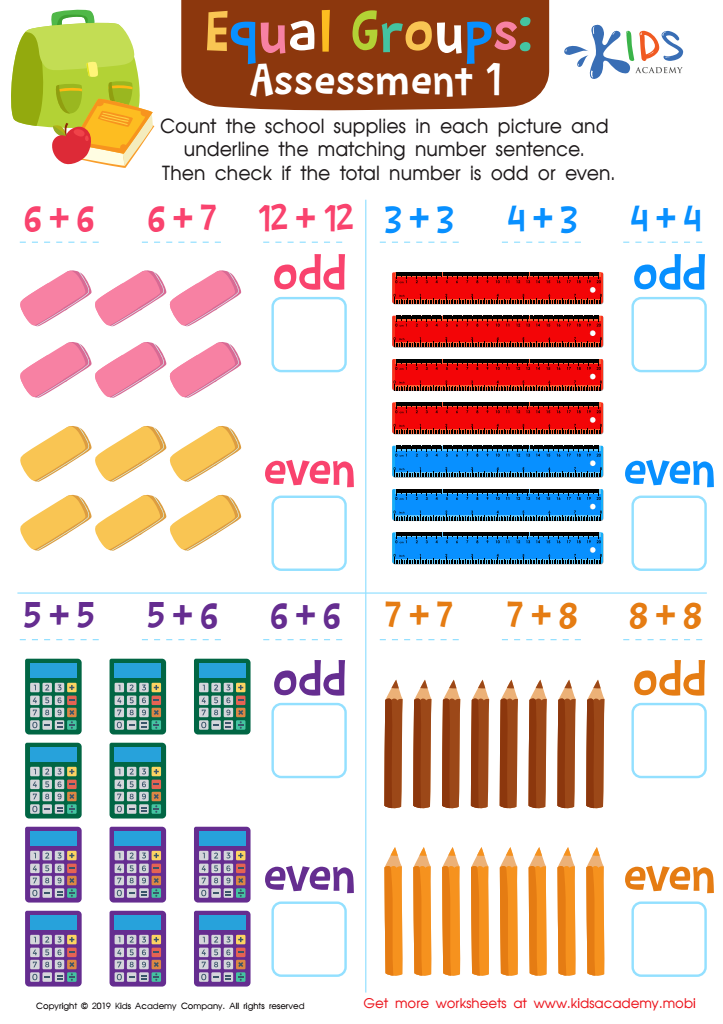
Equal Groups: Assessment 1 Worksheet
Have your students count the school supplies in each picture. Underline the number sentence that matches. Ask them if the total number is odd or even. Help your eager little preschoolers explore their classroom, which is full of pencils, chairs, desks, a blackboard and the teacher's desk.
Equal Groups: Assessment 1 Worksheet
Worksheet
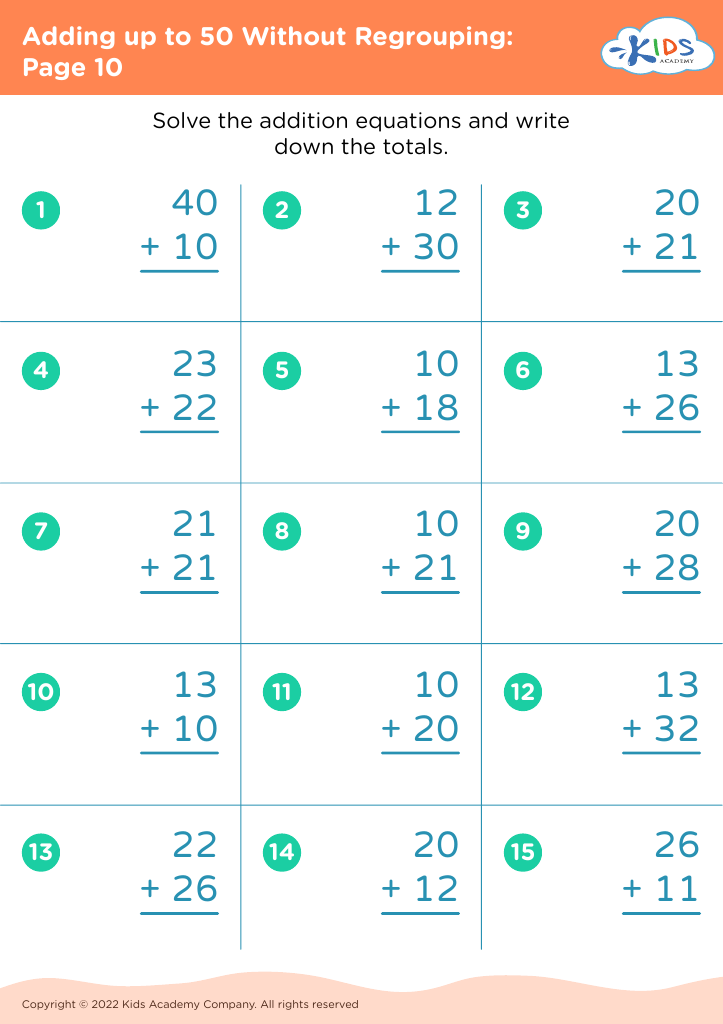
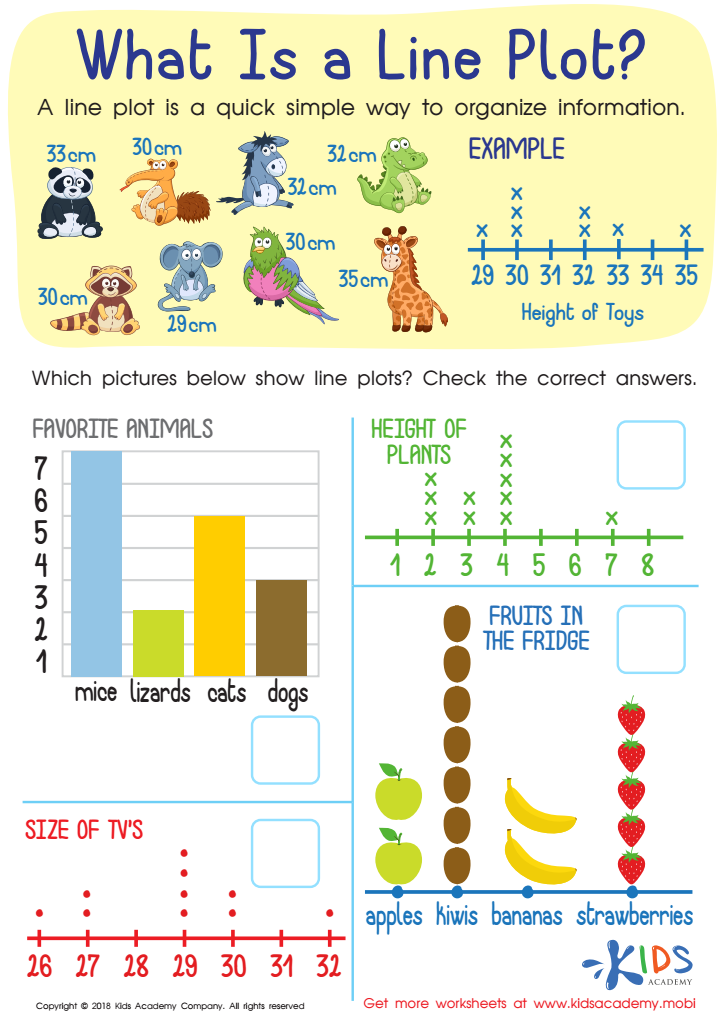
What Is a Line Plot? Worksheet
A line plot is an ideal method to organize data. For example, if your child needs to arrange objects for easy recognition, draw a line plot. This worksheet can help teach the skill. Kids must identify correct pictures that display line plots.
What Is a Line Plot? Worksheet
Worksheet
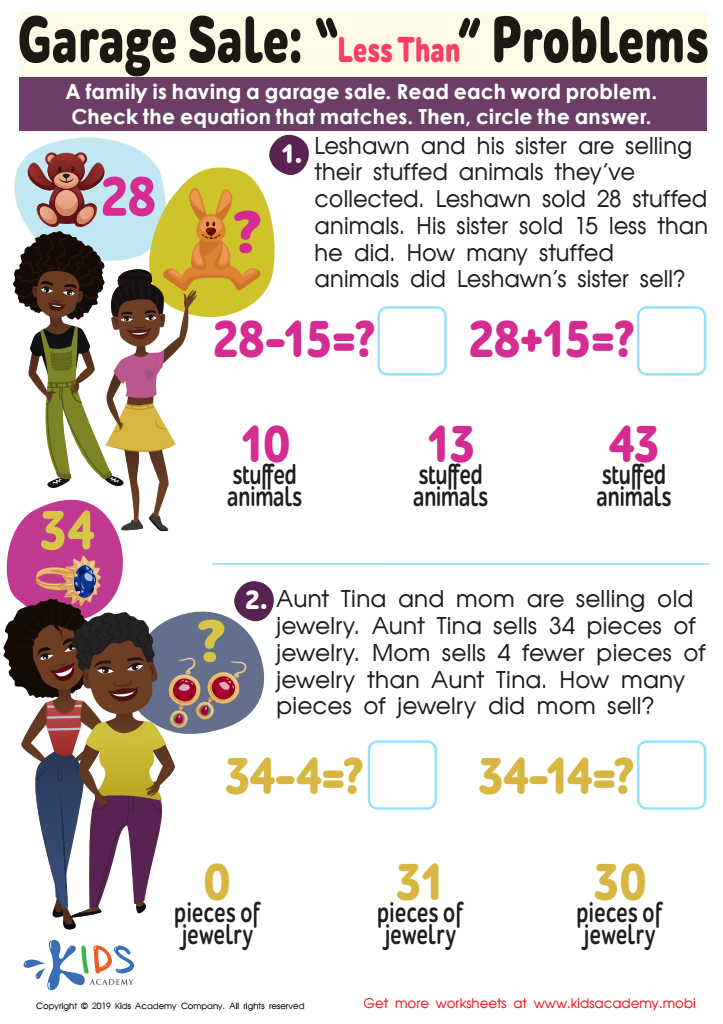
Garage Sale Less Than Worksheet
Kids often struggle with math word problems. This worksheet offers practice, using a real-world situation: friends having a garage sale. Students read each problem, extract the relevant information, match it with the correct equation and solve. Great for honing those essential problem-solving skills!
Garage Sale Less Than Worksheet
Worksheet
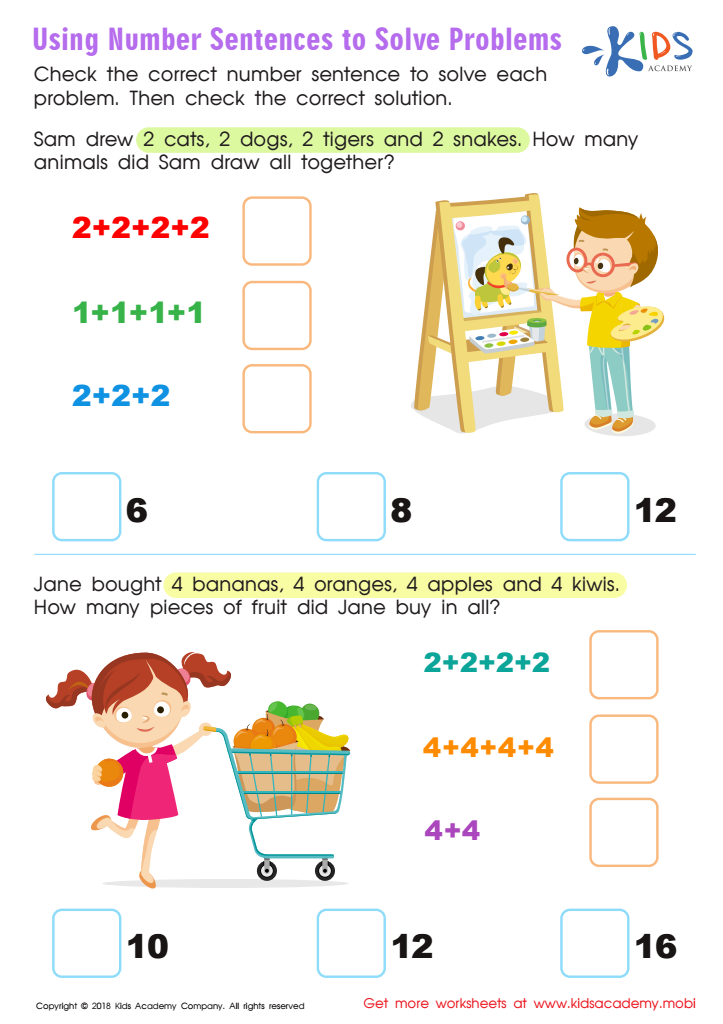
Using Number Sentences to Solve Problems Worksheet
Solving math problems requires an efficient strategy. Picture representation can help young mathematicians with basic addition problems, especially when it involves repeated addends. As they gain confidence, they'll be able to apply their number sentence solving abilities to more complex equations.
Using Number Sentences to Solve Problems Worksheet
Worksheet
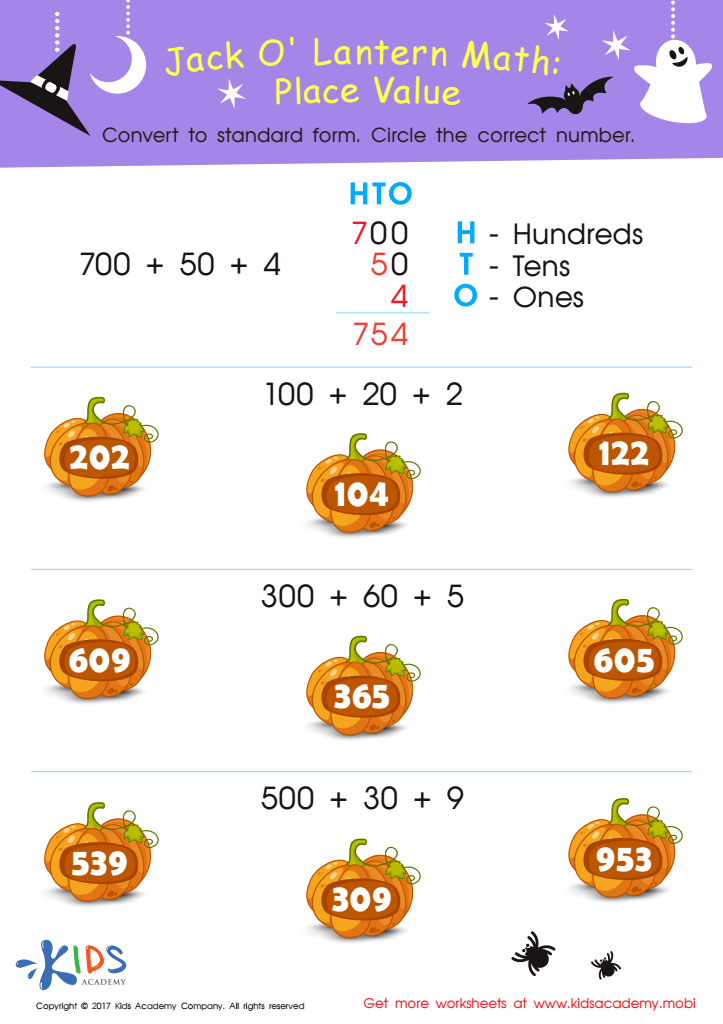
Free Place Value Worksheet
This Halloween-themed worksheet helps children practice converting equations to standard form and understand place value for better problem-solving. Download this free PDF for a fun way to do it!
Free Place Value Worksheet
Worksheet
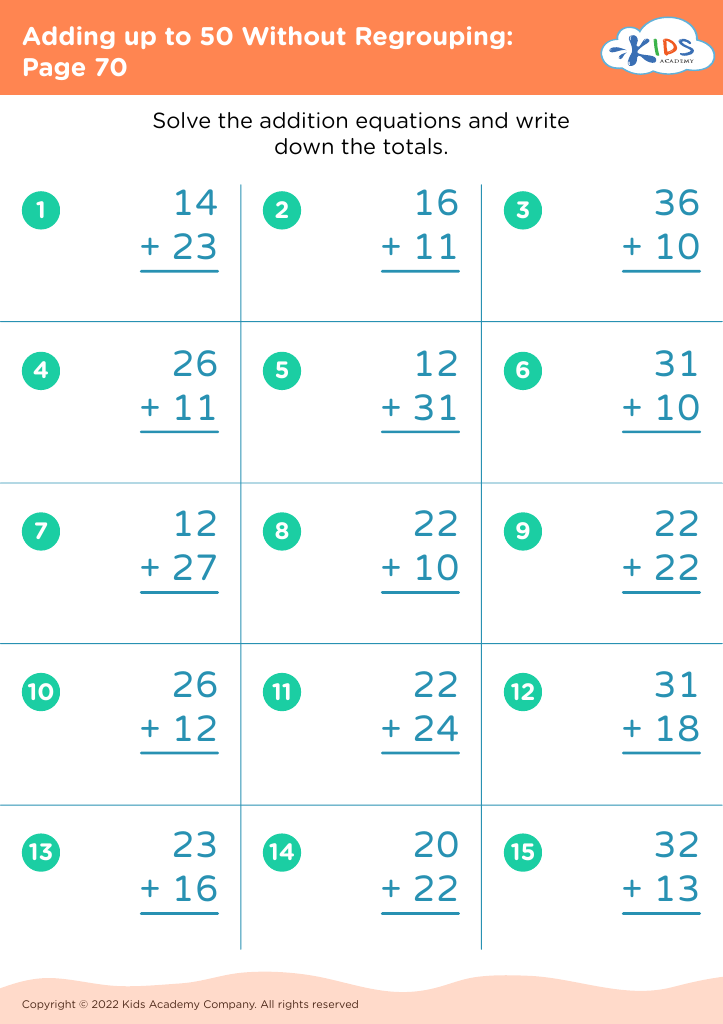
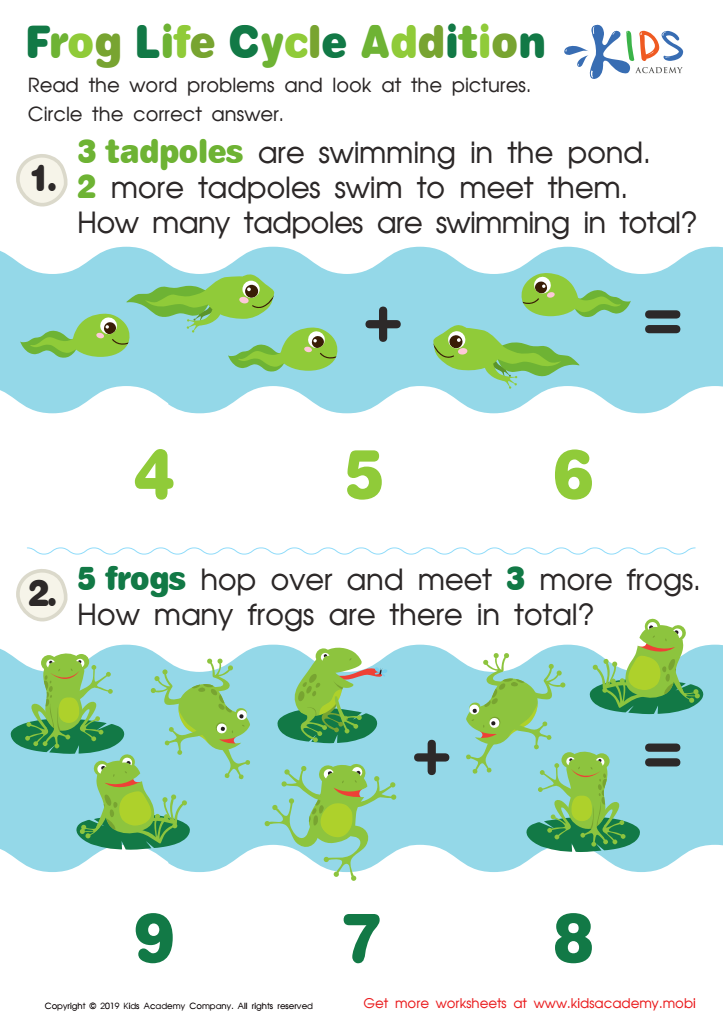
Frog Life Cycle Addition Worksheet
Look at this worksheet with your kids. Read the two word problems aloud, pointing at the pictures showing the frog's life cycle. Help your kids add simple equations and circle the correct answer. Fascinating creatures, frogs go through a cycle before becoming an adult.
Frog Life Cycle Addition Worksheet
Worksheet
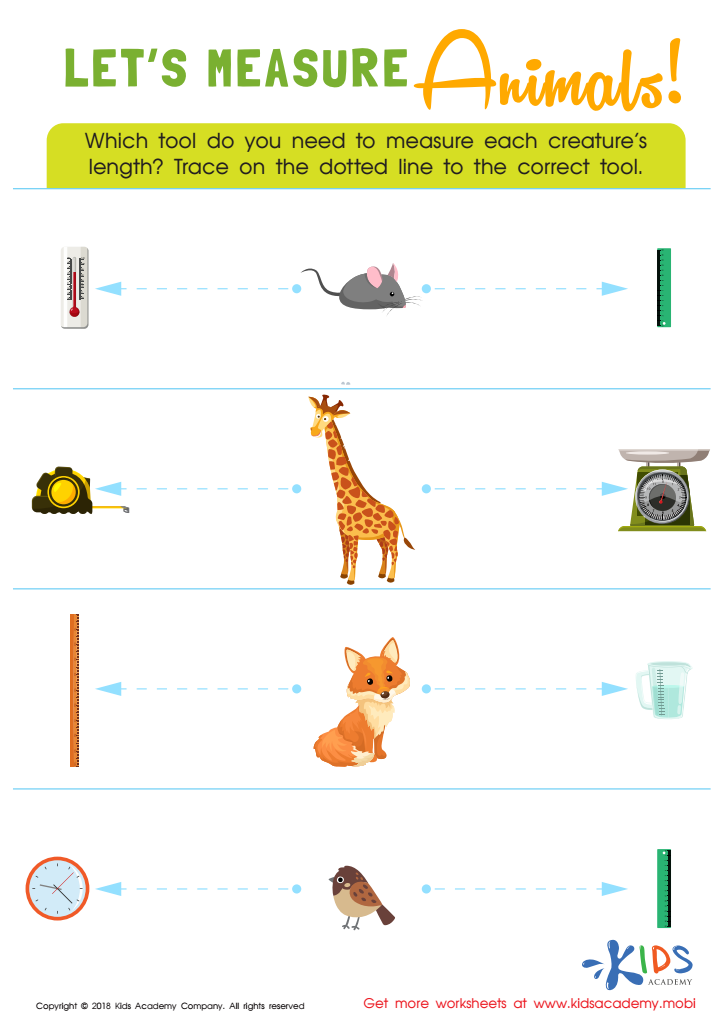
Let's Measure Animals! Worksheet
Have your students measure the length of animals like a mouse, giraffe, fox, and bird using this fun tracing sheet. They must carefully follow the dotted lines to the correct measuring tool, and by the end of the colorful worksheet, they'll know more about measuring and the different tools used.
Let's Measure Animals! Worksheet
Worksheet
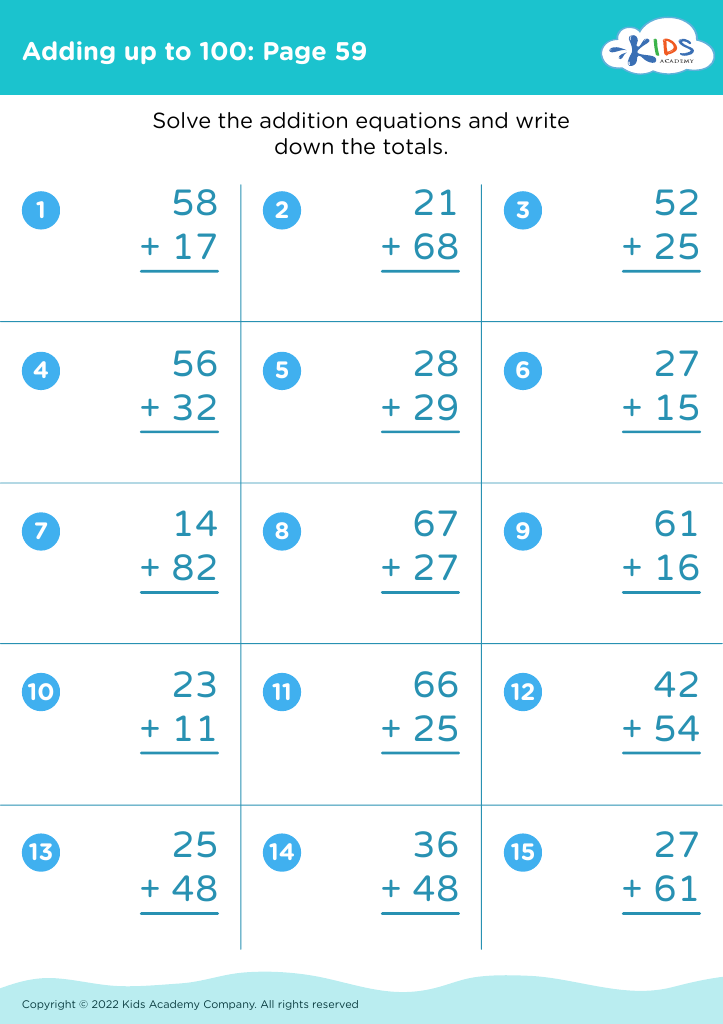
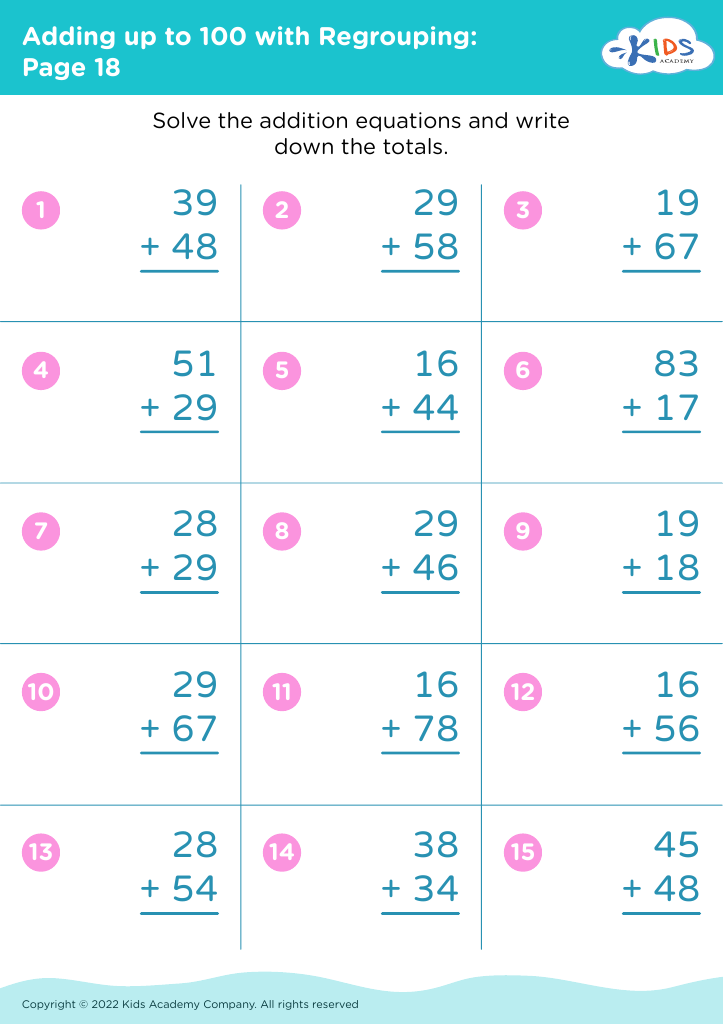
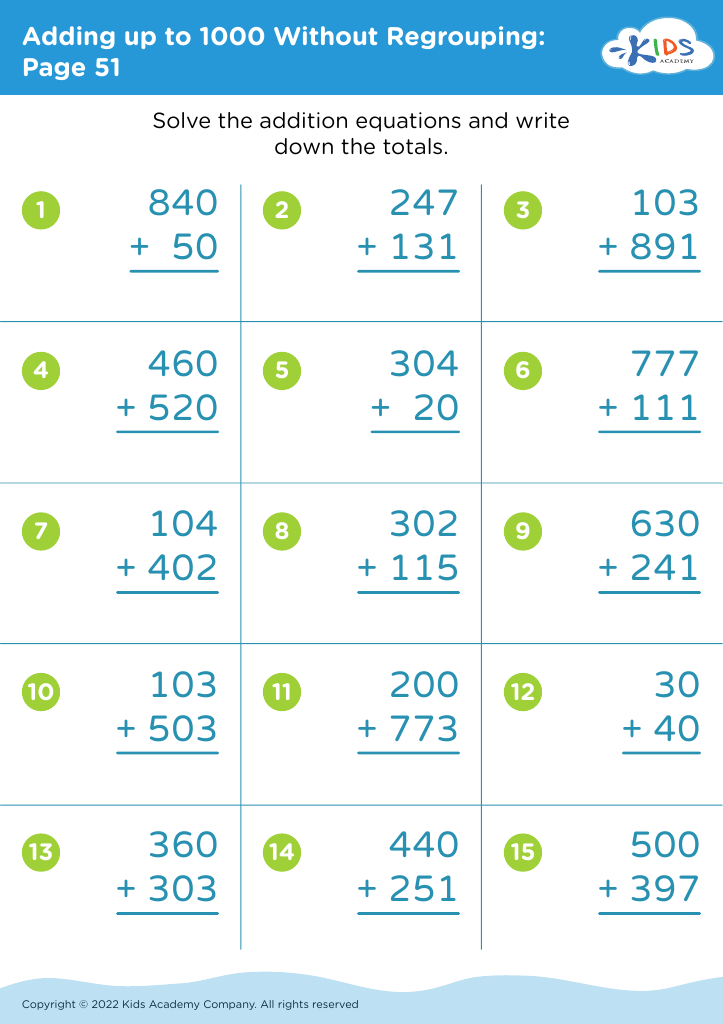
Join Kids Academy for Free
Who is primarily going to use this learning content?


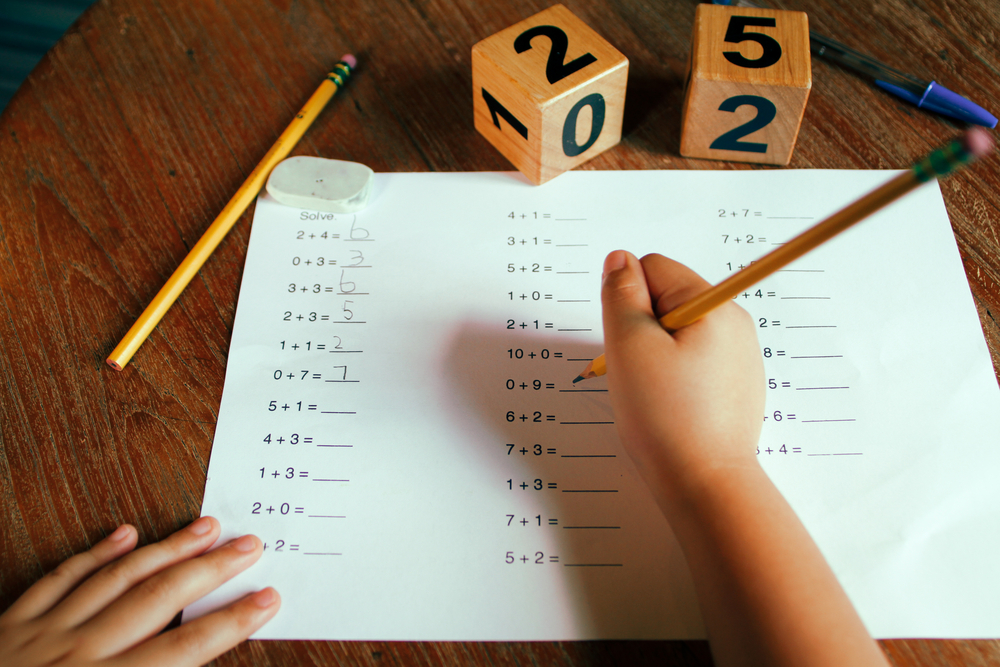




Enhancing counting skills in Grade 2 mathematics is crucial for several reasons. First, counting serves as the foundation for all mathematical concepts. A strong grasp of counting enables students to confidently tackle addition, subtraction, and even early multiplication, paving the way for more complex problem-solving as they advance in school.
Moreover, developing counting skills fosters a child's number sense, helping them understand quantity, order, and patterns. This is essential for real-life applications, from organizing items to budgeting their allowances. When parents and teachers prioritize counting skill enhancement, they are equipping students with critical thinking abilities and imaginative problem-solving techniques that will benefit them in various aspects of life.
Further, engaging activities focused on counting can make learning enjoyable and relatable, motivating children to participate actively in their education. Equipped with effective counting skills, students also experience increased confidence in math, reducing anxiety associated with numeracy. The collaborative encouragement of parents and teachers reinforces this learning environment and emphasizes its importance.
In essence, by caring about and promoting counting skills, we are nurturing competent, confident learners ready to face future mathematical challenges and lifelong learning opportunities.