Fraction Addition Grade 2 Math Worksheets
14 filtered results
-
From - To
Introduce your second graders to the exciting world of fraction addition with our comprehensive collection of Fraction Addition Grade 2 Math Worksheets. Designed to blend fun with effective learning, these worksheets come packed with engaging exercises and vibrant illustrations to help young students grasp the concept of adding fractions. Each worksheet is crafted so kids can practice and enhance their fraction sense progressively. With varying levels of difficulty, our worksheets cater to different learning paces, ensuring every child feels challenged and confident. Download now and watch your students embark on a fun-filled journey toward mastering fraction addition!
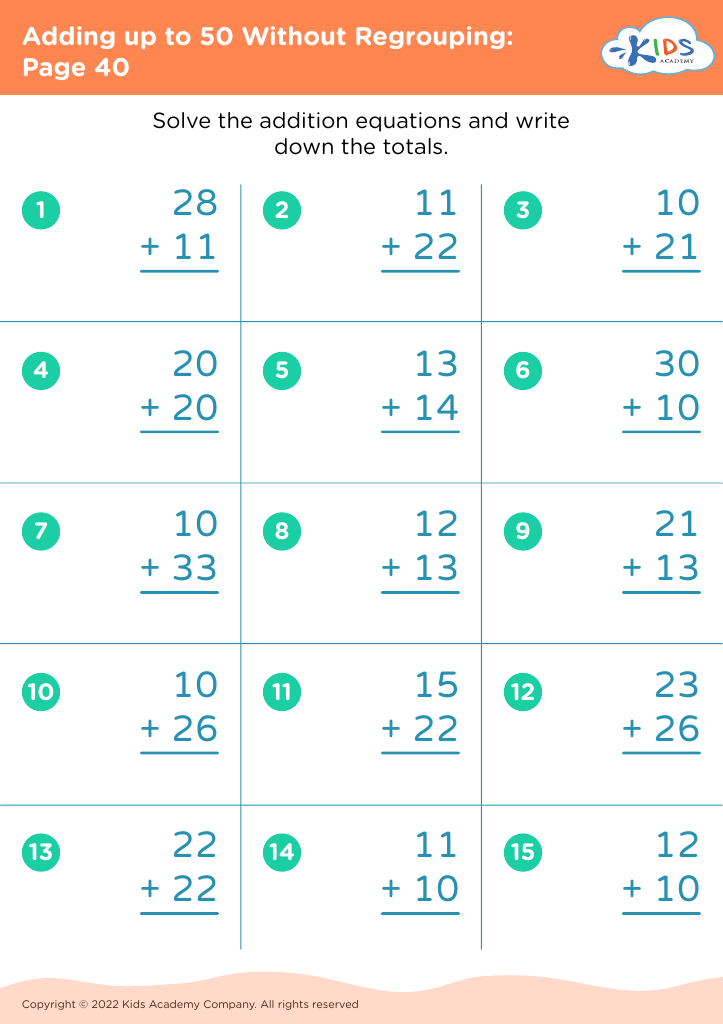
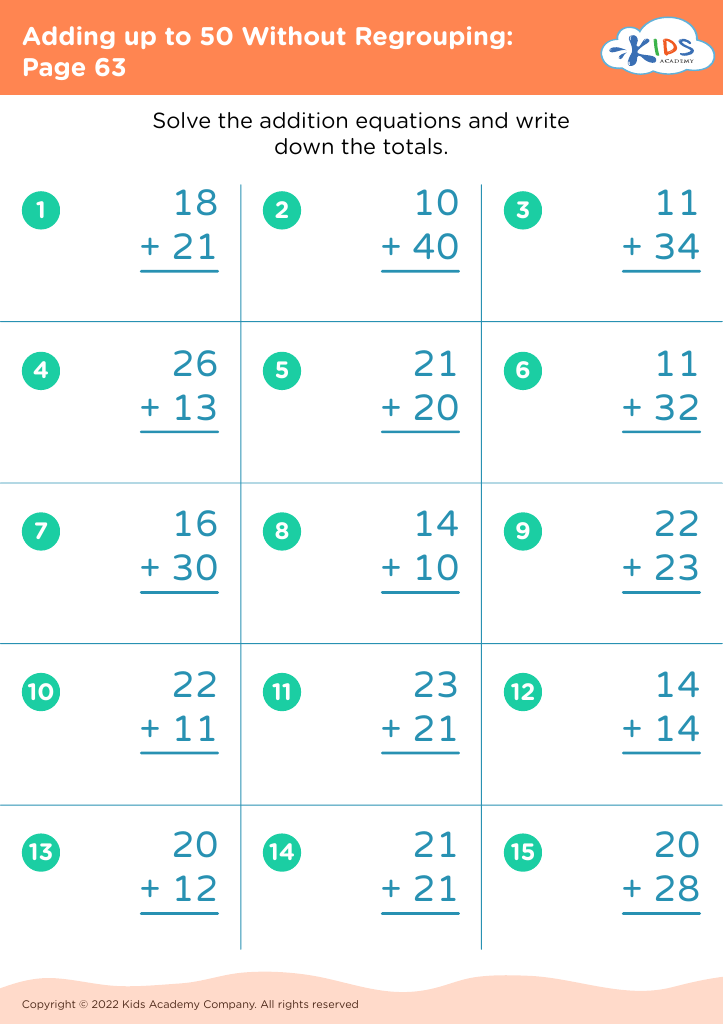
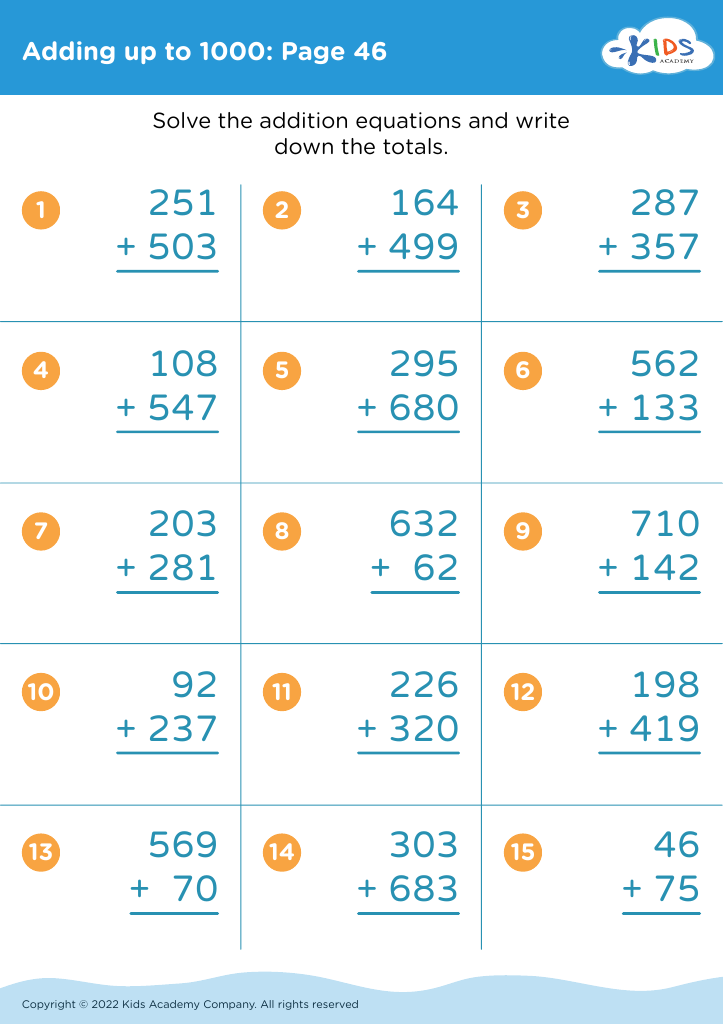
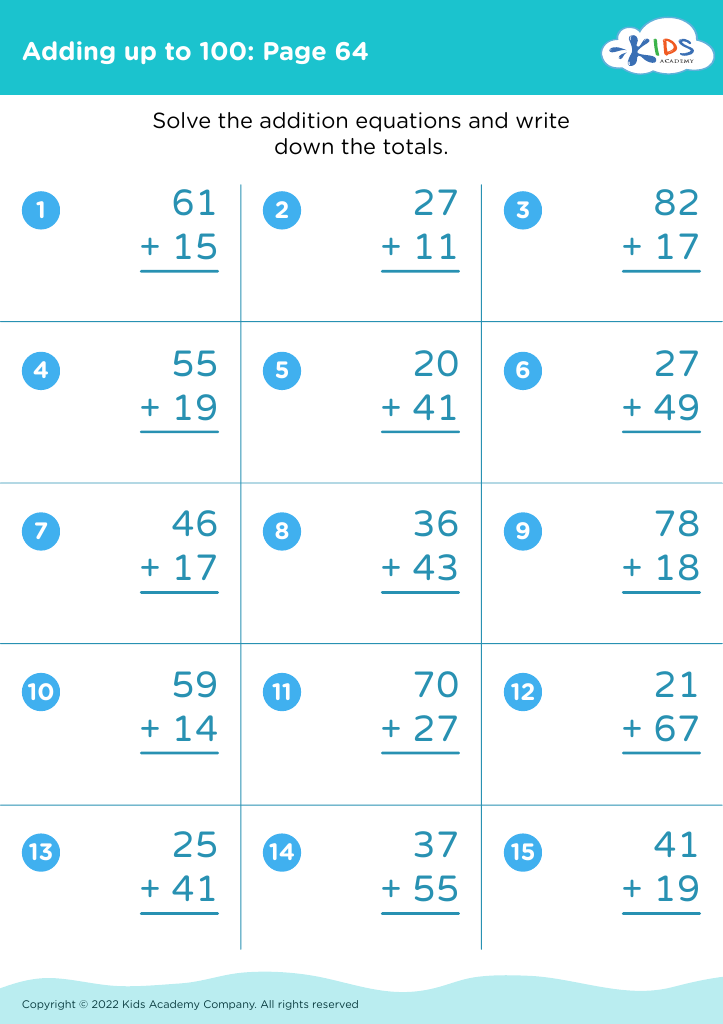







Parents and teachers should care about Fraction Addition in Grade 2 math because it lays a critical foundation for future mathematical understanding and problem-solving. Introducing fraction addition at this stage helps children develop a strong sense of numerical relationships and parts of a whole, which are essential skills for advanced math topics encountered in later grades, such as algebra, geometry, and calculus.
Understanding how to add fractions is not just a mathematical skill, but a life skill. It enhances children’s ability to think critically and logically, fosters their ability to make decisions and solve everyday problems involving quantities and measurements, and supports academic success. When children grasp fraction addition early, they build confidence in their math abilities, reducing math anxiety and increasing their willingness to tackle more complex math challenges.
Furthermore, fraction addition feeds into a broader understanding of equivalence, proportionality, and the use of multiple representations to solve problems. Providing quality fraction education at an early age ensures a smoother transition to more abstract concepts later on. This not only benefits academic intelligence but also cultivates patience and perseverance as children work through the logical steps required in fraction operations. For effective, long-term educational and personal development, it's crucial to prioritize fraction understanding in early math instruction.