Identifying patterns Grade 2 Math Worksheets
3 filtered results
-
From - To
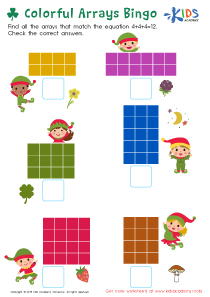
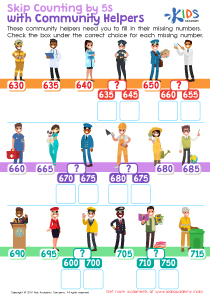
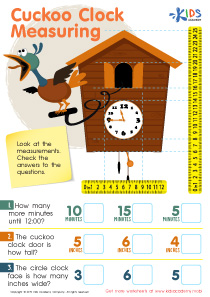
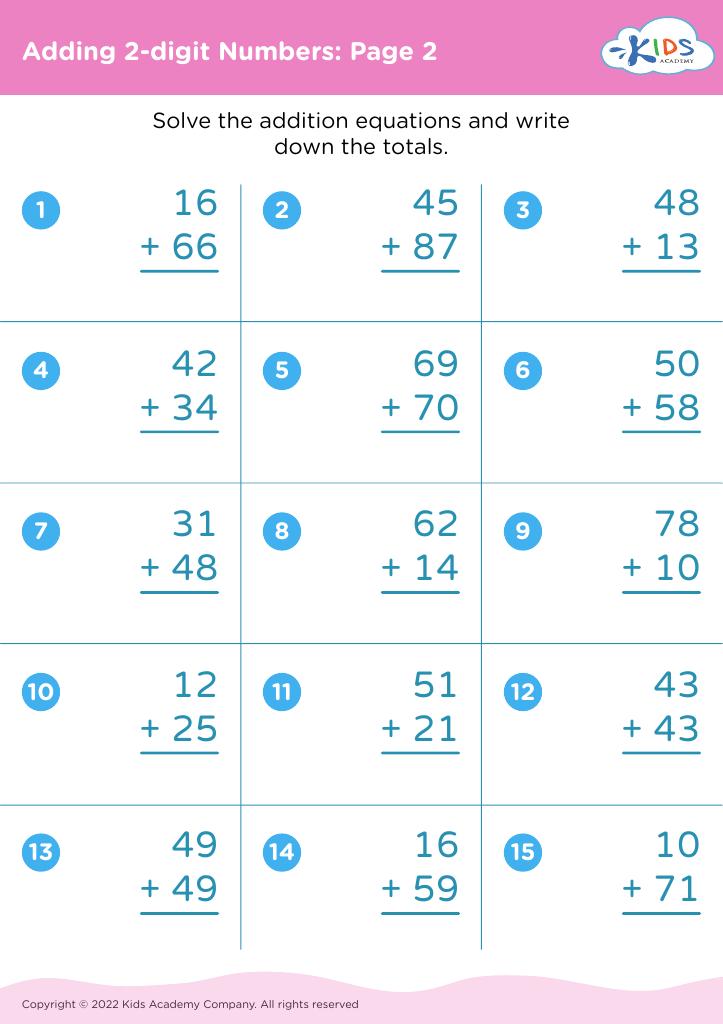
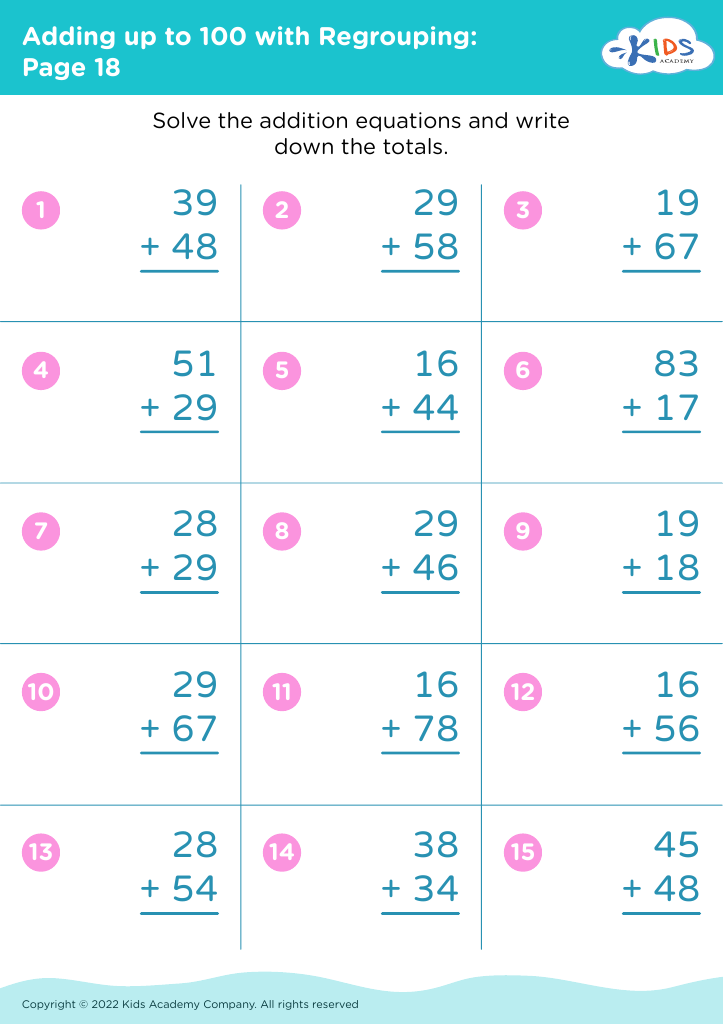
Explore our Grade 2 Math Worksheets designed to help young learners master the skill of identifying patterns. These engaging, colorful worksheets from Kids Academy provide numerous exercises that promote critical thinking and problem-solving abilities. Each worksheet is equipped with various patterns, including shapes, colors, and numbers, to build a strong mathematical foundation. Perfect for classroom use or at-home practice, our worksheets ensure that students easily understand and recognize repeating sequences. With clear instructions and appealing illustrations, second graders will enjoy learning as they enhance their pattern recognition skills. Unlock your child's potential with our expertly crafted worksheets today!
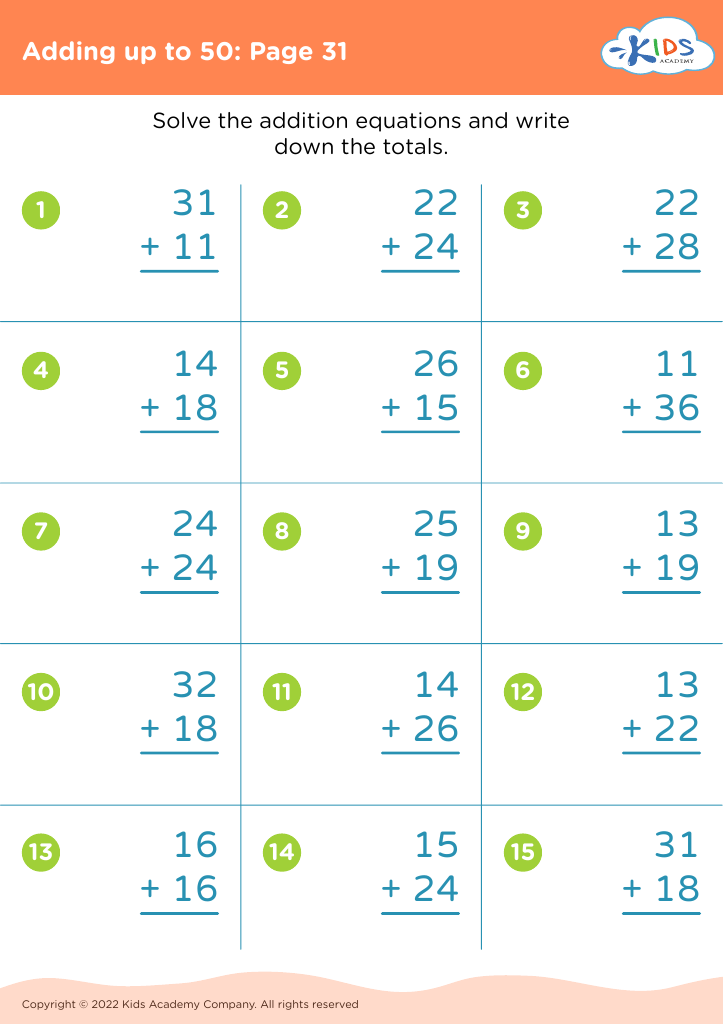







Identifying patterns is a foundational skill in Grade 2 Math that parents and teachers should focus on because it supports a child's overall cognitive development and academic success. At its core, recognizing patterns fosters critical thinking, problem-solving, and logical reasoning abilities. These skills are not only vital in mathematics but also in everyday decision-making and problem-solving tasks.
Engaging with patterns helps young students understand and predict sequences, which also lays the groundwork for more advanced math concepts, such as algebra, where recognizing patterns becomes crucial for finding unknown variables. For example, a child who can identify a numerical pattern like 2, 4, 6, 8 will find it easier to grasp more complex numerical relationships later on.
Furthermore, pattern recognition can enhance a child's ability to organize and categorize information, which is beneficial across all subjects. This skill improves memory and the ability to make connections between different pieces of information, promoting a more cohesive and comprehensive learning experience.
For parents and teachers, fostering an environment where pattern identification is regularly practiced through interactive activities, games, and practical examples can make learning fun and engaging. Addressing this educational component boosts confidence and enthusiasm for math, setting a strong academic foundation for the future.