Reading analog clocks Grade 2 Math Worksheets
5 filtered results
Difficulty Level
Grade
Age
-
From - To
Subject
Activity
Standards
Enhance your 2nd grader’s time-telling skills with our engaging "Reading Analog Clocks" worksheets! Our specially designed activities help young learners effortlessly grasp the concept of reading time on traditional clock faces. With fun exercises and clear visual aids, children practice identifying hours, half-hours, and minutes, reinforcing their math foundations in an enjoyable way. Perfect for both classroom use and at-home practice, these printable worksheets transform learning into a delightful adventure. Watch as your child’s confidence grows and their proficiency in reading analog clocks soars. Equip your young learner with essential skills today!
Favorites
With answer key
Interactive
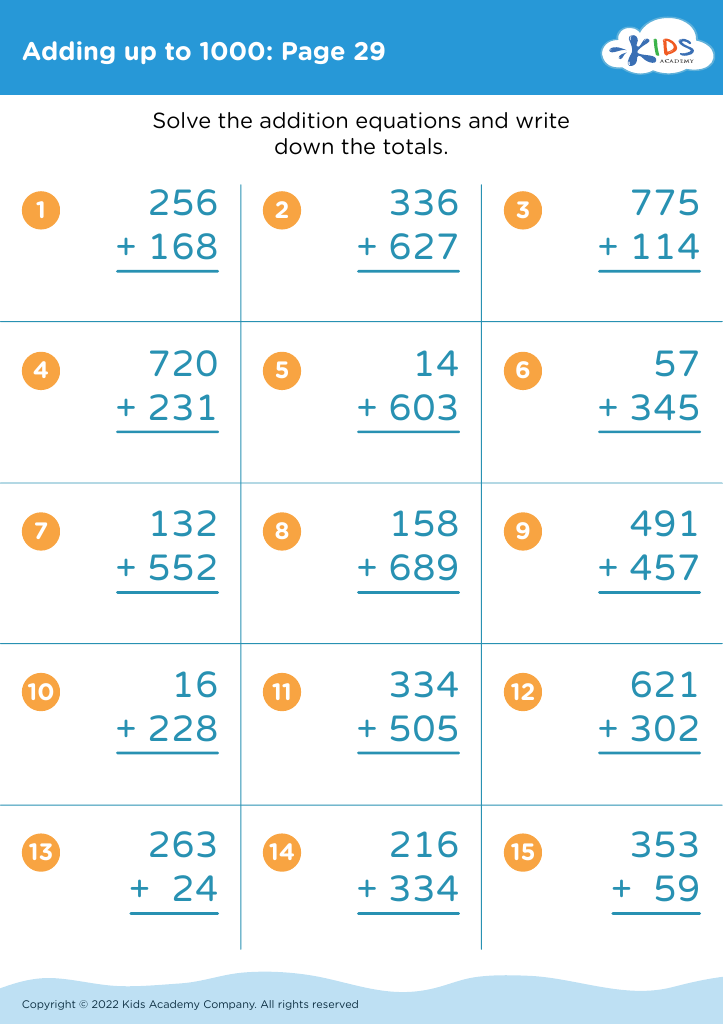
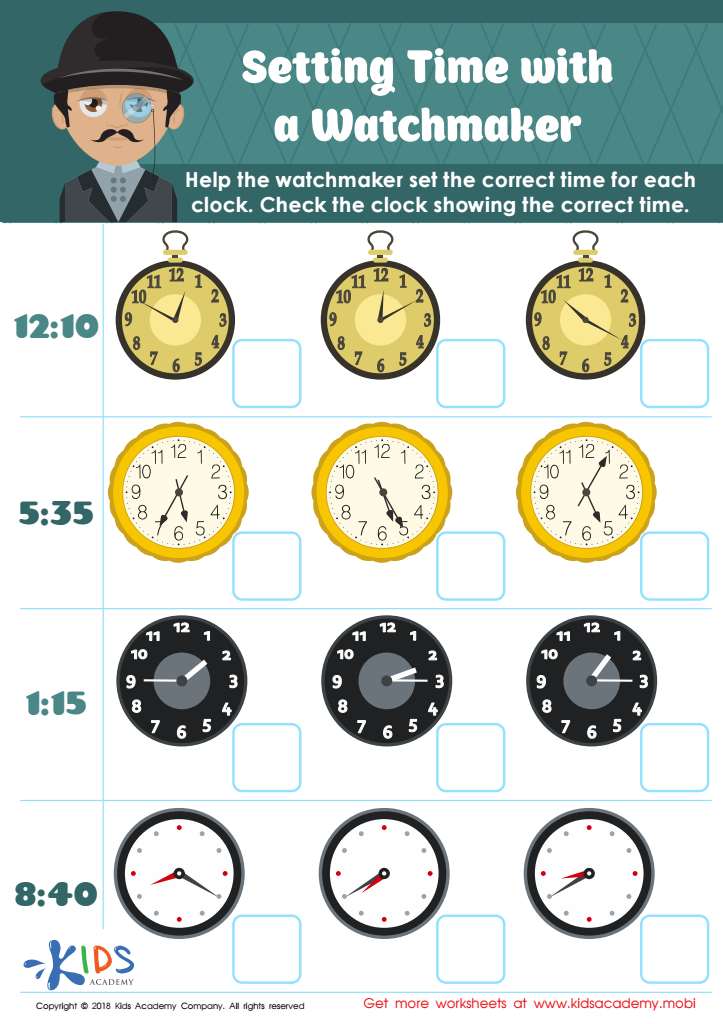
Setting Time with Watchmaker Worksheet
Can your kids tell the time? If so, this worksheet should be easy. Help them set the time for each clock: look at the time written on the left side and find the clock on the right side that matches.
 Assign to My Students
Setting Time with Watchmaker Worksheet
Worksheet
Join Kids Academy for Free
Who is primarily going to use this learning content?







Teaching second graders to read analog clocks is more important than it might first appear. Analog clocks provide a tactile, visual method for understanding time, which complements digital clocks by reinforcing fundamental principles of fractions, arithmetic, and spatial awareness. Learning to read an analog clock involves distinguishing between the minute and hour hands, memorizing which numbers correspond to which times, and understanding concepts like "half past" and "quarter to."
This educational endeavor integrates mathematical concepts such as counting by fives, understanding circular fractions, and recognizing patterns, which are crucial skills in math development. From these early stages, students can better grasp more complex time-related problems they will encounter in later grades.
Moreover, a thorough understanding of analog clocks fosters practical life skills and independence. Children learn time management, the daily schedule framework, and punctuality, which are invaluable as they grow. Analog clocks are still prevalent in many environments, from classrooms to public transportation systems, so being proficient in reading them remains relevant.
Teachers and parents adopting a supportive stance ensures students comfortably embrace these lessons. Their involvement demonstrates the practical application and reinforces consistent practice both at school and home, collaboratively equipping children with essential, lifelong learning skills.