Recognizing shapes Grade 2 Math Worksheets - Page 2
31 filtered results
-
From - To
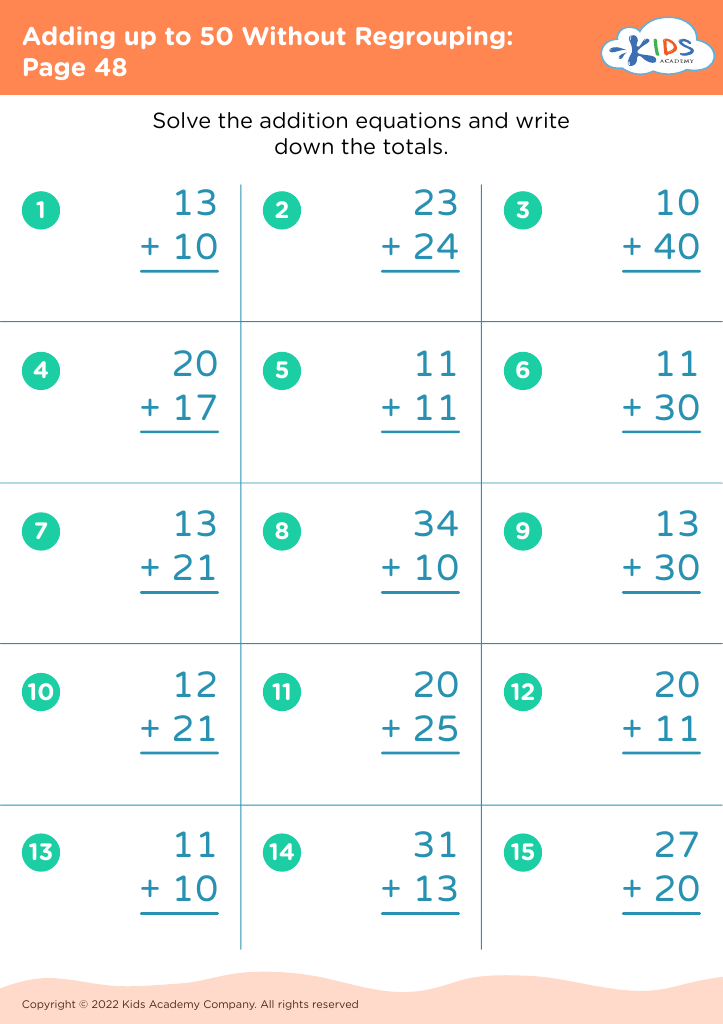
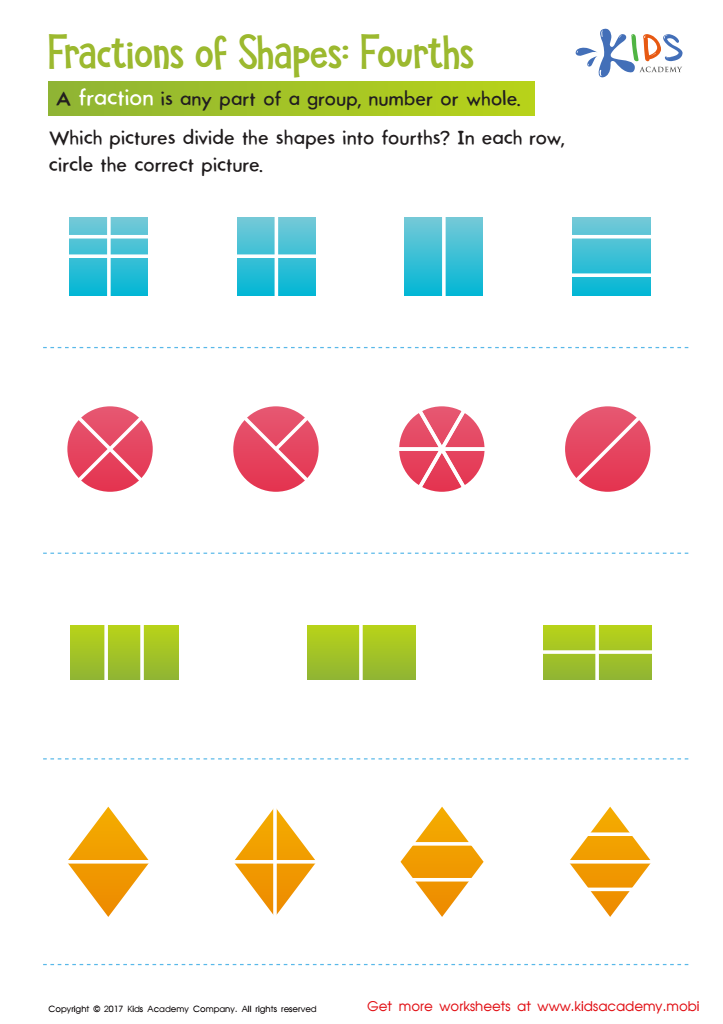
Fractions of Shapes Worksheet
 Assign to My Students







Recognizing shapes in Grade 2 math is fundamental for a child's cognitive and developmental growth. It extends beyond basic geometry and delves into critical thinking, problem-solving, and spatial awareness. For parents and teachers, emphasizing this skill is crucial for several reasons.
Firstly, understanding shapes enhances visual perception abilities. Children learn to observe the world around them more closely and understand the properties of different objects. This skill is not only vital in math but also in everyday situations.
Secondly, recognizing shapes lays the groundwork for more advanced mathematical concepts. This includes understanding fractions, area, perimeter, and symmetry, which are integral parts of the curriculum as students progress. Early mastery of shape recognition creates a solid foundation for these future topics.
Additionally, shape recognition supports language and communication development. Describing shapes involves using specific vocabulary, which helps expand a child's language skills. Phrases like "sides," "angles," and "vertices" become part of their descriptive language toolkit.
Finally, shapes are everywhere in daily life, from traffic signs to art and architecture. Recognizing and understanding them helps children make sense of their environment. Investing time in teaching shapes thus equips children with essential skills and broadens their overall understanding of both mathematical and real-world concepts.