Help your second graders master fractions with our engaging, printable math worksheets designed specifically for their grade level. "Understand Fractions" worksheets focus on essential concepts such as recognizing and comparing parts of a whole, identifying equivalent fractions, and learning fraction terminology. Each worksheet is crafted to enhance students' understanding through fun illustrations and interactive exercises. Ideal for both classroom and home learning, these resources provide structured practice that builds confidence and skills in math. Foster a solid foundation in fractions, making math enjoyable and accessible for every child. Start your journey toward fraction mastery today!
Check out this FREE Grade 2 Trial Lesson on Math!

One-Syllable Long and Short Vowel Words

Favorites
With answer key
Interactive
  • Grade 2
  • Understand fractions
  • Math
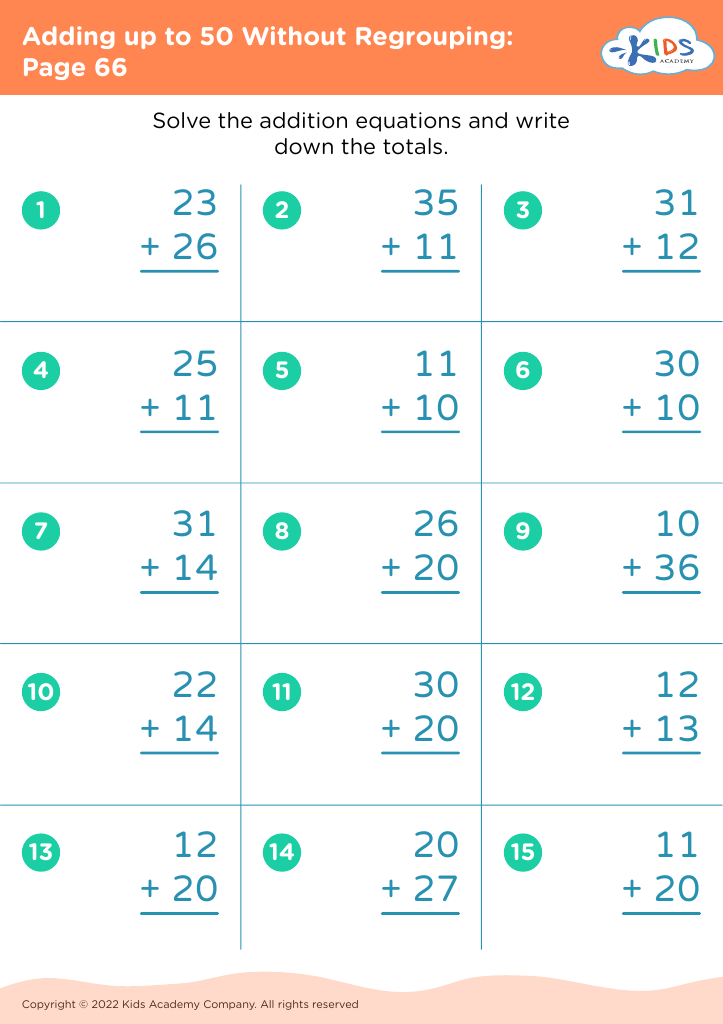
Adding up to 50 Without Regrouping: Page 66
Worksheet
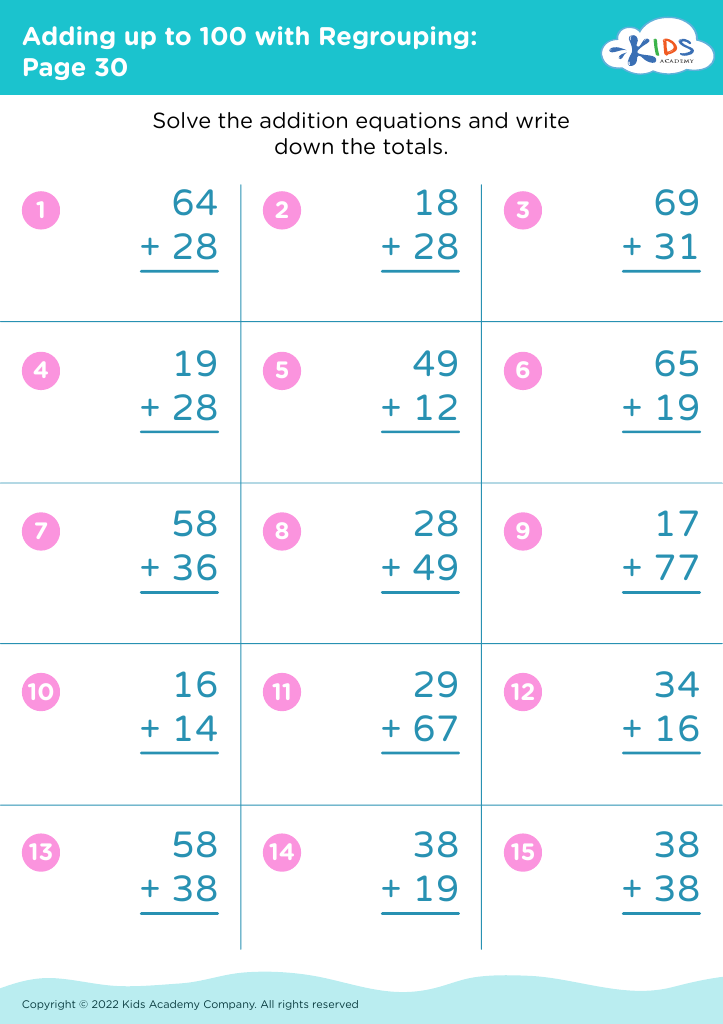
Adding up to 100 with Regrouping: Page 30
Worksheet
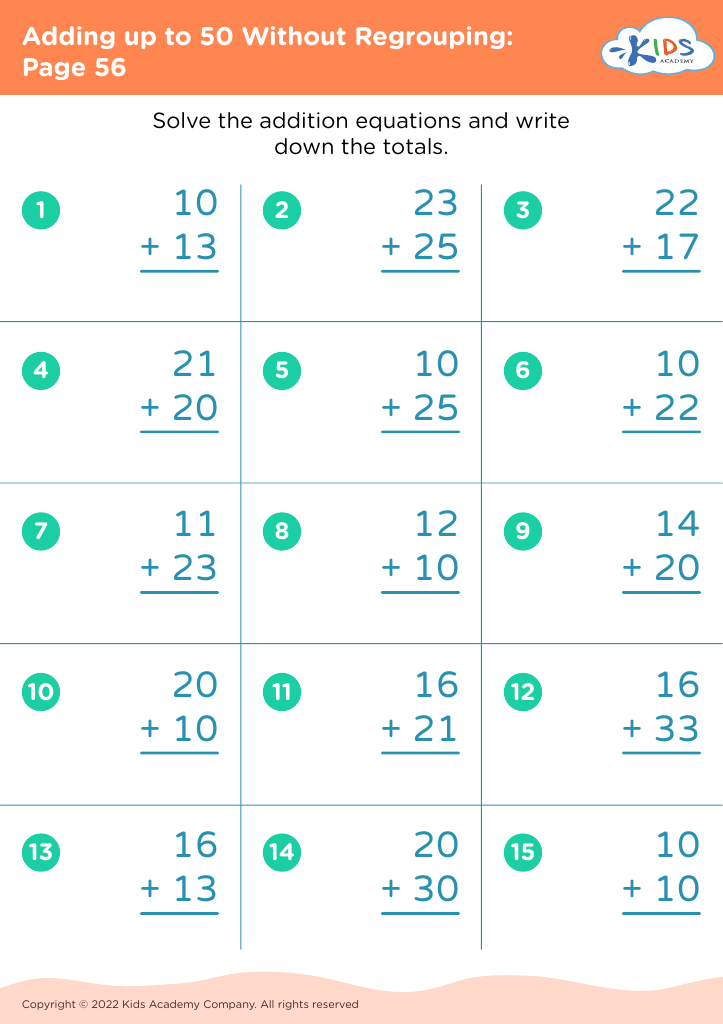
Adding up to 50 Without Regrouping: Page 56
Worksheet
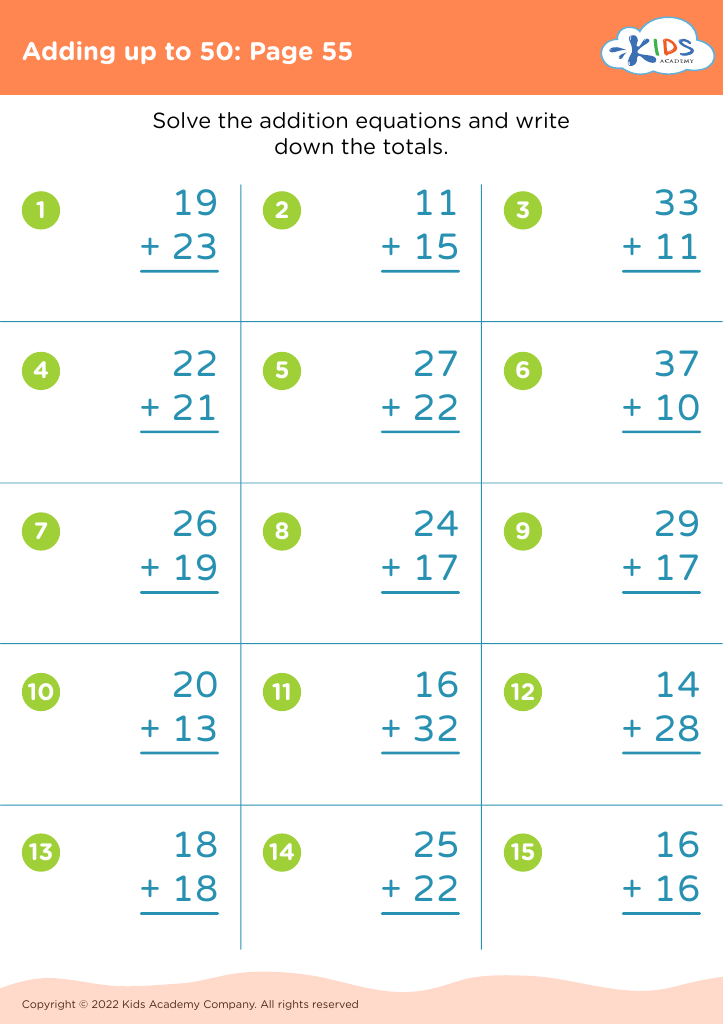
Adding up to 50: Page 55

Adding up to 50: Page 55

Adding up to 50: Page 55
Worksheet
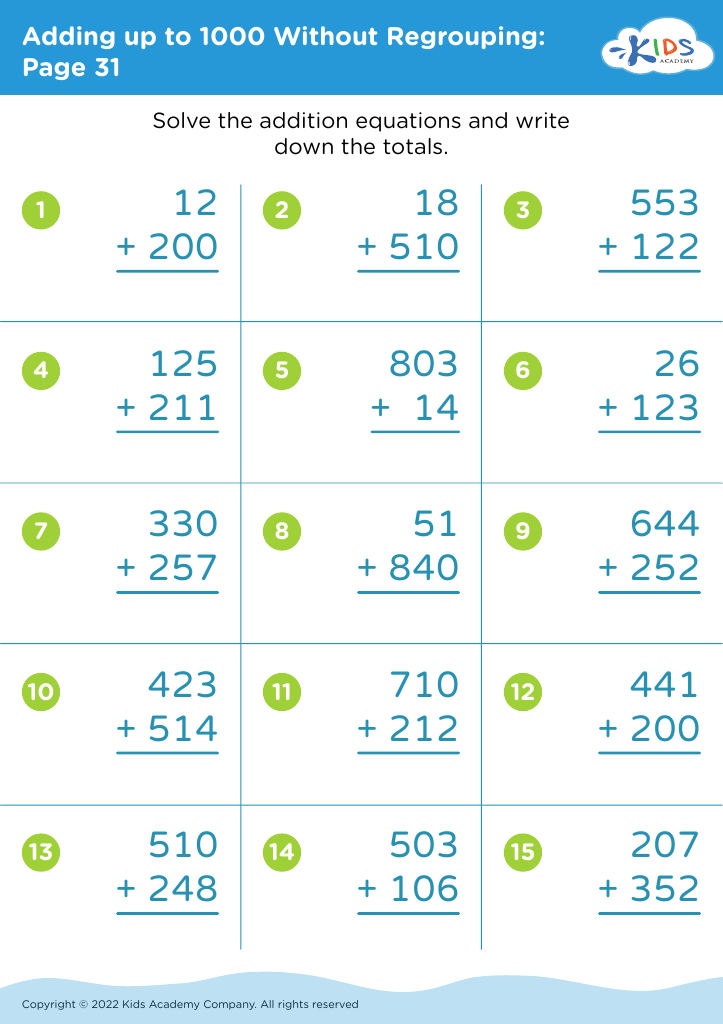
Adding up to 1000 Without Regrouping: Page 31
Worksheet
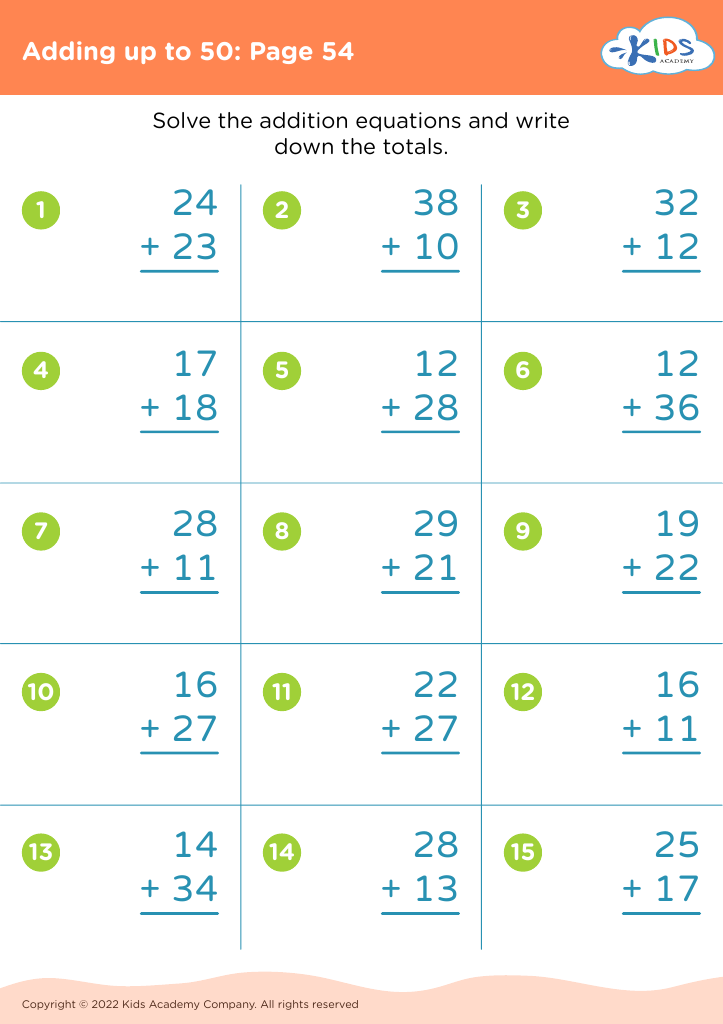
Adding up to 50: Page 54

Adding up to 50: Page 54

Adding up to 50: Page 54
Worksheet
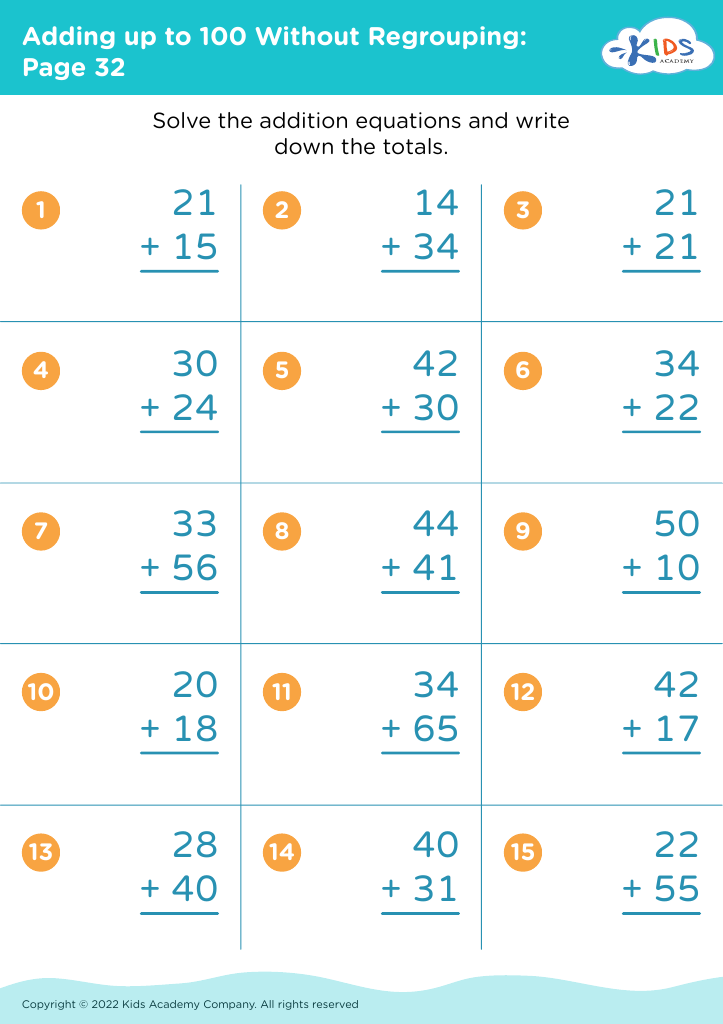
Adding up to 100 Without Regrouping: Page 32
Worksheet
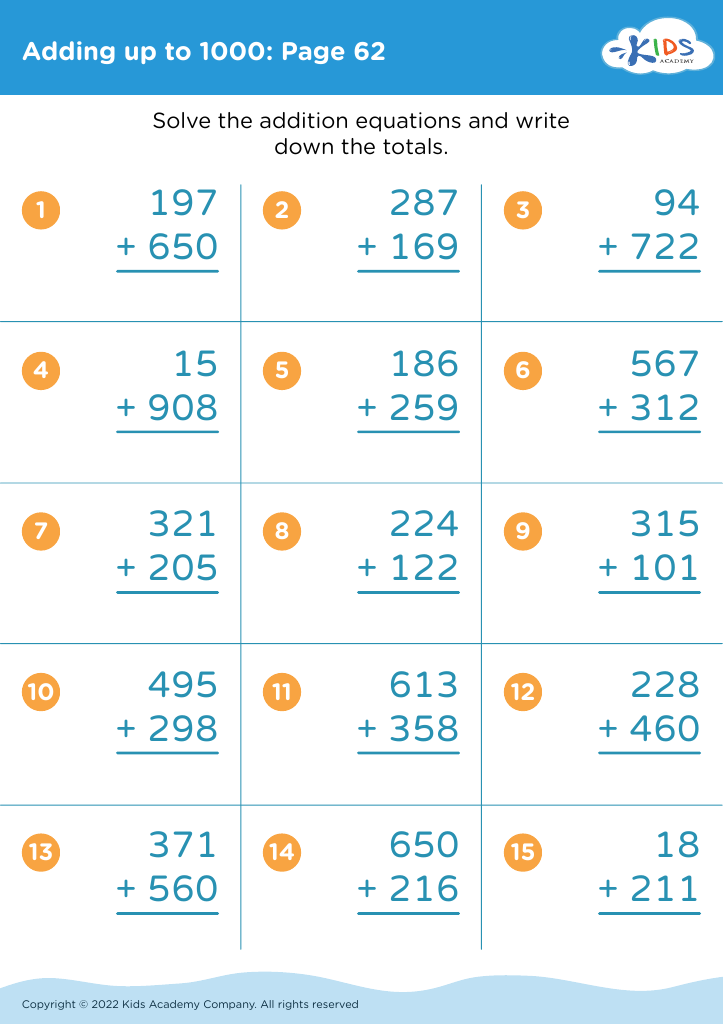
Adding up to 1000: Page 62

Adding up to 1000: Page 62

Adding up to 1000: Page 62
Worksheet
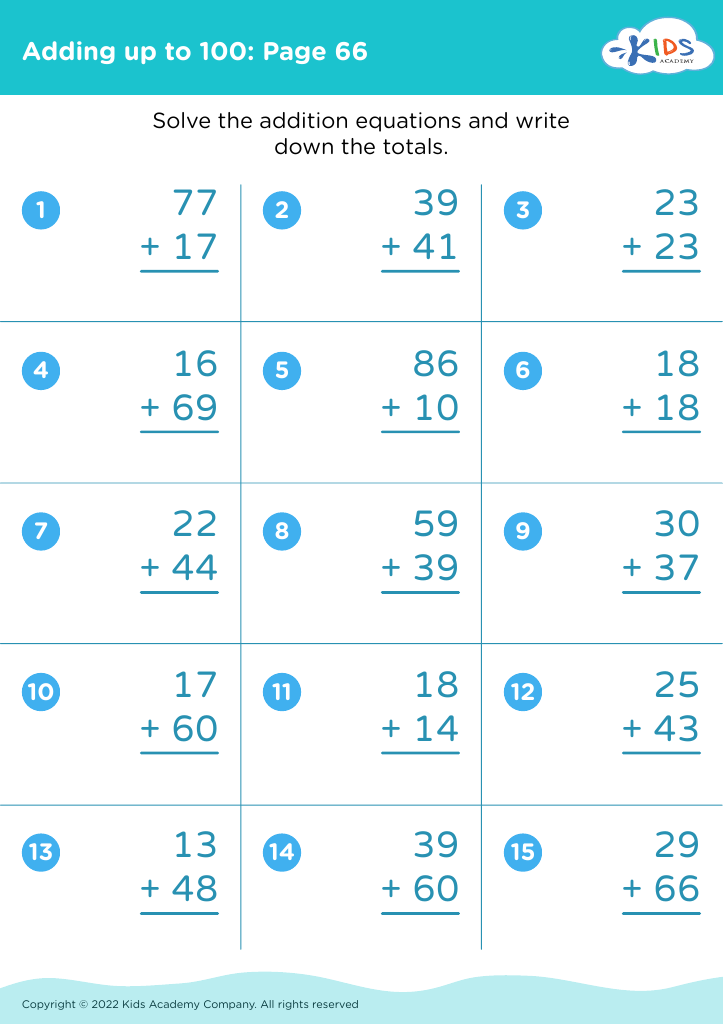
Adding up to 100: Page 66

Adding up to 100: Page 66

Adding up to 100: Page 66
Worksheet
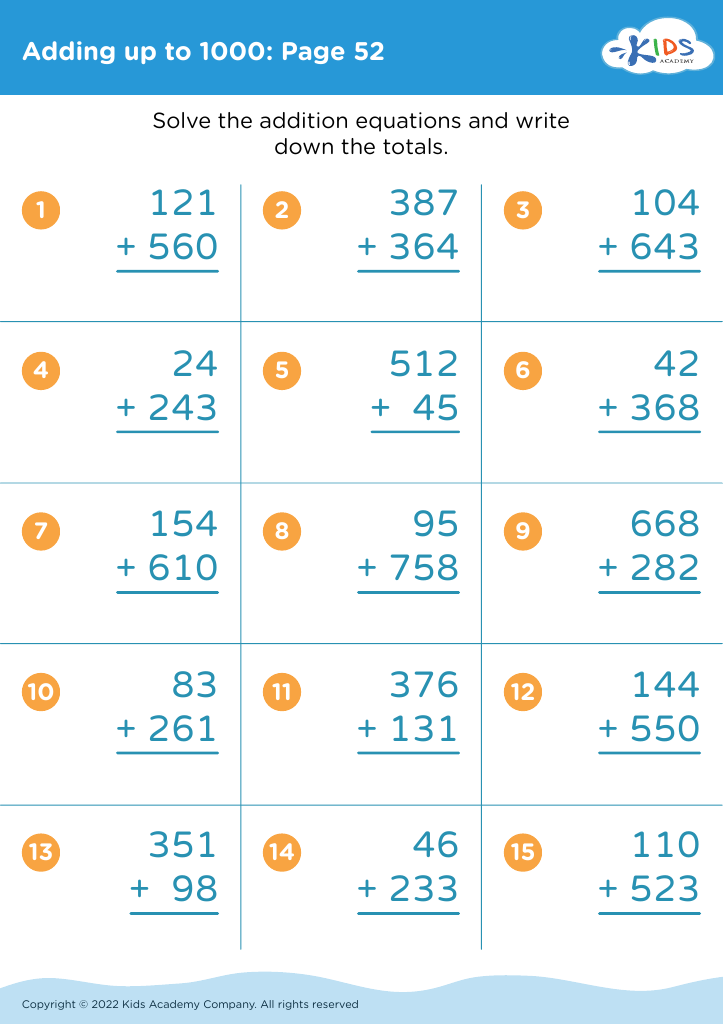
Adding up to 1000: Page 52

Adding up to 1000: Page 52

Adding up to 1000: Page 52
Worksheet
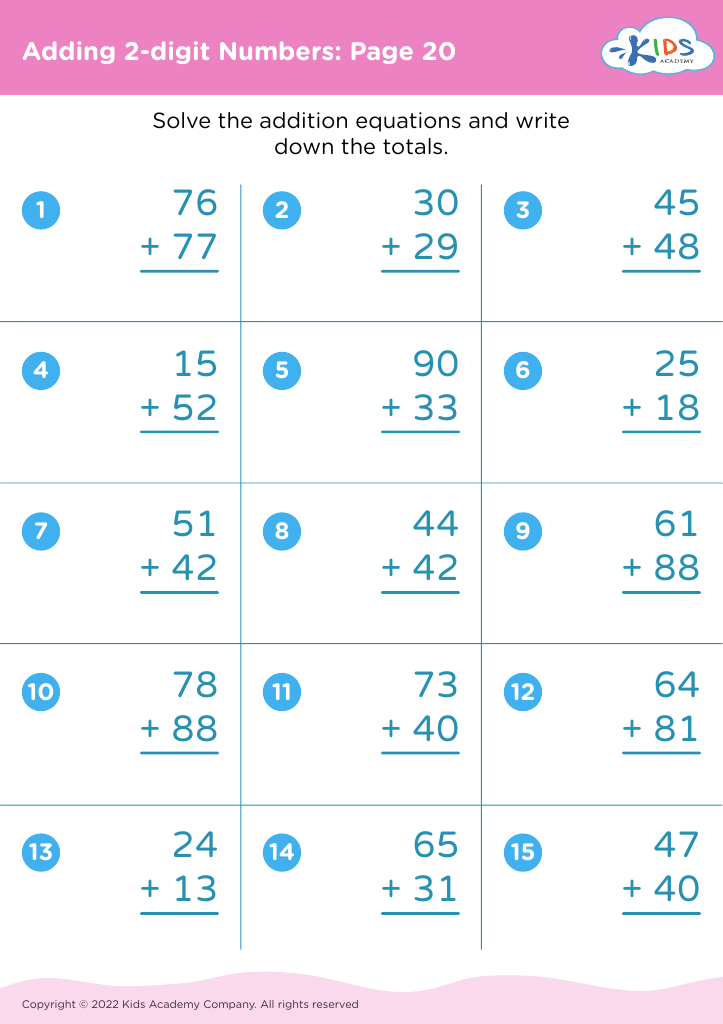
Adding 2-digit Numbers: Page 20

Adding 2-digit Numbers: Page 20

Adding 2-digit Numbers: Page 20
Worksheet
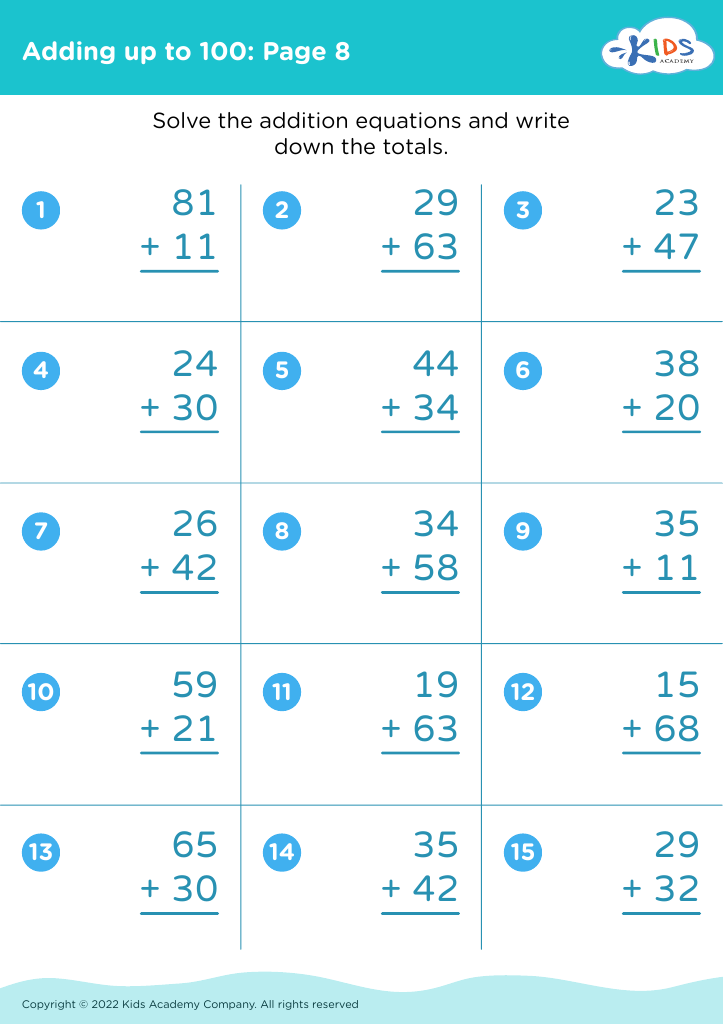
Adding up to 100: Page 8

Adding up to 100: Page 8

Adding up to 100: Page 8
Worksheet
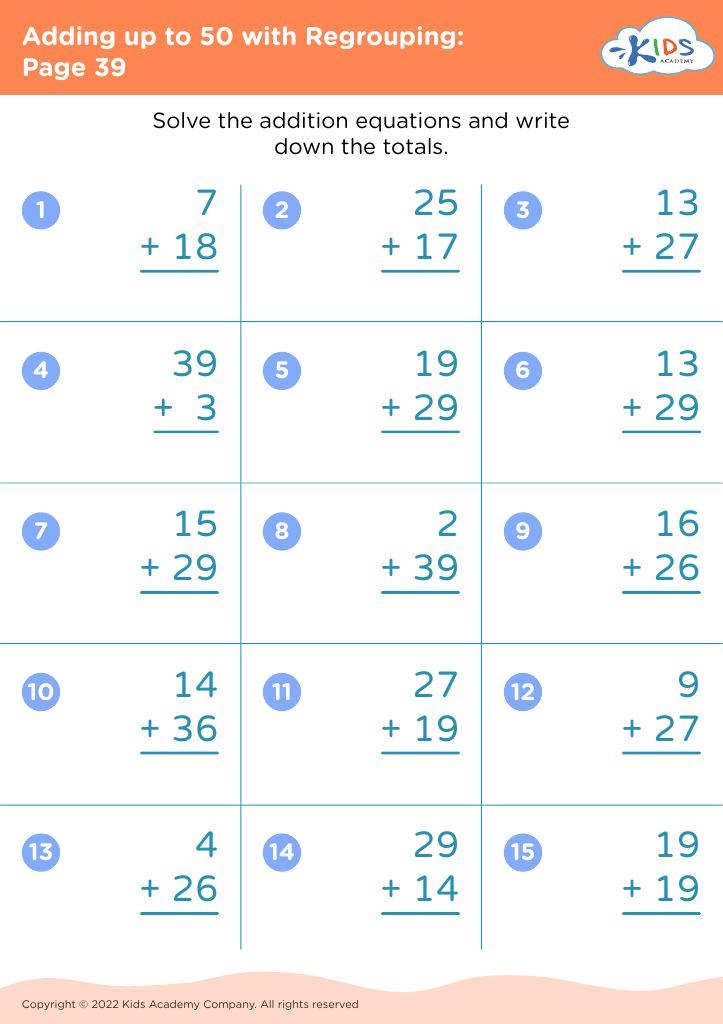
Adding up to 50 with Regrouping: Page 39
Worksheet
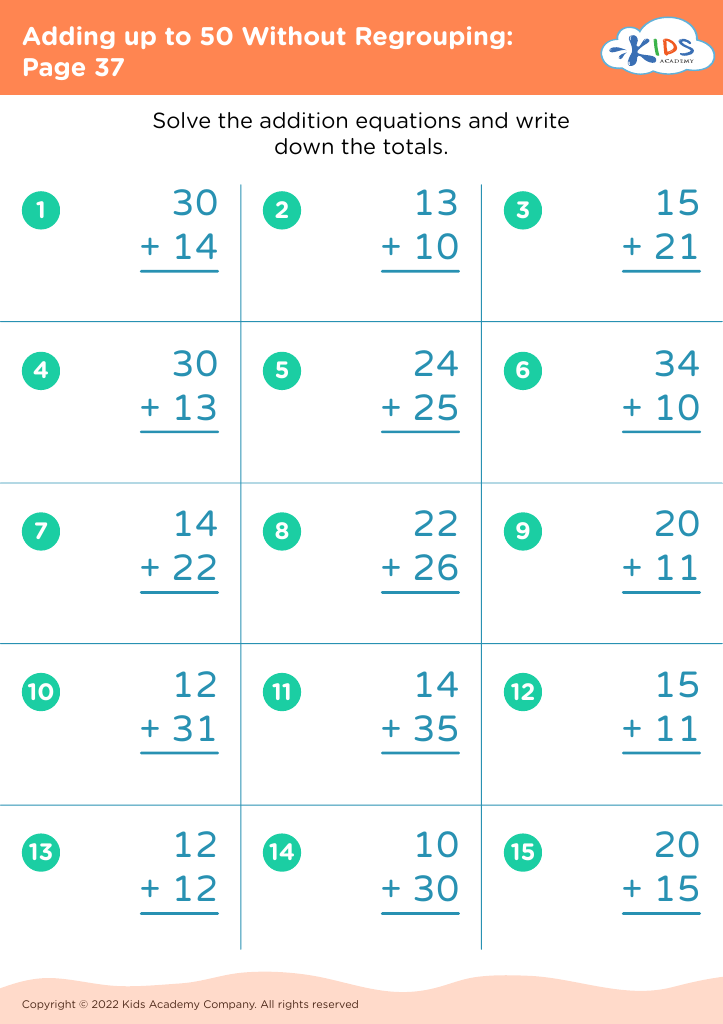
Adding up to 50 Without Regrouping: Page 37
Worksheet
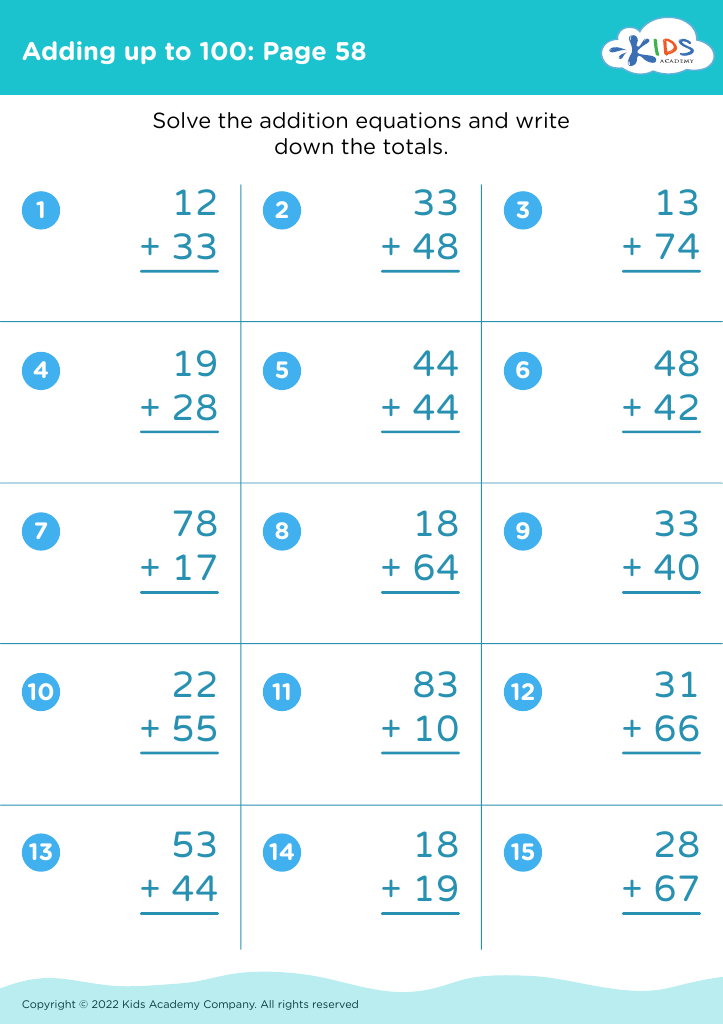
Adding up to 100: Page 58

Adding up to 100: Page 58

Adding up to 100: Page 58
Worksheet
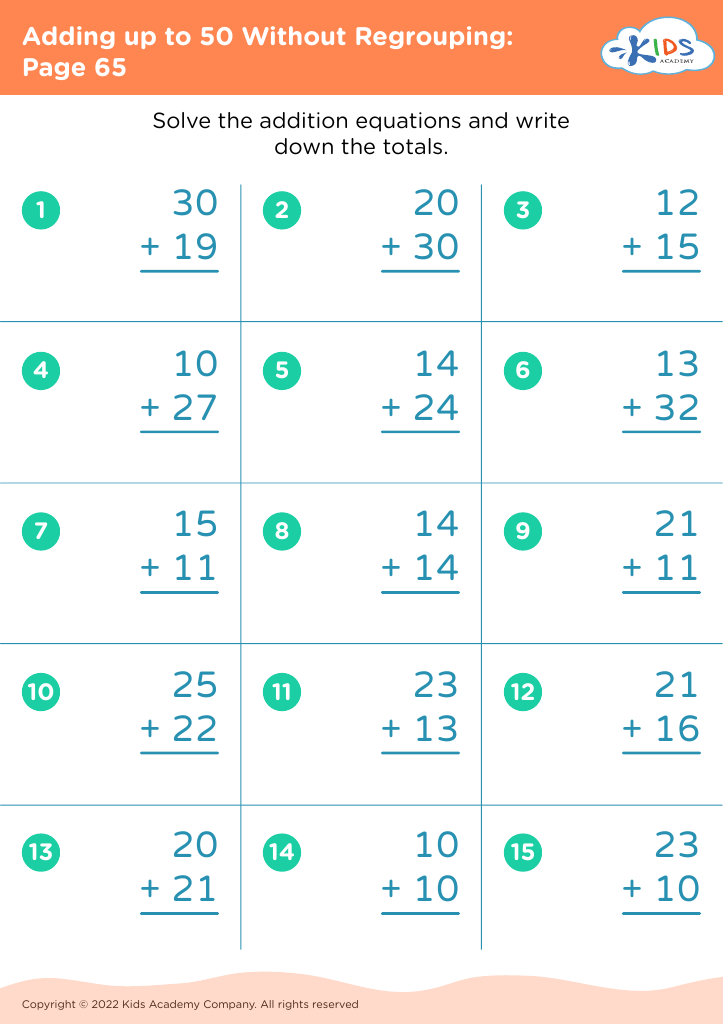
Adding up to 50 Without Regrouping: Page 65
Worksheet
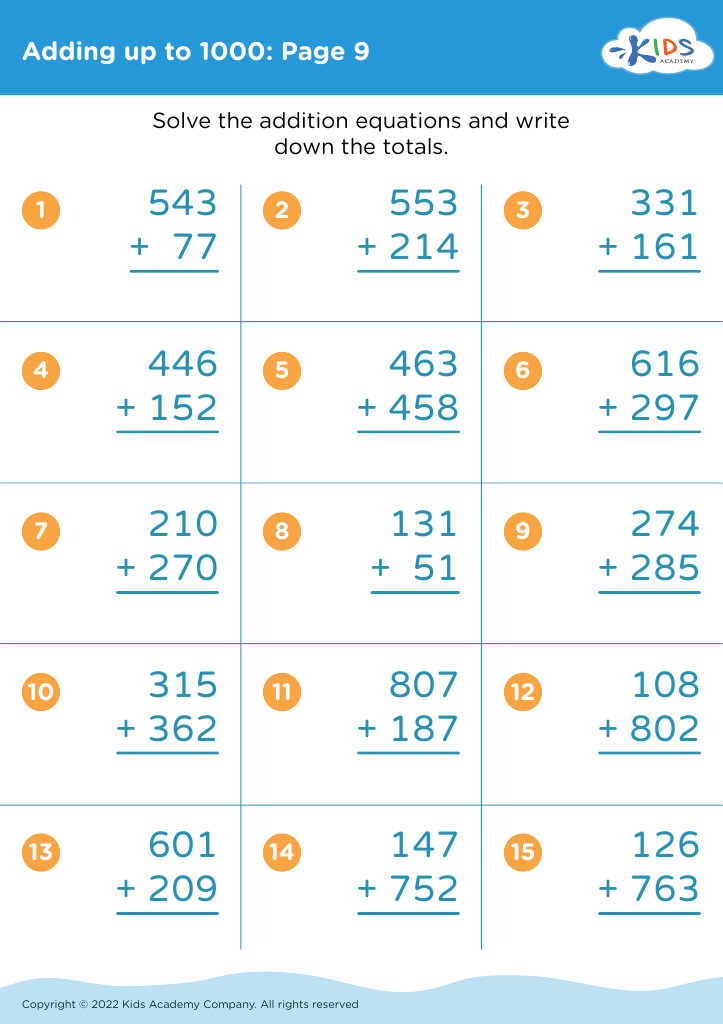
Adding up to 1000: Page 9

Adding up to 1000: Page 9

Adding up to 1000: Page 9
Worksheet
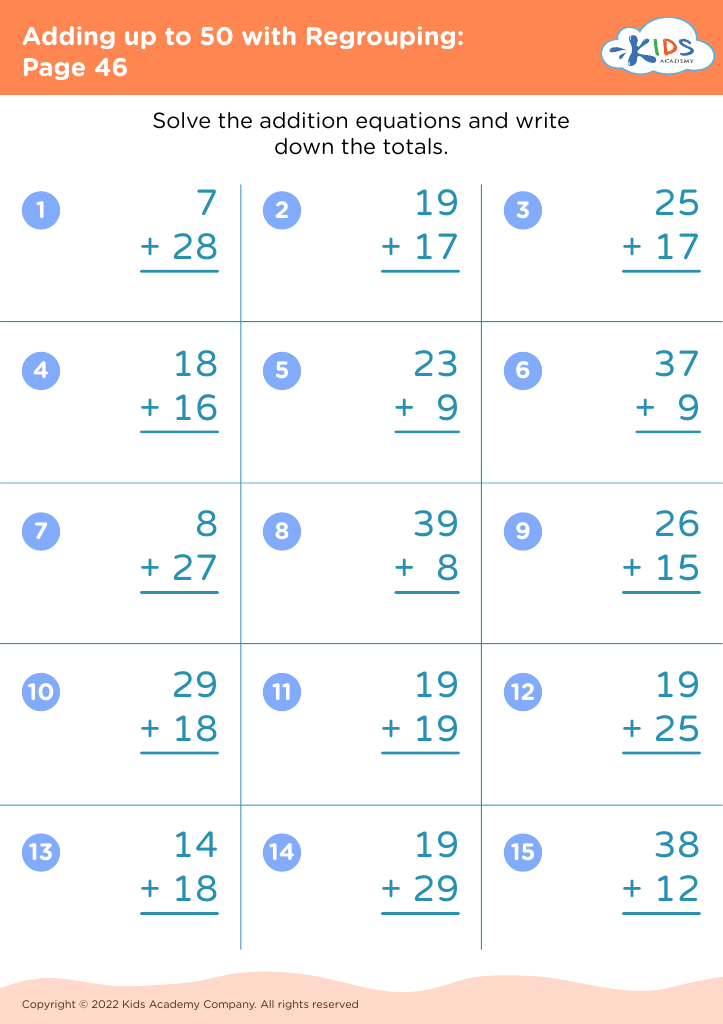
Adding up to 50 with Regrouping: Page 46
Worksheet
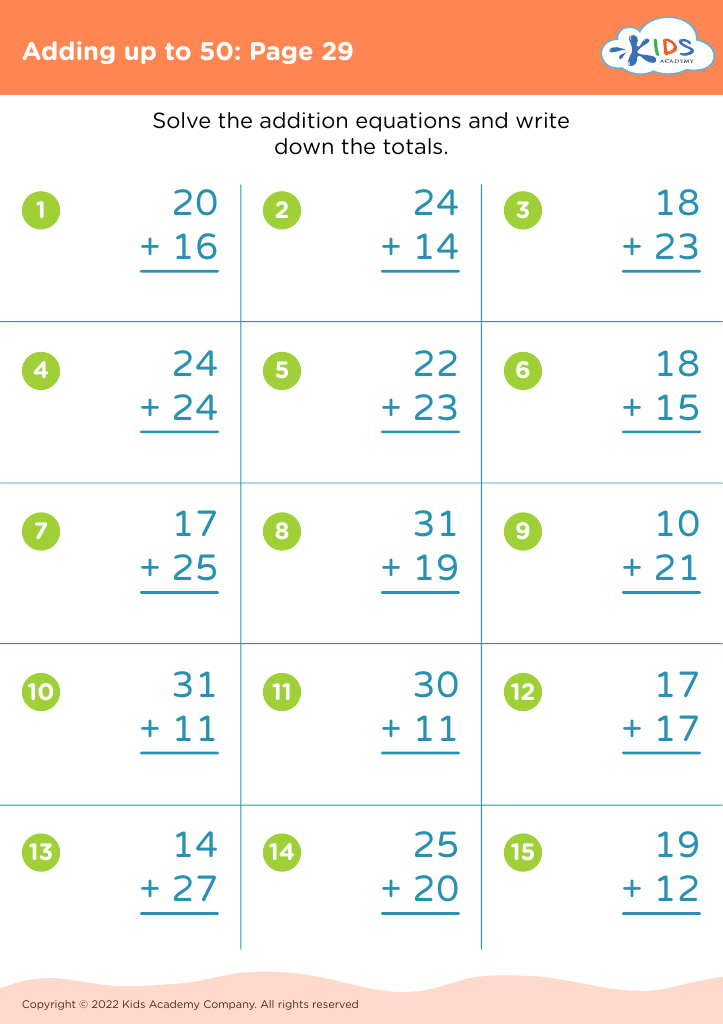
Adding up to 50: Page 29

Adding up to 50: Page 29

Adding up to 50: Page 29
Worksheet


Understanding fractions is a foundational skill that plays a crucial role in a child's overall mathematical development, particularly in Grade 2. At this level, students begin to decipher the concepts of part-to-whole relationships, which form the cornerstone of more advanced math topics, such as multiplication, division, and algebraic thinking. Fractions help students grasp the concept of sharing and dividing, making it relatable to everyday situations like cooking or sharing snacks.

For parents and teachers, recognizing the importance of fractions in Grade 2 math is essential for fostering a well-rounded education. Proficiency in fractions enhances critical thinking and problem-solving skills, encouraging children to approach challenges with a mathematical mindset. Mastery of fractions also builds confidence; as students understand how to manipulate and compare them, they develop a positive attitude toward math as a whole.

Moreover, in a world where quantitative literacy is increasingly vital, understanding fractions equips students with the skills necessary to navigate everyday tasks. Engaging with fractions early helps set the stage for success in higher-level math classes and real-life applications. Thus, parents and educators should prioritize fostering a solid understanding of fractions to aid the students’ academic growth and confidence in mathematics.