Understanding clocks Grade 2 Math Worksheets
3 filtered results
-
From - To
Enhance your 2nd grader's time-telling abilities with our "Understanding Clocks Grade 2 Math Worksheets." Specially designed for young learners, these worksheets help children master reading both analog and digital clocks. Each activity focuses on building essential skills such as identifying hours, minutes, and understanding AM/PM. Engaging exercises and colorful illustrations make learning fun and interactive, ensuring kids grasp the concept clearly. Perfect for classroom or at-home practice, these worksheets support foundational math skills and everyday time management. Join us at Kids Academy for quality, educator-approved resources to help your child excel in time-telling and beyond!
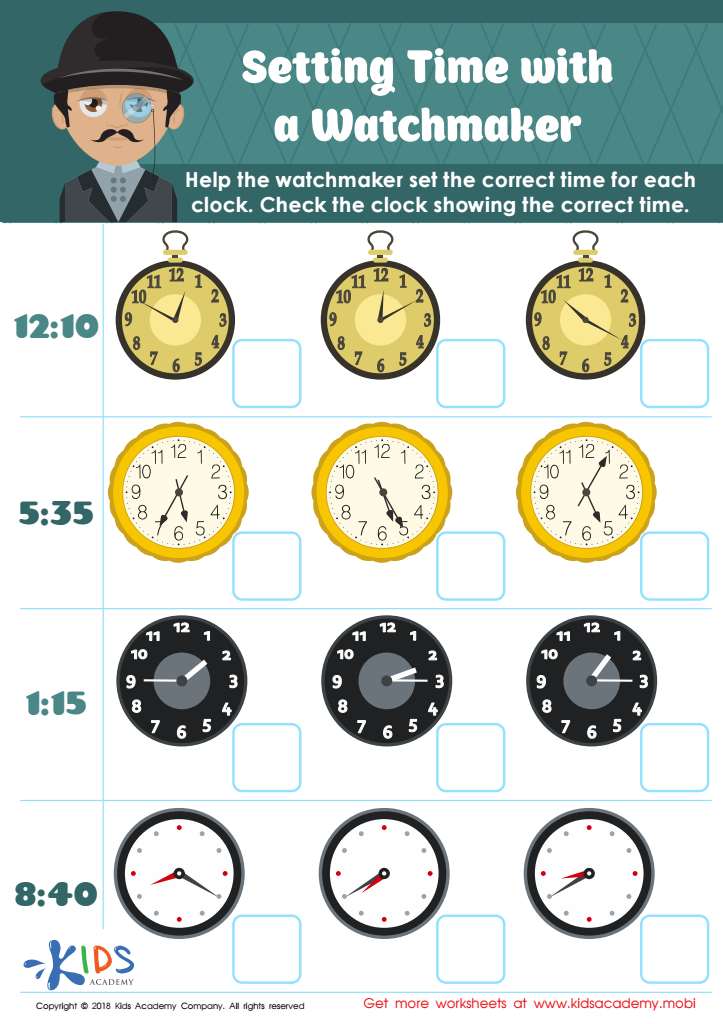
Setting Time with Watchmaker Worksheet
 Assign to My Students
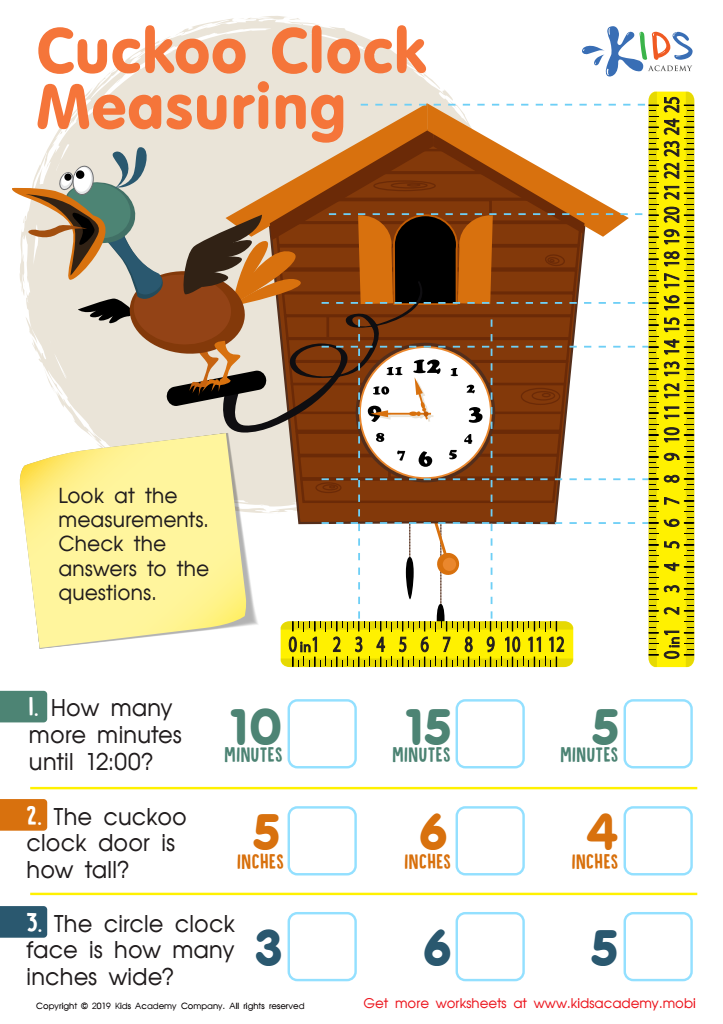
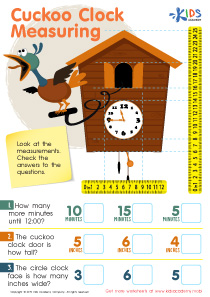
Cuckoo Clock Measuring Worksheet







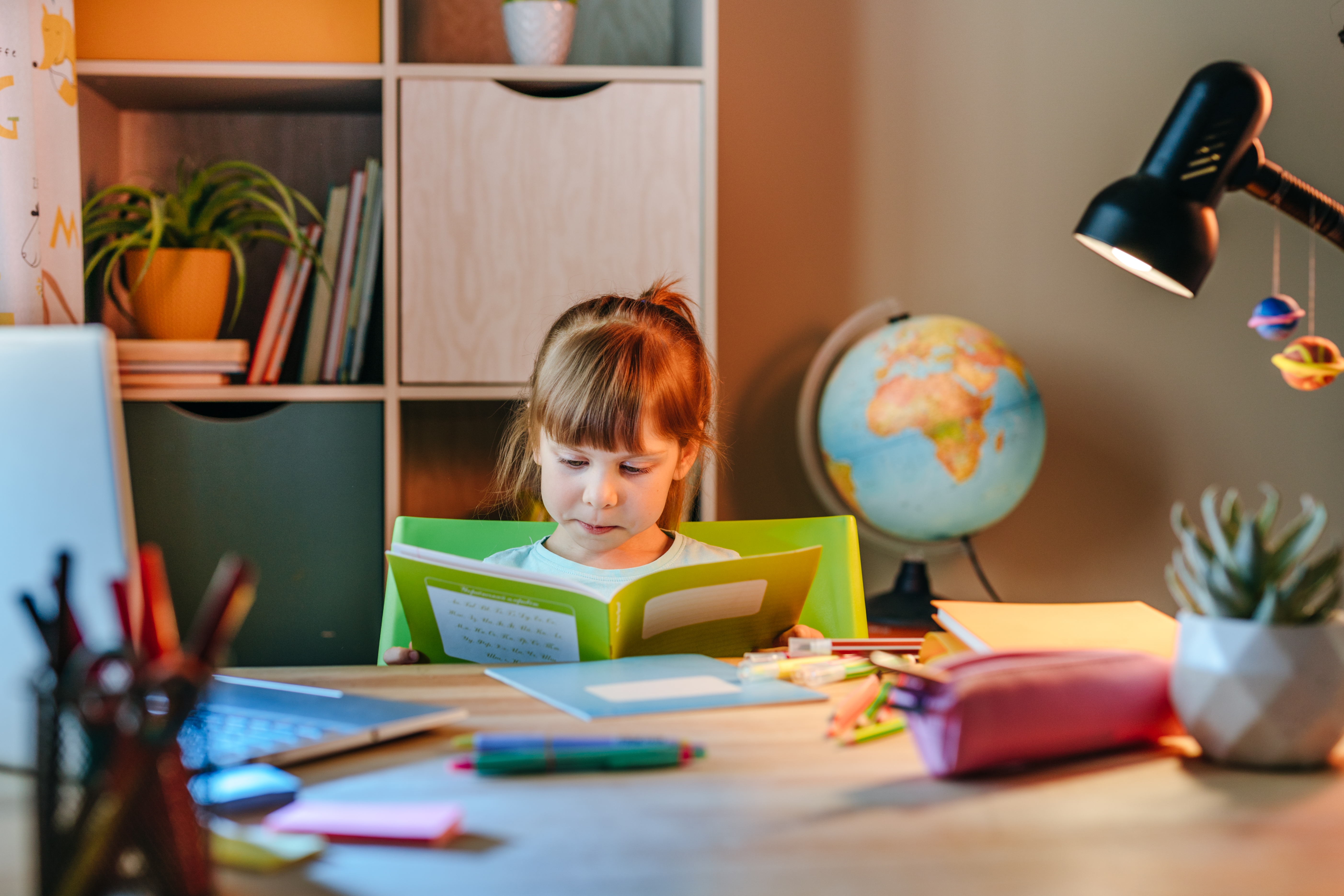
Understanding clocks and telling time are fundamental skills that second graders need to learn, not just for academic success, but for life readiness. Teaching children to read analog and digital clocks goes beyond mere recognition of numbers and the movement of clock hands. It helps them grasp key concepts of time management, punctuality, and the passage of time.
For parents, understanding clocks equips children with the ability to organize their day, follow routines, and develop a sense of independence. Children can make connections between scheduled activities, their duration, and the correlation to their everyday life events. This skill is crucial for transitioning into more structured environments such as school timetables and eventually the workforce.
For teachers, ensuring that students are proficient in telling time lays a groundwork for future math concepts, including fractions and timelines. Reading clocks enhances cognitive skills such as counting by fives, understanding equivalent times (e.g., 15 minutes is a quarter-hour), and developing spatial reasoning through the position of hour and minute hands.
Overall, mastering this skill in Grade 2 fosters a child's development in an integrated manner—enhancing academic abilities while instilling practical life skills, thereby preparing them for future societal roles. Through collaborative efforts, parents and teachers can ensure children are adept at navigating a world where time awareness is essential.