Data interpretation Grade 2 Measurement Worksheets
8 filtered results
Difficulty Level
Grade
Age
-
From - To
Subject
Activity
Standards
Welcome to our Grade 2 Data Interpretation Measurement Worksheets! Designed specifically for young learners, these engaging resources help students master essential measurement concepts while developing their data interpretation skills. Each worksheet includes fun activities that incorporate sorting, analyzing, and interpreting graphs and charts. With vibrant illustrations and age-appropriate exercises, students will enjoy exploring measurement data in real-world contexts. Perfect for classroom use or at-home practice, these worksheets support your child's mathematical growth and confidence. Start your child's journey to understanding measurements and data interpretation today, fostering critical thinking skills essential for future learning success!
Favorites
With answer key
Interactive
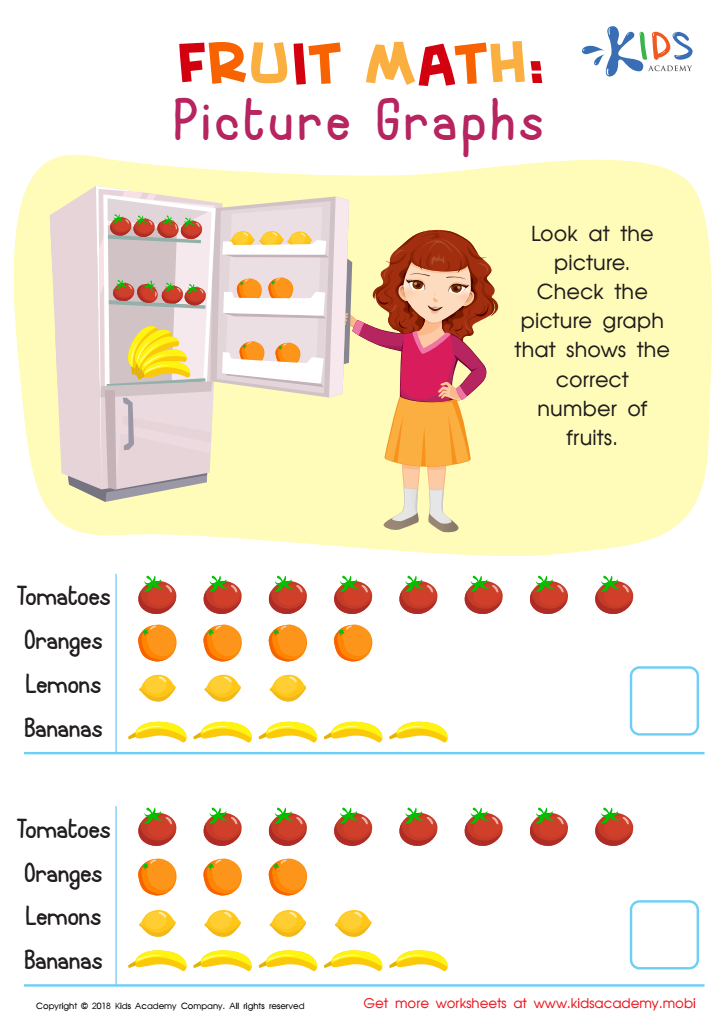
Fruit Math: Picture Graphs Worksheet
Help your child learn to draw graphs by having them look at pictures. Ask them to identify a graph that accurately portrays the data and have them explain why. This will prepare them to easily draw more complex graphs in the future. For example, have them look at the picture with the number of fruits in the colorful worksheet and explain why the graph is accurate.
 Assign to My Students
Fruit Math: Picture Graphs Worksheet
Worksheet
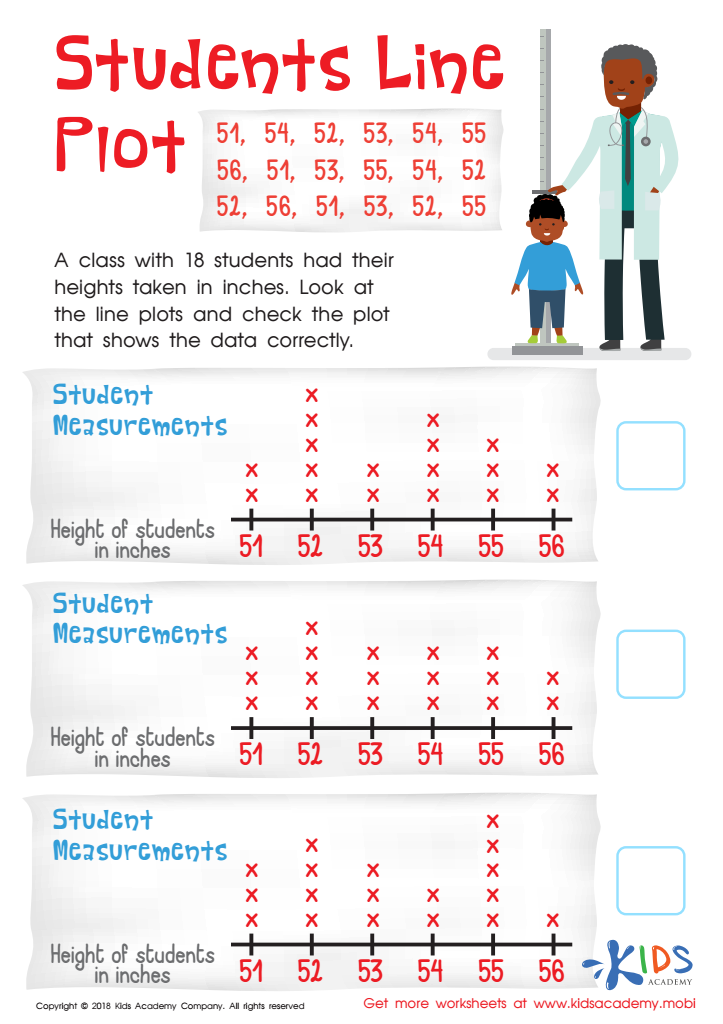
Students Line Plot Worksheet
Help your students learn to draw a line plot correctly by giving real examples. In this exercise, they must check the data of a class of 18 students' heights (in inches). Have them compare two line plots and figure out which one is correct.
Students Line Plot Worksheet
Worksheet
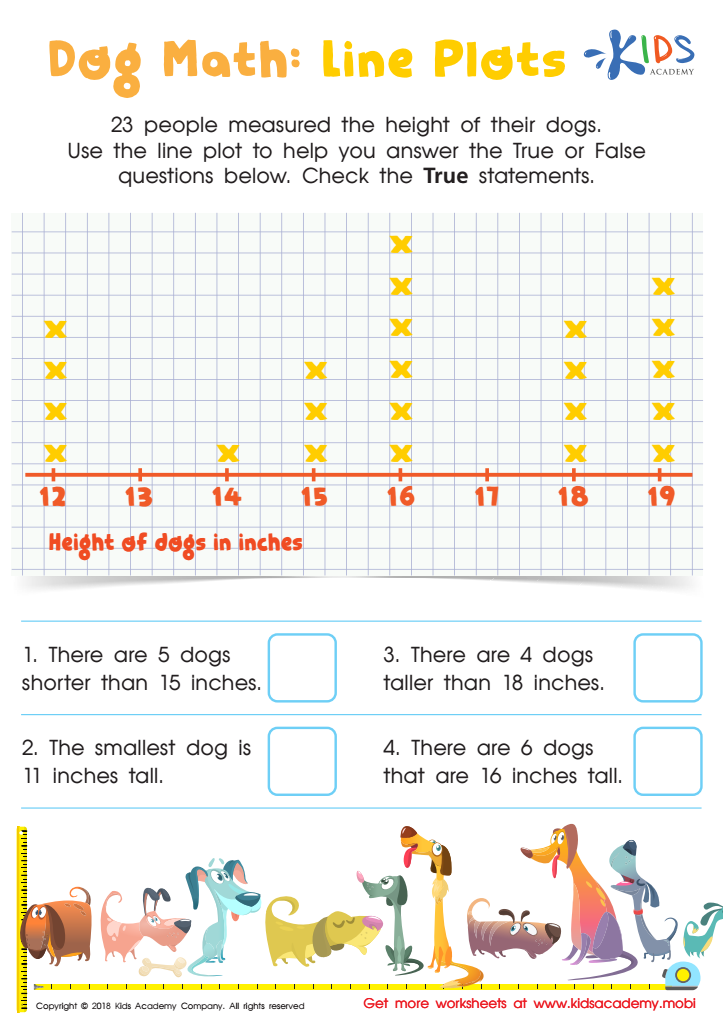
Dog Math: Line Plots Worksheet
Do your kids love dogs? If you have family pets, your kids may be excited to do this worksheet. It involves a line plot and True/False questions about 23 people measuring their dogs' heights. Assist your kids in verifying the statements that are True.
Dog Math: Line Plots Worksheet
Worksheet
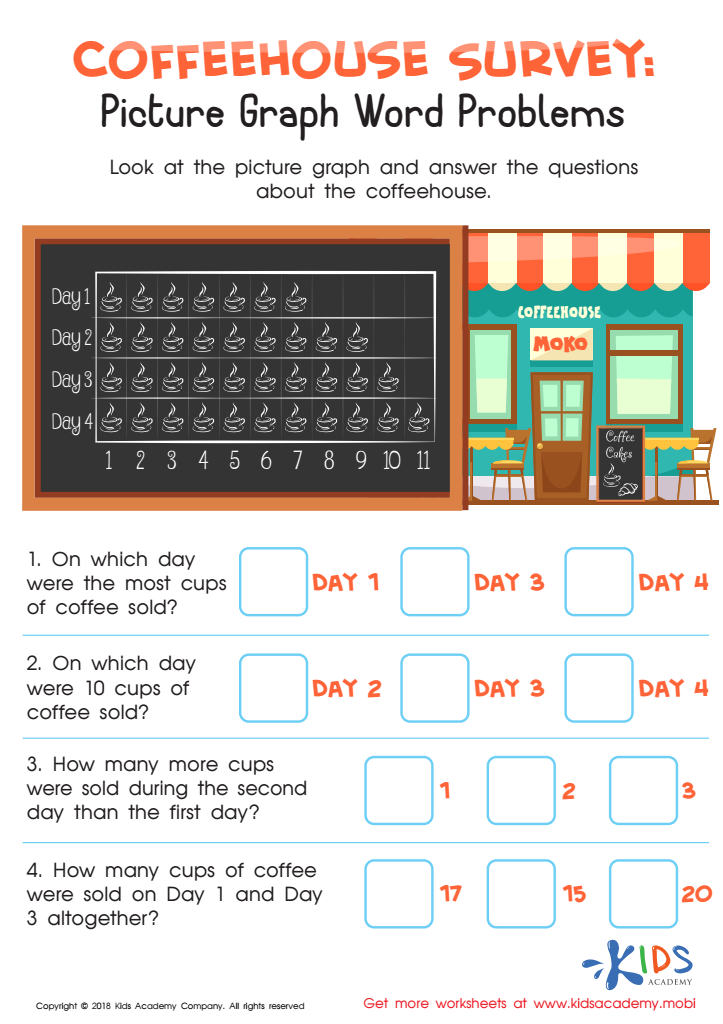
Coffeehouse Survey: Picture Graph Word Problems Worksheet
This coffeehouse survey helps children interpret pictures and answer questions. Your child will look at a picture graph displaying daily coffee cup sales from Day 1 to Day 4. Aid them in answering questions on the number of cups sold and which day had the most sales.
Coffeehouse Survey: Picture Graph Word Problems Worksheet
Worksheet
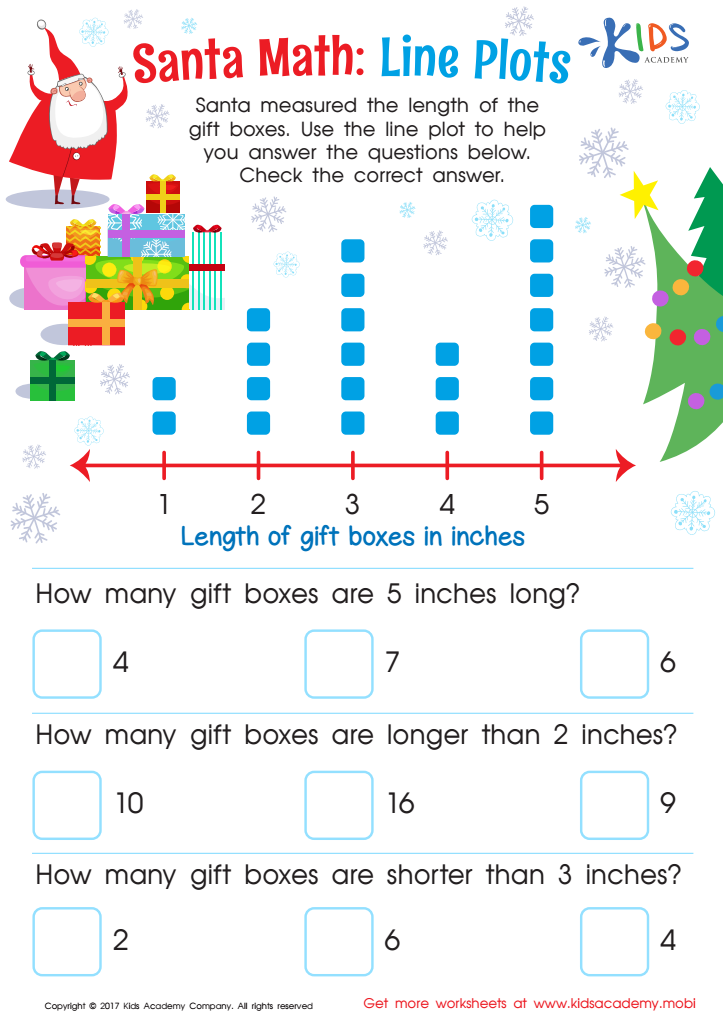
Line Plot Worksheet
Help your child measure presents with Santa using this 2nd grade line plot worksheet! It's a fun way to boost math skills and analyze data. Plus, it's sure to delight your child!
Line Plot Worksheet
Worksheet
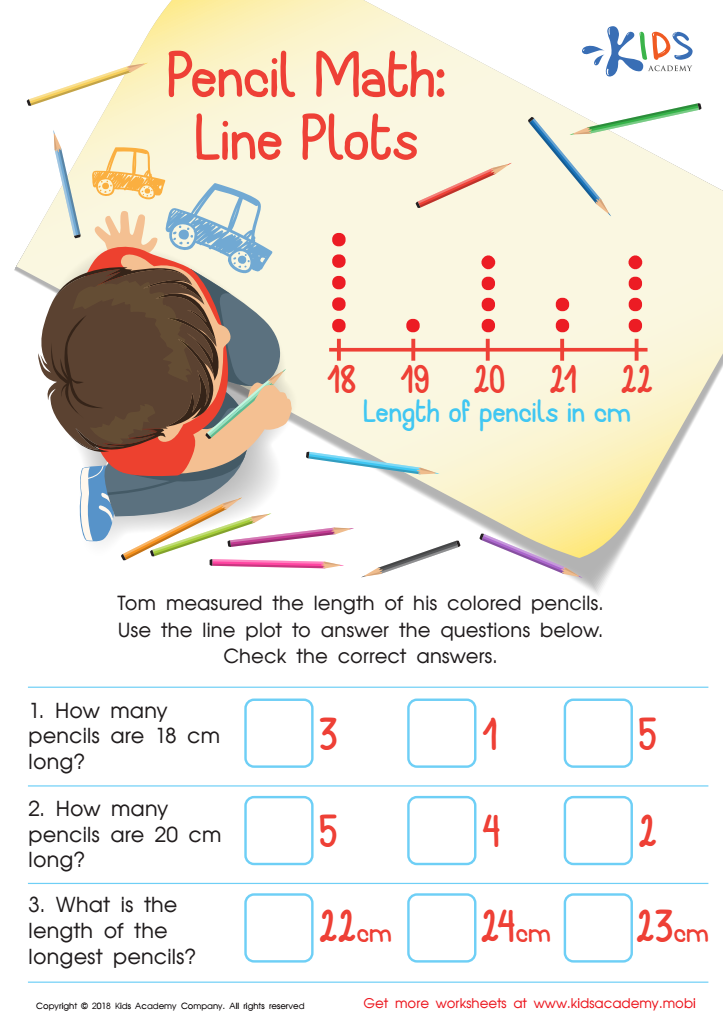
Pencil Math: Line Plots Worksheet
Your child will meet Tom in this worksheet, helping him find the length of his colored pencils. Tom has written the lengths in cm, and the line plot will help your kids answer the questions. Check the correct answers for each, including how many pencils are of a certain length. The line plot makes it easy to find the answers.
Pencil Math: Line Plots Worksheet
Worksheet
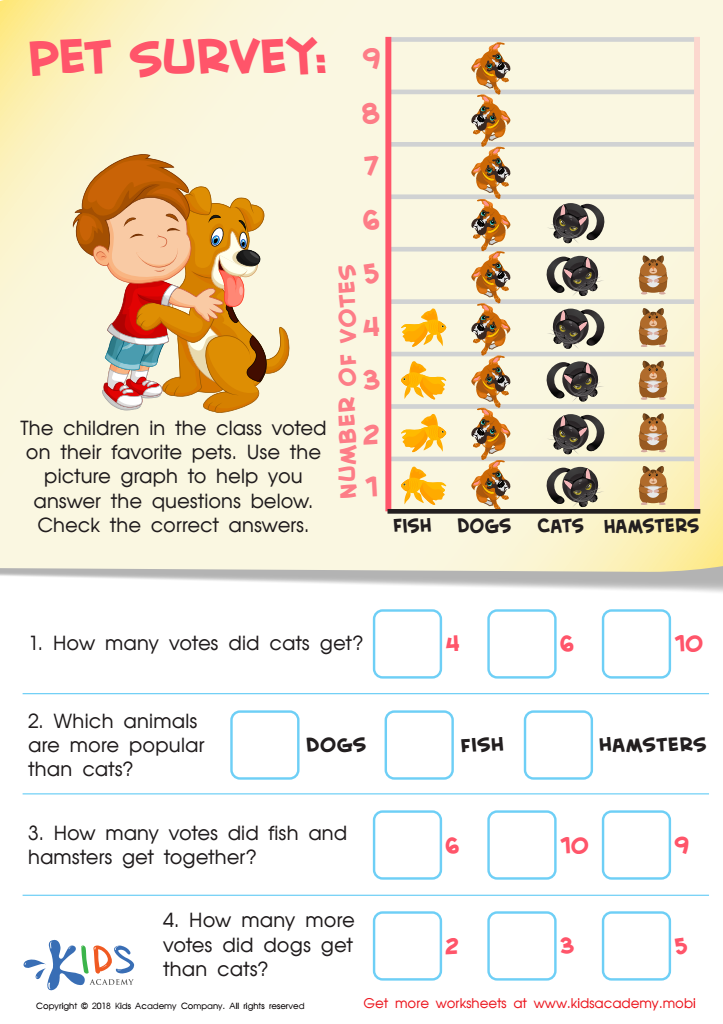
Pet Survey Worksheet
Do you have a furry family member? If the answer is yes and your kids love animals, they'll enjoy this worksheet. The picture graph shows the children's votes for their favorite pet - fish, dog, cat and hamster. Ask your child to use the graph to answer the questions. Guide them to check the right answer.
Pet Survey Worksheet
Worksheet
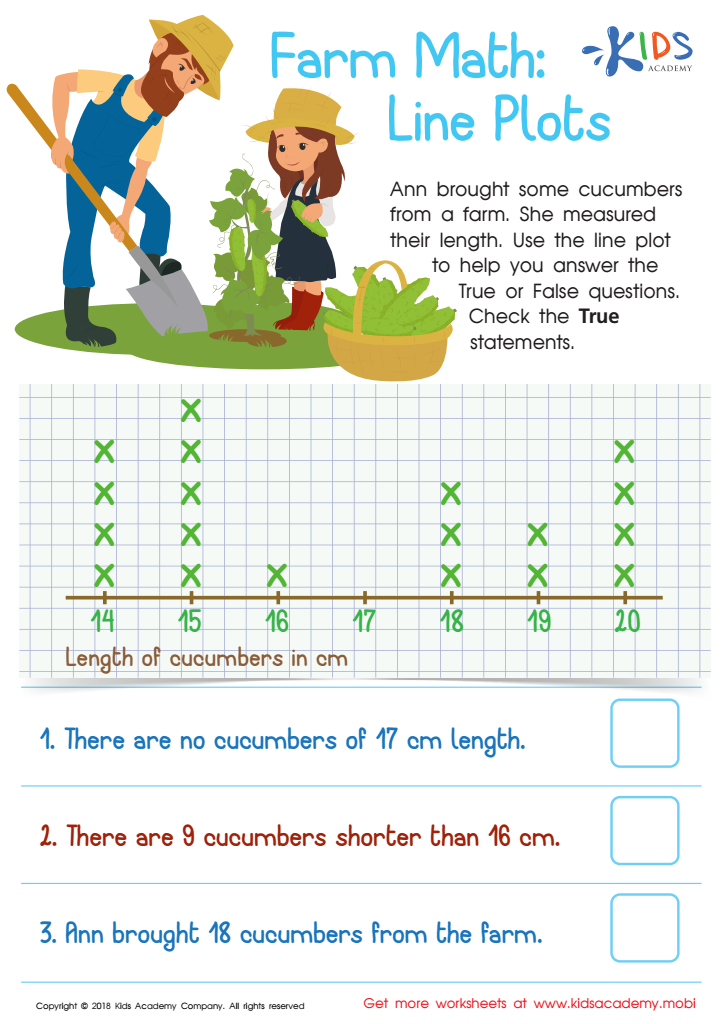
Farm Math: Line Plots Worksheet
Ann brought cucumbers from a farm and measured their length. She drew a line plot for your students to use to answer True/False questions about the number and length of the cucumbers. Ask your students to check only the True statements. (80 words)
Farm Math: Line Plots Worksheet
Worksheet
Join Kids Academy for Free
Who is primarily going to use this learning content?





Data interpretation in Grade 2 measurement is crucial as it lays the foundation for critical thinking and analytical skills. At this stage, children begin to understand how to collect, organize, and represent data, which is an essential step in developing mathematical literacy. When parents and teachers emphasize data interpretation, they help children learn how to make sense of information, recognize patterns, and draw conclusions based on evidence.
Understanding measurement concepts and tools, like rulers and scales, enhances a child's ability to grasp real-world applications. For instance, when kids measure objects around them, they not only learn about lengths and weights but also foster curiosity about their environment. This hands-on learning encourages problem-solving and logical reasoning, valuable skills for academic success.
By supporting data interpretation, parents and educators can create more interactive and engaging learning experiences. This support can inspire confidence and motivation in students, as they see practical relevance in what they learn. Ultimately, early exposure to data analysis equips children with skills that extend beyond mathematics, influencing their decision-making and understanding of the world throughout their lives. Thus, investing time in these activities benefits students in multiple ways, ensuring they thrive both in school and beyond.