Addition Practice Grade 2 Building Vocabulary Worksheets
3 filtered results
Difficulty Level
Grade
Age
-
From - To
Subject
Activity
Standards
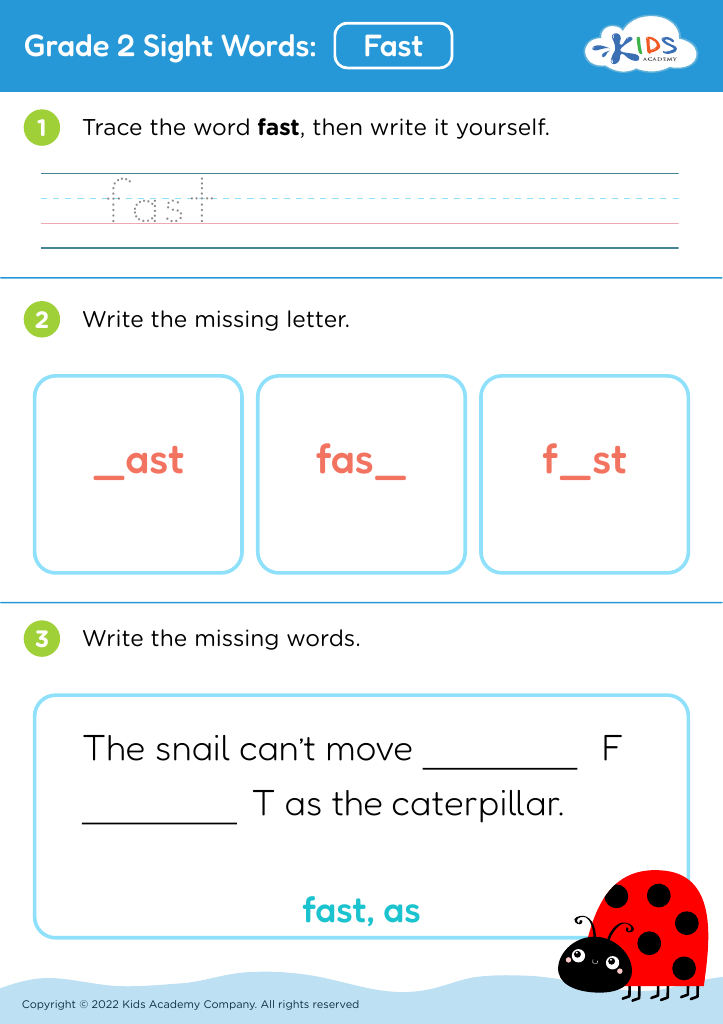
Enhance your second grader's math skills with our engaging "Addition Practice Grade 2 Building Vocabulary Worksheets." These worksheets are designed to reinforce foundational addition concepts while expanding vocabulary and language skills. Each printable resource includes a variety of fun and interactive exercises that encourage students to practice addition in a meaningful context. Through word problems, real-world scenarios, and visual aids, children will learn to identify key terms and improve their understanding of math language. Foster a love for learning with these versatile worksheets, perfect for classroom use or home practice, and watch your child build confidence in both math and vocabulary!
Favorites
With answer key
Interactive
Join Kids Academy for Free
Who is primarily going to use this learning content?








Addition practice in Grade 2 is crucial for children's mathematical development and cognitive growth. Engaging in regular addition exercises helps students solidify their understanding of basic arithmetic, which is foundational for more advanced math concepts they will encounter later on. By practicing addition, children enhance not only their numerical skills but also their problem-solving abilities and critical thinking.
Moreover, incorporating vocabulary in addition practice is essential as it helps students comprehend math language, which often includes terms like "sum," "total," and "plus." Understanding these terms allows children to communicate their ideas more clearly and enhances their overall learning experience. It builds a bridge between mathematical concepts and everyday language, making math more relatable and less intimidating.
Additionally, learning through play and interactive vocabulary-building activities keeps students engaged and motivated. When parents and teachers focus on both addition practice and vocabulary development, they equip children with the tools needed for academic success across all subjects. This holistic approach encourages a positive attitude towards education and fosters a love for learning, setting the stage for lifelong curiosity and achievement. Ultimately, prioritizing addition practice and vocabulary in Grade 2 lays a strong foundation for future academic and personal success.