Phonics Skills Grade 2 Reading Worksheets
5 filtered results
-
From - To
Enhance your second grader's reading abilities with our engaging Phonics Skills Worksheets! Tailored for Grade 2, these printable worksheets are designed to strengthen essential phonics skills through fun exercises and colorful illustrations. Students will practice consonant blends, vowel pairs, and word decoding, all while developing confidence in their reading skills. Perfect for both classroom settings and at-home learning, our resources empower young learners to master phonics fundamentals. Explore a variety of activities that stimulate learning, ensure comprehension, and foster a love for reading. Download the Phonics Skills Worksheets today to transform your child's reading journey into an enjoyable adventure!
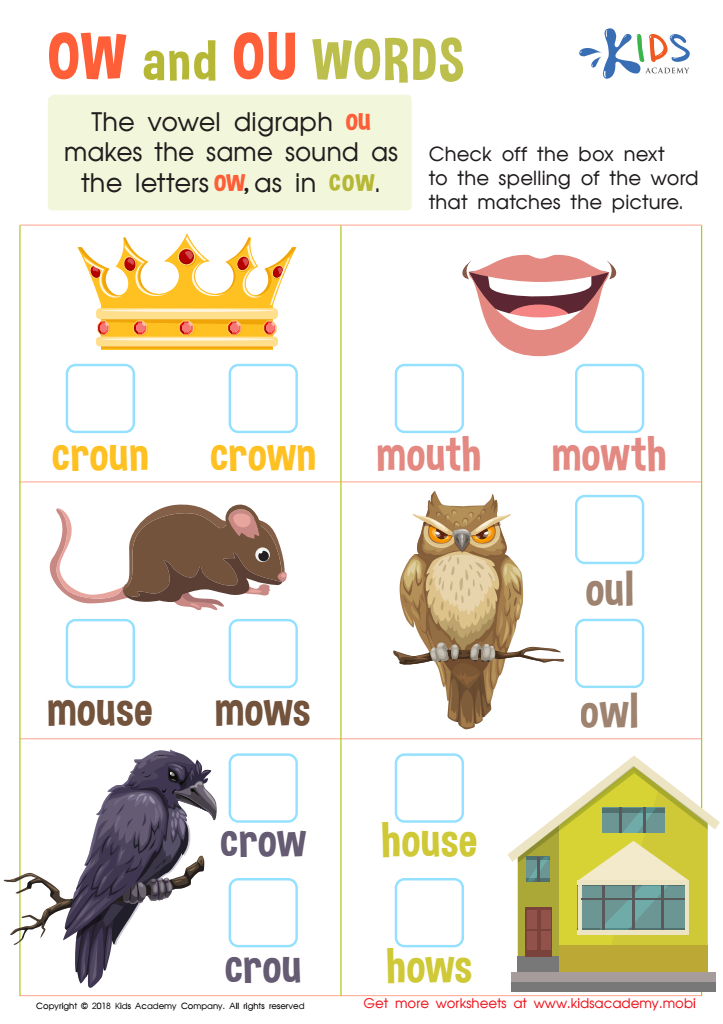
Reading: OW and OU Words Worksheet
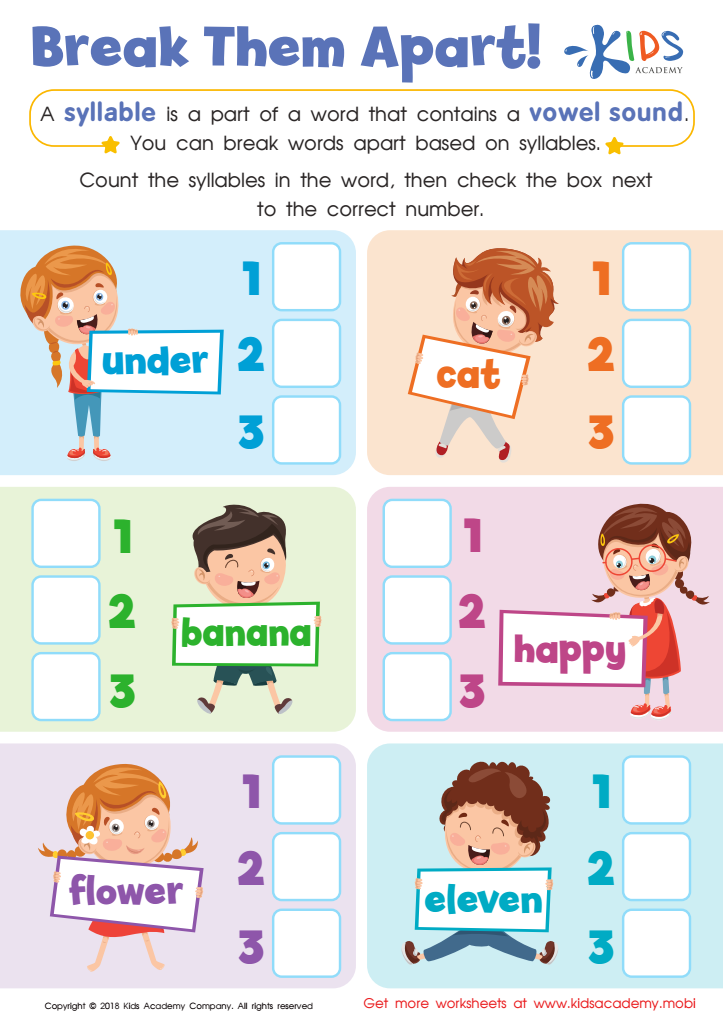
Reading: Break Them Apart Worksheet
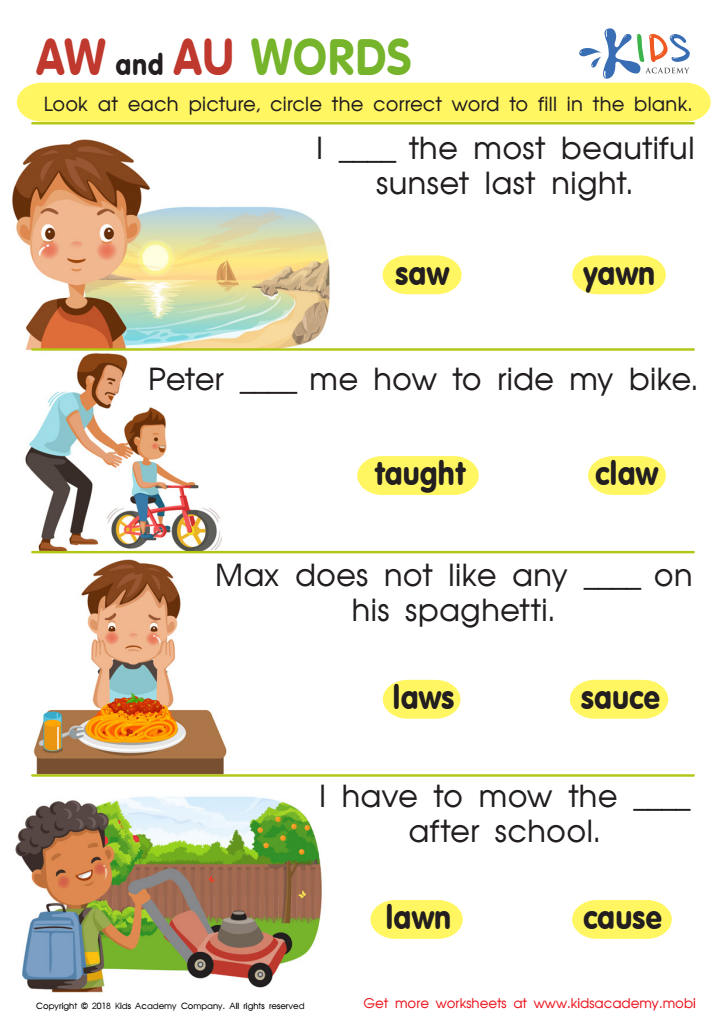
Reading: AW and AU Words Worksheet
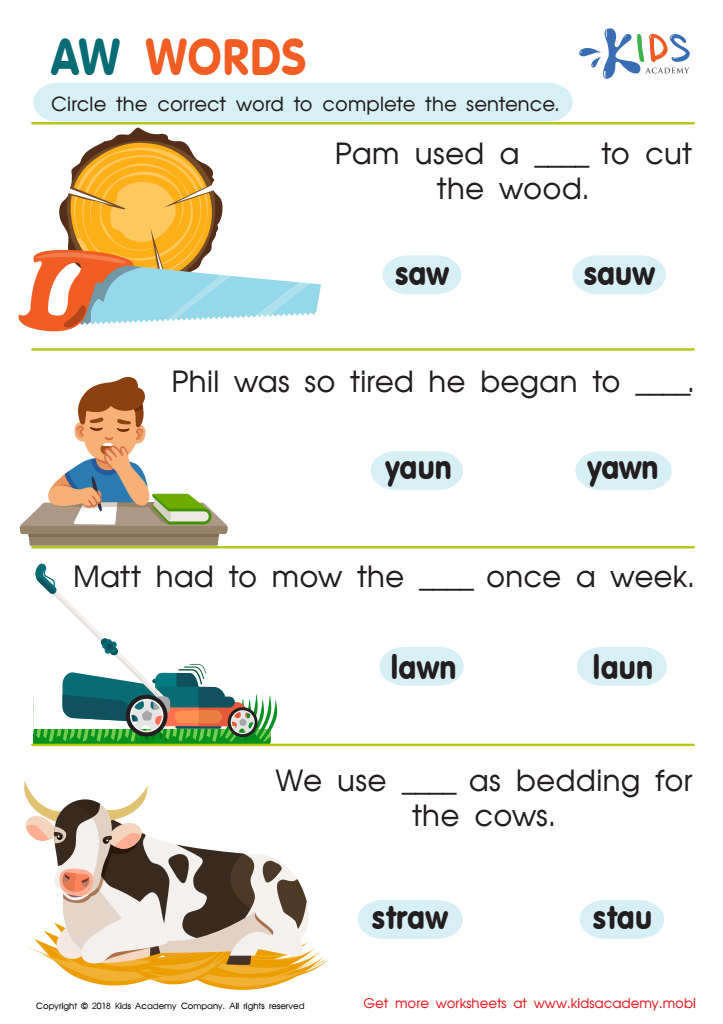
Reading: AW Words Worksheet

Long and Short E Worksheet
 Assign to My Students







Phonics skills are crucial for Grade 2 reading development, making it essential for parents and teachers to pay attention to this area. At this developmental stage, children are transitioning from learning to read to reading to learn. This shift hinges significantly on their phonics knowledge - the understanding of how letters correspond to sounds.
Strong phonics skills enable children to decode new words, enhancing their reading fluency and comprehension. When students grasp these concepts, they become more confident readers, willing to tackle challenging texts. This self-assurance positively impacts their overall academic performance and fosters a love for reading.
Moreover, research shows that phonics instruction helps struggling readers catch up with their peers. Early intervention can bridge gaps in literacy skills, preventing long-term learning difficulties. Parents play a vital role by supporting phonics practice at home through reading together and engaging with phonetic games, while teachers can employ targeted strategies in the classroom to reinforce these skills.
By collectively prioritizing phonics education, parents and teachers empower children to achieve literacy, laying a strong foundation for their future educational endeavors. Early investment in phonics not only benefits individual students but also cultivates a literate and informed society.