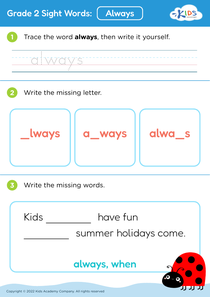
Vocabulary expansion Grade 2 Reading Fiction Worksheets
6 filtered results
-
From - To
Unlock the power of words with our Grade 2 Reading Fiction Vocabulary Expansion Worksheets! Designed to boost literacy and comprehension skills in young readers, these engaging worksheets provide an array of fun activities tailored for second graders. Students will explore new vocabulary in context through captivating fiction passages, encouraging a love for reading while enhancing their language skills. Each worksheet promotes critical thinking, vocabulary recognition, and sentence construction, ensuring a well-rounded approach to learning. Perfect for classroom use or at-home practice, these resources will inspire creativity and foster a lifelong enthusiasm for reading! Transform your child’s reading journey today!
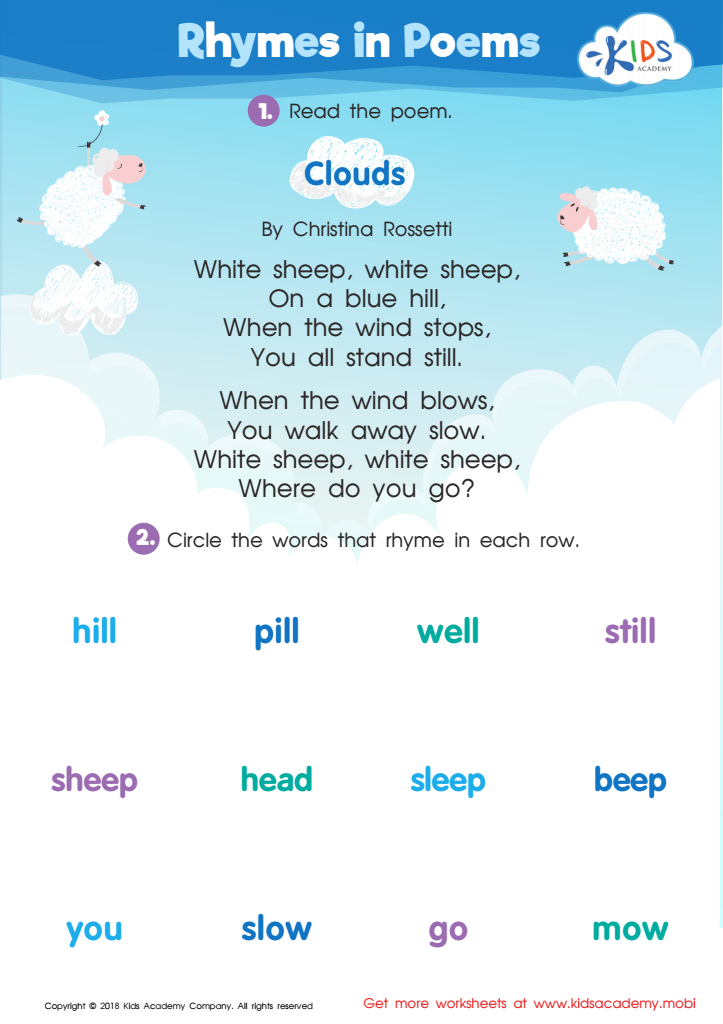
Rhymes in Poems Worksheet
 Assign to My Students
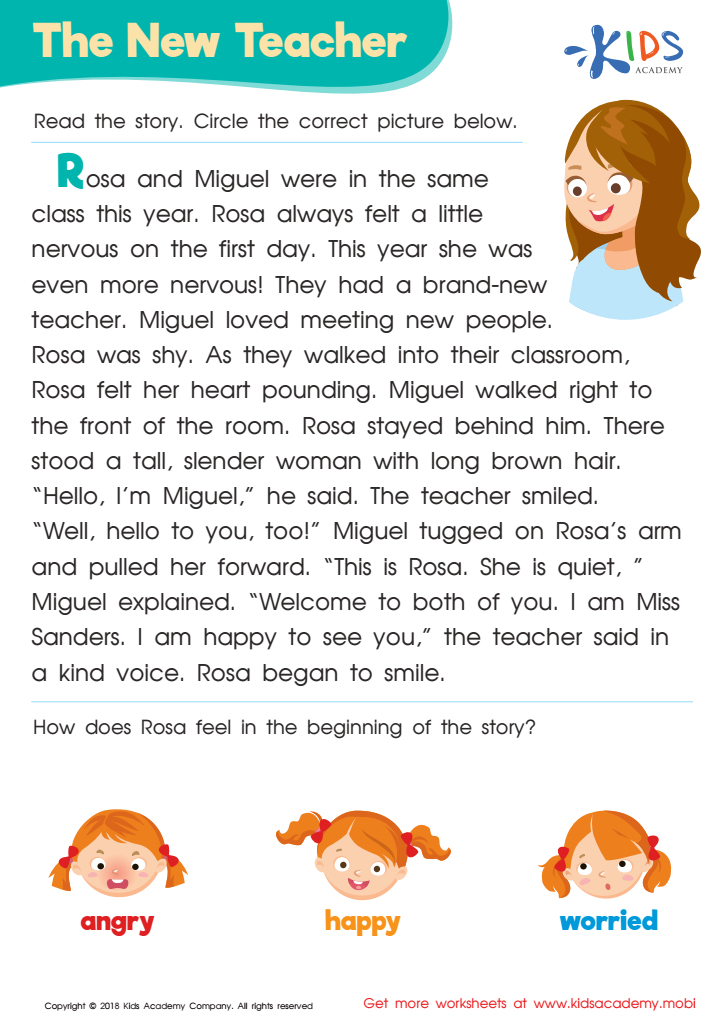
The New Teacher Worksheet
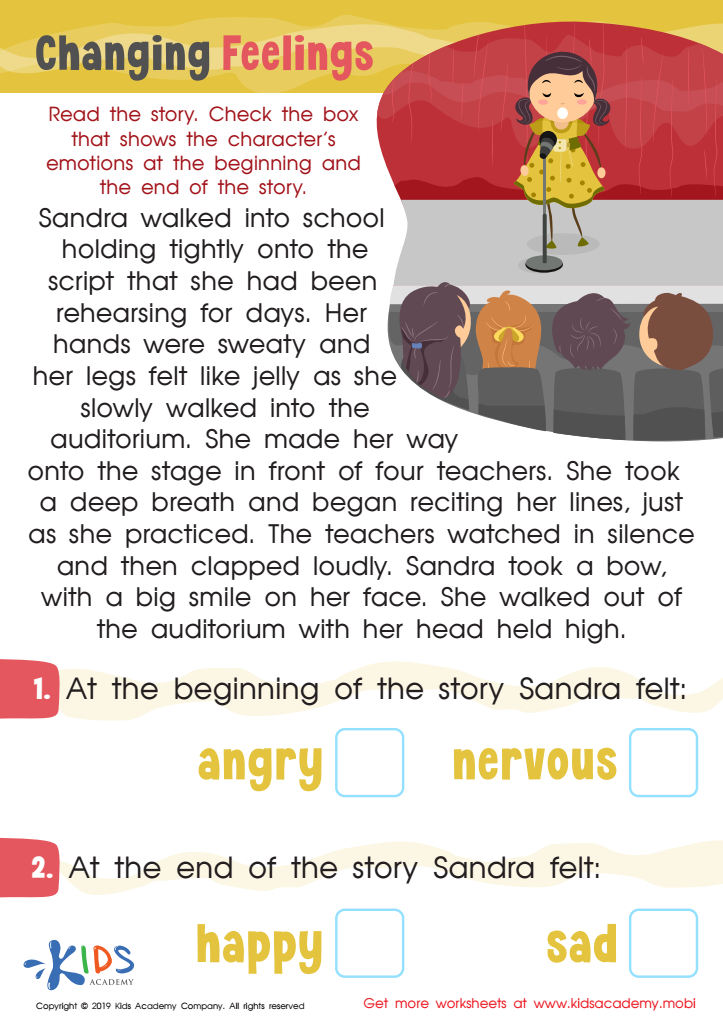
Changing Feelings Worksheet
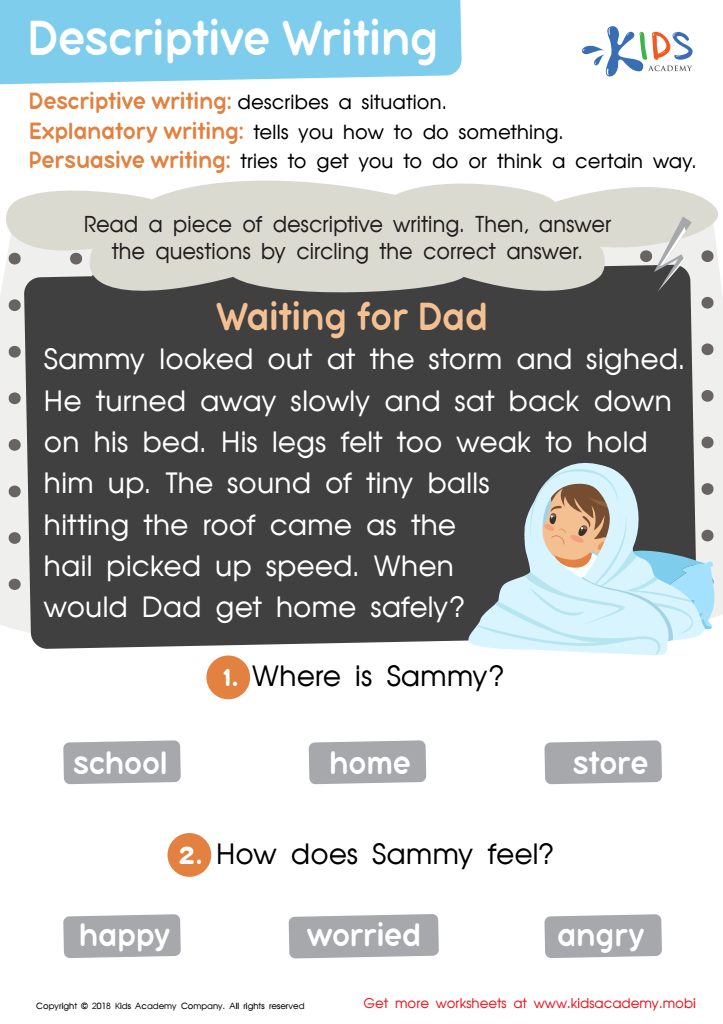
Descriptive Writing Worksheet: Part 2
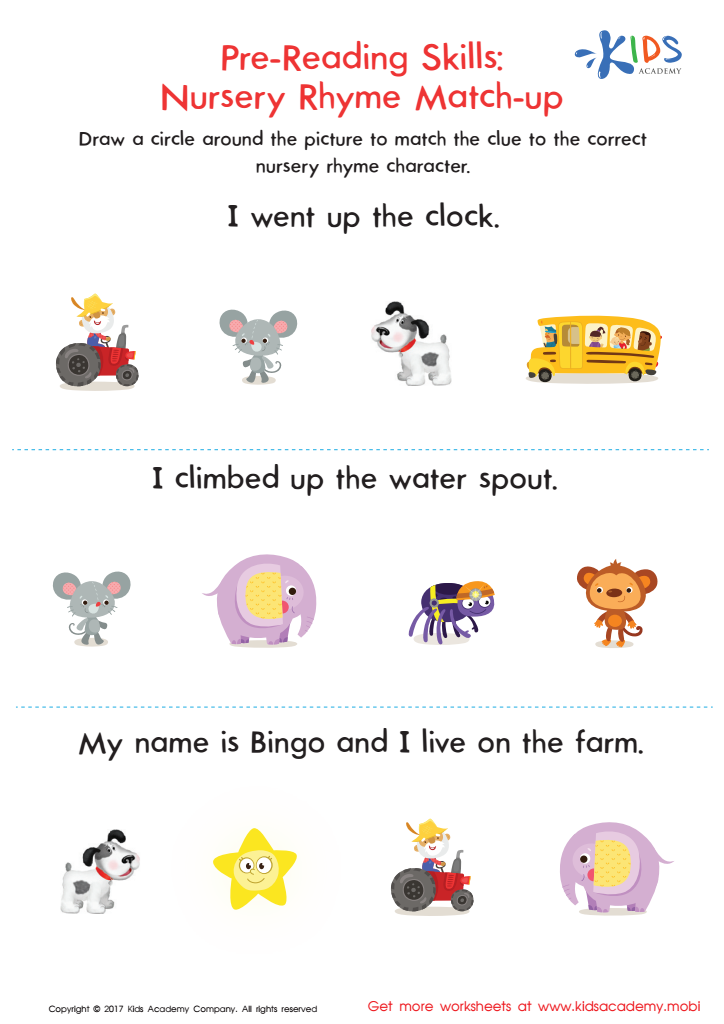
Nursery Rhyme Match–Up Worksheet
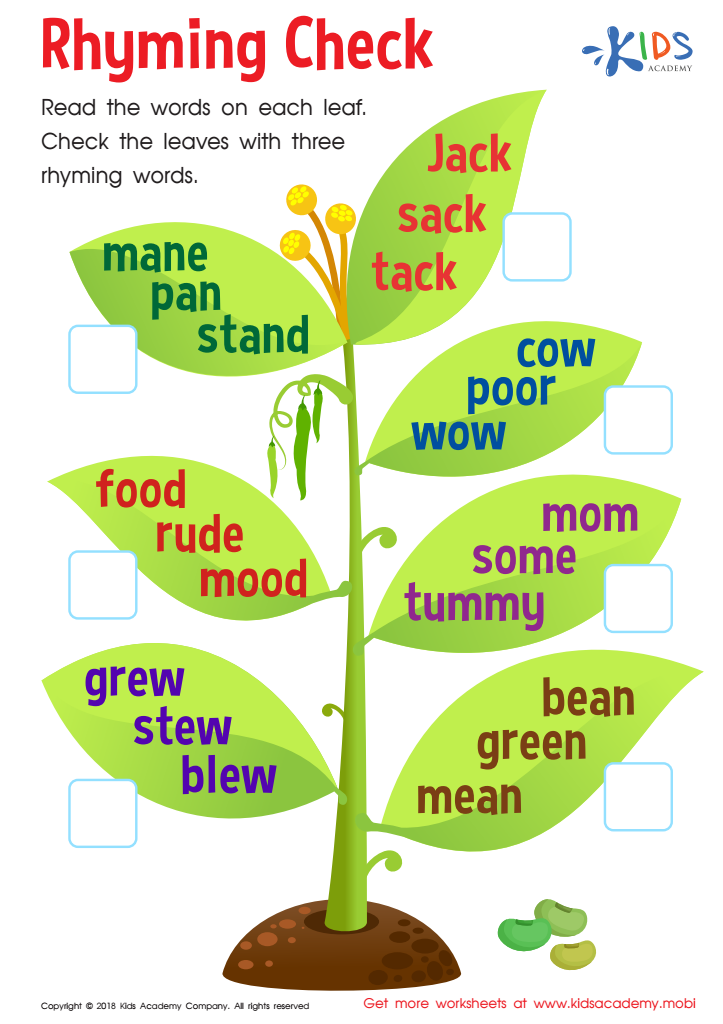
Rhyming Check Worksheet







Vocabulary expansion is crucial for Grade 2 students reading fiction as it significantly enhances their comprehension and communication skills. At this stage, children are transitioning from learning to read to reading to learn. A rich vocabulary allows them to engage more deeply with texts, understanding characters, settings, and plots more fully. This foundational skill not only aids in enjoying stories but also prepares them for more complex narratives and academic subjects in the future.
Furthermore, a strong vocabulary supports writing abilities, allowing children to express their thoughts and ideas more clearly and creatively. When children encounter new words in fiction, they learn to infer meanings from context, which builds critical thinking skills essential for their overall cognitive development.
Parents and teachers play a pivotal role in facilitating vocabulary growth. By providing diverse reading materials and discussing new words in engaging contexts, they can enrich learners’ language experience. Additionally, vocabulary expansion contributes to children's self-esteem and motivation, as being able to understand and engage with stories empowers them as readers. In essence, fostering vocabulary development is key to nurturing informed, articulate, and confident learners who are prepared for future academic challenges.