Sound Association Grade 3 Alphabet Worksheets
5 filtered results
-
From - To
Enhance your Grade 3 student's literacy skills with our engaging Sound Association Alphabet Worksheets! Designed to support young learners in mastering the connections between letters and their sounds, these printable activities promote phonemic awareness. Each worksheet offers a variety of fun exercises such as matching sounds to pictures, handwriting practice, and sound identification, making learning enjoyable and interactive. Our carefully crafted materials cater to different learning styles, ensuring every child can thrive. Perfect for classroom use or homework, these worksheets are an invaluable resource for teachers and parents alike, helping students build a strong foundation in reading and writing. Explore our collection today!
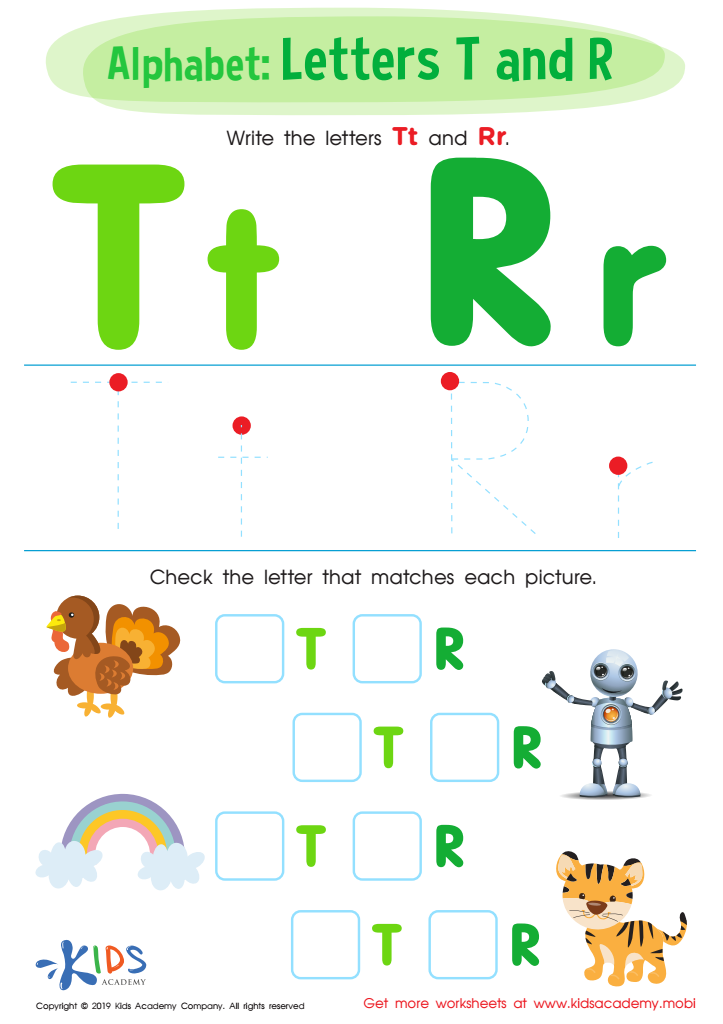
Letters T and R Worksheet
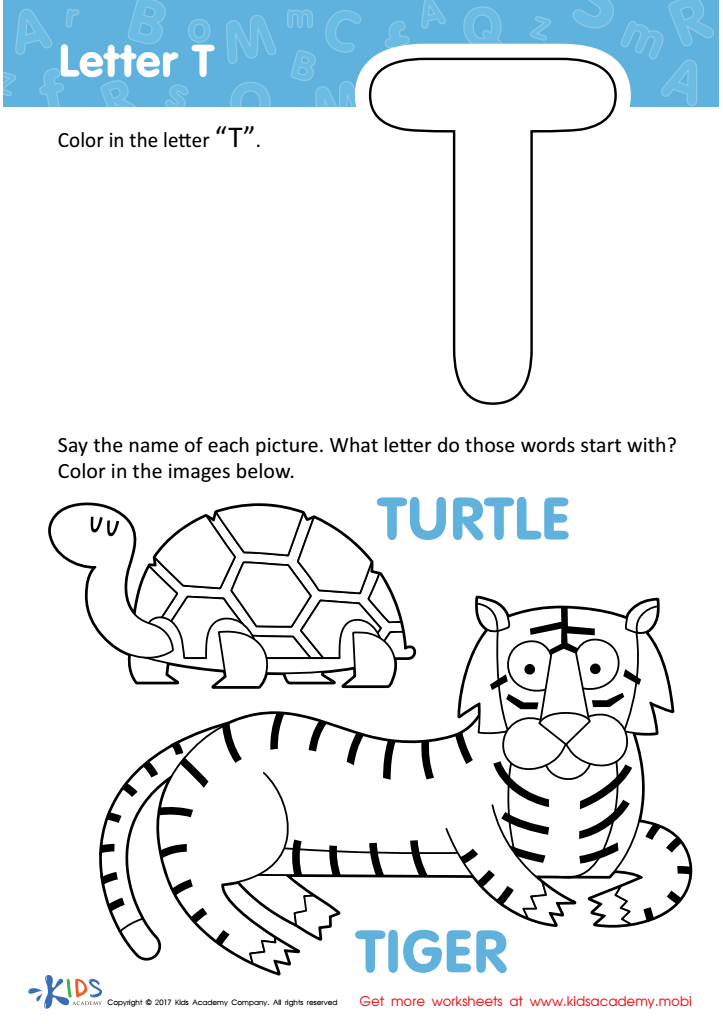
Letter T Coloring Sheet
 Assign to My Students
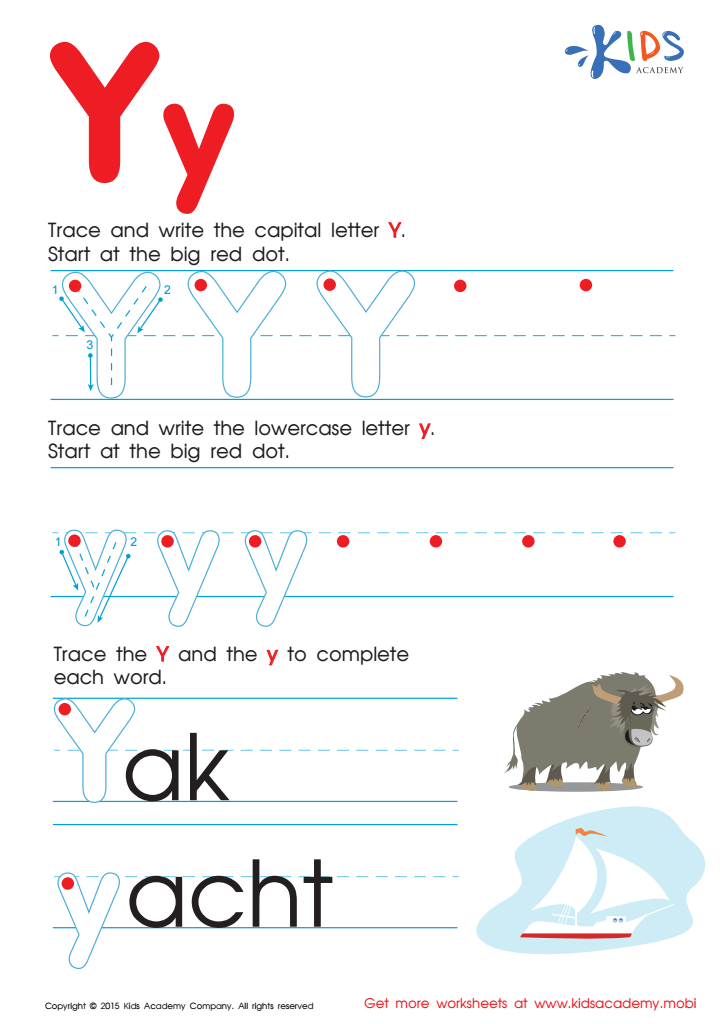
Letter Y Tracing Page
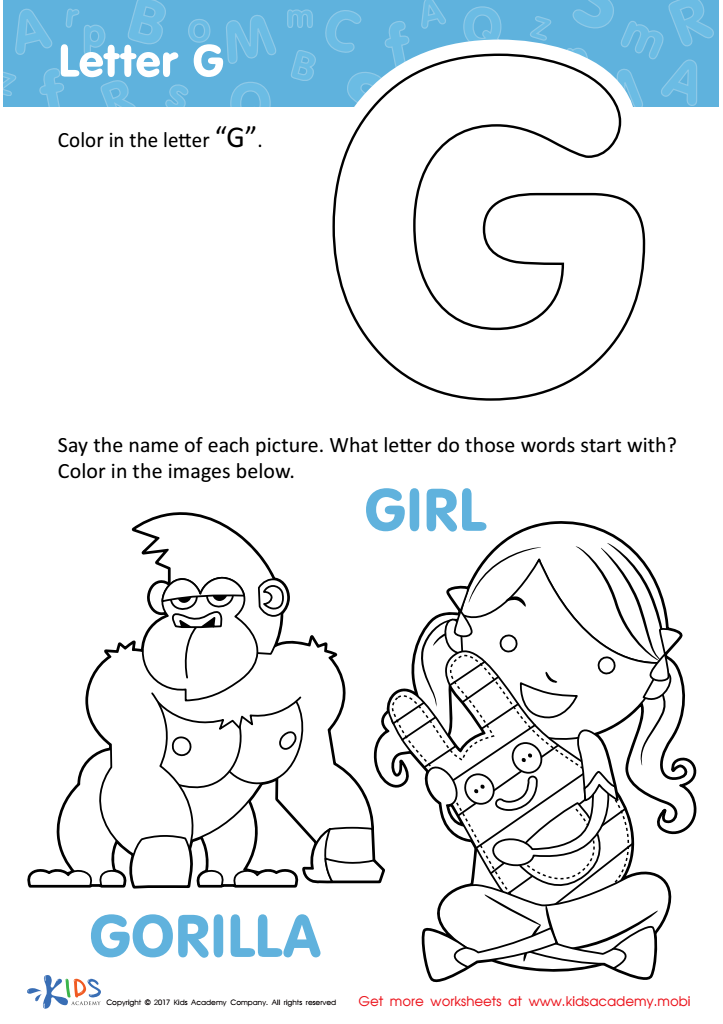
Letter G Coloring Sheet
Assign to My Students
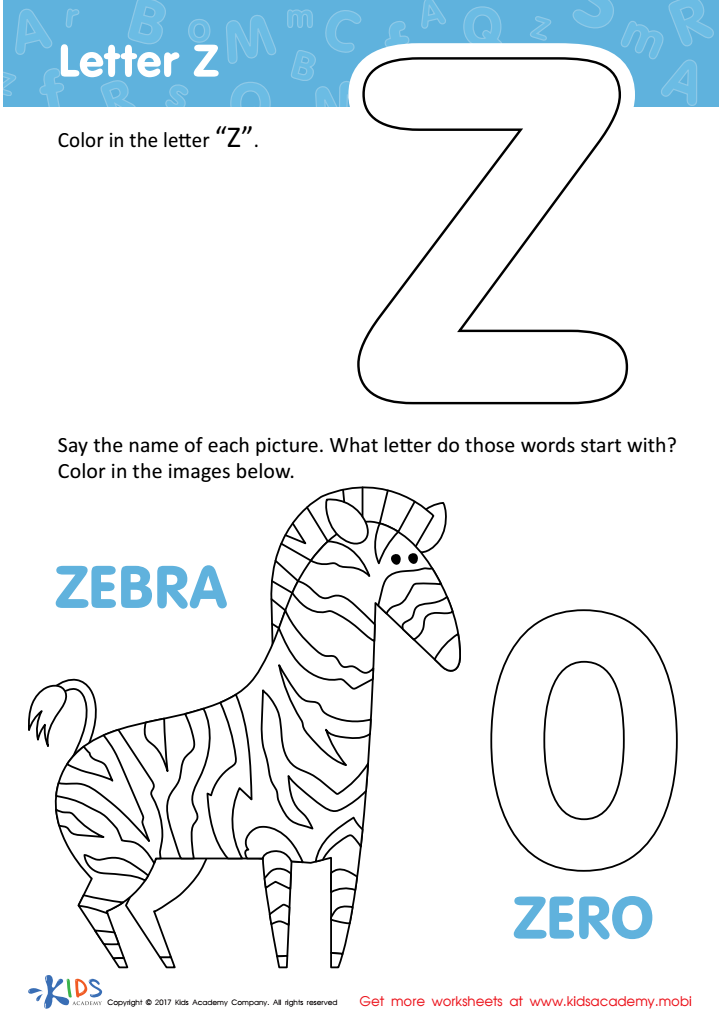
Letter Z Coloring Sheet
Assign to My Students








Sound association is crucial for third-grade students as it forms the foundation for reading and writing skills. At this stage, children expand their vocabulary, understanding of phonetics, and comprehension abilities. When parents and teachers prioritize sound association with the alphabet, they equip children to decode words effectively. Mastering this skill is essential as it directly impacts literacy development, allowing students to tackle more complex texts and express their thoughts in writing.
Furthermore, sound association enhances reading fluency, helping children recognize words quickly without guessing. This proficiency builds their confidence and enjoyment in reading, fostering a lifelong love for literature. Moreover, when parents engage in sound association activities at home, it reinforces what is learned in the classroom, creating a collaborative learning environment.
Teachers benefit from incorporating sound association strategies in their curriculum, as these activities support diverse learning styles. Whether through rhymes, phonics games, or interactive writing, engaging different modalities can deepen understanding.
Ultimately, supporting sound association means nurturing capable readers and writers, fostering essential communication skills. It establishes a strong academic foundation that influences a child's success in all subjects as they progress through school and beyond. Thus, both parents and teachers play vital roles in this fundamental aspect of literacy development.