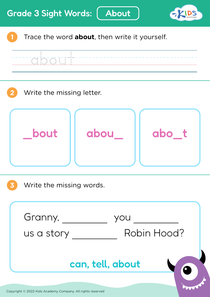
Developing critical thinking Grade 3 Worksheets
3 filtered results
-
From - To
Our "Developing Critical Thinking Grade 3 Worksheets" are designed to stimulate young minds and enhance logical reasoning skills. Each worksheet offers engaging activities that promote analysis, problem-solving, and higher-order thinking. From puzzles to real-life scenarios, these worksheets help children think outside the box while having fun. Aligned with educational standards, they support key areas such as reading comprehension, math, and science. Our resources enable children to draw connections, make inferences, and approach challenges creatively. Perfect for classroom use or a learning boost at home, these worksheets pave the way for academic success and lifelong cognitive skills.
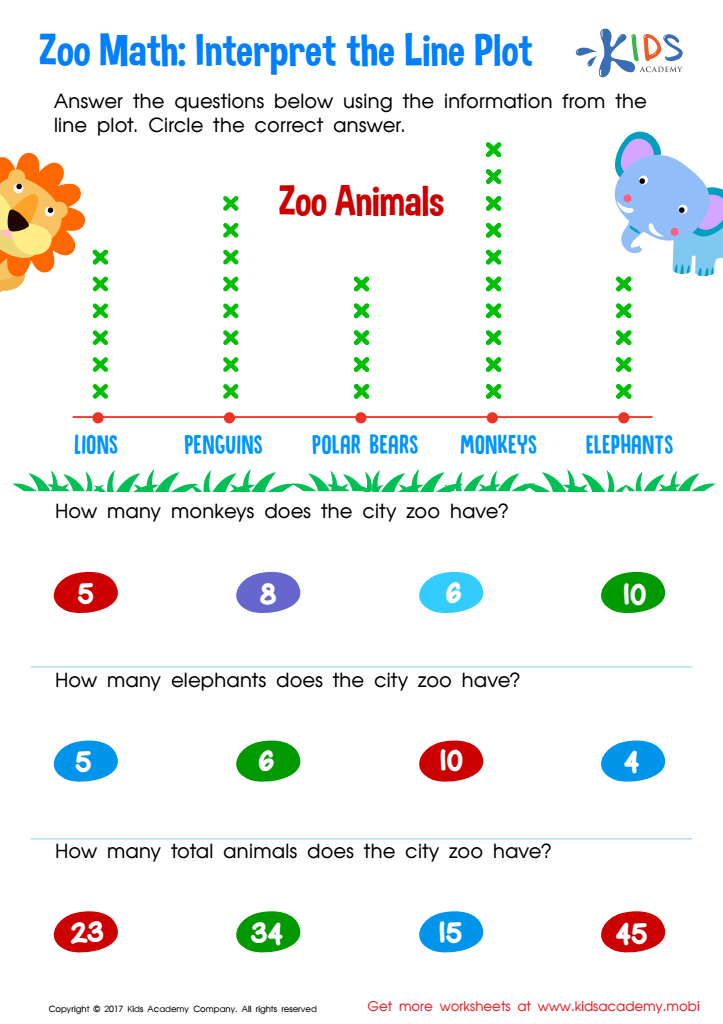
Interpret Line Plot Worksheet
 Assign to My Students
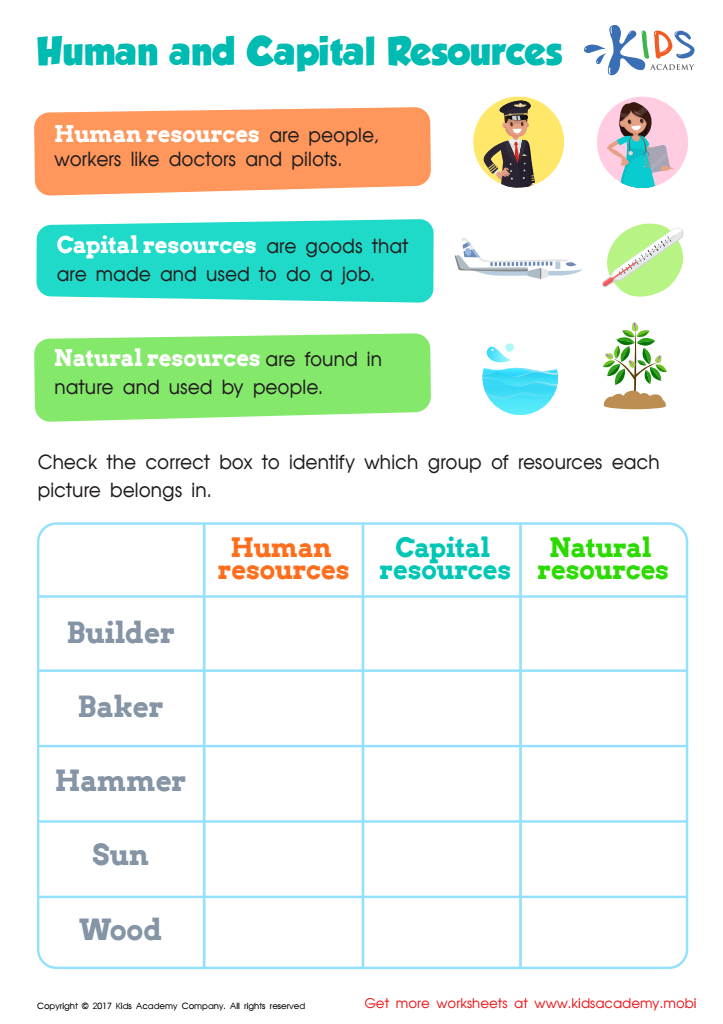
Human and Capital Resources Worksheet








Developing critical thinking in Grade 3 is vital for both academic success and overall personal growth, and it merits the keen attention of both parents and teachers. At this formative stage, children are not just learning to memorize facts and figures; they are beginning to understand complex concepts and how to apply them. Critical thinking allows young students to analyze information, make reasoned judgments, and solve problems effectively. Skills like these lay the groundwork for more advanced learning in later grades and set the stage for a lifetime of adaptive and independent thought.
For parents, nurturing critical thinking skills in their children can mean improved decision-making abilities and better life choices, from managing personal relationships to solving daily problems. It helps children become more self-reliant and confident in their abilities to tackle challenges.
Teachers, on the other hand, may find that fostering these skills can make classroom management easier and teaching more effective. Students who can think critically often work better in collaborative settings, engage more deeply with the material, and exhibit a stronger ability to understand and retain information.
Overall, emphasizing critical thinking in Grade 3 paves the way for a balanced, inquisitive, and resilient mindset, equipping children with essential skills that transcend academic achievement and contribute to their overall well-being.