Improve mathematical skills Grade 3 Worksheets
3 filtered results
-
From - To
Enhance your Grade 3 students' mathematical skills with our engaging and comprehensive worksheets! Designed to reinforce key concepts such as addition, subtraction, multiplication, and division, these printable resources provide a fun and interactive way for learners to practice essential math skills. Each worksheet is aligned with educational standards and progressively challenges students to improve their problem-solving abilities and critical thinking skills. Perfect for use in the classroom or at home, our worksheets make math enjoyable while building confidence in young learners. Explore a variety of exercises that cater to different learning styles and help students master Grade 3 math concepts effectively!
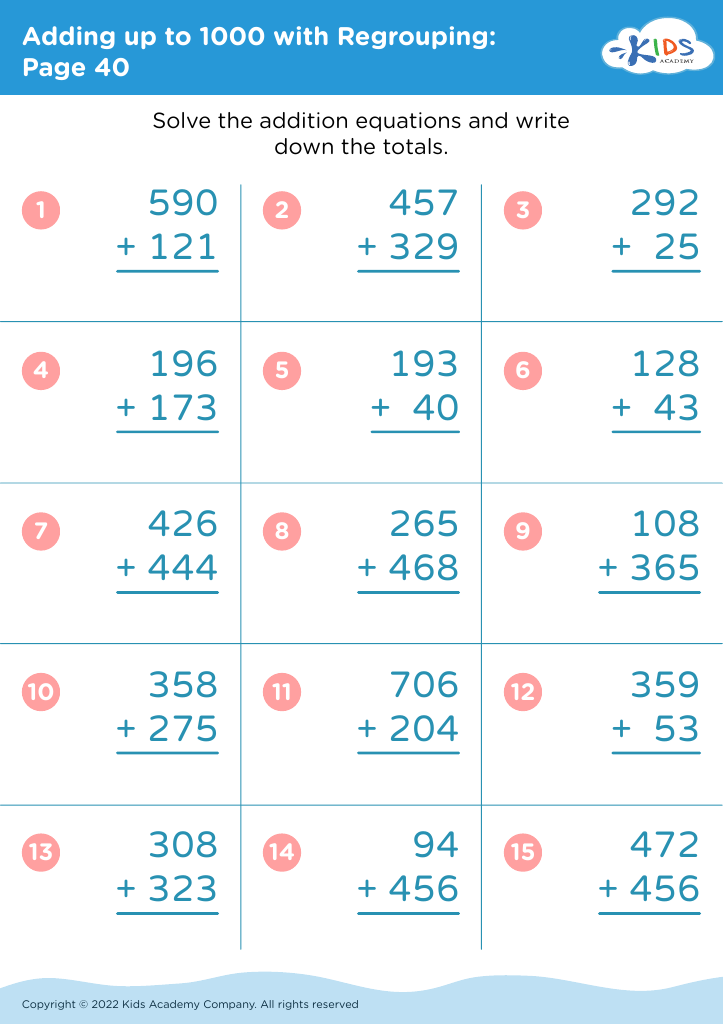
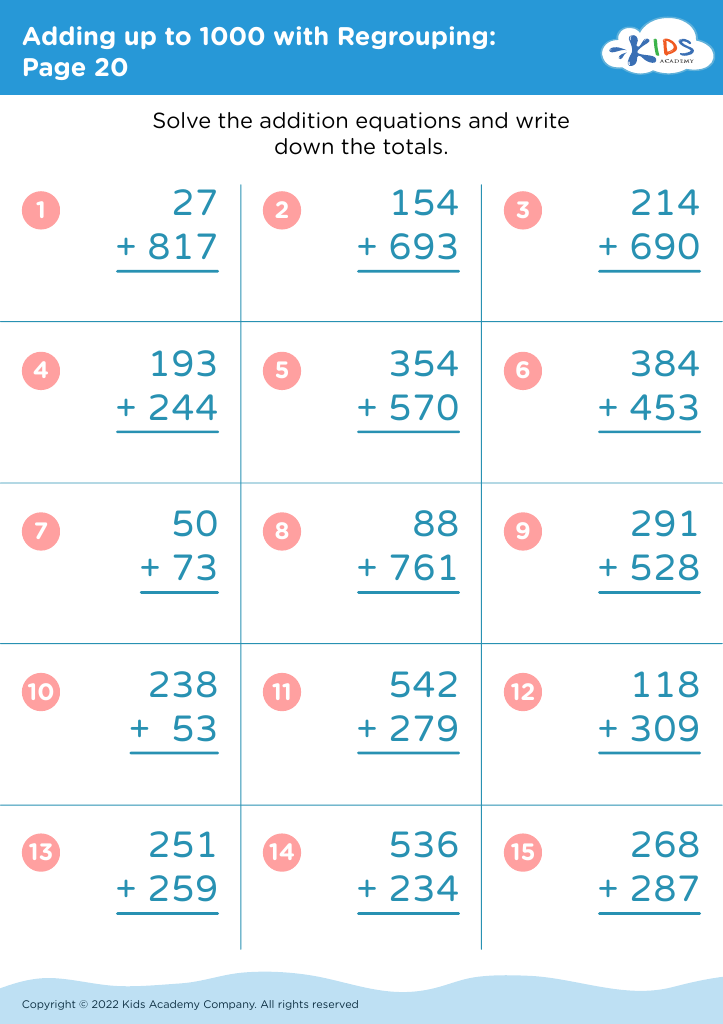
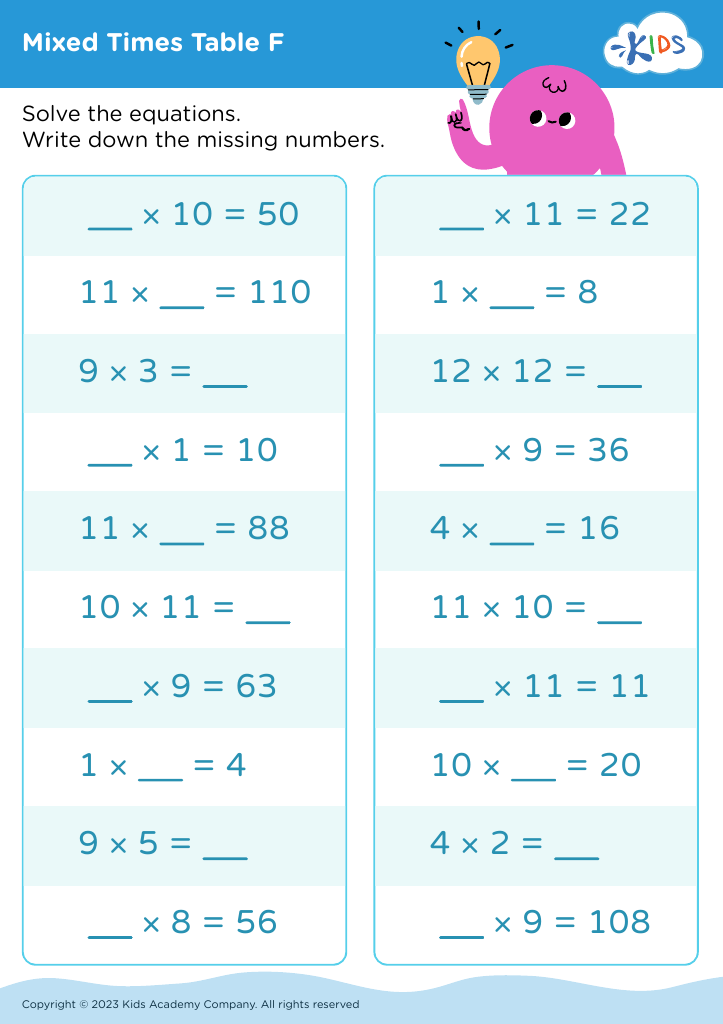






Improving mathematical skills in Grade 3 is crucial for both parents and teachers, as this foundational year shapes students' future academic success and confidence. At this stage, children transition from learning basic concepts to applying mathematical reasoning in more complex scenarios. Strong mathematical skills support critical thinking and problem-solving abilities that are essential not only in math but across all subjects.
Parents should be invested in their child's mathematical development because it influences essential life skills, such as budgeting, understanding time, and evaluating information. Children who excel in math tend to feel more self-assured, fostering a love for learning that can last a lifetime.
Teachers play a pivotal role in encouraging and enhancing these skills through engaging lessons and tailored support. By using varied teaching methods and integrating real-world applications, teachers can make math relevant and enjoyable. Furthermore, collaborative efforts between parents and teachers can fortify a child’s learning experience. Consistent communication around performance and progress allows for a comprehensive support system that motivates students.
In essence, nurturing mathematical skills not only builds academic proficiency but also empowers children with the essential tools they need to navigate both educational and everyday challenges effectively.