Improving counting skills Grade 3 Worksheets
8 filtered results
Difficulty Level
Grade
Age
-
From - To
Subject
Activity
Standards
Boost your child's mathematical abilities with our expertly designed Grade 3 worksheets focused on improving counting skills. Developed to blend fun with learning, these resources feature engaging activities that reinforce number sequencing, skip counting, and place value concepts. Tailored to adhere to educational standards, they provide a solid foundation in arithmetic, preparing students for more advanced math topics. Ideal for both classroom use and home practice, these worksheets help children grasp essential counting skills while enjoying each step of their learning journey. Equip your third grader with the tools they need for success in math with our targeted, high-quality worksheets.
Favorites
With answer key
Interactive
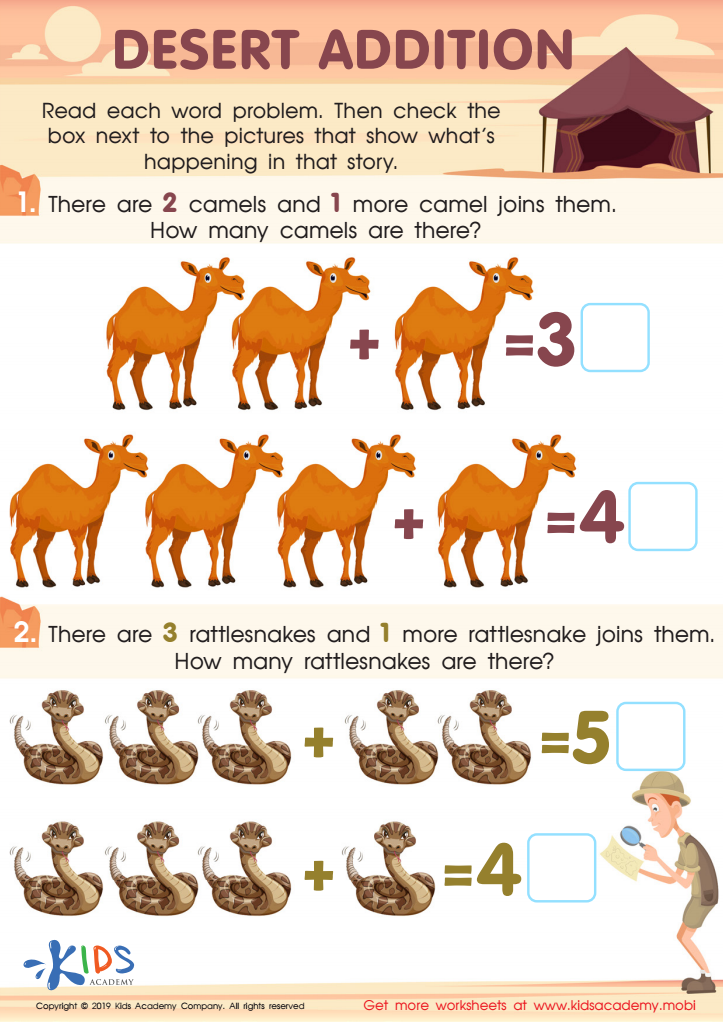
Desert Addition Worksheet
In the desert, scorching heat and little water mean animals must adapt to survive. Show kids pictures of these animals and teach their names. Then, read the word problems in the worksheet, and have them check the box next to the pictures that portray each story. 80 words
 Assign to My Students
Desert Addition Worksheet
Worksheet
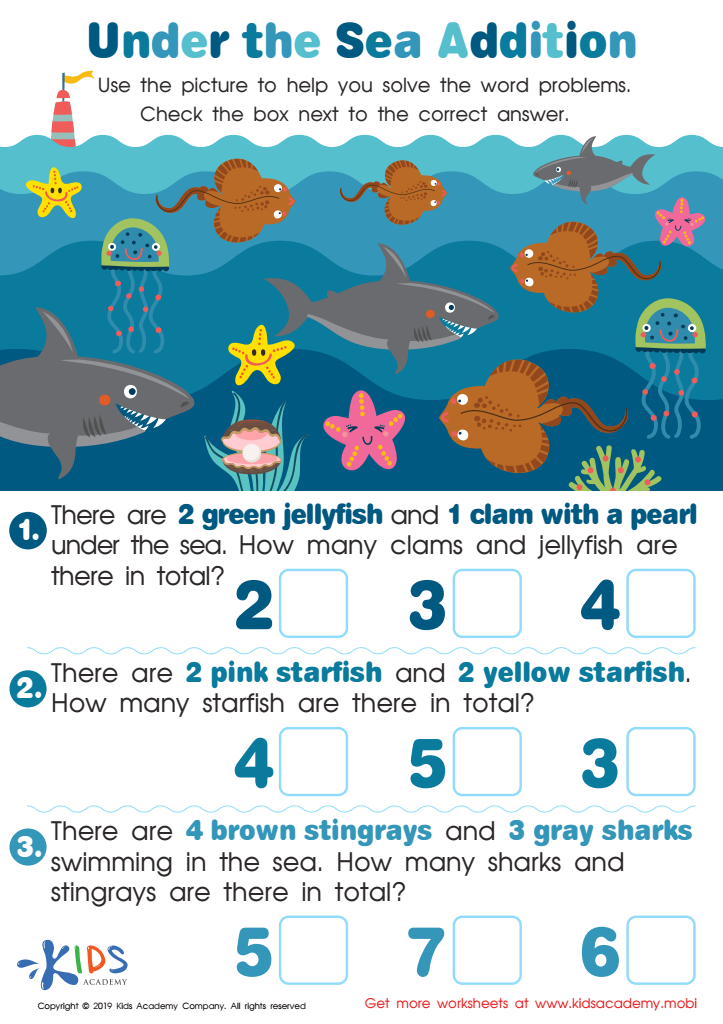
Under the Sea Addition Worksheet
Ask your kids to identify undersea animals in a picture, then solve the word problems at the bottom with it! If they're into the nature channel or marine life, they'll love this worksheet. Check the box next to the correct answer for each one. 80 words
Under the Sea Addition Worksheet
Worksheet
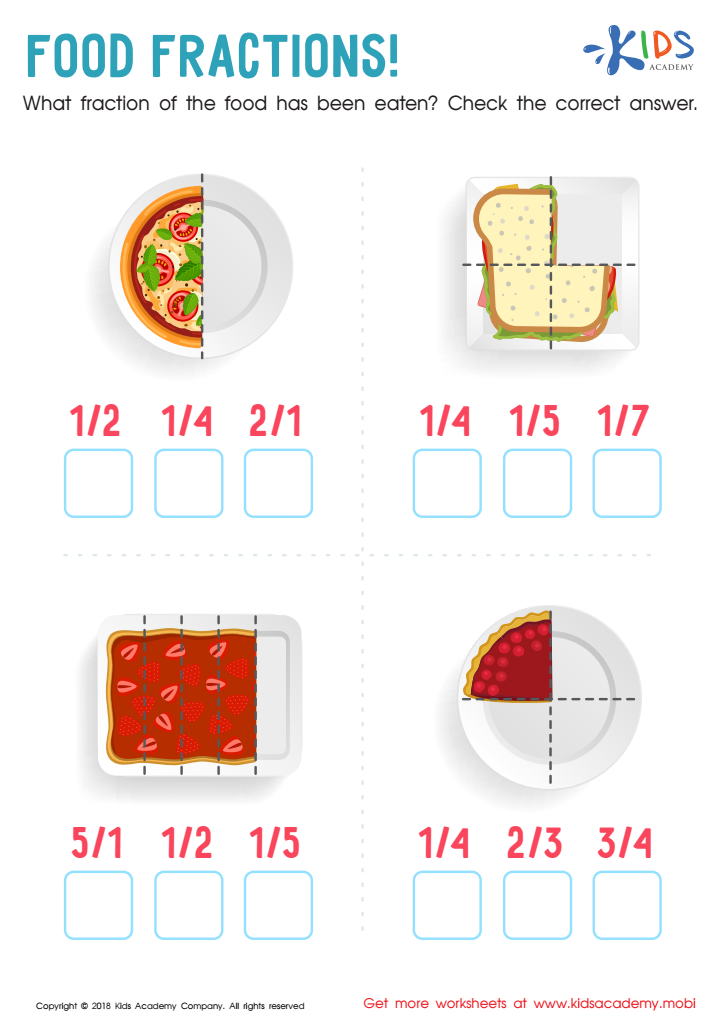
Food Fractions Worksheet
Test your child's understanding of fractions with this Food Fractions worksheet. Ask them to identify what fraction of the food in the four pictures has been eaten and select the correct answer from the options provided. See how well they understand your lessons!
Food Fractions Worksheet
Worksheet
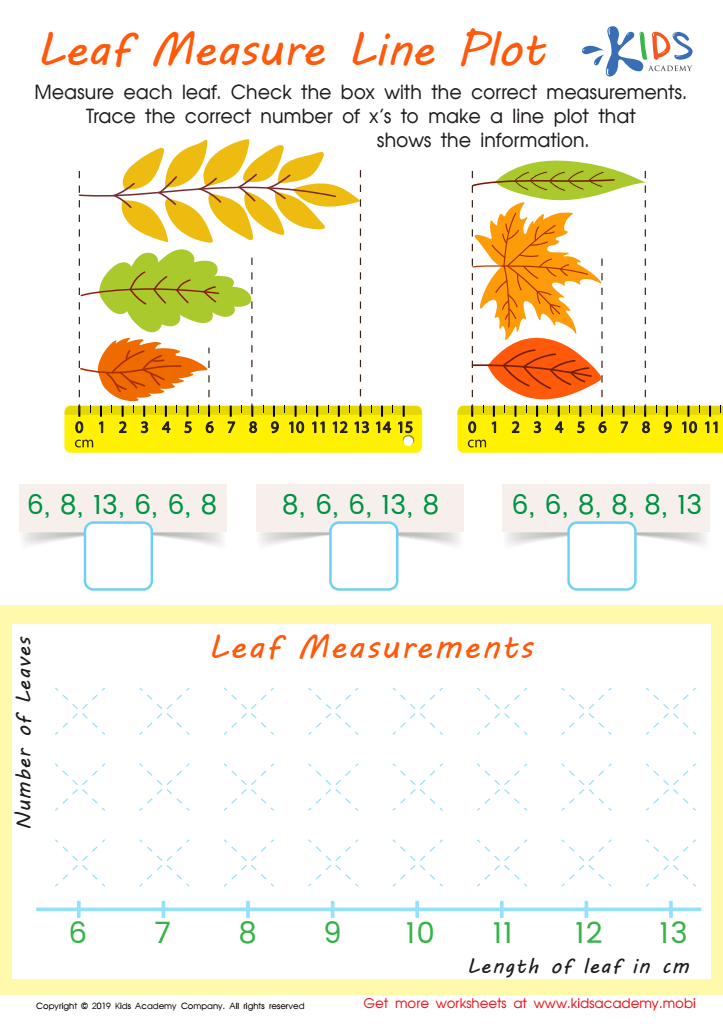
Leaf Measure Line Plot Worksheet
Help your third grader measure each of the four leaves, and check the box with the correct measurements. Then, trace the right number of x's to make a line plot showing the data. This exercise will engage your students and make it easier for them to grasp the concept of line plots.
Leaf Measure Line Plot Worksheet
Worksheet
Join Kids Academy for Free
Who is primarily going to use this learning content?





Improving counting skills in Grade 3 is crucial for a child's overall academic and cognitive development. At this stage, children move beyond simple rote counting and develop a deeper understanding of numbers, which sets the foundation for more complex math concepts like addition, subtraction, multiplication, and division. Effective counting skills also foster number sense, which is the ability to recognize quantities without physically counting and to understand the relationships between numbers.
From a practical standpoint, strong counting skills are essential for everyday activities, such as telling time, handling money, and measuring ingredients in a recipe. These skills boost a child's confidence and independence in both academic and real-life situations. For example, a child who is proficient at counting can more easily grasp math problems and logical reasoning tasks, which are critical in all areas of learning.
Moreover, counting activities promote cognitive development by enhancing memory, attention to detail, and problem-solving abilities. Engaging children in counting exercises also promotes social interaction and collaborative learning, as they often work in groups to solve problems or play counting games.
For teachers and parents, focusing on improving counting skills helps ensure that children have a solid mathematical foundation, confidence in their abilities, and the readiness to tackle more advanced concepts. Investing time and effort into building these skills can significantly impact a child's future academic success and practical life skills.