Recognizing Patterns Grade 3 Worksheets
8 filtered results
-
From - To
Discover our engaging "Recognizing Patterns Grade 3 Worksheets," designed to enhance students' critical thinking and analytical skills! These worksheets offer a variety of fun activities that help young learners identify, create, and extend patterns using shapes, colors, and numbers. Each worksheet encourages creativity and introduces essential math concepts, preparing third graders for more advanced problem-solving. Ideal for classroom use or at-home practice, these resources are aligned with curriculum standards, ensuring kids build a strong foundation in pattern recognition. Explore our colorful and interactive worksheets today to support your child's learning journey and boost their confidence in math!
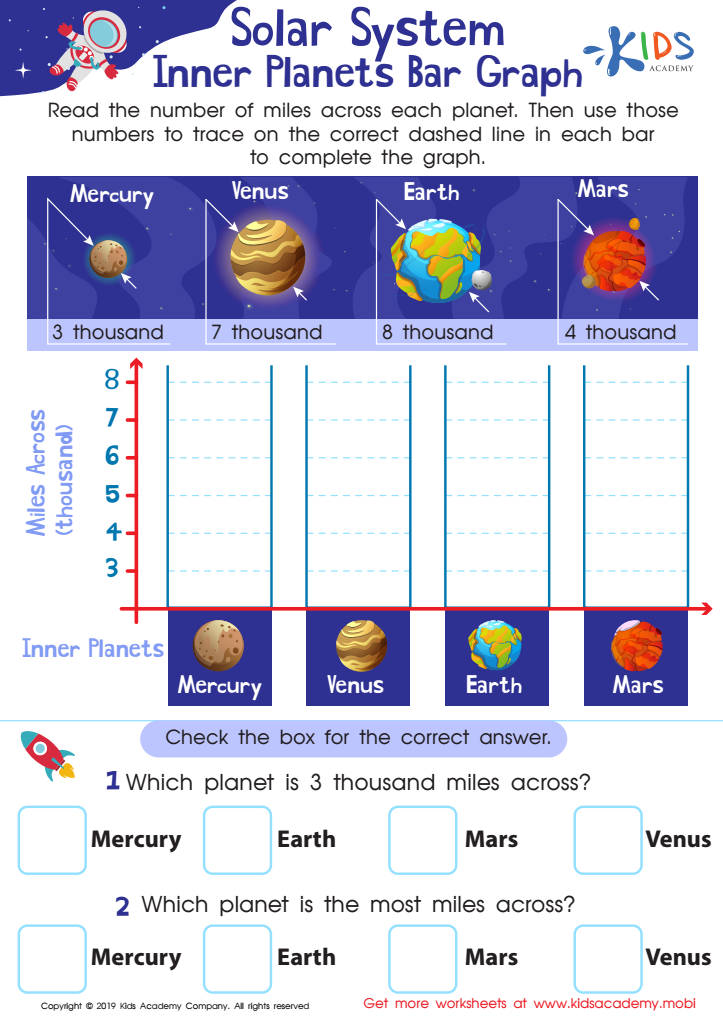
Planets Bar Graph Worksheet
 Assign to My Students
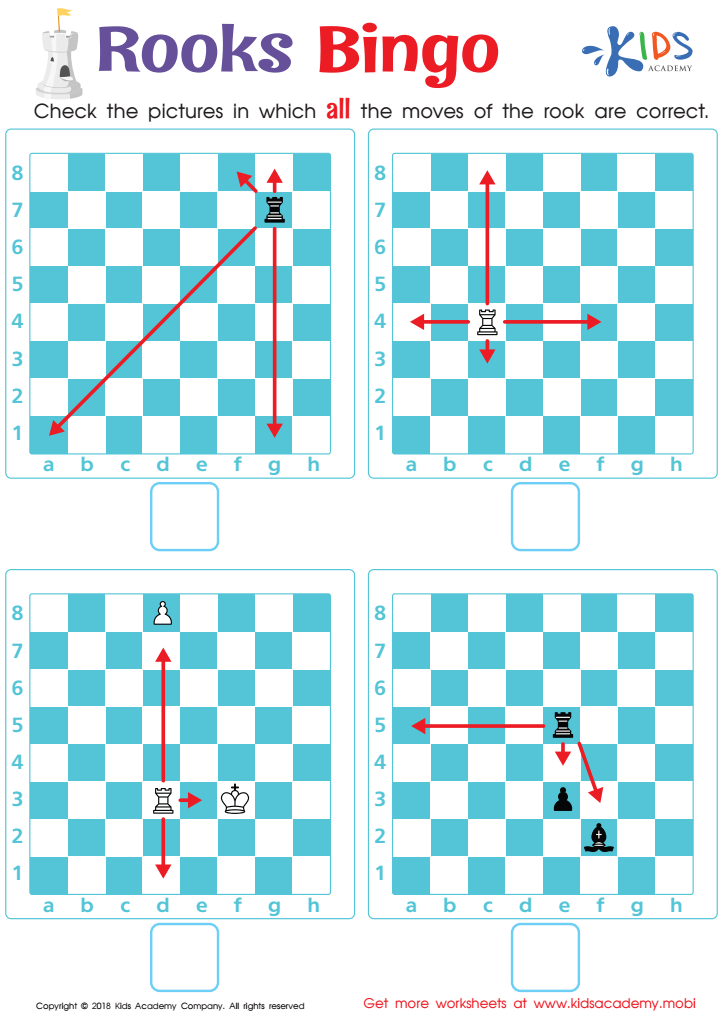
Rooks Bingo Worksheet








Recognizing patterns is a fundamental skill that significantly impacts a child's cognitive development and understanding of mathematics, science, and the world around them. In Grade 3, children transition from concrete counting to more abstract mathematical concepts, making it essential for both parents and teachers to prioritize pattern recognition in their curriculum and home activities.
Recognizing patterns enhances critical thinking and problem-solving abilities. It helps children make connections between different mathematical ideas, such as multiplication and division or geometry's symmetrical shapes. Additionally, understanding patterns fosters logical reasoning, vital for grasping more complex concepts in later grades.
Beyond mathematics, recognizing patterns is also a key skill in various subjects, including science, where it helps in observing trends, making predictions, and hypothesizing about the natural world. Furthermore, pattern recognition plays a role in music, art, and even social interactions, facilitating a deeper understanding of sequences and structures.
Ultimately, nurturing this skill in Grade 3 lays a strong foundation for future learning. Parents and teachers can support this development through engaging activities, such as interactive games and hands-on projects, making learning fun and relevant. By recognizing the value of patterns, educators and families can significantly enhance a child's overall academic success.