Boost your child's mathematical skills with our expertly crafted "Understanding Sequences Grade 3 Worksheets." Designed specifically for third graders, these engaging worksheets help young learners master number sequences through fun and interactive exercises. They aim to enhance logical thinking and pattern recognition abilities, crucial for math success. The activities include fill-in-the-blanks, matching sequences, and more, ensuring a comprehensive grasp of sequencing concepts. Perfect for classroom or home use, these worksheets cater to different learning paces. Empower your child’s education journey and foster a love for learning with Kids Academy’s thoughtfully designed resources. Download today and watch your child excel!

Check out this FREE Grade 3 "Understanding Sequences" Trial Lesson!

Realistic Fiction

Favorites
With answer key
Interactive
  • Grade 3
  • Understanding Sequences
Sequence Word Eagle Worksheet

Sequence Word Eagle Worksheet

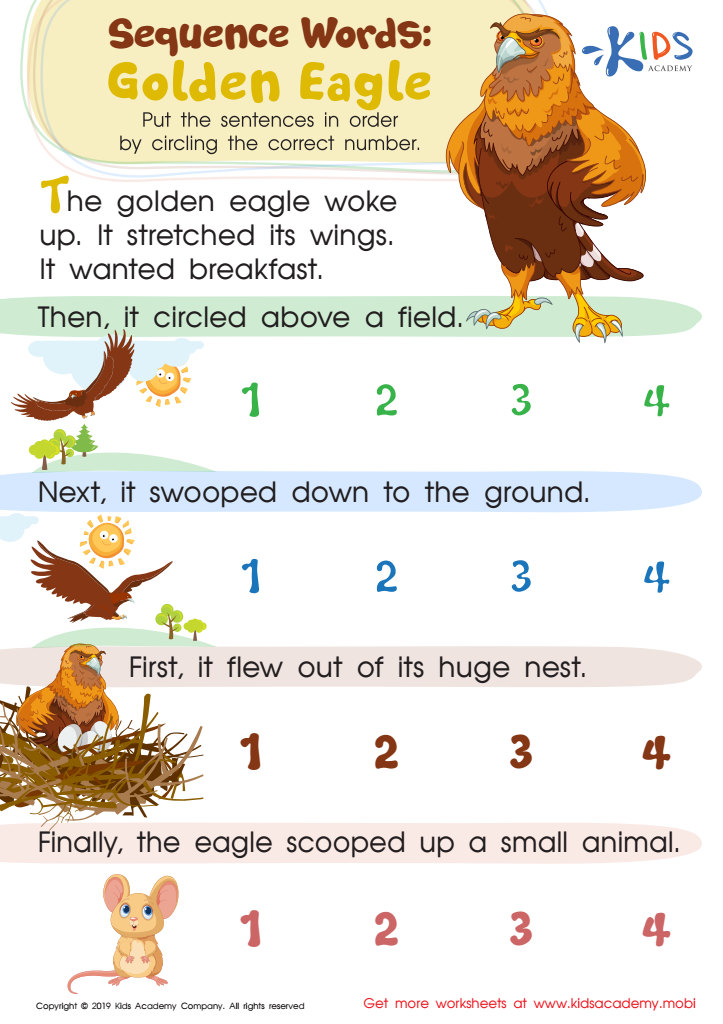
Help your child brush up on reading and writing with this fun worksheet. Read the story of the golden eagle's day, then have the child circle the numbers in the right order. Point out the sequence words that tell the order of events. This helps learners understand how to make their writing clear and understandable to others.
Sequence Word Eagle Worksheet
Worksheet
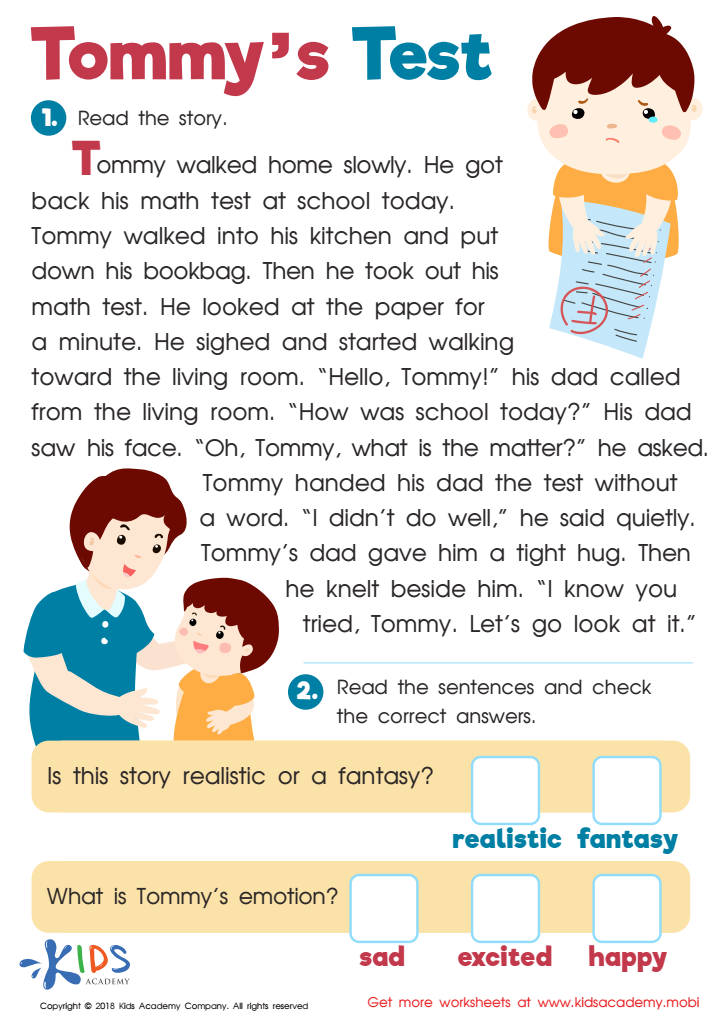
Tommys Test Worksheet

Tommys Test Worksheet

Reading short stories to your students builds a bond, teaches new words and lessons. Read the story aloud and then have them listen for details. Ask them the questions at the bottom and help them check the answers.
Tommys Test Worksheet
Worksheet
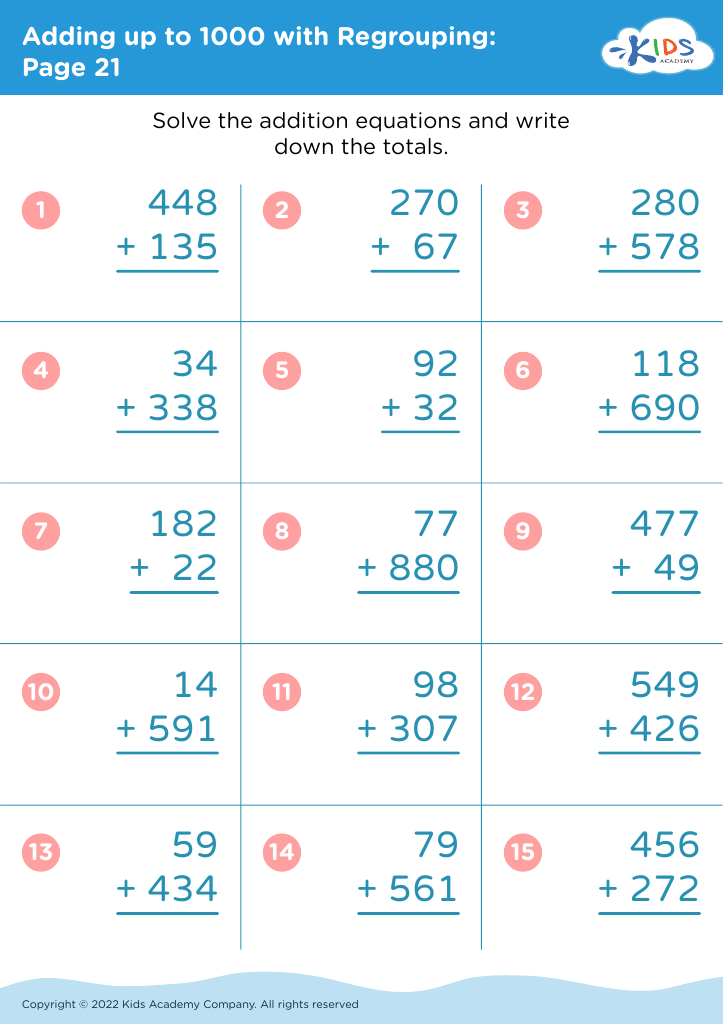
Adding up to 1000 with Regrouping: Page 21
Worksheet
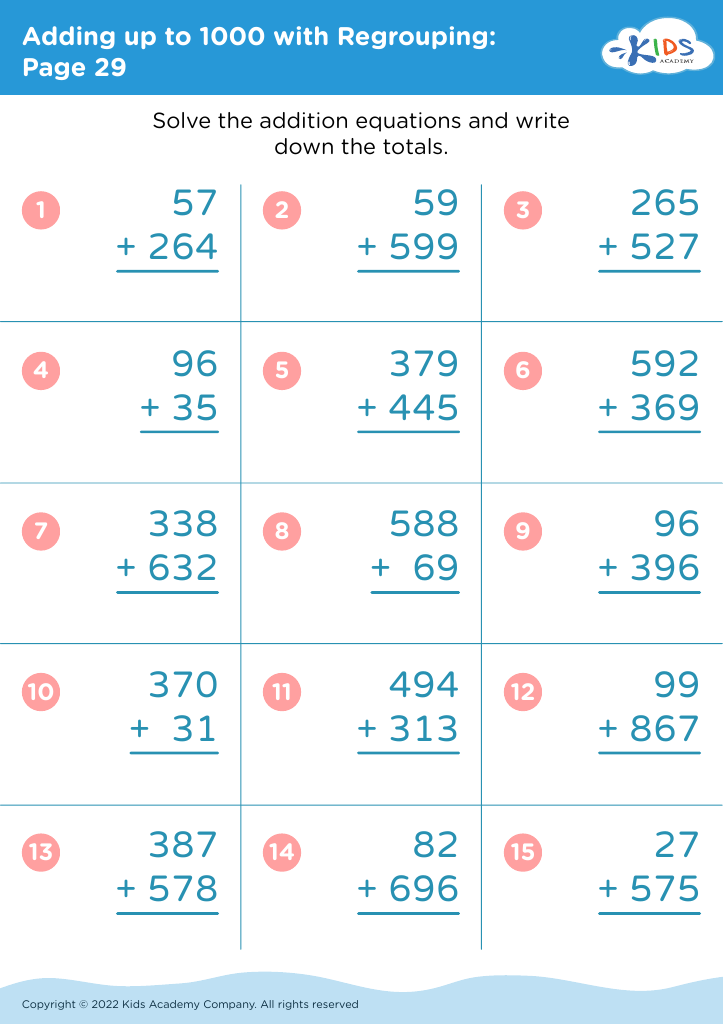
Adding up to 1000 with Regrouping: Page 29
Worksheet
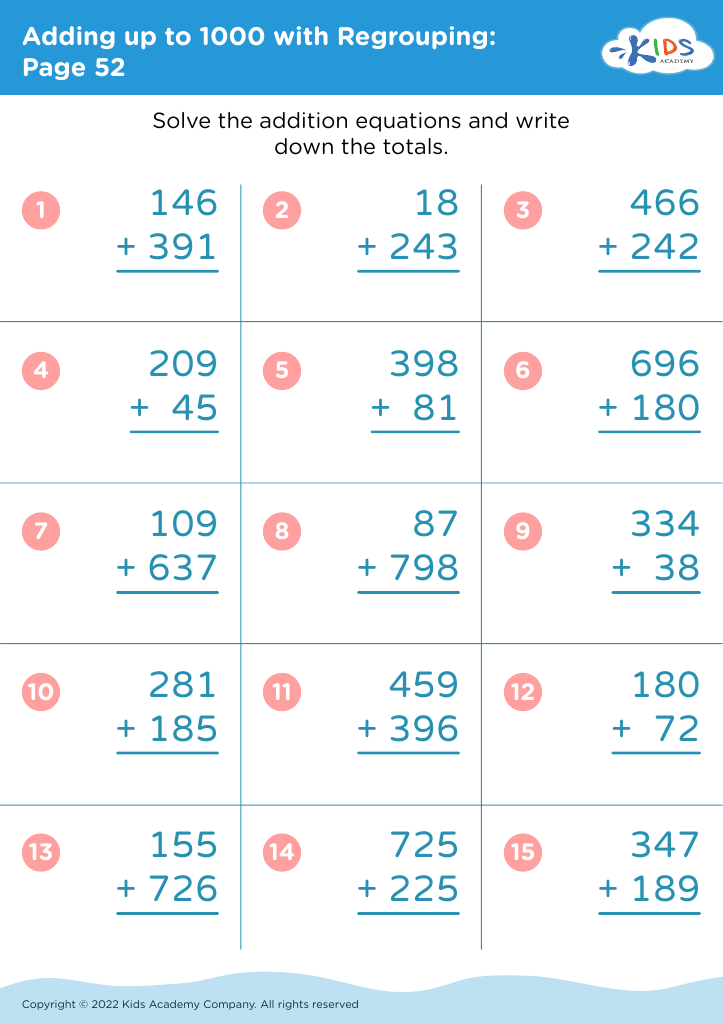
Adding up to 1000 with Regrouping: Page 52
Worksheet
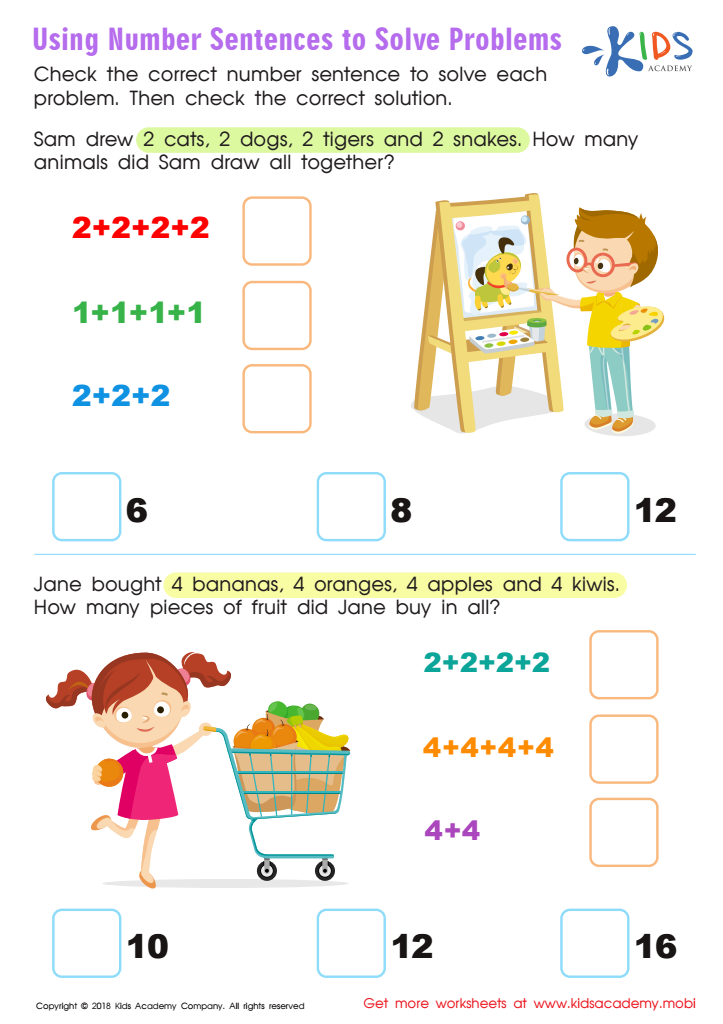
Using Number Sentences to Solve Problems Worksheet

Using Number Sentences to Solve Problems Worksheet

Solving math problems requires an efficient strategy. Picture representation can help young mathematicians with basic addition problems, especially when it involves repeated addends. As they gain confidence, they'll be able to apply their number sentence solving abilities to more complex equations.
Using Number Sentences to Solve Problems Worksheet
Worksheet
Sequencential Order Worksheet

Sequencential Order Worksheet

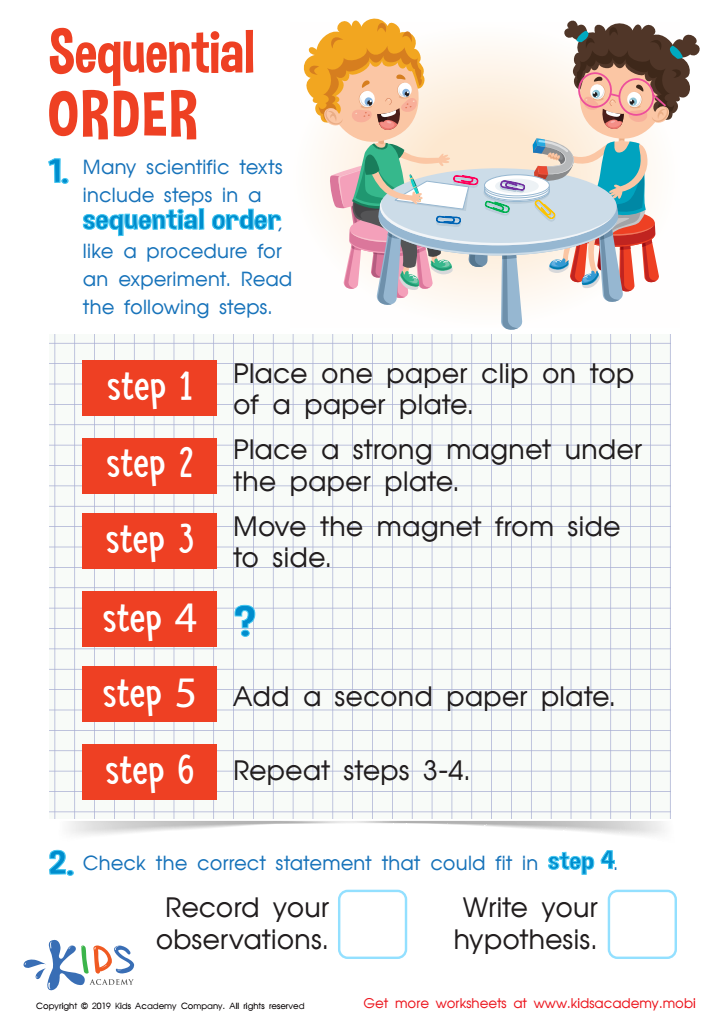
This worksheet is perfect for science-lovers: it'll test how good your child is at following instructions by asking them to complete the steps in the right order. Have them read the steps and then choose the statements that correctly fill in the blanks. It's more than just fun experiments and results - science also requires careful procedure.
Sequencential Order Worksheet
Worksheet
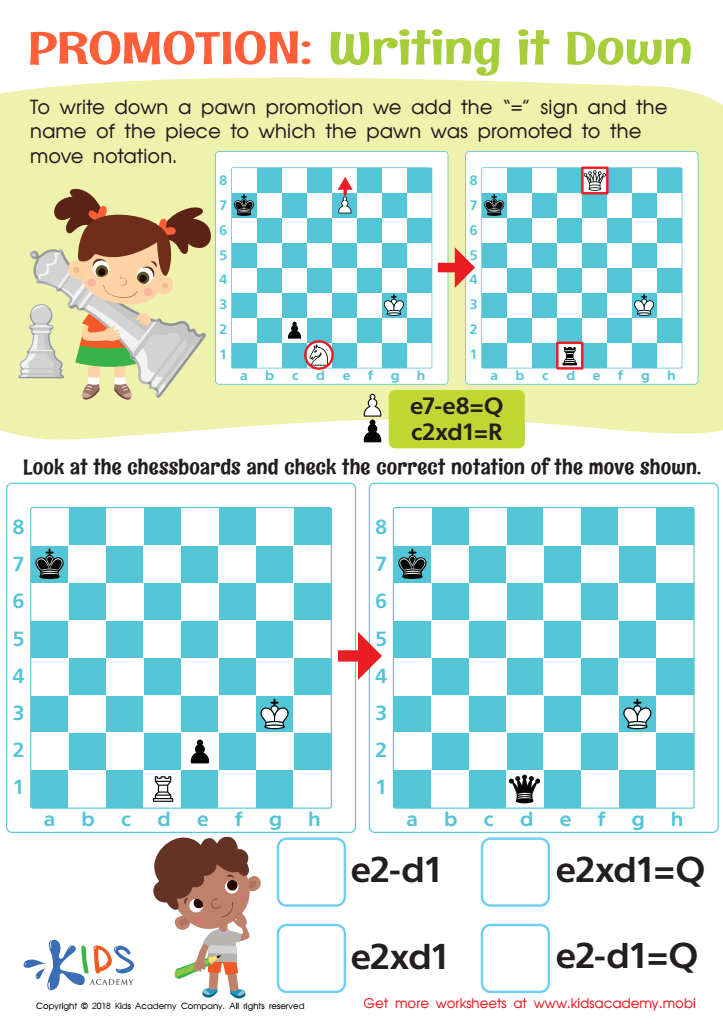
Writing it Down Worksheet

Writing it Down Worksheet

To document pawn promotion, add "=<piece name>" to the move notation. For example: e7-e8=Q. Ask your child to look at the chessboard and take note of the moves. Check the notations are correct. (80 words)
Writing it Down Worksheet
Worksheet
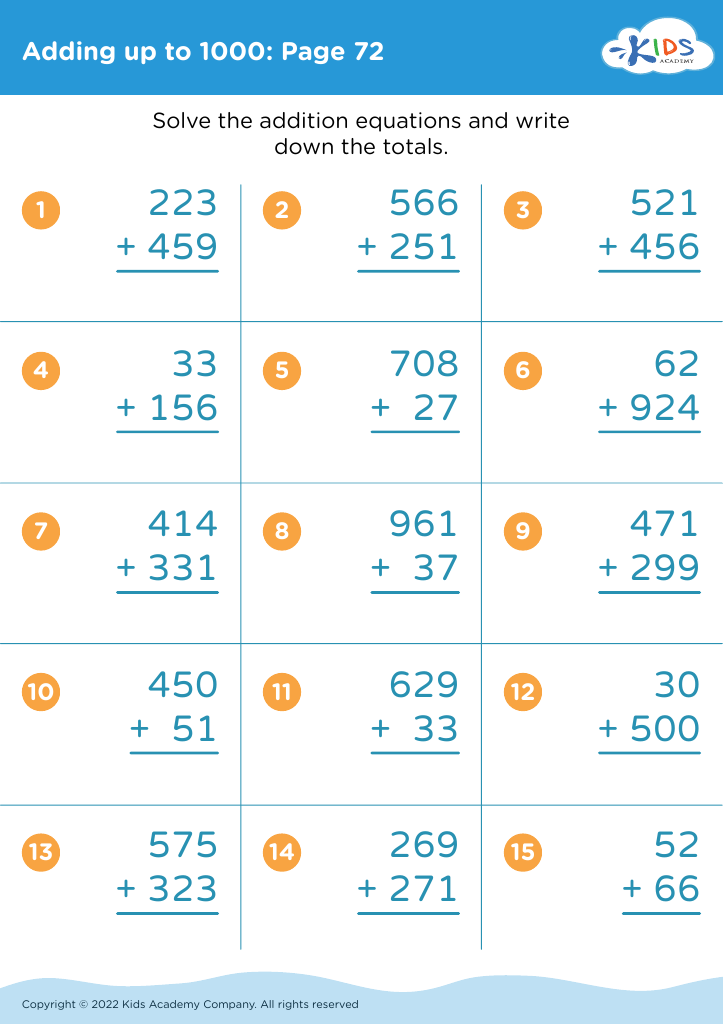
Adding up to 1000: Page 72

Adding up to 1000: Page 72

Adding up to 1000: Page 72
Worksheet
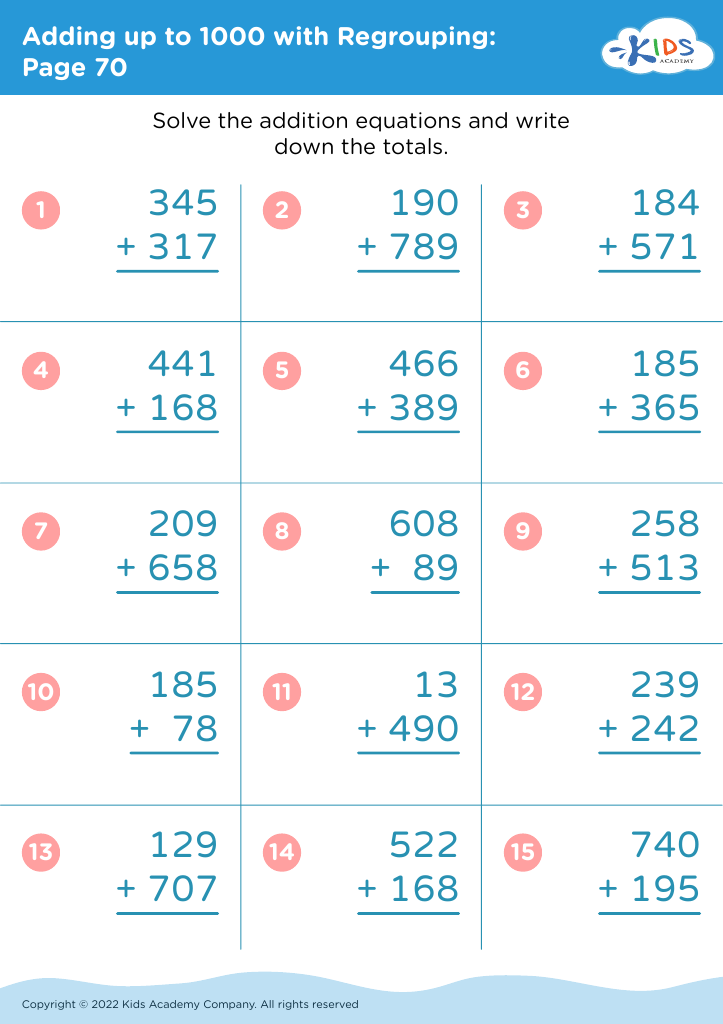
Adding up to 1000 with Regrouping: Page 70
Worksheet
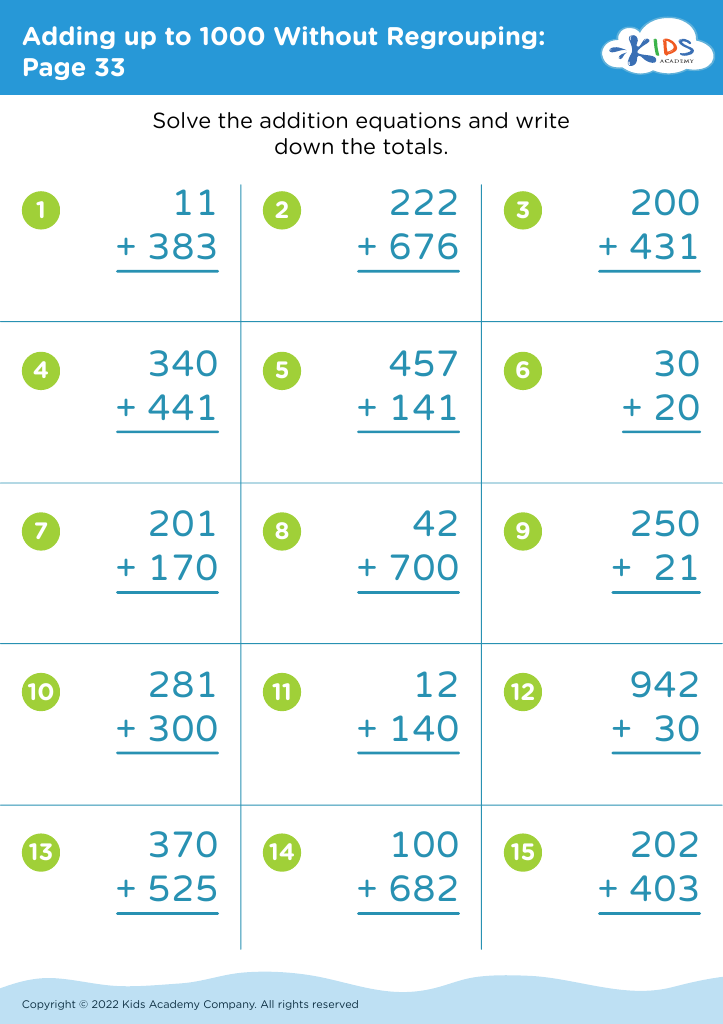
Adding up to 1000 Without Regrouping: Page 33
Worksheet


Understanding sequences, or the ability to recognize and predict patterns, is fundamental for third-grade students as it resonates with critical cognitive development at this age. For parents and teachers, fostering this competency is crucial for several reasons.

Firstly, sequences underpin many aspects of early mathematics, such as understanding number patterns, skip-counting, and the basics of algebra. Grasping these concepts early on sets a solid foundation for more complex mathematical topics in later grades. It ensures that students develop strong problem-solving and logical thinking skills.

Secondly, recognizing sequences enhances reading comprehension and language skills. Understanding the order of events within a story or being able to predict what happens next promotes better engagement and retention. Moreover, it aids with following directions, an essential skill in both classroom settings and daily life.

Lastly, mastering sequences contributes to developing critical life skills. From organizing their daily routines to following the steps in a scientific experiment, students learn to process information sequentially, which is vital for becoming independent thinkers and efficient learners.

Thus, prioritizing the teaching of sequences enriches a child’s educational journey, leading to improved academic performance and essential life capabilities. It ensures they are well-prepared for the challenges and opportunities that lie ahead.