Hand-eye Coordination Grade 3 Addition and Subtraction Word Problems Worksheets
3 filtered results
-
From - To
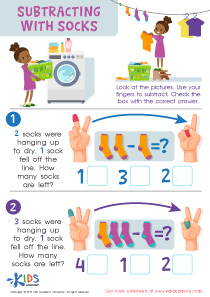
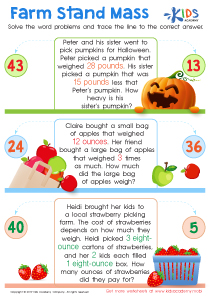
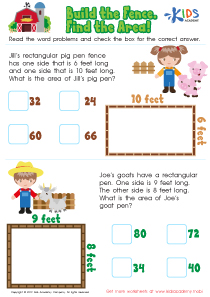
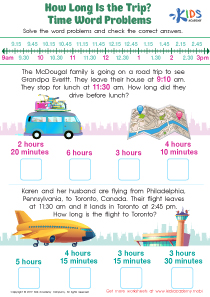
Enhance your child's hand-eye coordination alongside their math skills with our Grade 3 Addition and Subtraction Word Problems Worksheets. Designed for young learners, these engaging exercises foster critical thinking while offering a blend of math and motor skills practice. Each worksheet presents real-life scenarios, promoting understanding of addition and subtraction through interactive challenges. Perfect for diverse learning environments, these resources encourage children to visualize math problems and strengthen their problem-solving abilities. Improve hand-eye coordination as students read, write, and solve word problems, making math both fun and practical. Start your third grader's journey to math mastery today!
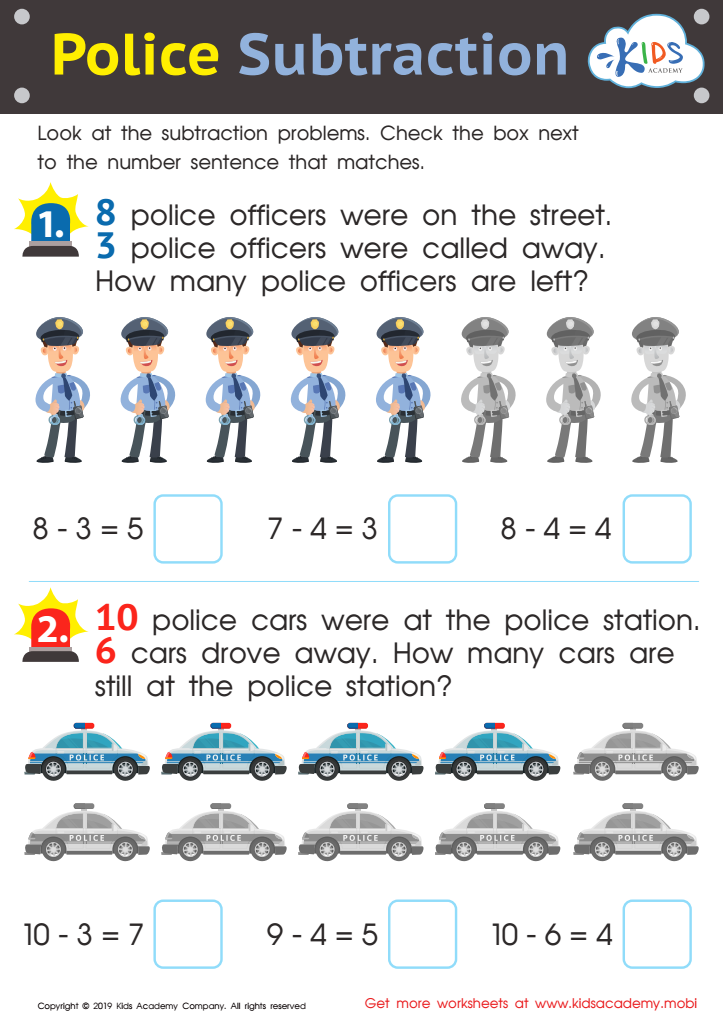
Police Subtraction Worksheet
 Assign to My Students
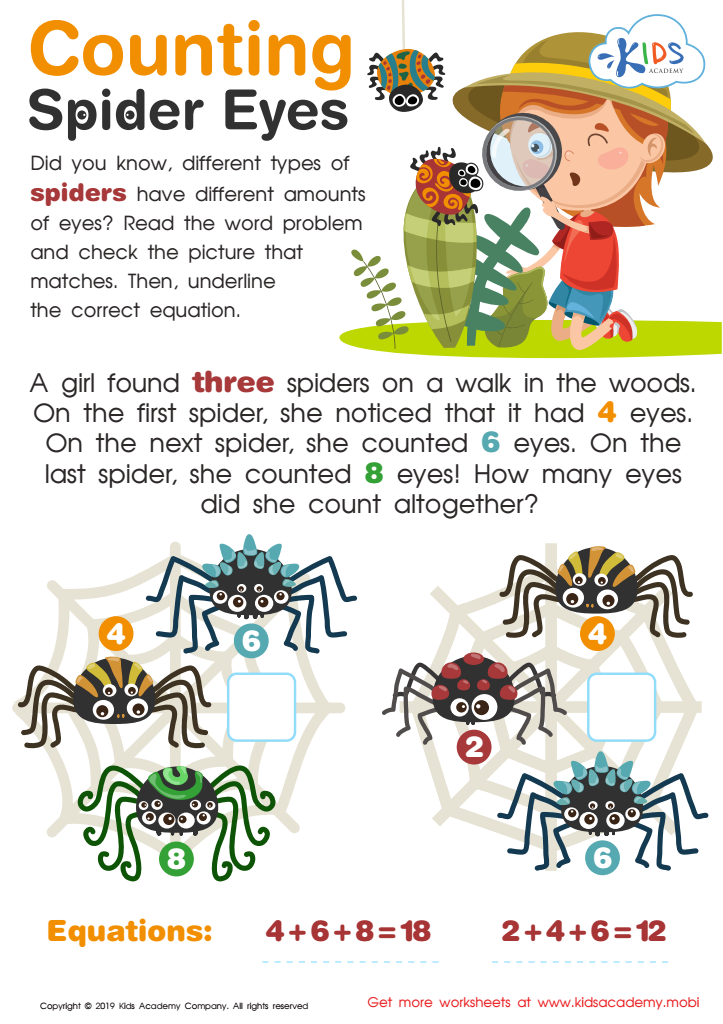
Counting Spider Eyes Worksheet
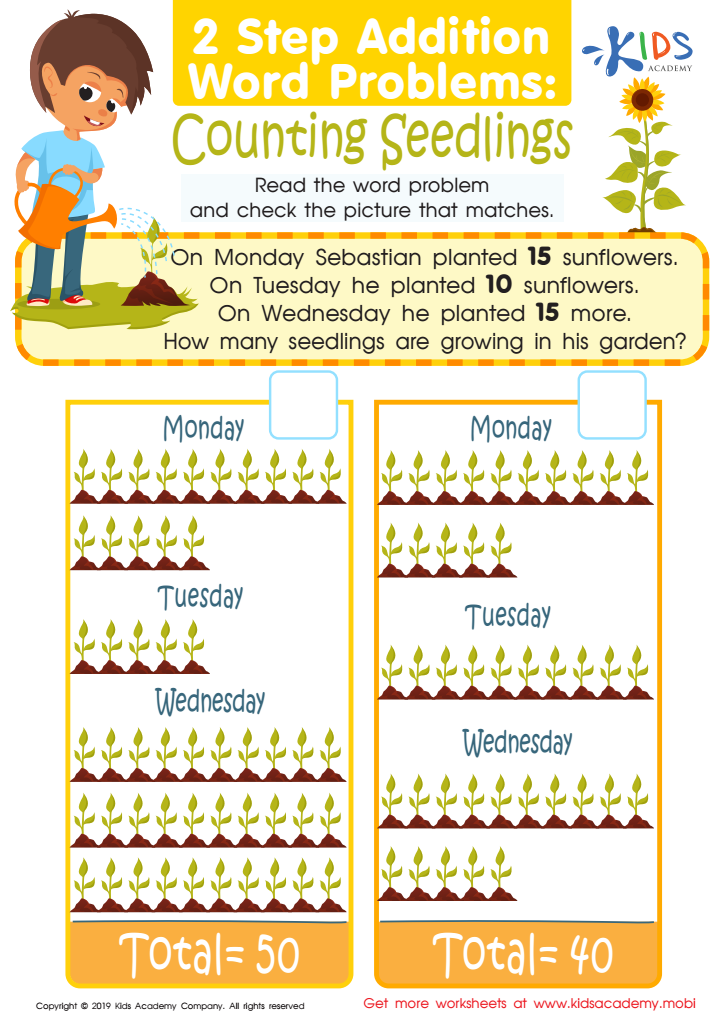
Counting Seedlings Worksheet








Hand-eye coordination is a crucial skill for children, as it directly impacts their ability to engage in various learning activities, including mathematics. For third graders, mastering addition and subtraction word problems is essential not just for academic success, but also for developing cognitive skills and problem-solving abilities. These problems require students to interpret information, think critically, and apply mathematical concepts in real-world contexts.
Parents and teachers should care about enhancing hand-eye coordination because it helps students visualize numbers and solutions, boosting their confidence in tackling complex word problems. Activities that improve this coordination, such as using manipulatives, engaging in interactive games, or practicing fine motor skills, often lay the groundwork for better performance in mathematical computations.
Additionally, effective hand-eye coordination supports broader educational goals, such as attention, focus, and spatial reasoning, which are vital in problem-solving. By integrating exercises that promote this coordination into the learning process, adults can foster not just mathematical skills, but also a child’s overall academic and personal development. Consequently, enhancing hand-eye coordination contributes to children’s transition into more advanced mathematical concepts, setting a strong foundation for future learning success.