Learn new vocabulary Grade 3 Addition & Subtraction Worksheets
3 filtered results
-
From - To
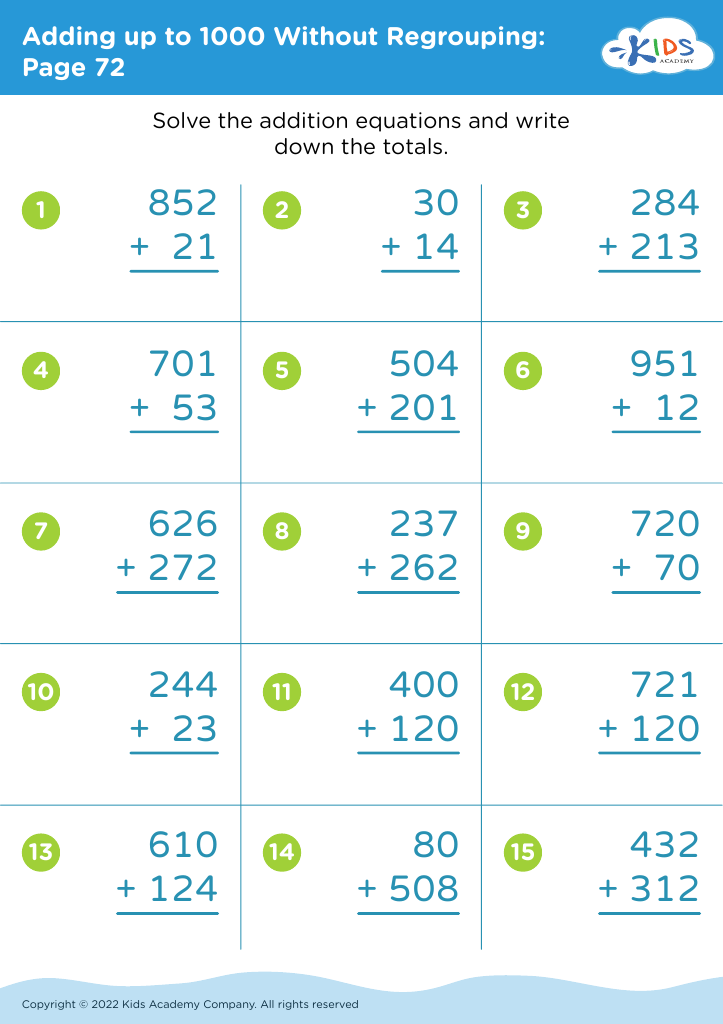
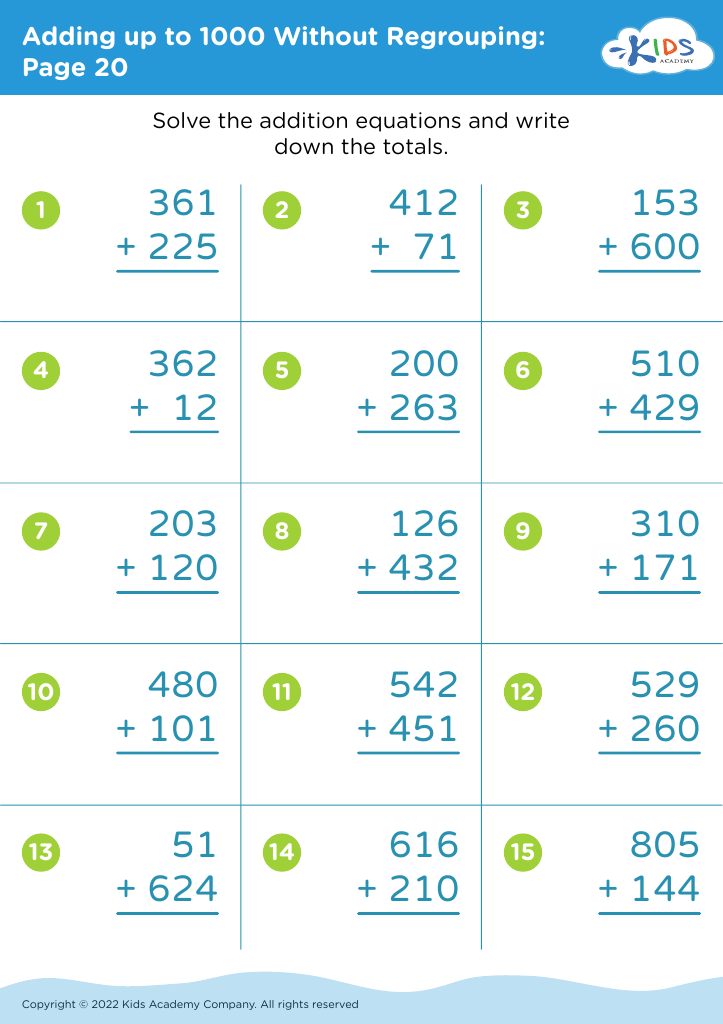
Enhance your third grader's math journey with our "Learn New Vocabulary Grade 3 Addition & Subtraction Worksheets." Designed to bolster both math skills and vocabulary, these engaging worksheets focus on key concepts such as sums, differences, and other essential terminology. Your child will strengthen their understanding of addition and subtraction while exploring vital vocabulary through fun exercises. Ideal for in-class use or home practice, these worksheets foster critical thinking and problem-solving skills. Explore our collection now and empower your young learner to master mathematical language and operations effectively, making math both enjoyable and educational. Start today!
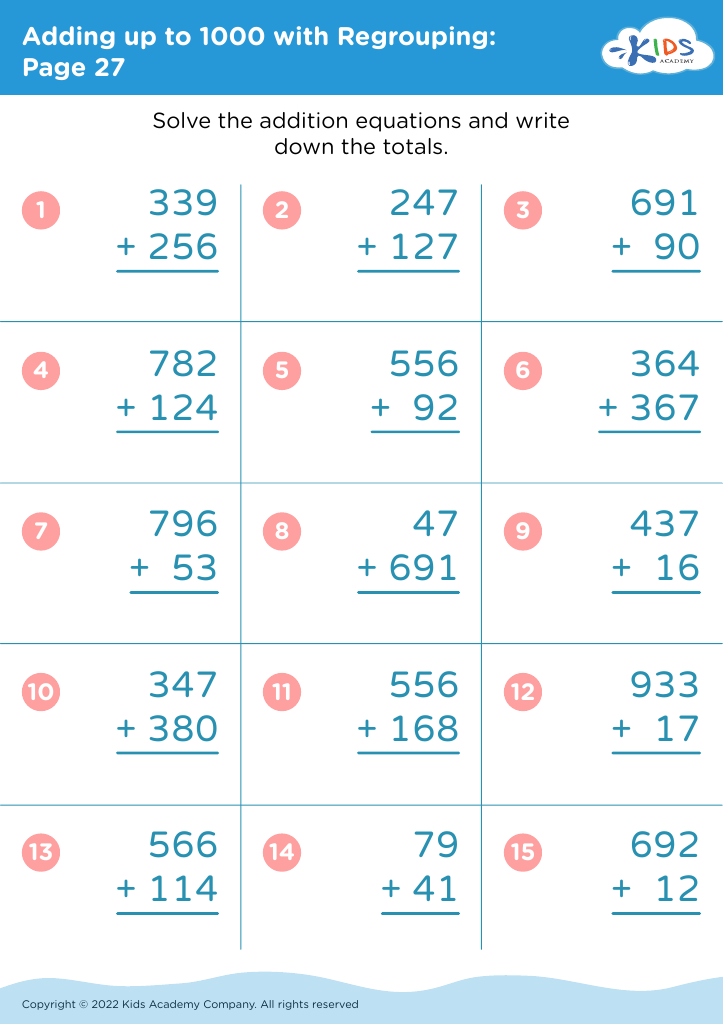








Parents and teachers should prioritize the introduction of new vocabulary in conjunction with grade 3 addition and subtraction because language development is fundamental to mathematical understanding. In third grade, students transition from basic arithmetic to more complex problem-solving that requires them to understand terminology such as “sum,” “difference,” “plus,” “minus,” and “equation.” Mastery of these terms not only enhances mathematical fluency but also improves the ability to communicate mathematical reasoning.
Moreover, vocabulary directly influences a child’s confidence and engagement in math. When students grasp the language of mathematics, they are more likely to approach problems with enthusiasm rather than frustration. This can create a positive cycle: the more they understand the words and concepts, the more proficient they become, leading to greater success and less anxiety around the subject.
Additionally, integrating vocabulary with practical application—such as word problems—helps solidify understanding, making math more relatable and accessible. Athoughtfully developed vocabulary program also fosters critical thinking skills, enhancing their ability to reason abstractly. By supporting vocabulary acquisition, parents and teachers can cultivate a more competent and confident mathematical mindset in their students, laying the groundwork for future success in academics and real-life scenarios.