Understand fractions Grade 3 Addition & Subtraction Worksheets
5 filtered results
Difficulty Level
Grade
Age
-
From - To
Subject
Activity
Standards
Our "Understand Fractions: Grade 3 Addition & Subtraction Worksheets" are designed to help third graders grasp essential math concepts with ease. These engaging and expertly crafted worksheets focus on addition and subtraction of fractions, providing a variety of problems that reinforce understanding through practice. By incorporating colorful visuals and interactive tasks, students can enjoy a hands-on learning experience. The worksheets cater to various learning styles, ensuring every child can build confidence and excel in fraction operations. Ideal for classroom and home use, these resources are perfect for parents and educators aiming to strengthen their students' math skills.
Favorites
With answer key
Interactive
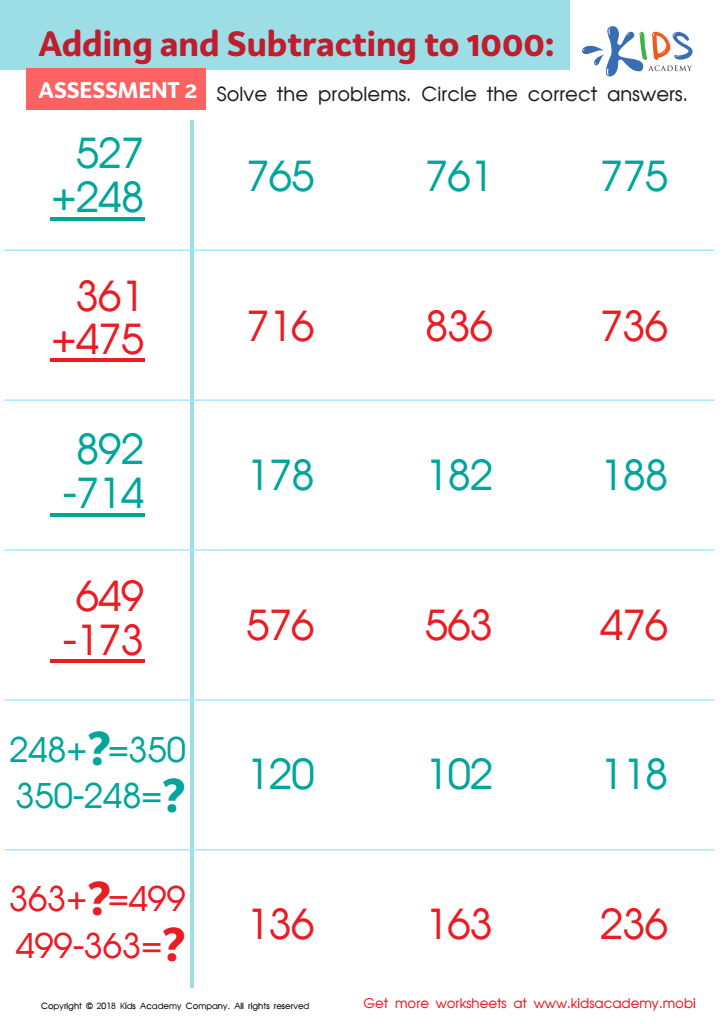
Adding and Subtracting to 1 Worksheet: Assessment 2
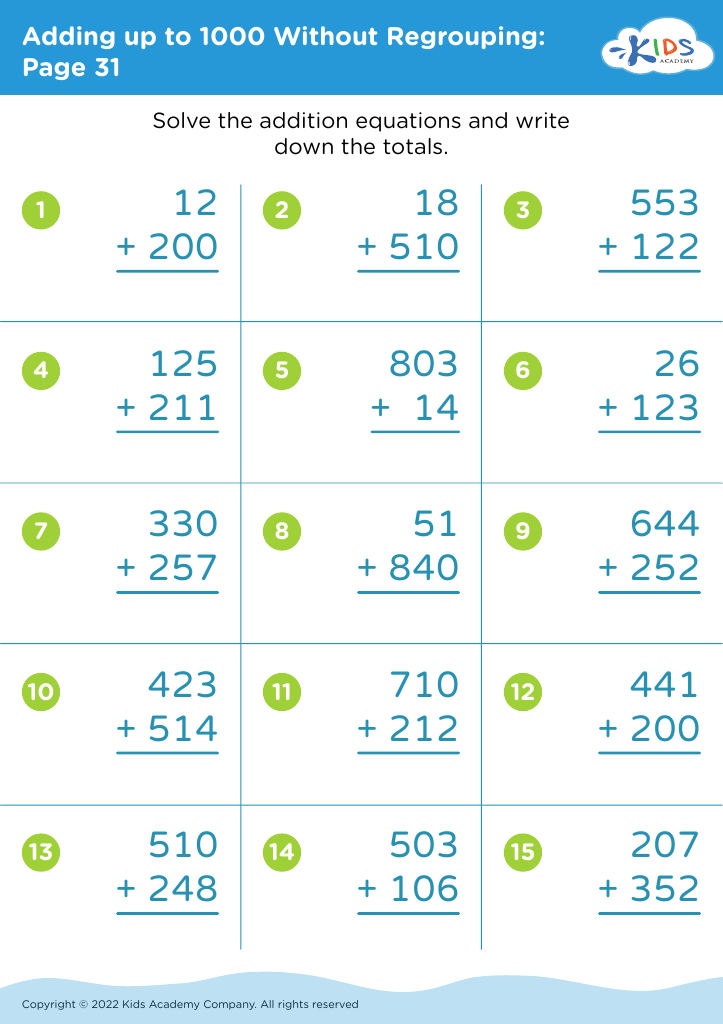
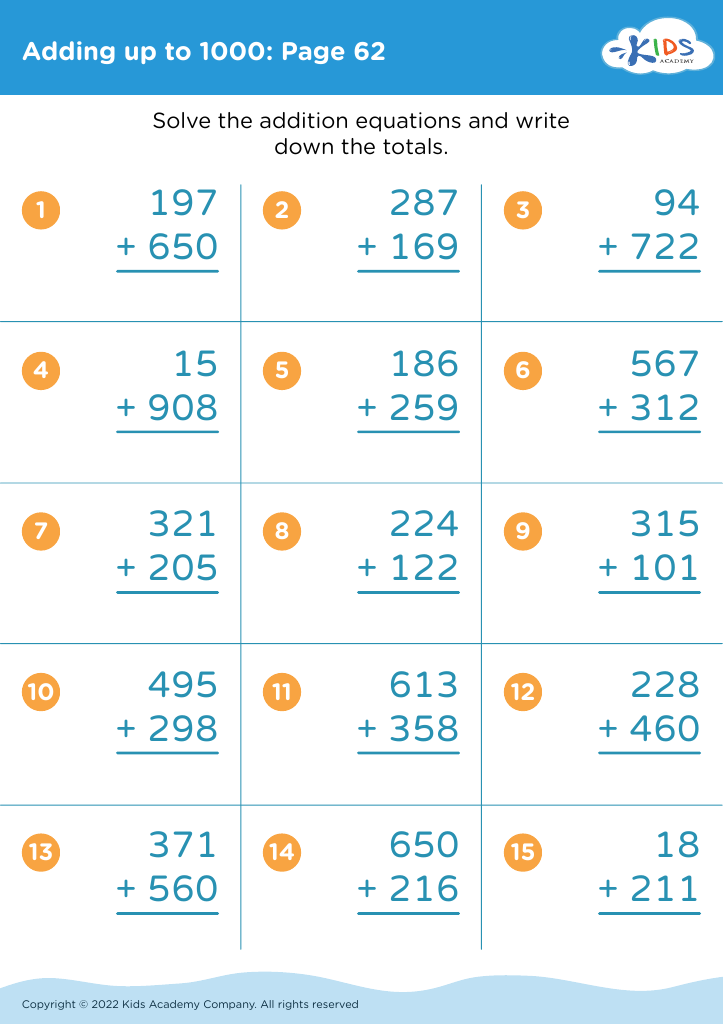
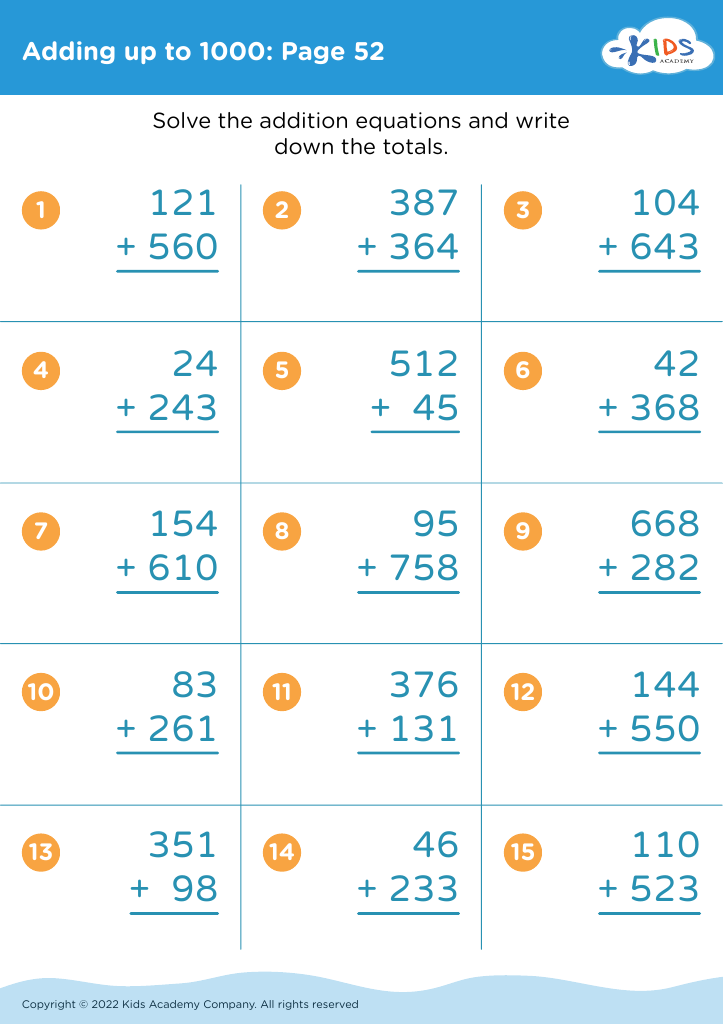
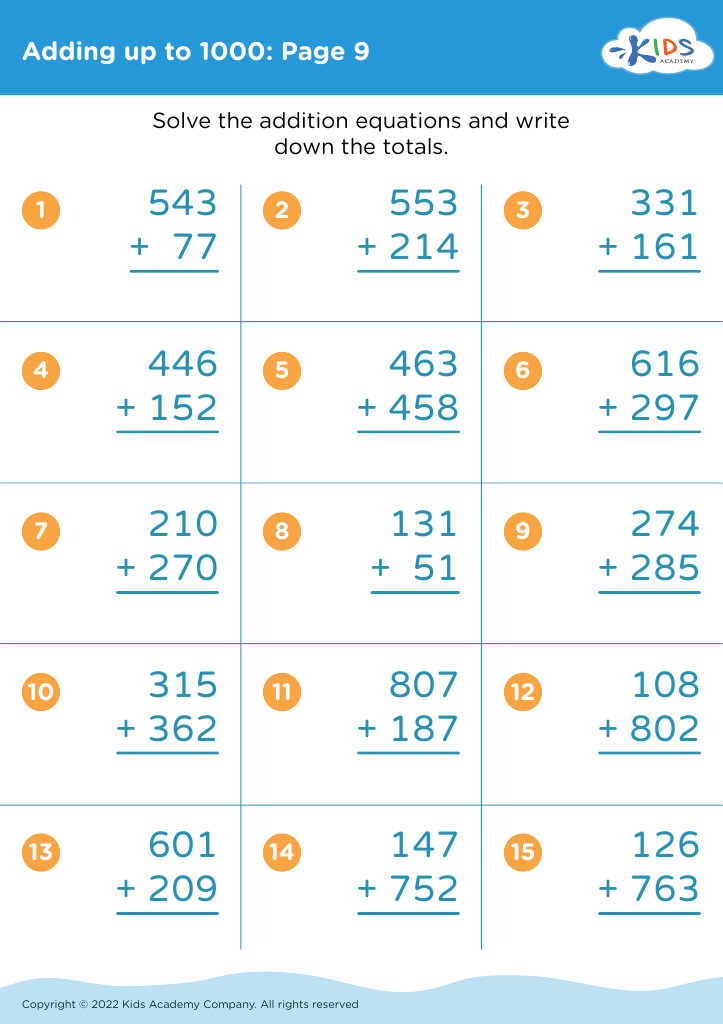
Test your child's addition and subtraction of 3-digit numbers with this assessment worksheet! They'll practice regrouping and pre-algebra skills to show their expertise. Have them work through the page and circle their answers, then see how many they got right to check their understanding and progress.
 Assign to My Students
Adding and Subtracting to 1 Worksheet: Assessment 2
Worksheet
Join Kids Academy for Free
Who is primarily going to use this learning content?








Understanding fractions and their operations—like addition and subtraction—is a crucial mathematical skill introduced in Grade 3 that lays the foundation for more advanced mathematics in higher grades. Here's why parents and teachers should prioritize this concept:
First, grasping fractions helps students build a solid mathematical foundation. By understanding how fractions operate, children can more easily tackle complex concepts like decimals, percentages, and ratios in later grades. This foundational knowledge is essential for success in high school math subjects, standardized testing, and real-world problem-solving.
Second, fractions help improve analytical and critical thinking skills. When students learn to add and subtract fractions, they practice breaking down problems into smaller, manageable parts and thinking logically about how these parts fit together. Engaging with these concepts enhances their overall cognitive development and problem-solving abilities.
Lastly, fractions are prevalent in everyday life. Whether it's in cooking, measuring, budgeting, or dividing something fairly among friends, understanding fractions allows children to apply mathematical reasoning to practical situations.
Given these reasons, ensuring that third graders develop a strong understanding of fractions' addition and subtraction isn't just about teaching them a specific concept—it's about equipping them for academic success and real-world functioning, guiding them towards becoming thoughtful, capable individuals.