Check out this FREE Grade 3 Trial Lesson on Addition & Subtraction!

What Is Chess?

Favorites
With answer key
Interactive
  • Grade 3
  • Understanding fractions
  • Addition & Subtraction
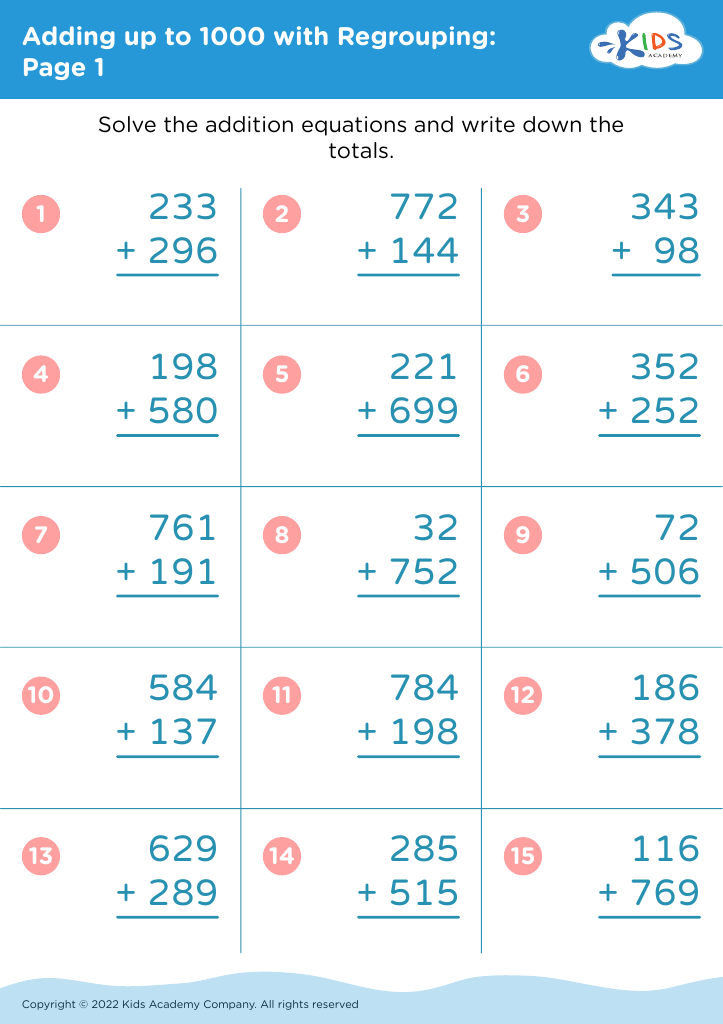
Adding up to 1000 with Regrouping: Page 1
Worksheet
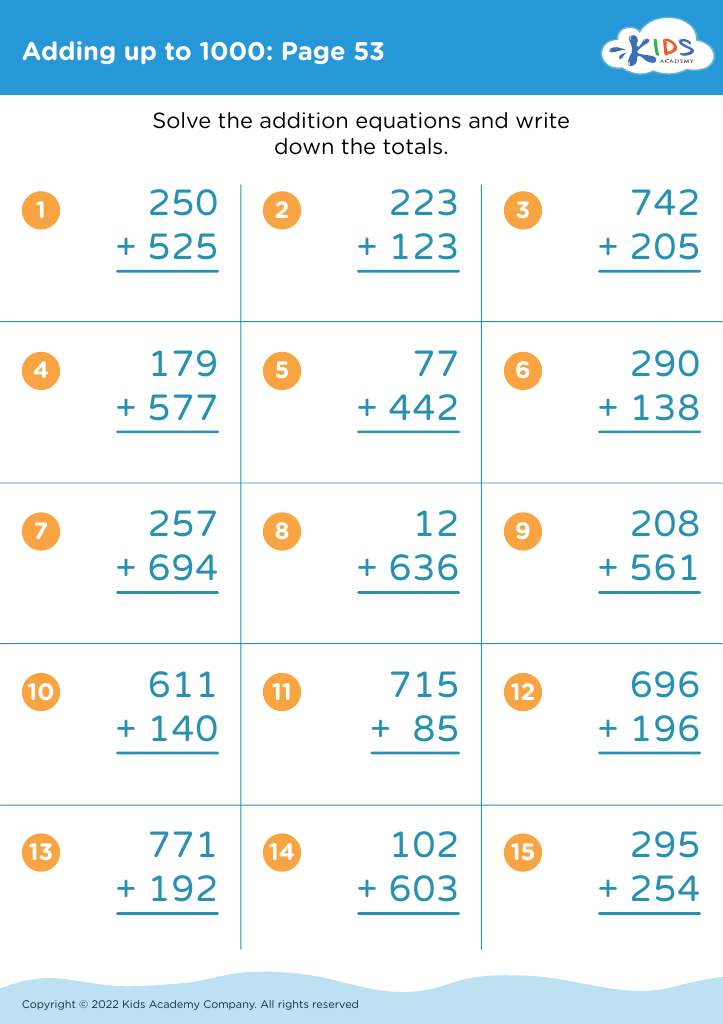
Adding up to 1000: Page 53

Adding up to 1000: Page 53

Adding up to 1000: Page 53
Worksheet
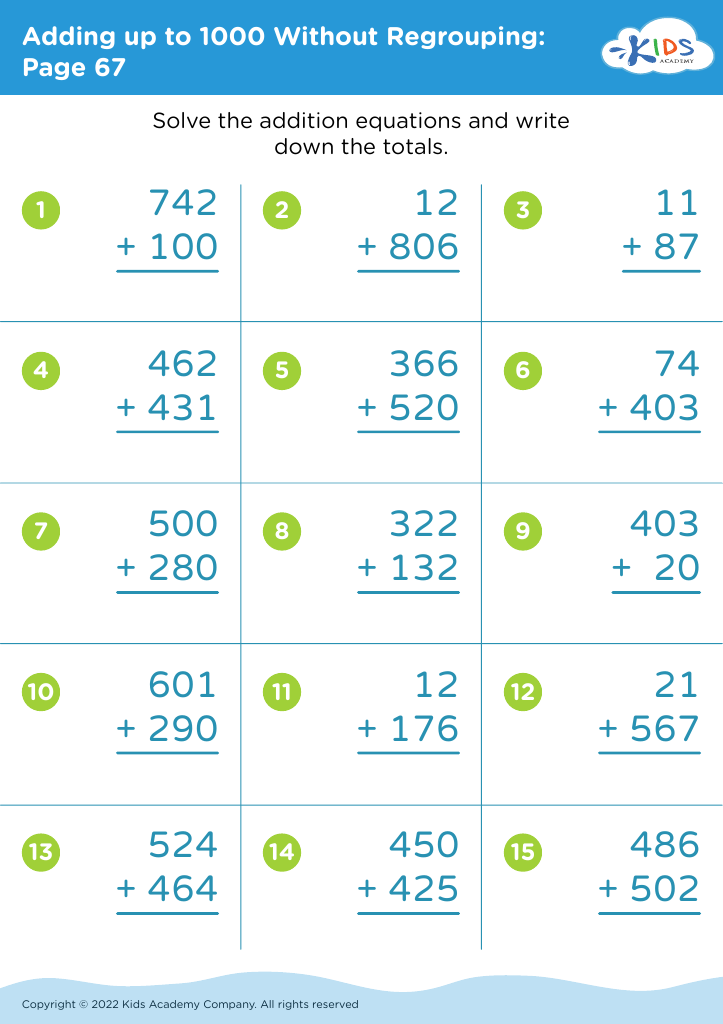
Adding up to 1000 Without Regrouping: Page 67
Worksheet
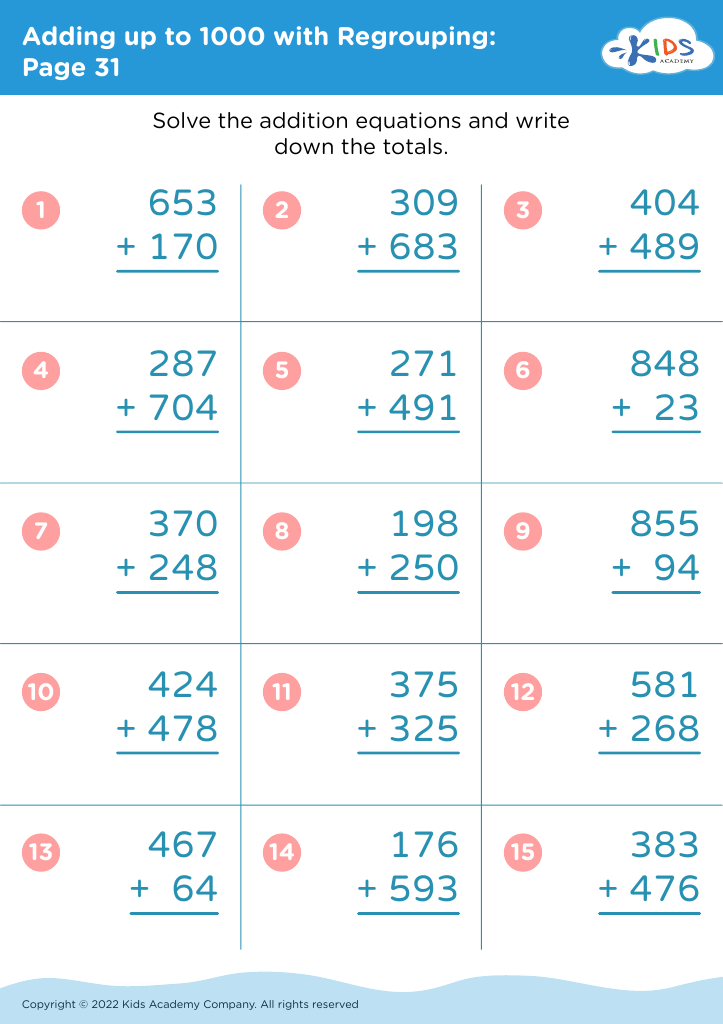
Adding up to 1000 with Regrouping: Page 31
Worksheet
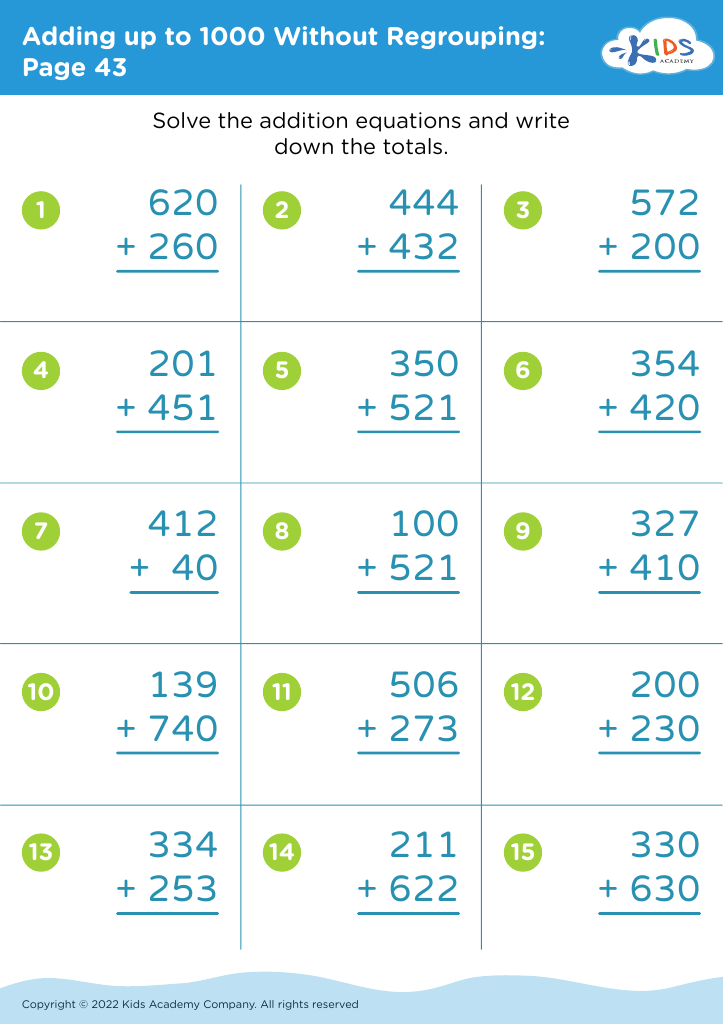
Adding up to 1000 Without Regrouping: Page 43
Worksheet
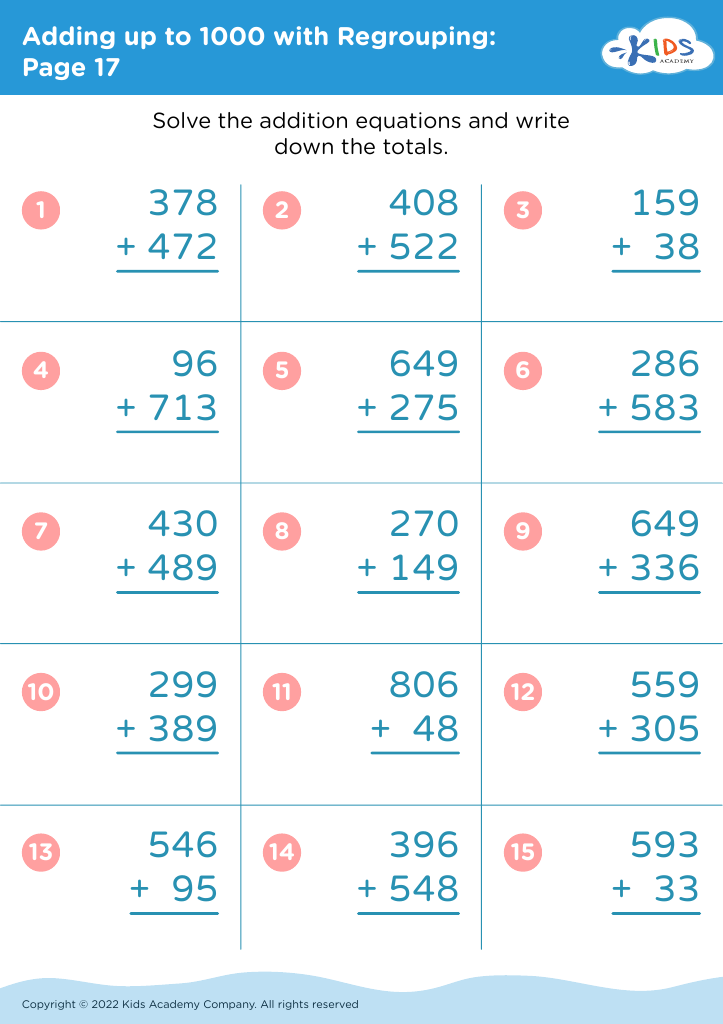
Adding up to 1000 with Regrouping: Page 17
Worksheet
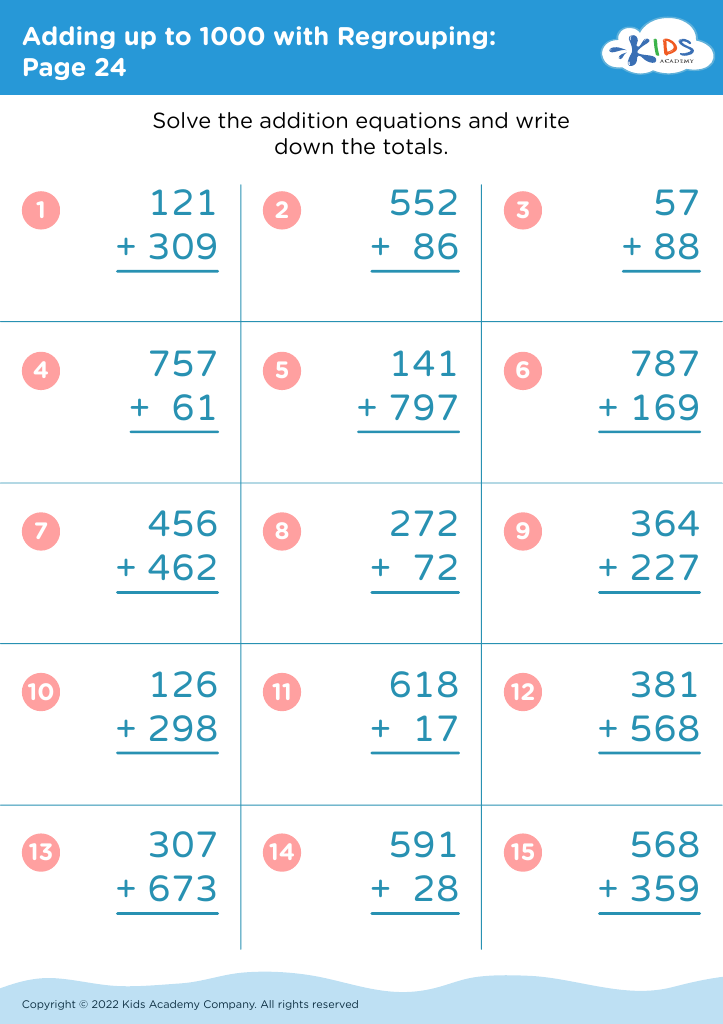
Adding up to 1000 with Regrouping: Page 24
Worksheet
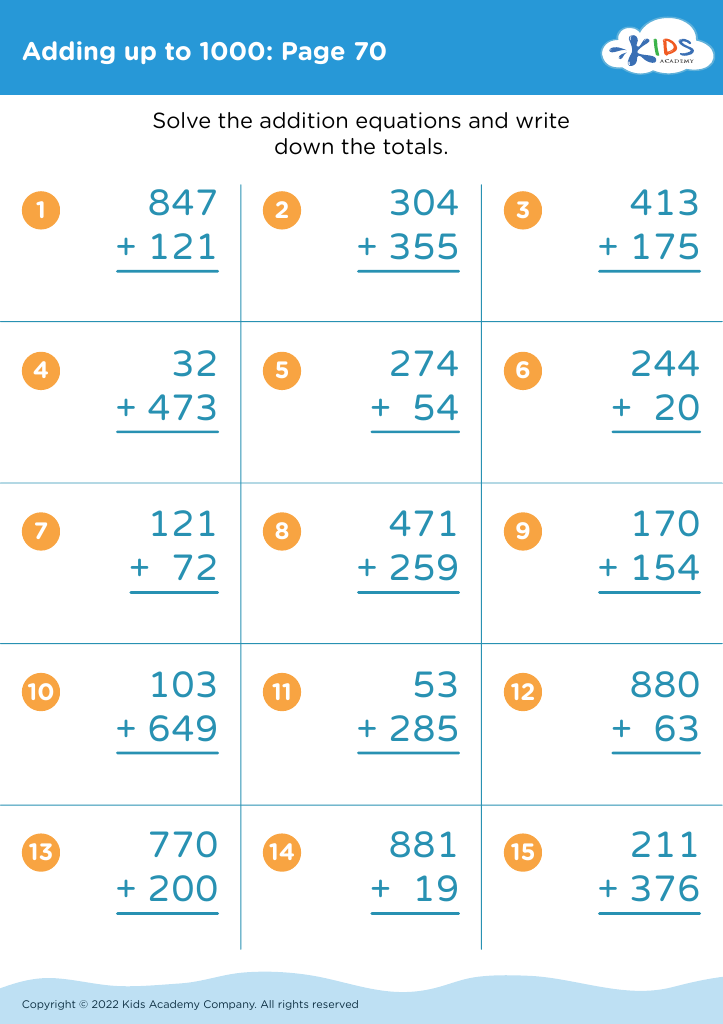
Adding up to 1000: Page 70

Adding up to 1000: Page 70

Adding up to 1000: Page 70
Worksheet
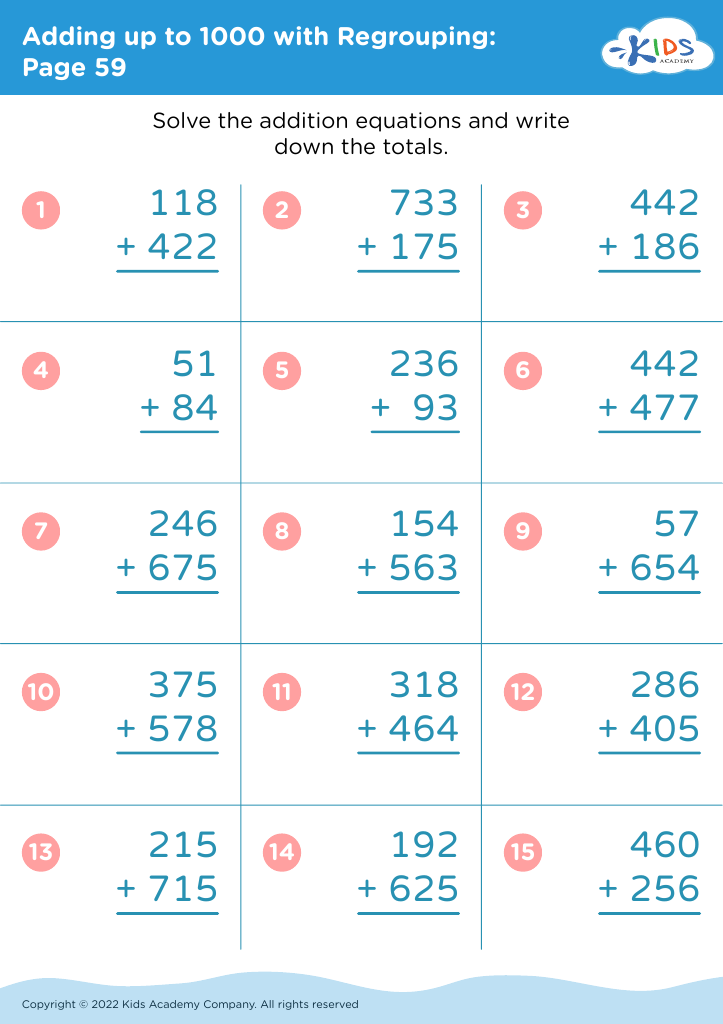
Adding up to 1000 with Regrouping: Page 59
Worksheet
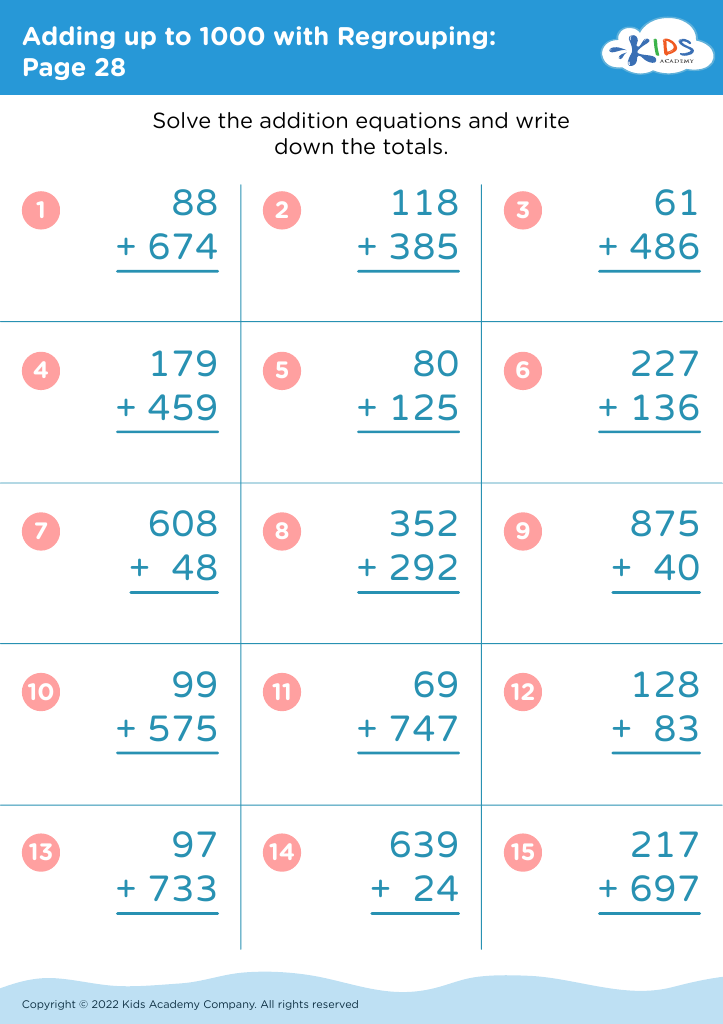
Adding up to 1000 with Regrouping: Page 28
Worksheet
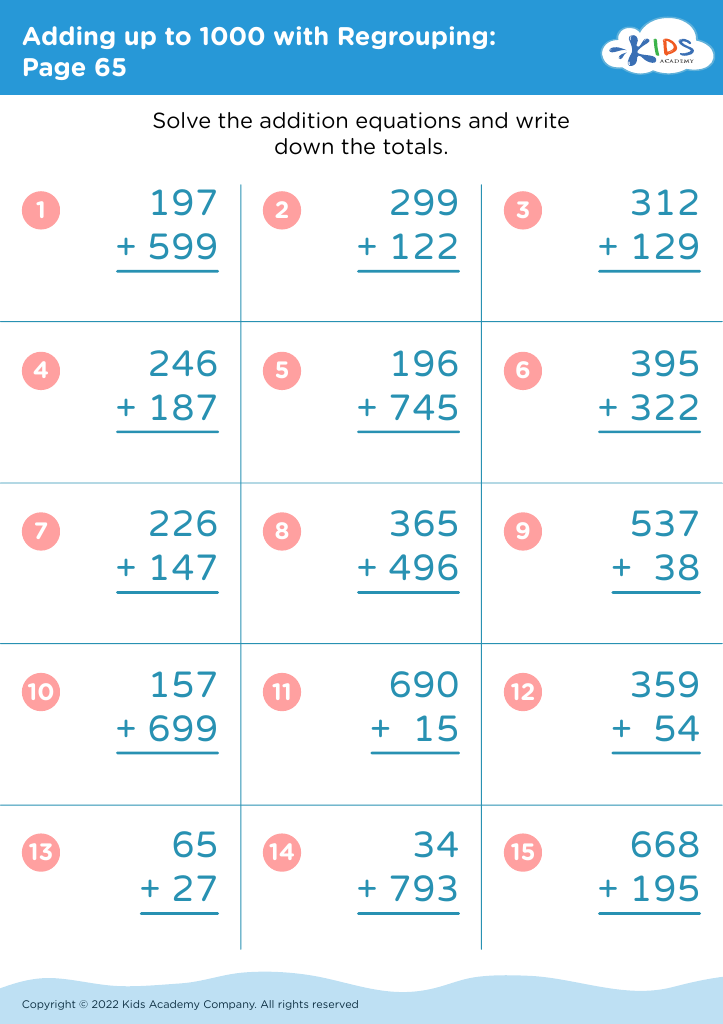
Adding up to 1000 with Regrouping: Page 65
Worksheet
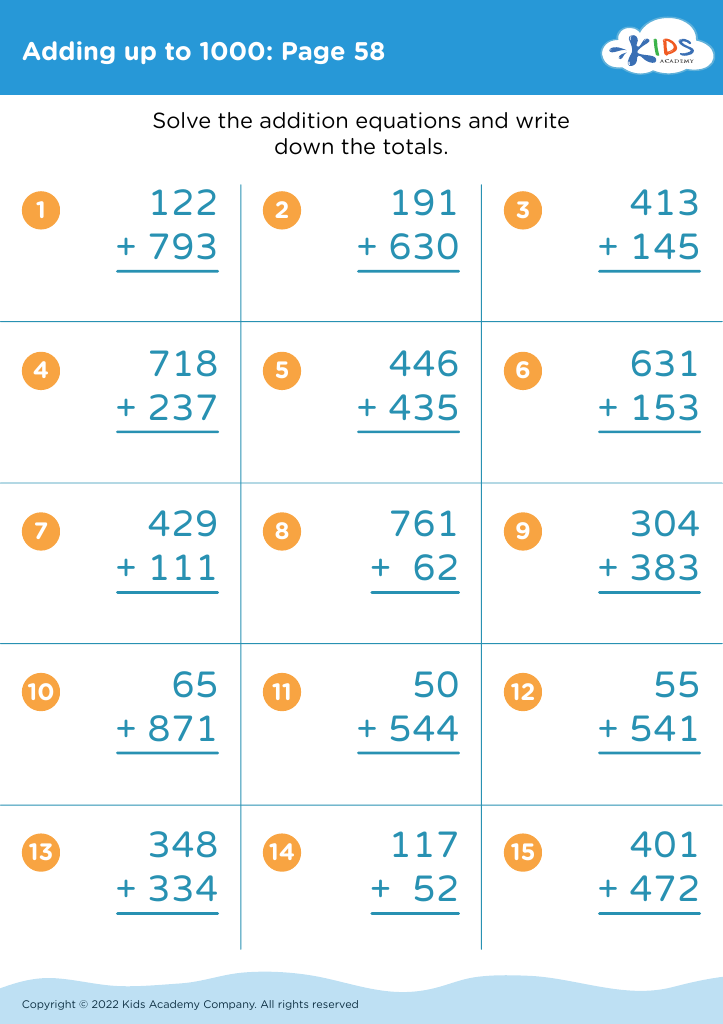
Adding up to 1000: Page 58

Adding up to 1000: Page 58

Adding up to 1000: Page 58
Worksheet
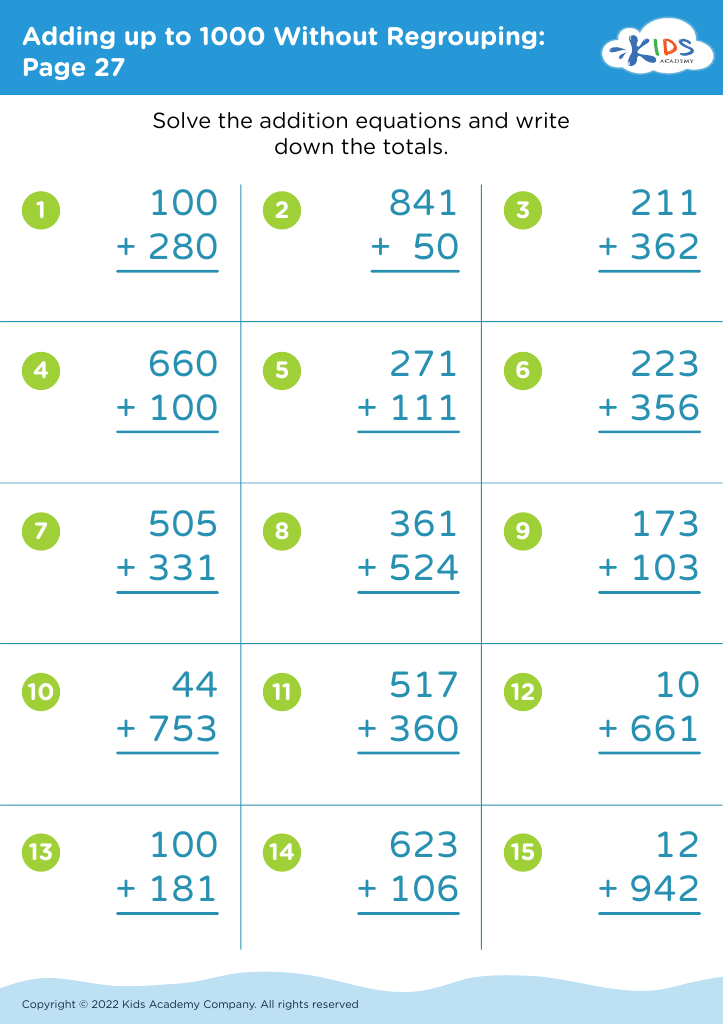
Adding up to 1000 Without Regrouping: Page 27
Worksheet
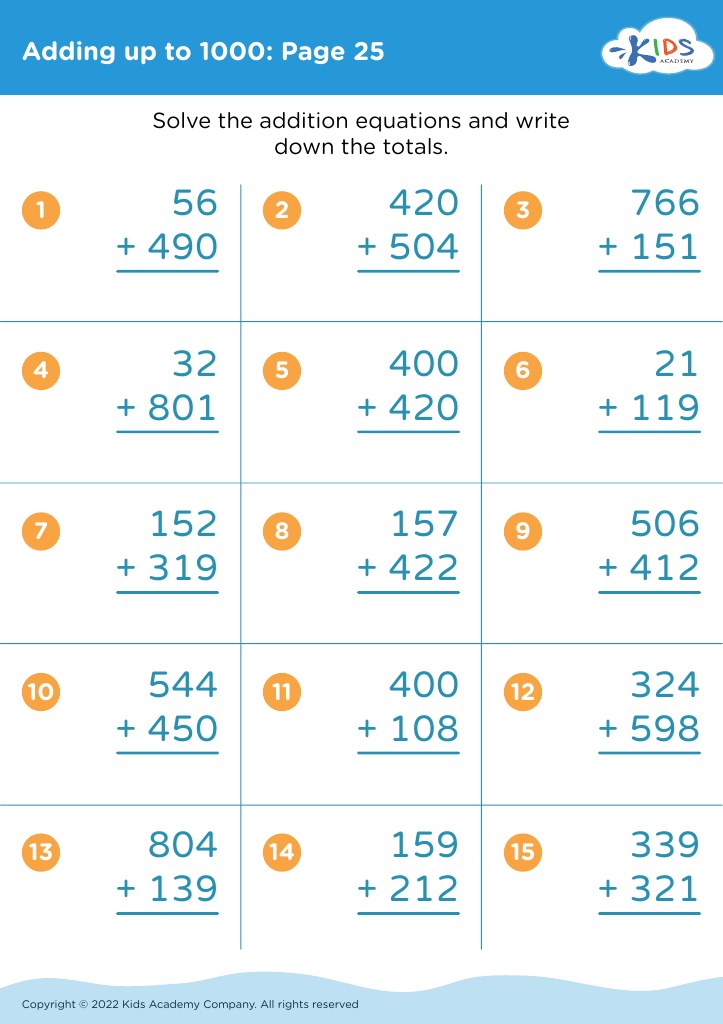
Adding up to 1000: Page 25

Adding up to 1000: Page 25

Adding up to 1000: Page 25
Worksheet
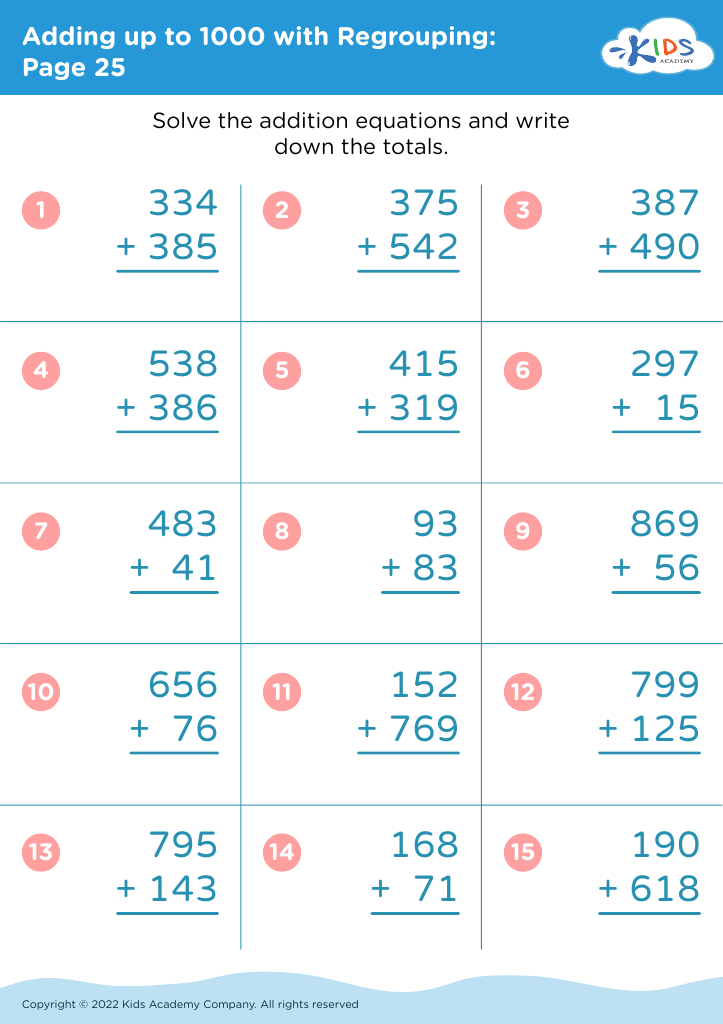
Adding up to 1000 with Regrouping: Page 25
Worksheet
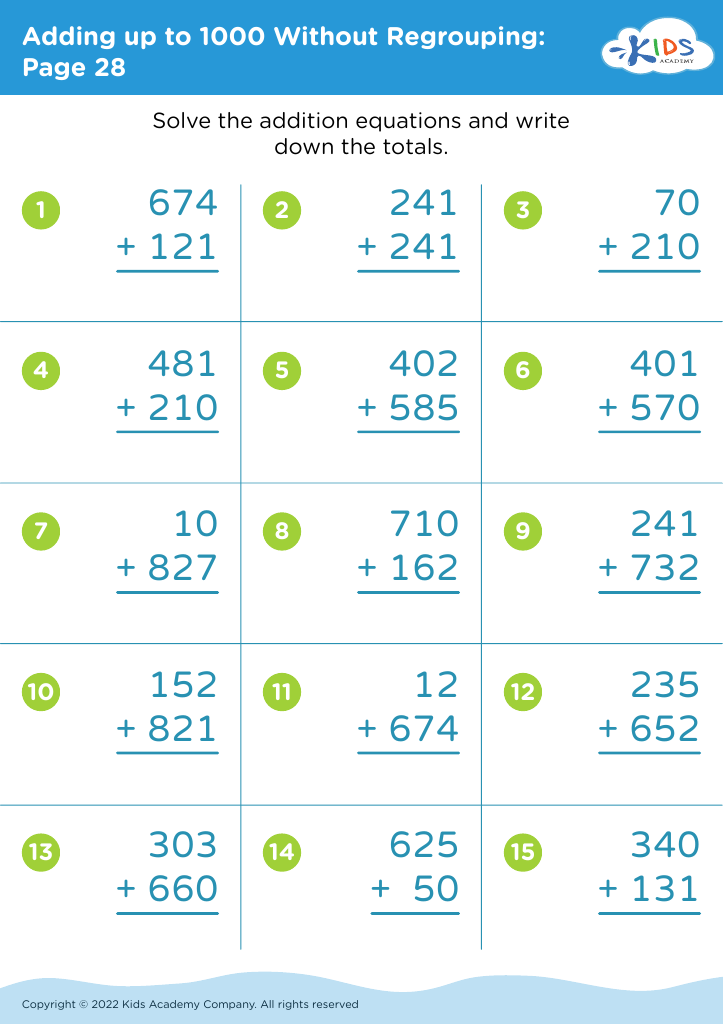
Adding up to 1000 Without Regrouping: Page 28
Worksheet
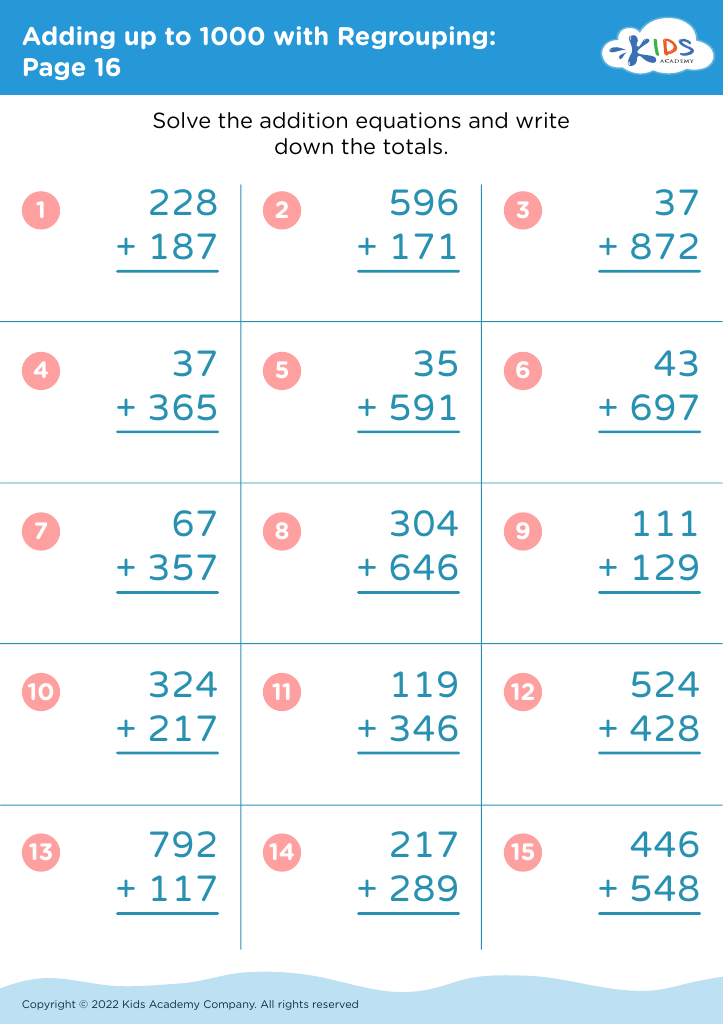
Adding up to 1000 with Regrouping: Page 16
Worksheet
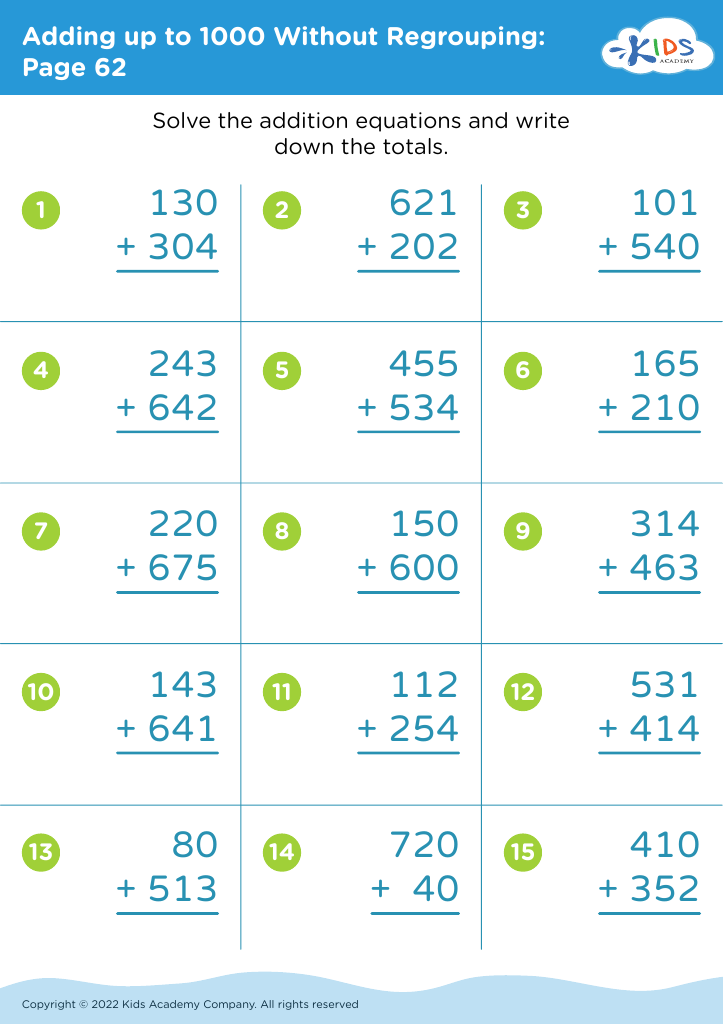
Adding up to 1000 Without Regrouping: Page 62
Worksheet
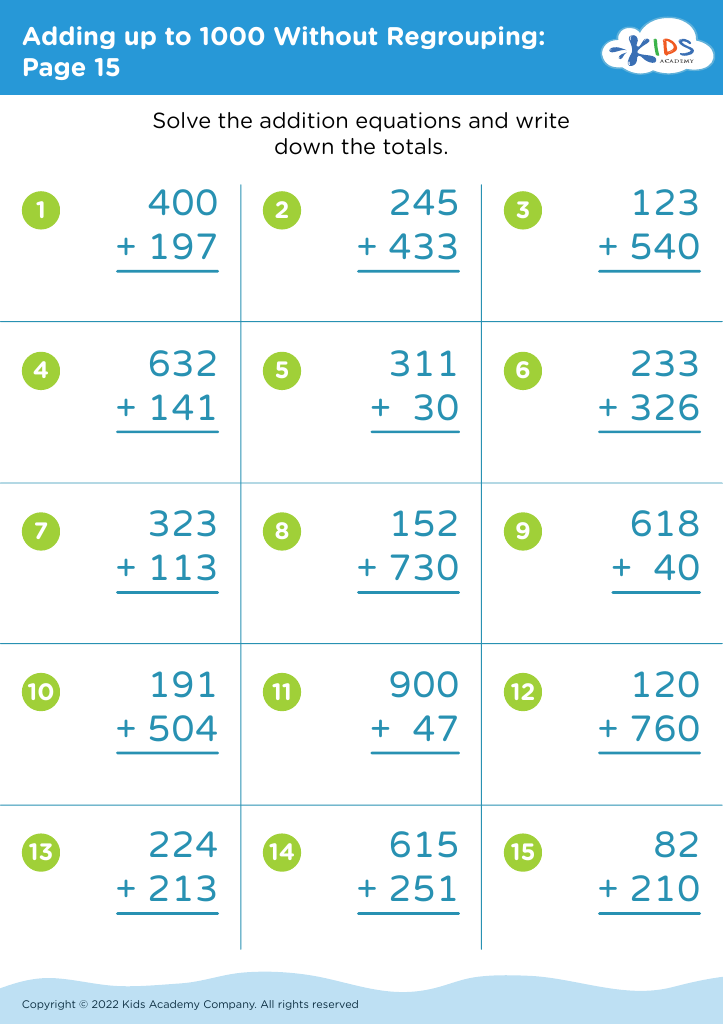
Adding up to 1000 Without Regrouping: Page 15
Worksheet
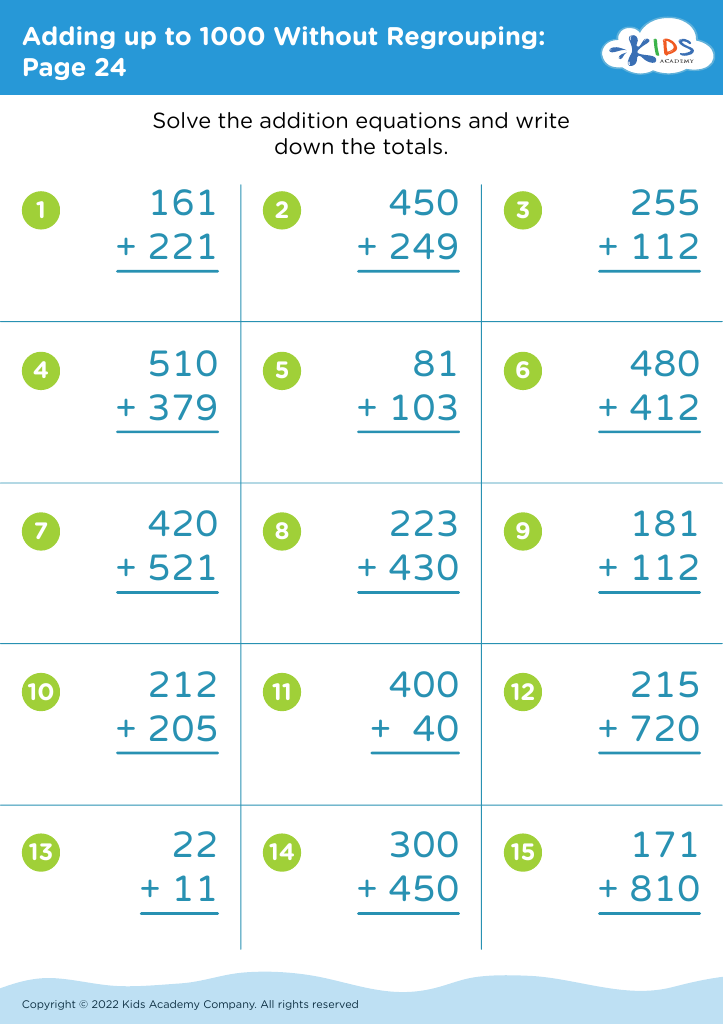
Adding up to 1000 Without Regrouping: Page 24
Worksheet


Understanding fractions is essential for Grade 3 students as it lays a foundational skill for future math concepts. By grasping the basics of addition and subtraction with fractions, children develop critical thinking and problem-solving abilities that are not only applicable in mathematics but also in everyday situations.

Fractions represent parts of a whole, and understanding them helps students comprehend concepts like sharing, measuring, and dividing. For instance, when cooking or sharing food, comprehending fractions enables children to make sense of portions and quantities effectively. As students engage with fractions, they enhance their ability to reason and make connections between numeric values and real household or classroom scenarios.

Moreover, a solid grasp of fraction addition and subtraction helps prepare students for more complex mathematical topics in later grades, such as multiplication and division of fractions, decimals, and ratios.

Teachers and parents play a vital role in fostering this comprehension. By providing engaging activities and real-world examples, they can illuminate concepts and make learning fraction addition and subtraction enjoyable. Invested encouragement builds not only competence in math but also confidence in the child's overall academic journey, making them more adept in both their current studies and future challenges.