Simplifying Fractions Grade 3 Numbers Worksheets
3 filtered results
-
From - To
Transform fraction basics into confidence-boosting successes with our Simplifying Fractions Grade 3 Worksheets! These engaging activities are designed to help young learners understand how to reduce fractions to their simplest form. With a variety of fun exercises, children can practice iteratively, building a solid math foundation. Aligned with common core standards, these worksheets ensure our third graders grasp essential fraction concepts through interactive and visually appealing methods. Whether used in a classroom or at home, they provide a perfect blend of enrichment and mastery, supporting our students in their journey toward mathematical excellence. Download now and simplify their learning adventure!
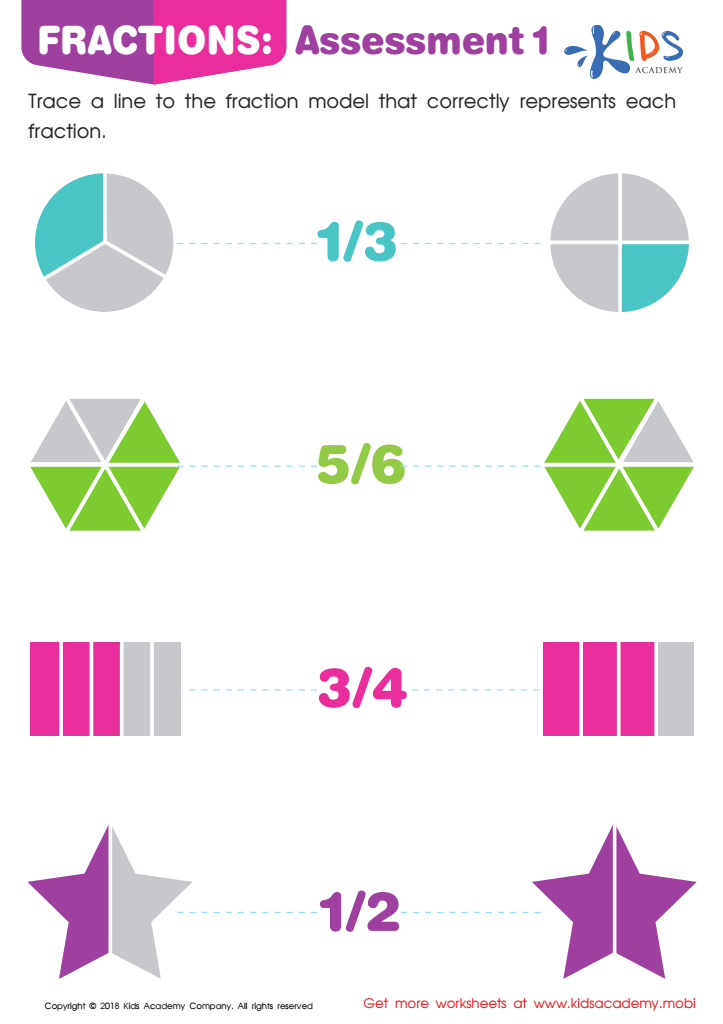
Fractions: Assessment 1 Worksheet
 Assign to My Students
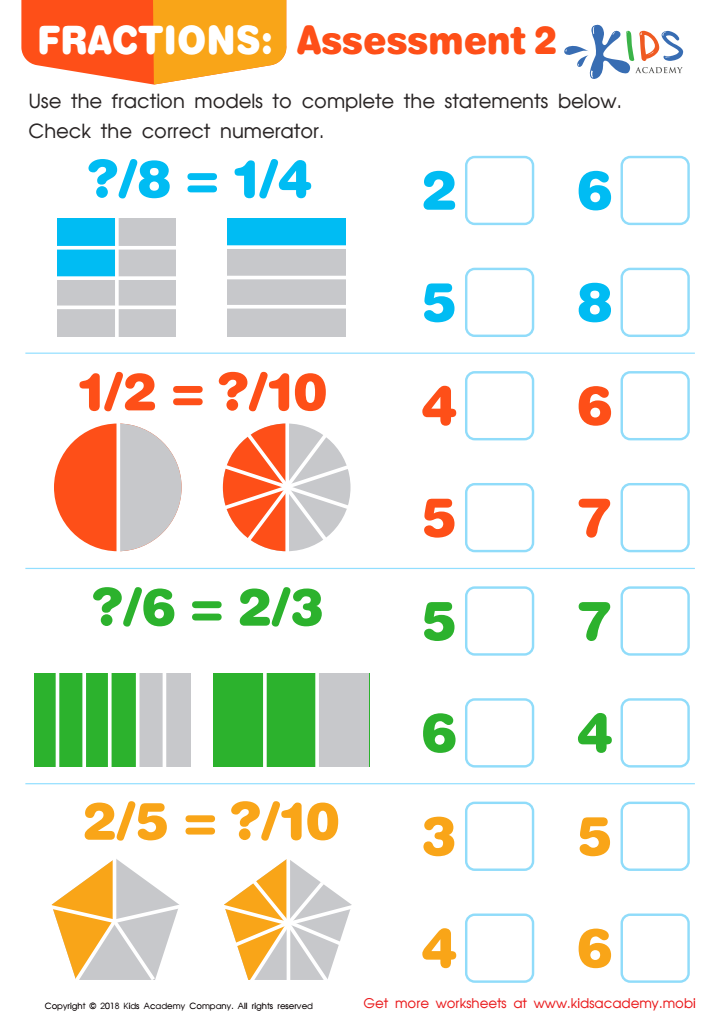
Fractions: Assessment 2 Worksheet
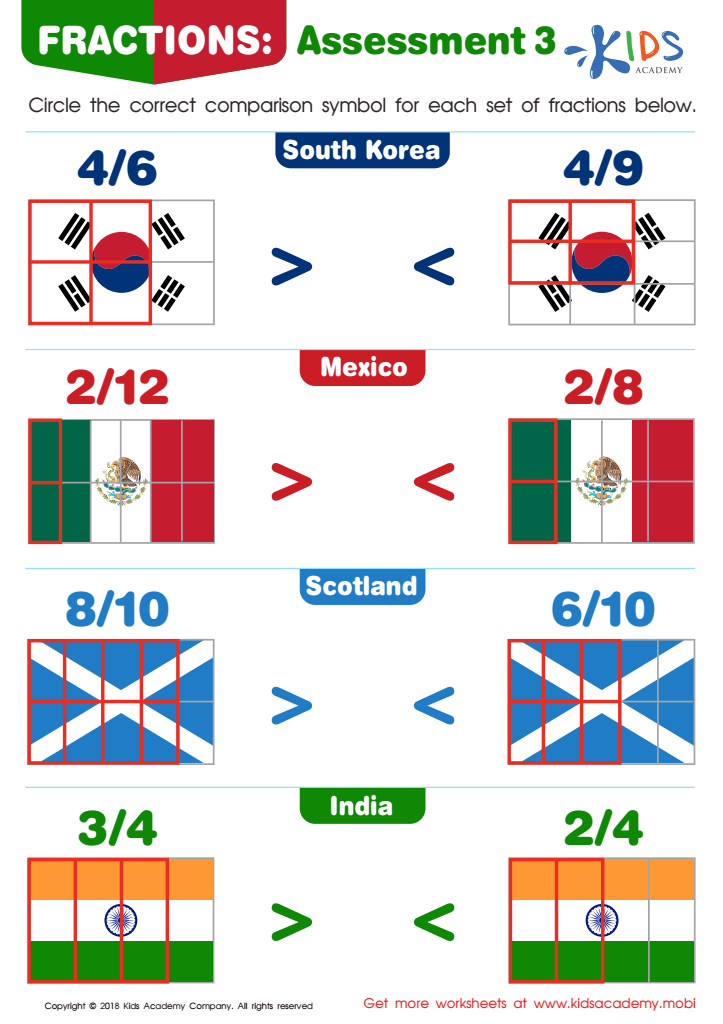
Fractions: Assessment 3 Worksheet








Simplifying fractions is a critical skill for Grade 3 students as it lays a strong foundation for their future math learning. At this stage, children develop an understanding of fractions, which is essential for more advanced topics they'll encounter later, like algebra and geometry. By simplifying fractions, students learn how to identify equivalent fractions, recognize numerical patterns, and enhance their number sense.
For parents and teachers, fostering this skill means ensuring that students gain clarity about how numbers work together. Proper understanding of simplified fractions aids in performing arithmetic operations like addition, subtraction, multiplication, and division of fractions more effectively. Simplifying fractions also helps to build critical thinking and problem-solving skills as students must determine the greatest common divisor and apply it.
Moreover, early proficiency in simplifying fractions boosts students' confidence in mathematics, helping to dispel math-related anxiety. With confident and competent fundamental skills, students are more likely to enjoy and excel in math. Thus, parents and teachers should emphasize simplifying fractions as it equips children with essential mathematical skills, fosters logical thinking, and prepares them for more complex mathematical challenges. Prioritizing this topic contributes significantly to a child’s overall academic development.