Developing problem-solving abilities Grade 3 Math Worksheets
4 filtered results
-
From - To
Unlock your child's potential with our Grade 3 Math Worksheets focused on developing problem-solving abilities. These expertly designed worksheets cover essential arithmetic operations, word problems, and logical reasoning tasks to help young learners enhance their critical thinking skills. Our engaging activities provide a balanced mix of challenges and fun to keep students motivated and excited about math. Tailored to meet educational standards, these worksheets support comprehensive learning, empowering your third grader to tackle complex problems with confidence. Ignite their mathematical curiosity and watch as they become proficient problem solvers with our dynamic and interactive resources.
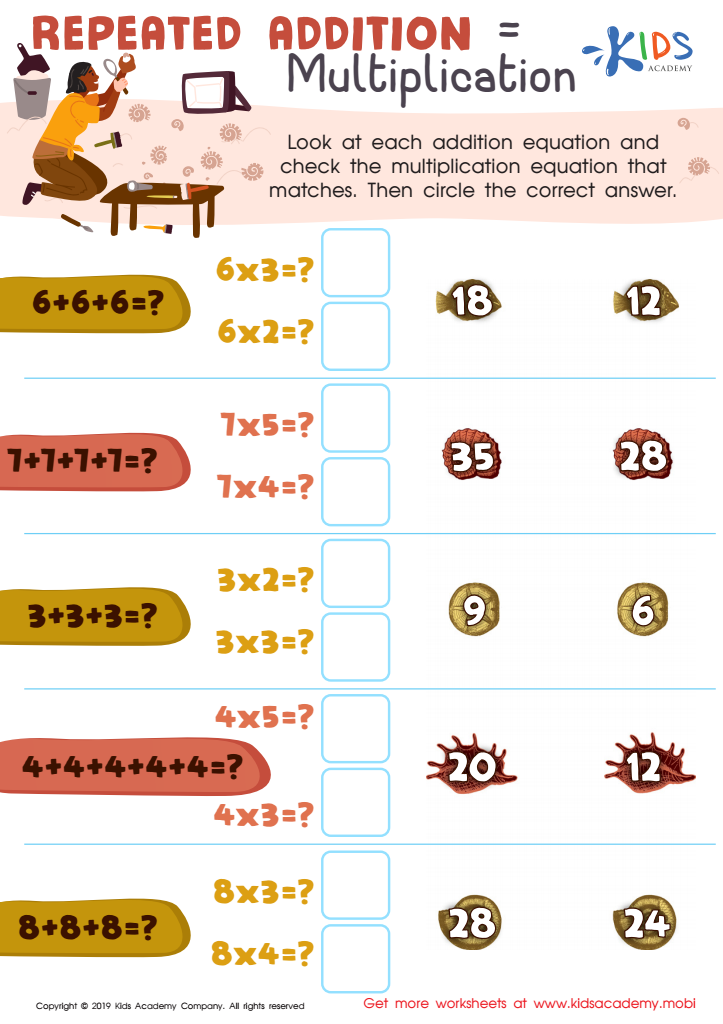
Repeated Addition = Multiplication Worksheet
 Assign to My Students
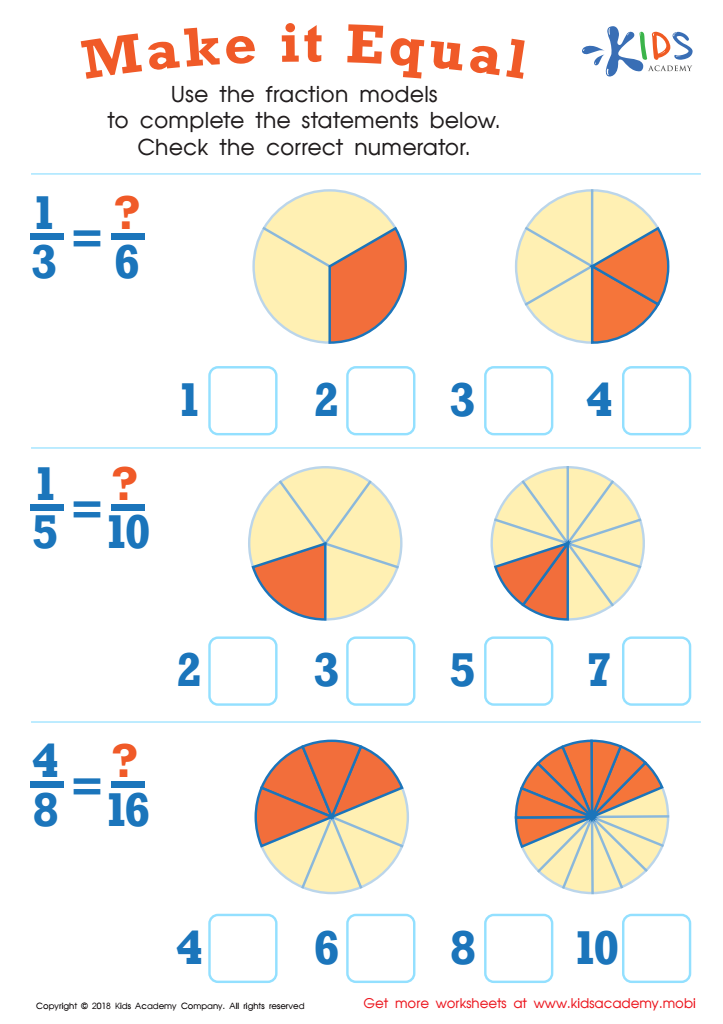
Make It Equal Worksheet
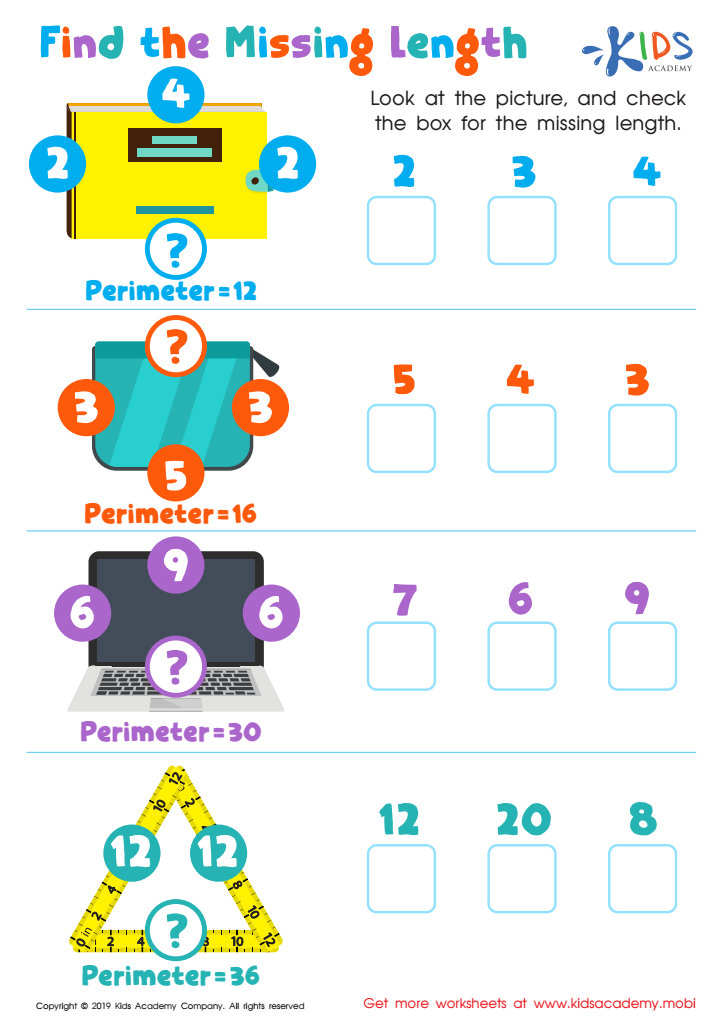
Find the Missing Length Worksheet








Developing problem-solving abilities in Grade 3 math is essential for several key reasons. First, these skills form the foundation for higher-level math concepts and real-world applications. By learning how to approach problems systematically, students enhance their understanding of mathematical concepts like addition, subtraction, multiplication, and division. These fundamental skills are crucial as students progress through their educational journey.
Second, problem-solving abilities bridge math with everyday life. Practicing these skills allows young learners to apply math in practical situations, from budgeting their allowance to planning a trip. This real-world relevance makes learning meaningful and deepens their engagement in the subject.
Moreover, problem-solving skills foster critical thinking, creativity, and perseverance. When children tackle a challenging problem, they learn to break it down into manageable steps, try different strategies, and persist until they find a solution. These qualities are invaluable not just in math but in all areas of life, helping young learners become more resilient and adaptable individuals.
Lastly, developing problem-solving abilities in math can boost confidence and independent learning. When children experience the satisfaction of solving a problem on their own, it builds self-esteem and encourages a positive attitude toward learning. Ultimately, caring about these skills equips children with tools for academic success and lifelong learning.