Problem Solving Grade 3 Math Worksheets
9 filtered results
-
From - To
Explore our engaging Problem Solving Grade 3 Math Worksheets designed to enhance critical thinking skills in young learners. Tailored for third graders, these worksheets tackle real-world scenarios encouraging students to apply their math knowledge in practical situations. Covering essential topics such as addition, subtraction, multiplication, and division, each worksheet promotes analytical reasoning and boosts confidence. With a variety of challenging problems, children will develop their problem-solving abilities while enjoying fun and interactive exercises. Perfect for classroom use or at-home practice, our worksheets help ignite a passion for math. Click to download and empower your child with essential math skills today!
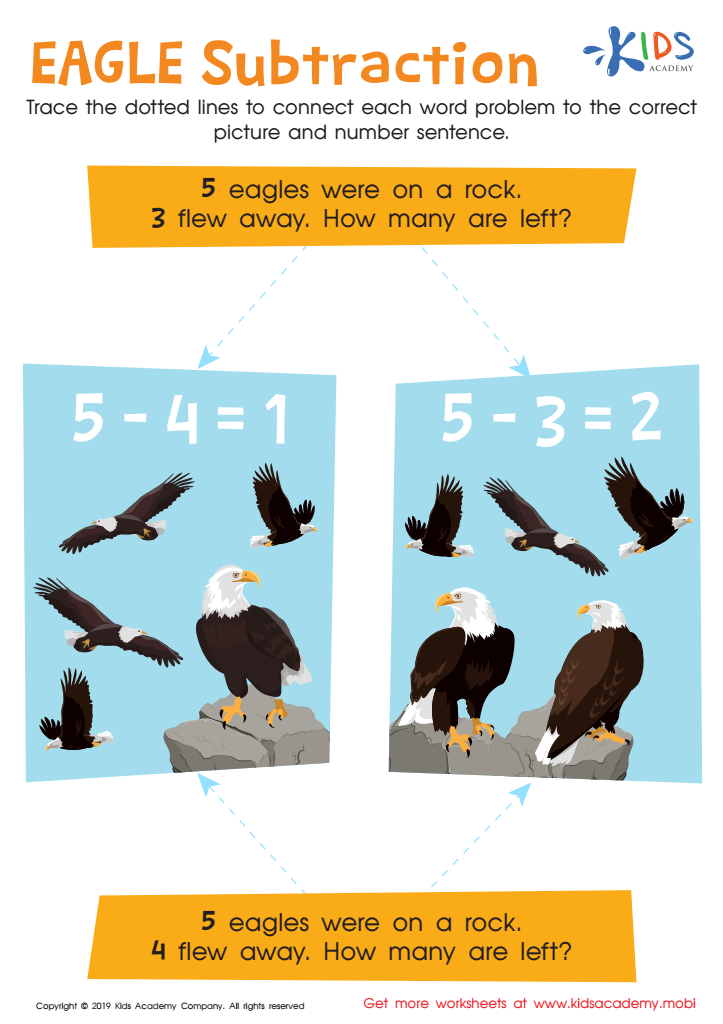
Eagle Subtraction Worksheet
 Assign to My Students
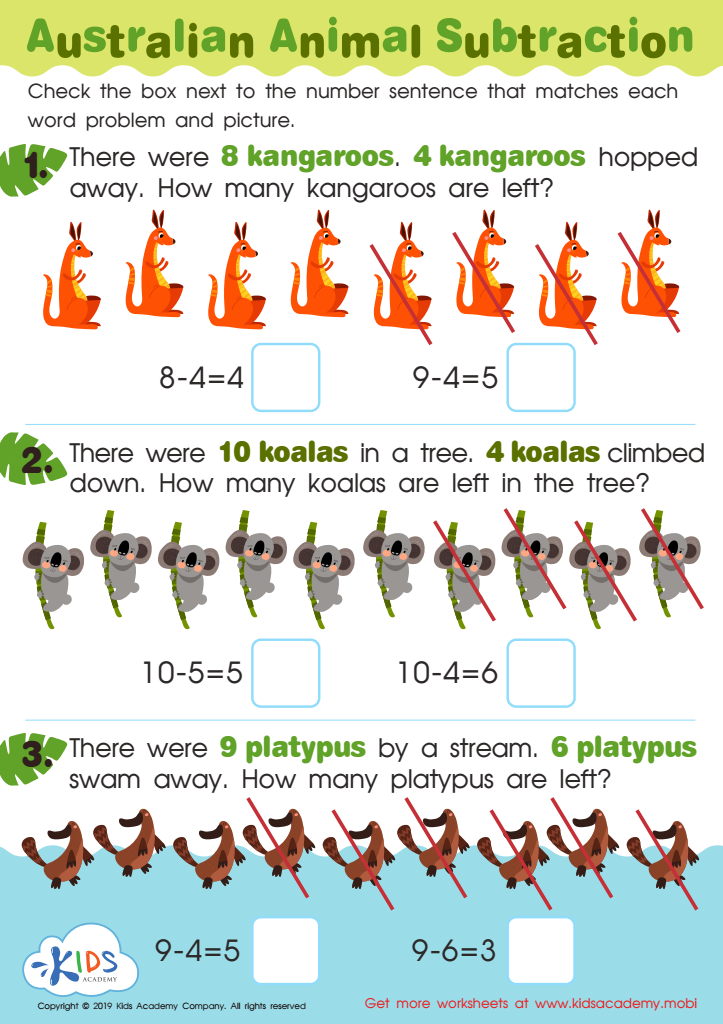
Australian Animal Subtraction Worksheet
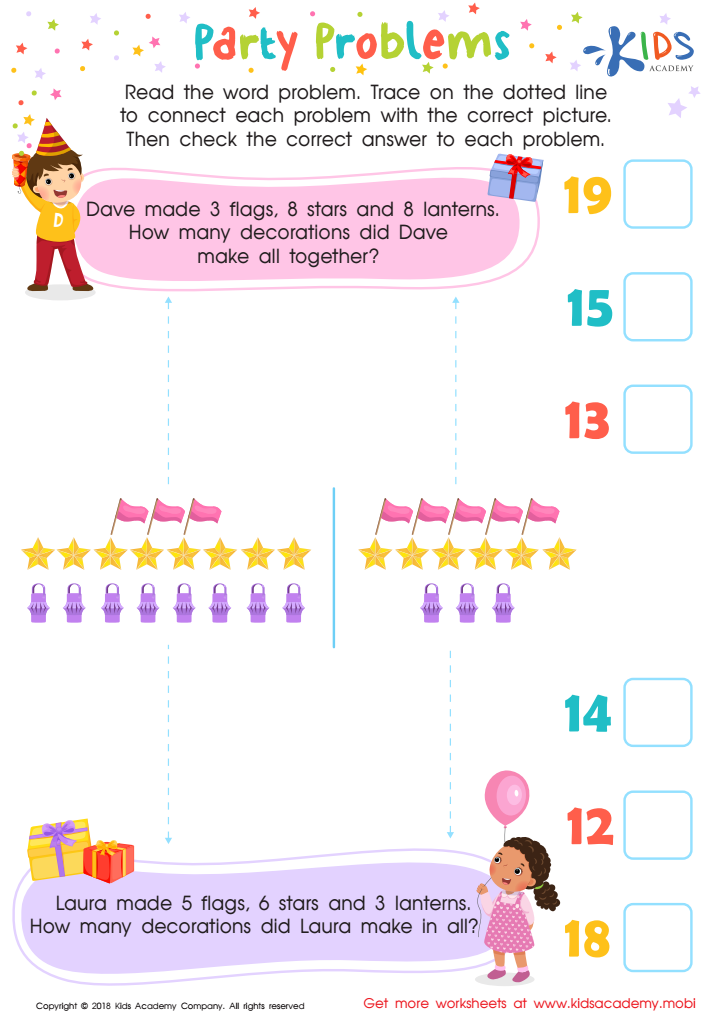
Party Problems Worksheet
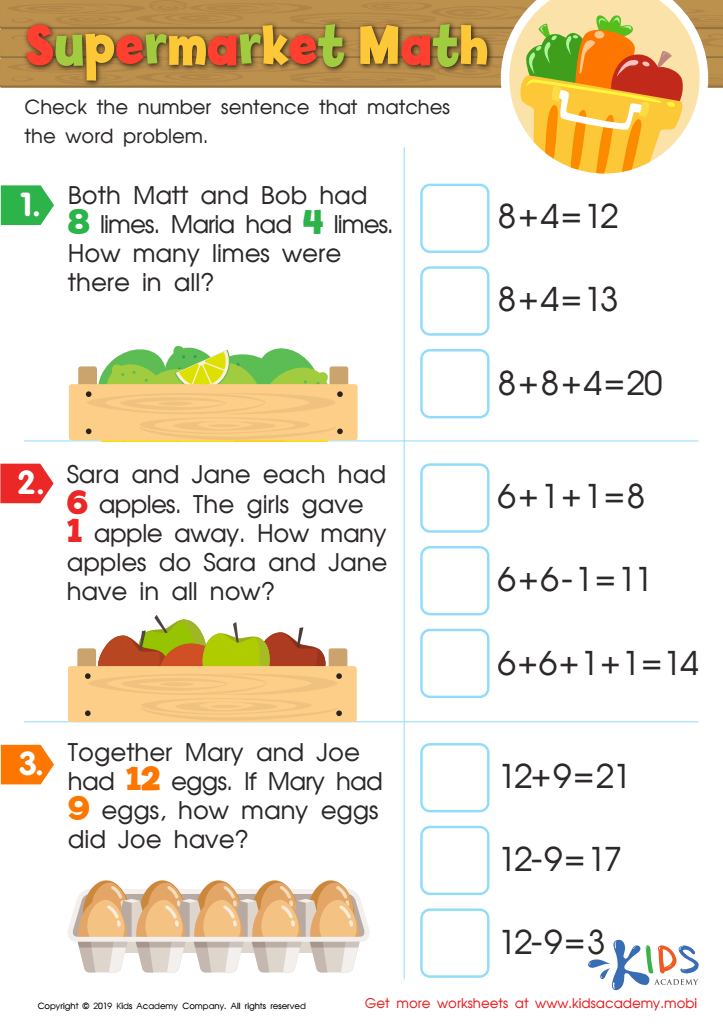
Supermarket Math Worksheet
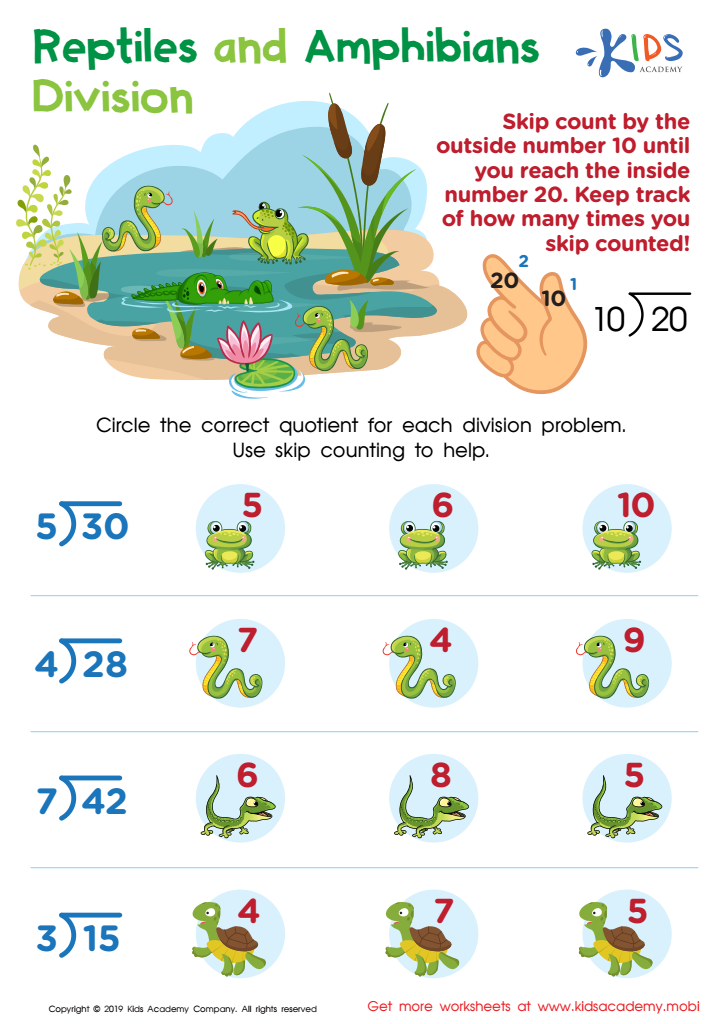
Reptile and Amphibians Division Worksheet
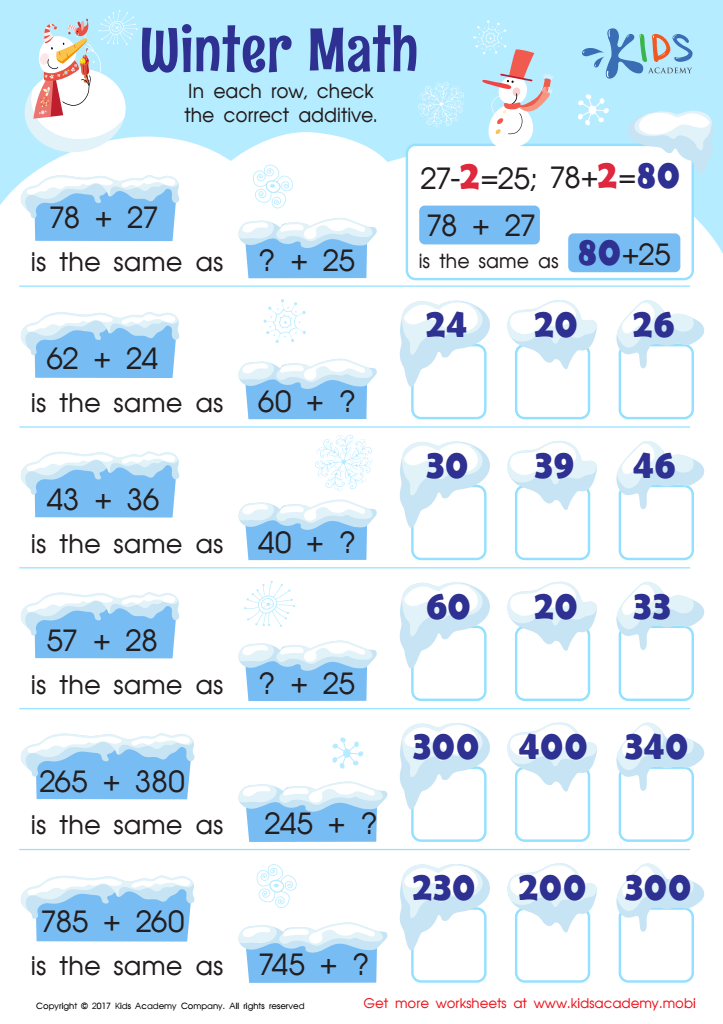
Free Addition Worksheet








Problem solving is a crucial skill that lays the foundation for mathematical understanding and real-life application, particularly for third graders. At this stage, children begin to transition from basic operations to more complex concepts, making it vital for parents and teachers to emphasize active engagement with problem-solving activities.
First, problem solving enhances critical thinking and reasoning skills. Children learn to analyze situations, identify relationships, and develop strategies, which are essential abilities not only in math but across disciplines. This promotes a growth mindset, encouraging persistence in the face of challenges.
Moreover, problem-solving math teaches children how to apply mathematical concepts to everyday situations. This relevance increases their confidence and interest in math, showing them that these skills extend far beyond the classroom.
Furthermore, collaborative problem-solving activities foster teamwork and communication skills, which are critical for social development. Teachers and parents play a significant role in guiding children through these challenges, offering support and encouragement while also allowing them to tackle problems independently.
Ultimately, prioritizing problem-solving in grade 3 math nurtures a love for learning, equips children with essential life skills, and prepares them for higher-level education. By fostering these skills early on, parents and teachers are investing in students' futures.