Shape Recognition Grade 3 Math Worksheets
21 filtered results
-
From - To
Enhance your third graders' math skills with our engaging Shape Recognition Grade 3 Math Worksheets! These interactive worksheets are designed to help students identify, compare, and classify various geometric shapes. Aligned with educational standards, each activity reinforces essential concepts through fun and challenging exercises. From recognizing basic shapes to understanding their properties, our printable resources foster critical thinking and enhance problem-solving abilities. Designed for classroom or home use, these worksheets provide a practical and enjoyable way for children to master shape recognition. Download them today and watch your students' confidence soar as they explore the exciting world of geometry!
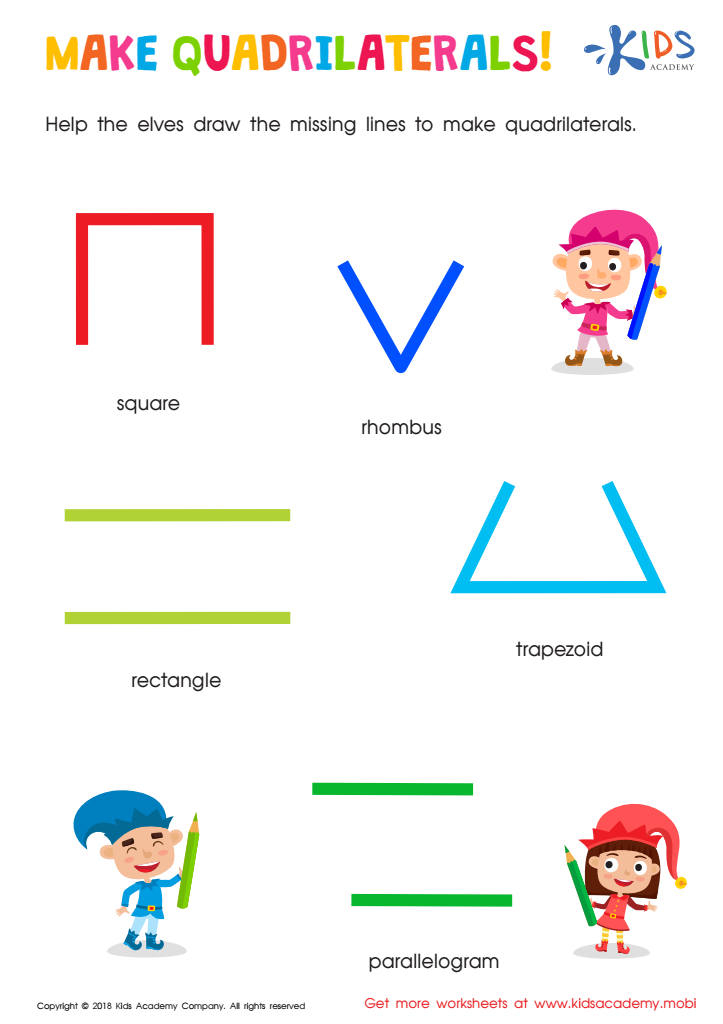
Make Quadrilaterals Worksheet
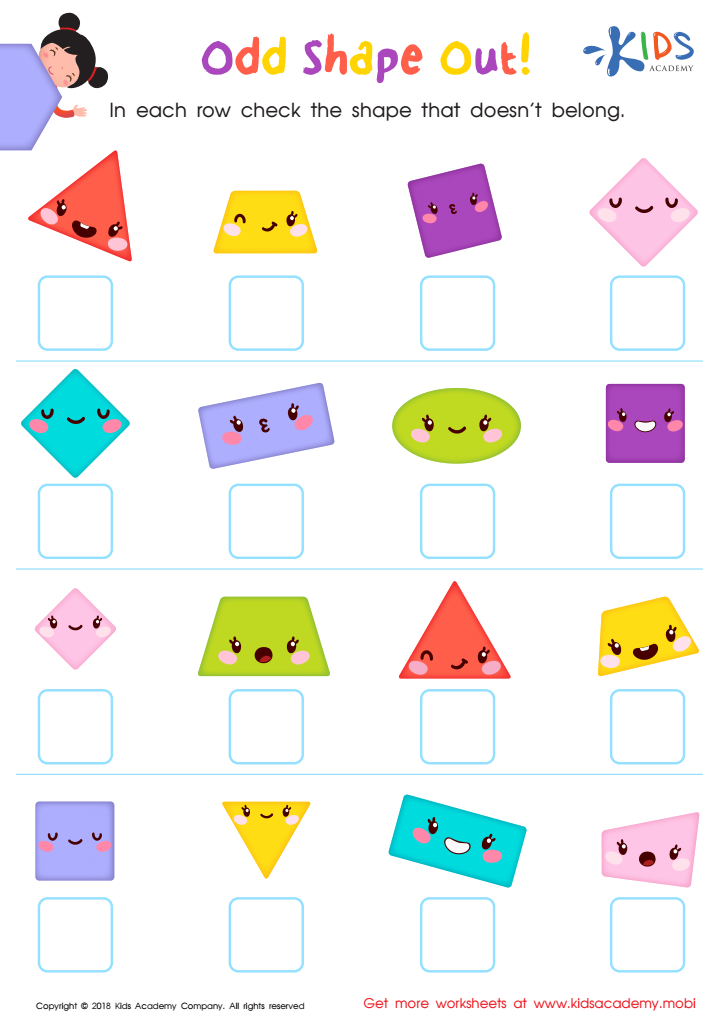
Odd Shape Out Worksheet for Grade 3
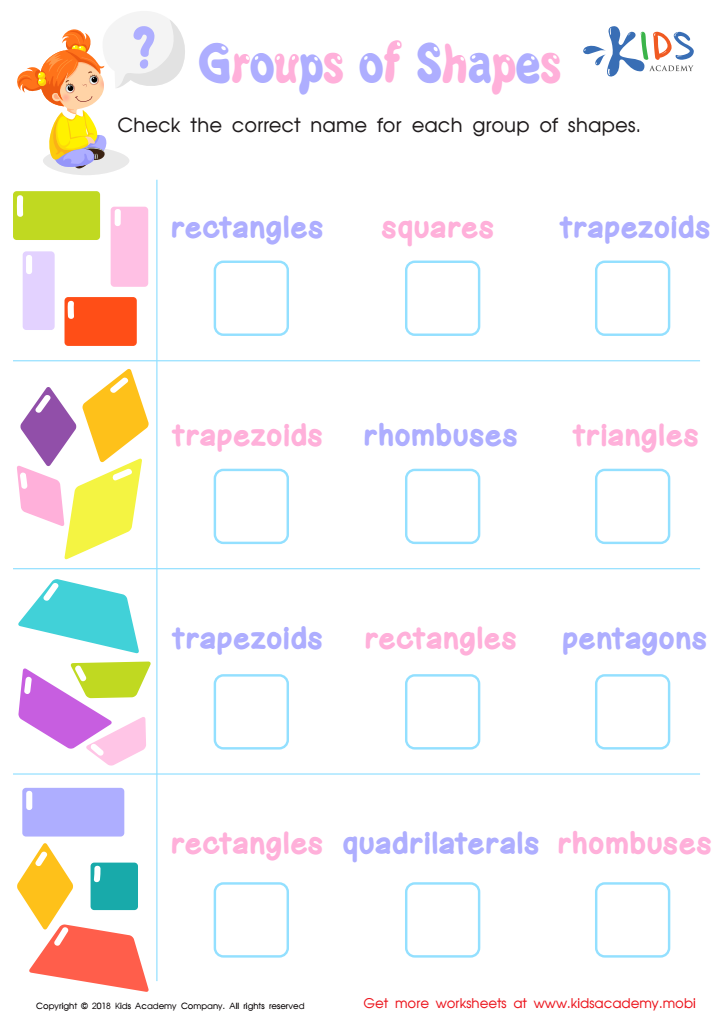
Groups of Shapes Worksheet
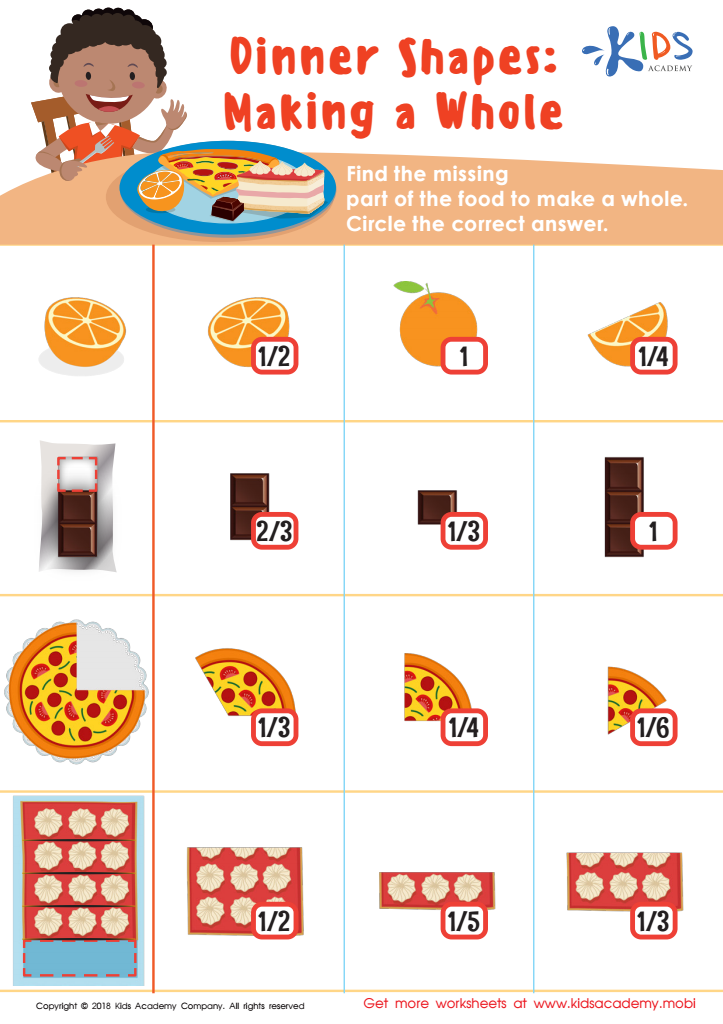
Dinner Shapes: Making a Whole Worksheet
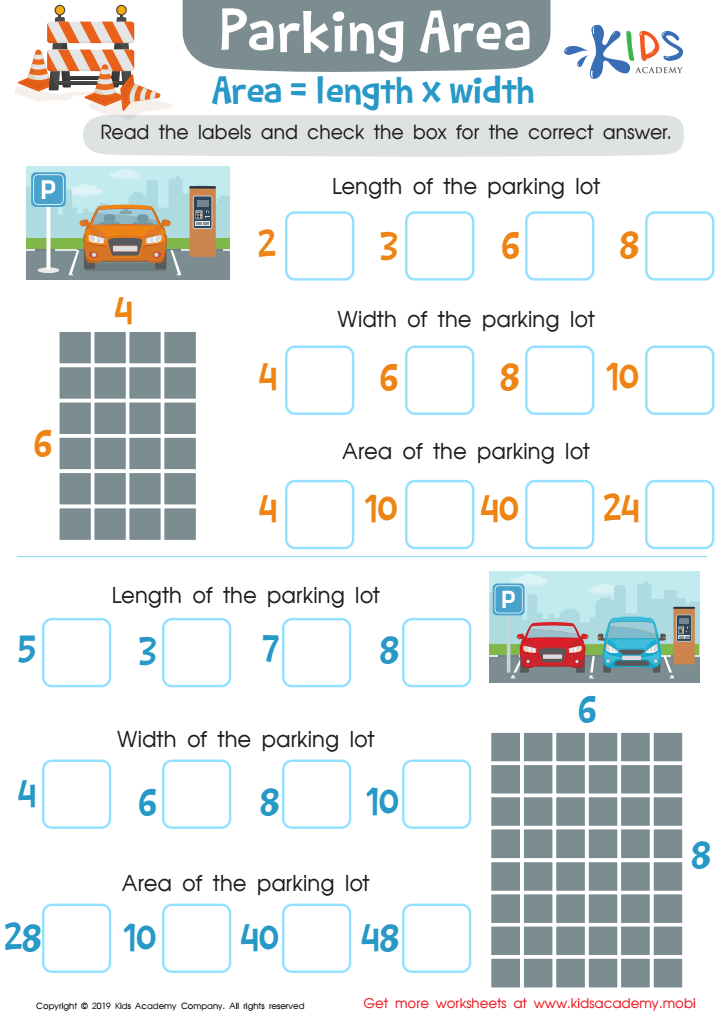
Parking Area Worksheet
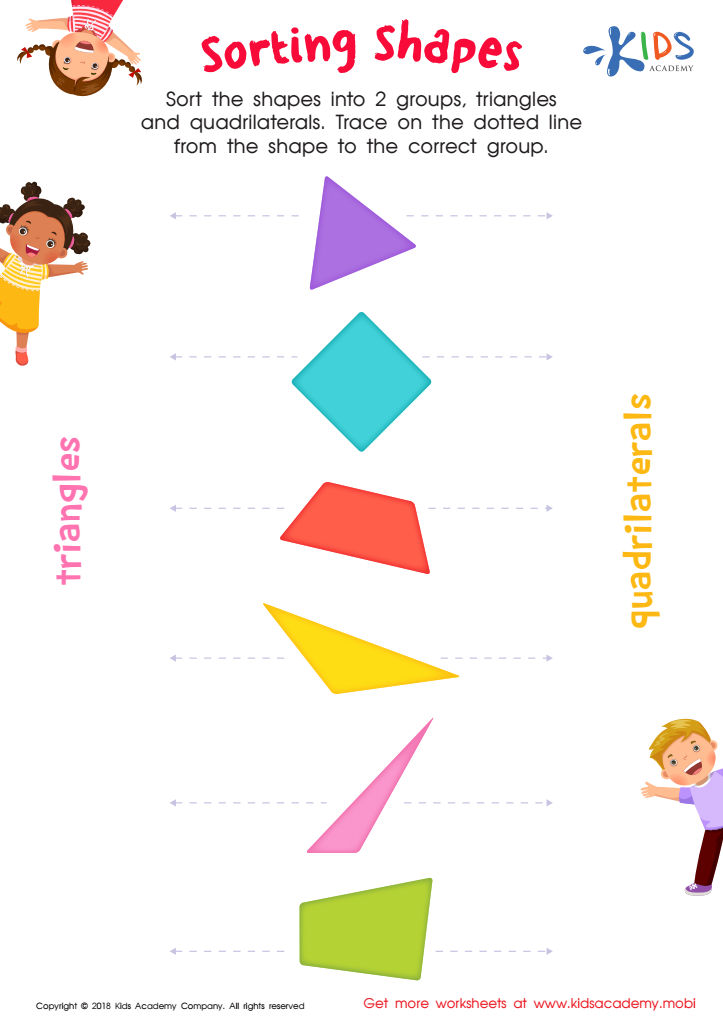
Sorting Shapes Worksheet
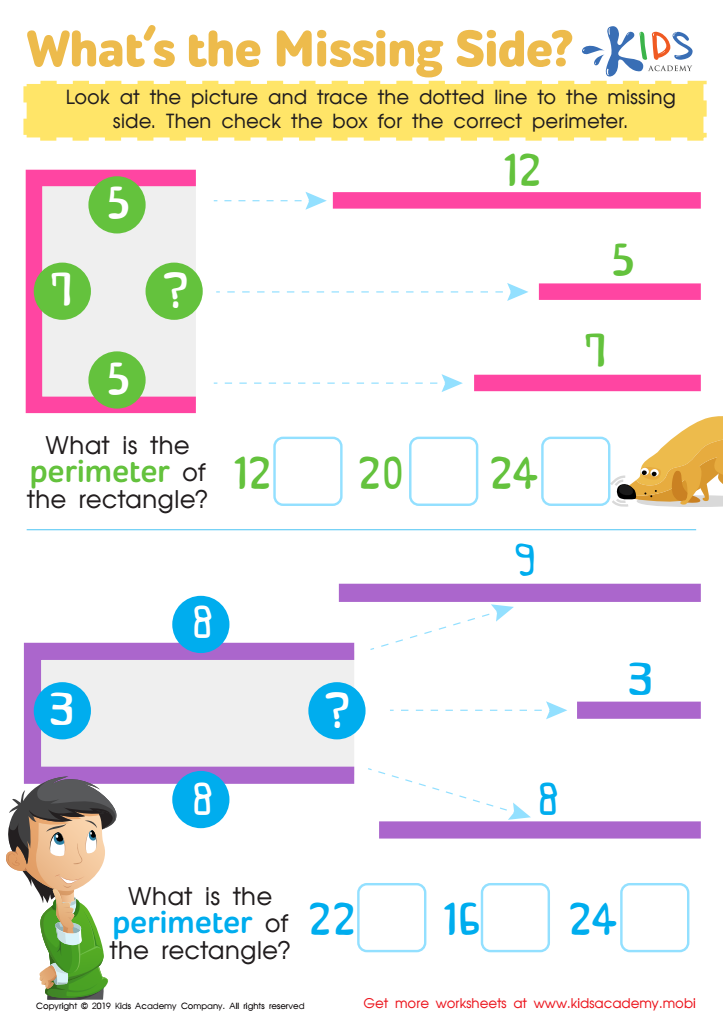
What's the Missing Side Worksheet
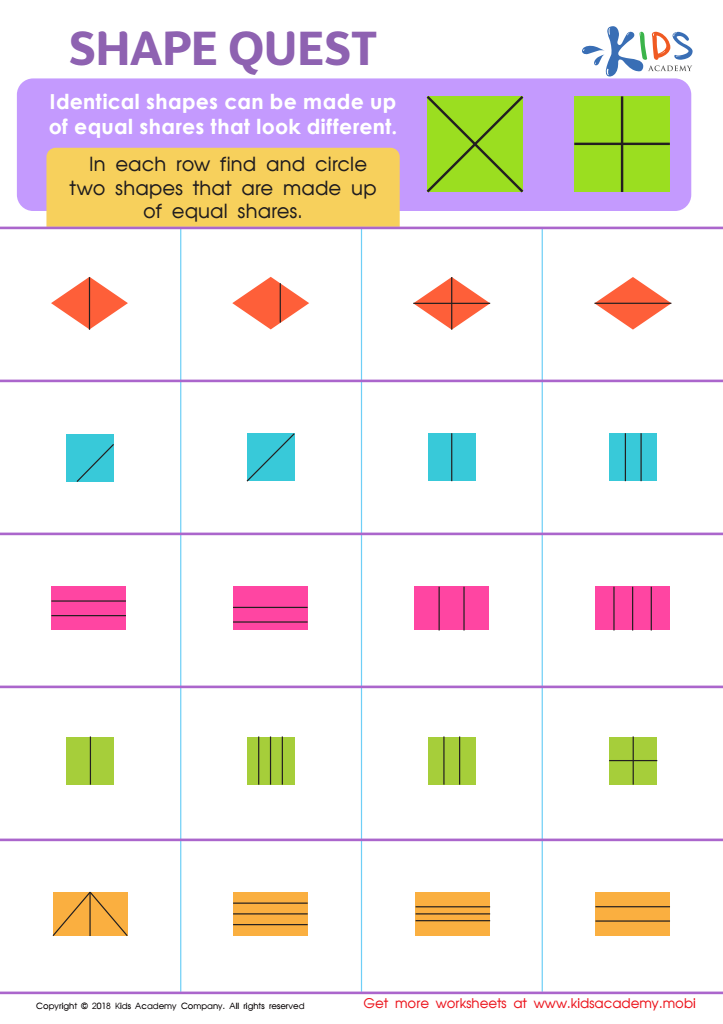
Shape Quest Worksheet
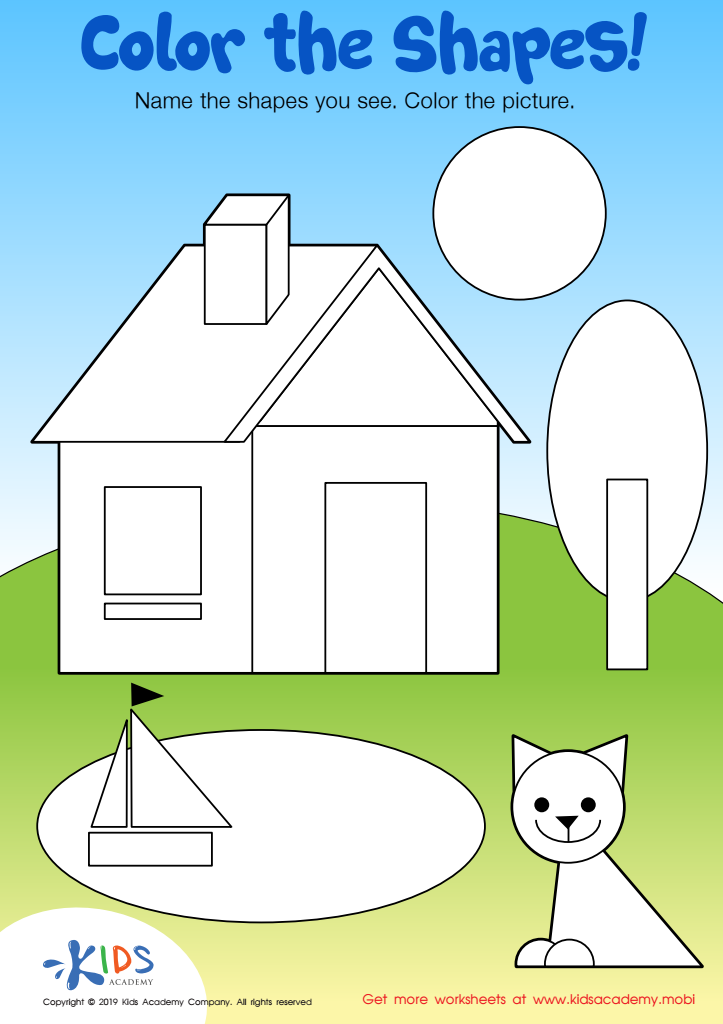
Color the Shapes Worksheet
 Assign to My Students
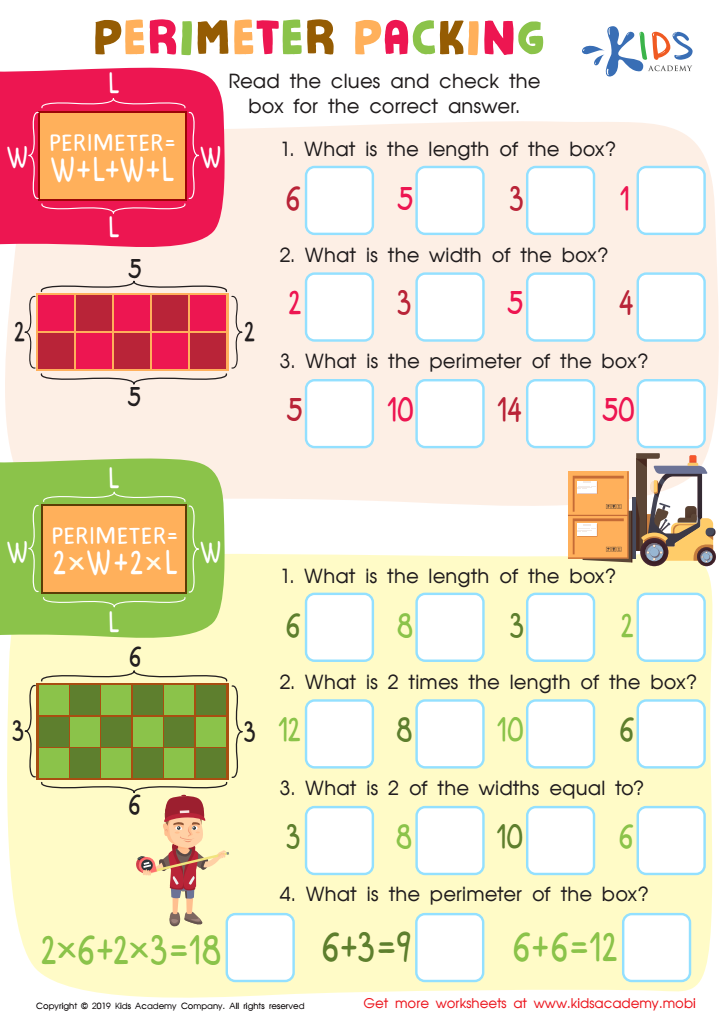
Perimeter Parking Worksheet








Shape recognition is a fundamental aspect of Grade 3 math that plays a crucial role in developing children's spatial awareness, critical thinking skills, and problem-solving abilities. As children learn to identify and describe various shapes, they enhance their understanding of geometry, which is essential for everyday life and many academic disciplines.
For parents and teachers, fostering shape recognition offers several benefits. Firstly, it aids in promoting cognitive development. Children who can readily identify shapes begin to understand how they relate to one another, which supports advanced mathematical concepts such as area, perimeter, and even symmetry. Additionally, these skills are linked to spatial reasoning, which is vital for fields such as engineering, architecture, and science.
Moreover, shape recognition aligns with real-world applications, as it helps children identify objects in their environment, appreciating the geometry around them. This enhances their observational skills, encouraging curiosity and exploration.
Finally, incorporating shape recognition into learning activities makes math more engaging, which in turn increases student motivation and proficiency. By prioritizing shape recognition, parents and teachers can lay a strong foundation for future learning, ensuring that children gain confidence in math and develop essential skills that will benefit them throughout their lives.