Understanding area Grade 3 Math Worksheets
3 filtered results
-
From - To
Explore our engaging Grade 3 Math Worksheets focused on Understanding Area! These worksheets are designed to help students grasp the concept of area through fun and interactive activities. Kids will learn to measure and calculate area using various methods, including counting squares and applying formulas. Our varied exercises develop critical thinking and problem-solving skills while making learning enjoyable. Suitable for classroom use or at-home practice, these resources ensure a solid understanding of area concepts in a supportive environment. Dive into the world of math with activities that encourage exploration and critical thinking, paving the way for future success in geometry!
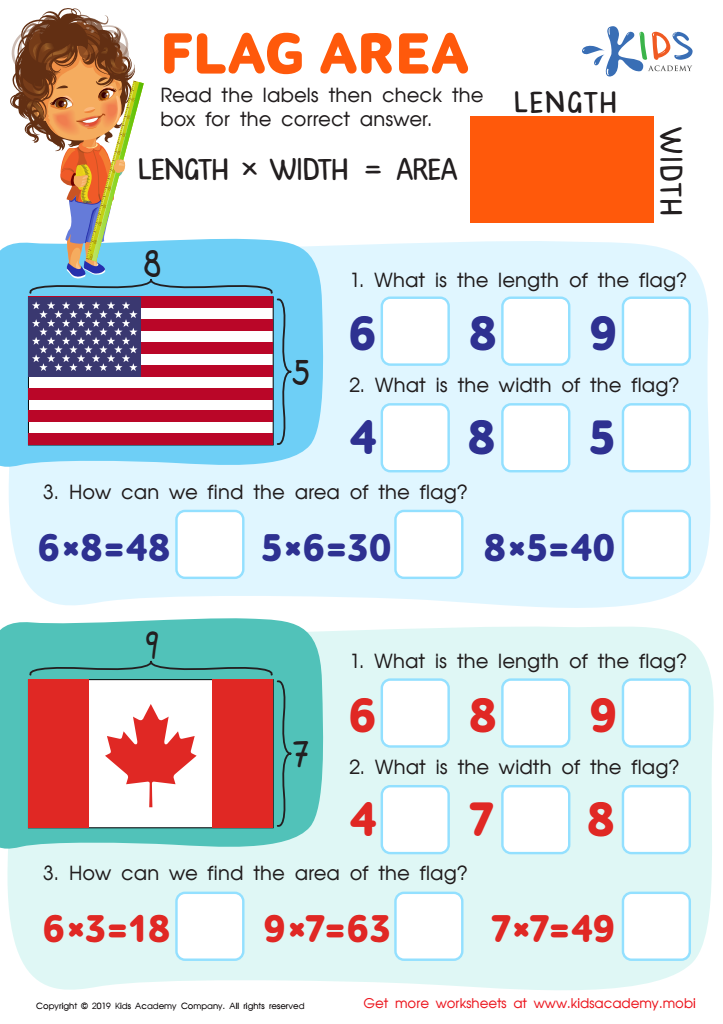
Flag Area Worksheet
 Assign to My Students
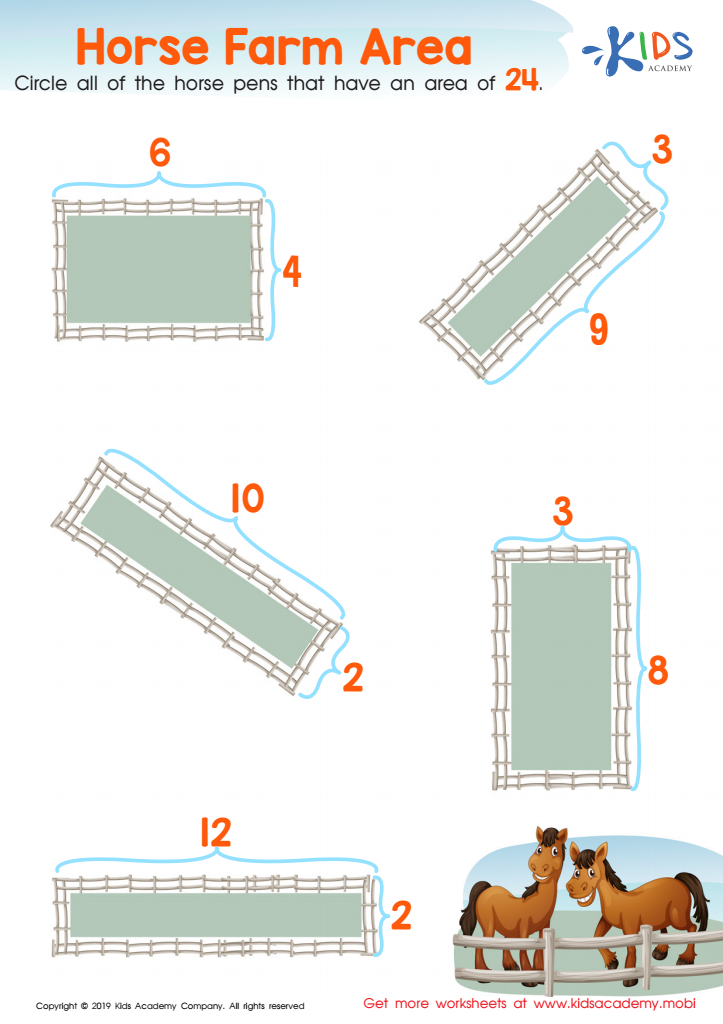
Horse Farm Area Worksheet
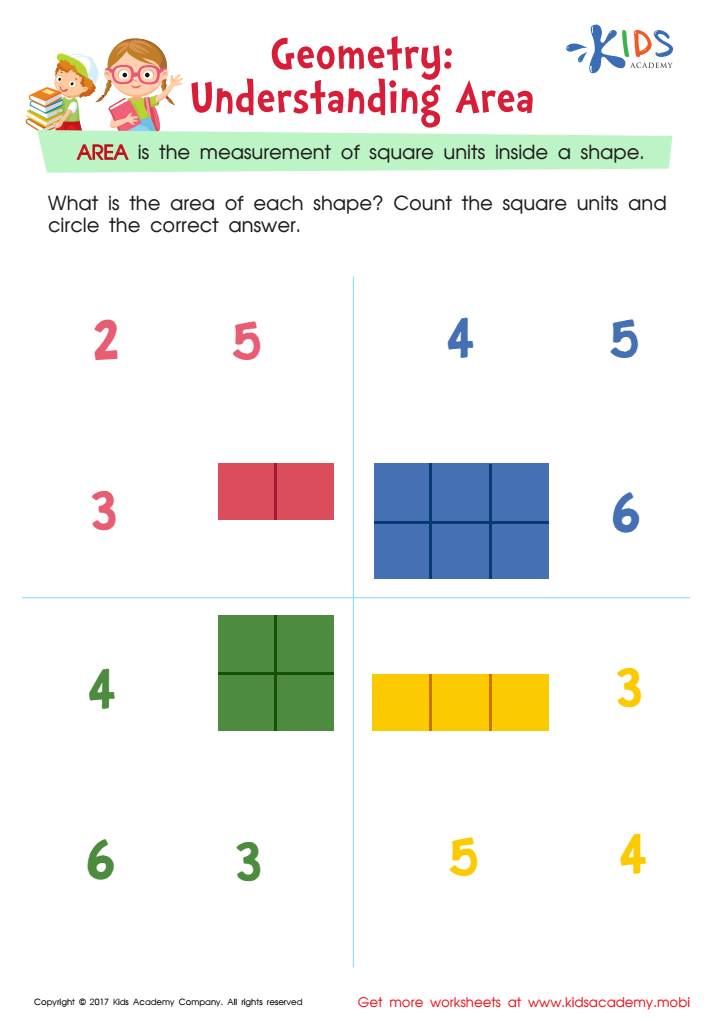
Understanding Area Worksheet







Understanding area is essential in Grade 3 Math as it lays the foundation for critical thinking and spatial awareness. For parents and teachers, grasping area concepts enables children to comprehend practical applications of math in everyday life. Learning about area helps students recognize how to measure and compare physical spaces, an important skill as they progress through education and engage with real-world scenarios.
Moreover, area calculations promote teamwork and problem-solving abilities when students collaborate to tackle challenges, such as creating designs or planning spaces. By engaging with this concept, children develop a sense of perseverance and the confidence to solve complex problems.
Involving parents in their child’s math journey by discussing area can create supportive learning environments at home, reinforcing classroom experiences. Recognizing shapes, understanding dimensions, and performing calculations all contribute to building a solid math foundation that aids in later concepts such as volume and geometry.
Ultimately, teaching area encourages a growth mindset and critical life skills, while also preparing students for future academic challenges. By valuing and emphasizing area understanding, both parents and teachers play a pivotal role in nurturing motivated learners who can appreciate the beauty of mathematics.