Understanding symmetry Grade 3 Math Worksheets
6 filtered results
-
From - To
Explore our engaging "Understanding Symmetry" Grade 3 Math Worksheets designed to enhance students' grasp of symmetry concepts. These thoughtfully crafted printable resources cater to third graders, helping them identify symmetrical shapes, lines of symmetry, and mirror images through fun activities. By utilizing dynamic visuals and interactive exercises, learners will develop essential geometry skills while fostering critical thinking. Each worksheet is tailored to conform to grade-level standards, ensuring a comprehensive learning experience. Whether in the classroom or at home, these exercises promote creativity and problem-solving, making math enjoyable and accessible. Download our worksheets today and let your child embark on a journey of discovery through symmetry!
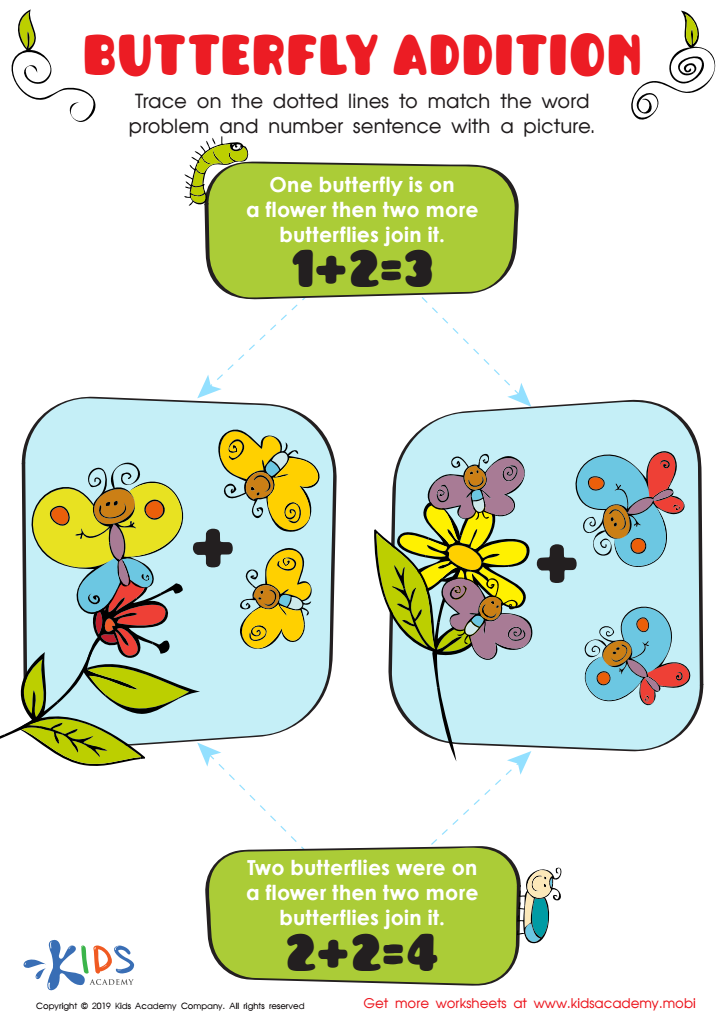
Butterfly Addition Worksheet
 Assign to My Students
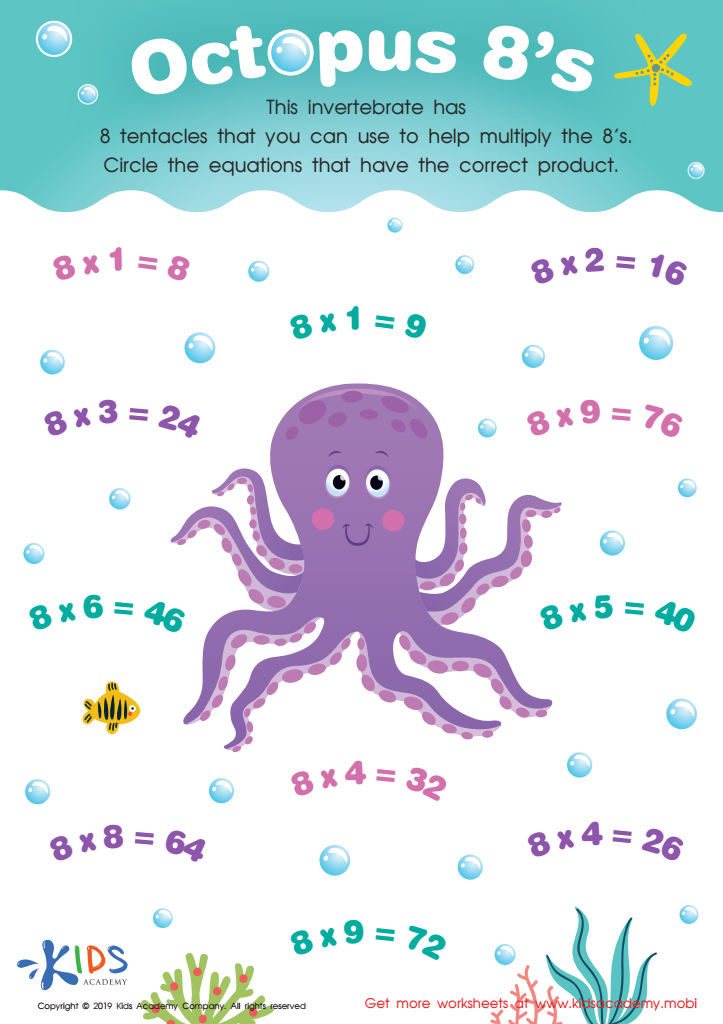
Octopus 8’s Worksheet






Understanding symmetry is crucial for third-grade students as it builds foundational math skills and enhances spatial awareness. Parents and teachers should care about this concept because it promotes critical thinking and problem-solving abilities. Symmetry introduces students to patterns and shapes, encouraging them to recognize relationships in geometry which is integral to further mathematical comprehension.
Moreover, engaging with symmetry helps children develop observational skills and fosters creativity. By identifying lines of symmetry in various objects, children learn to appreciate the beauty of balance and proportion in everyday life, from nature to art. Symmetry also ties into various real-world applications, such as architecture and design, making math relevant and exciting.
Additionally, exploring symmetry provides a concrete way to teach mathematical reasoning. When children understand that figures can be folded or divided into identical halves, they grasp essential concepts of equality, which seamlessly leads into more advanced mathematical operations later on.
Furthermore, teaching symmetry can boost children's confidence in math, making them more eager to tackle challenging topics in the future. Thus, both parents and teachers play a pivotal role in nurturing this key competency, setting the stage for a lifelong appreciation of math and its applications.