Logical Reasoning Grade 3 Word Problems Worksheets
5 filtered results
-
From - To
Discover our engaging "Logical Reasoning Grade 3 Word Problems Worksheets" designed to enhance your child's critical thinking and problem-solving skills. Tailored for third graders, these worksheets present fun and challenging scenarios that require students to analyze information and draw conclusions. With a variety of contexts—ranging from everyday situations to complex puzzles—these resources encourage young learners to think creatively while developing mathematical comprehension. Perfect for classroom use or at-home practice, our worksheets foster essential reasoning skills, making math both enjoyable and informative. Explore our collection and empower your child’s logical reasoning abilities today!
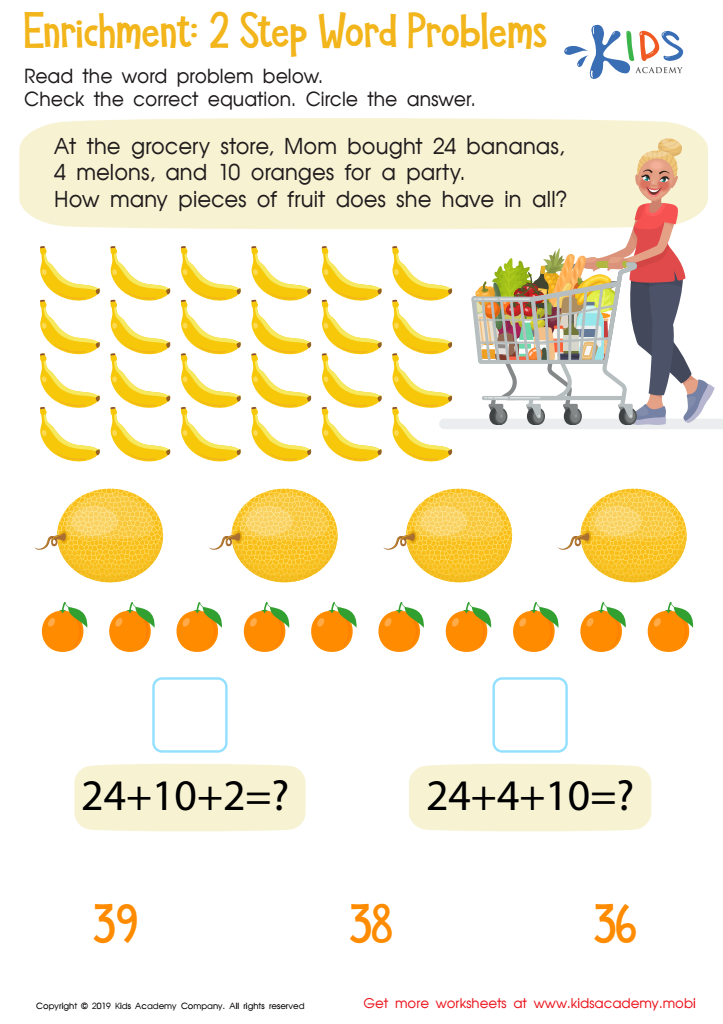
Enrichment -2 Step Word Problems Worksheet
 Assign to My Students
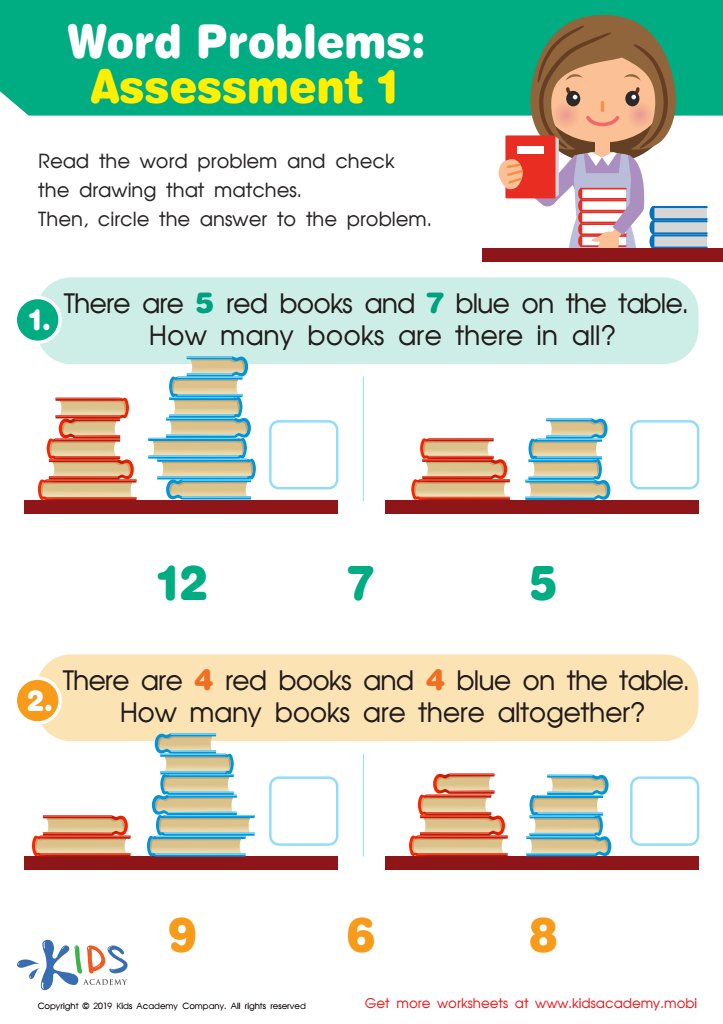
Word Problems: Assessment 1 Worksheet
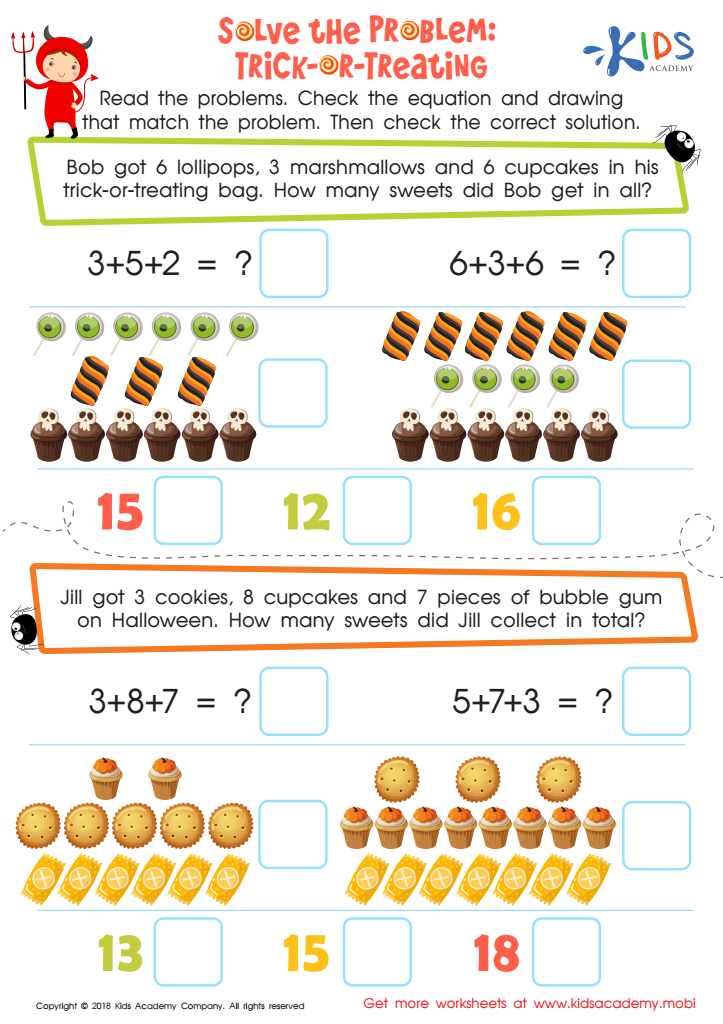
Solve the Problem: Trick–or–treating Worksheet
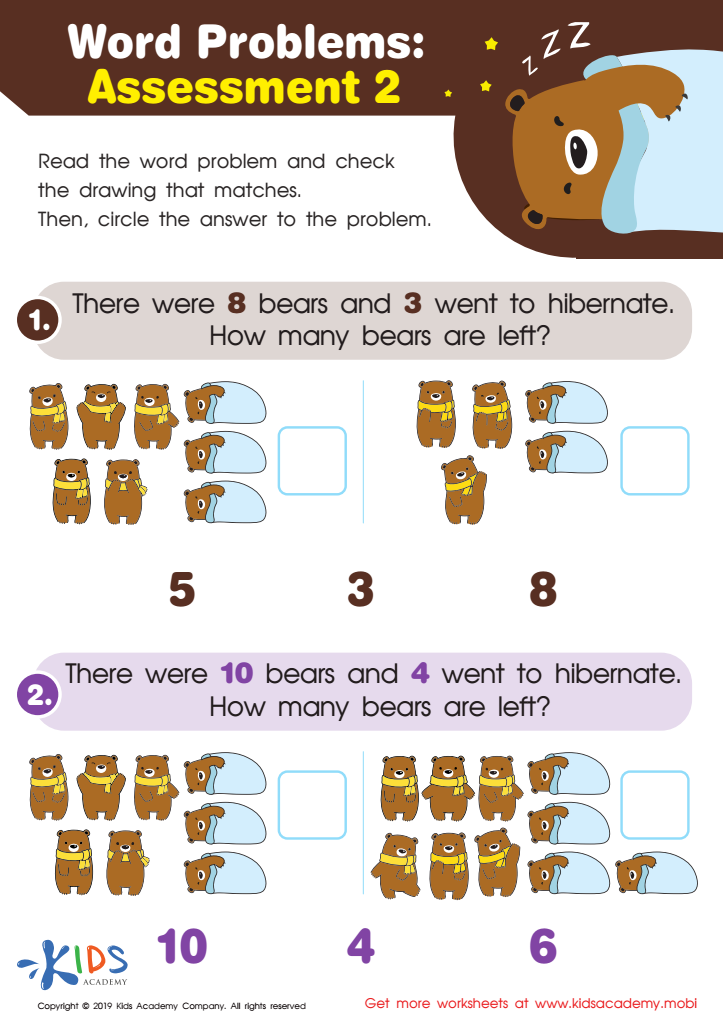
Word Problems: Assessment 2 Worksheet
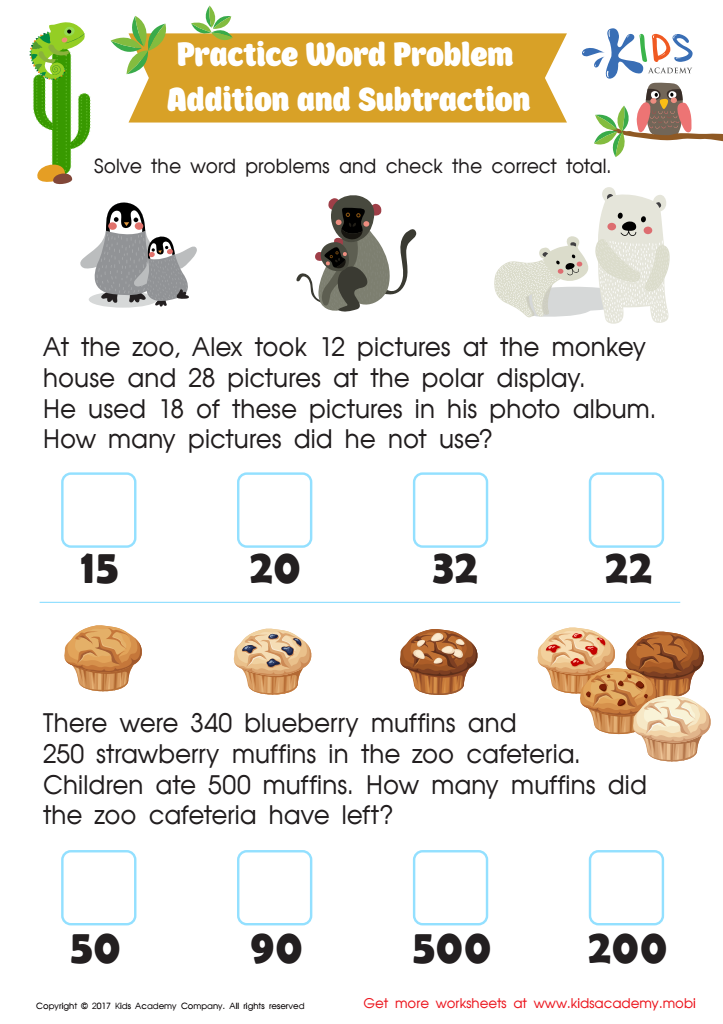
Addition and Subtraction: Word Problems Worksheet








Parents and teachers should prioritize Logical Reasoning Grade 3 word problems as they play a crucial role in developing a child's critical thinking and problem-solving skills. At this age, children are transitioning from basic arithmetic to applying mathematical concepts in real-world contexts. Word problems encourage students to decipher situations, understand the underlying mathematical operations, and devise strategies to arrive at solutions.
Engaging with word problems enhances students' comprehension skills, as they must identify relevant information, segregate unnecessary details, and connect ideas. This not only boosts their mathematical proficiency but also cultivates analytical thinking, which is vital for effective decision-making in everyday life.
Furthermore, tackling logical reasoning in word problems fosters perseverance and resilience. Students learn to approach challenges systematically, an essential skill that extends beyond academics and into personal and professional realms. Encouraging children to articulate their thought processes also improves communication skills, reinforcing their ability to justify and explain their reasoning clearly.
In summary, supporting Grade 3 students in mastering logical reasoning through word problems equips them with foundational skills, promotes a growth mindset, and prepares them for more complex mathematical and analytical tasks in the future.