Recognizing shapes Grade 3 Reading Worksheets
3 filtered results
-
From - To
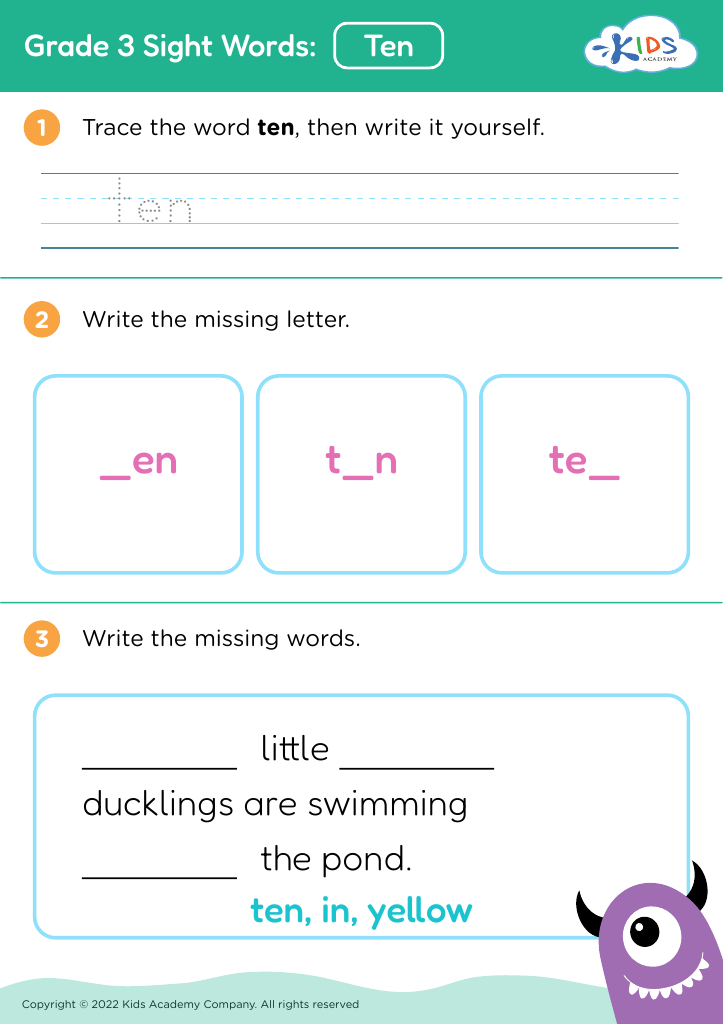
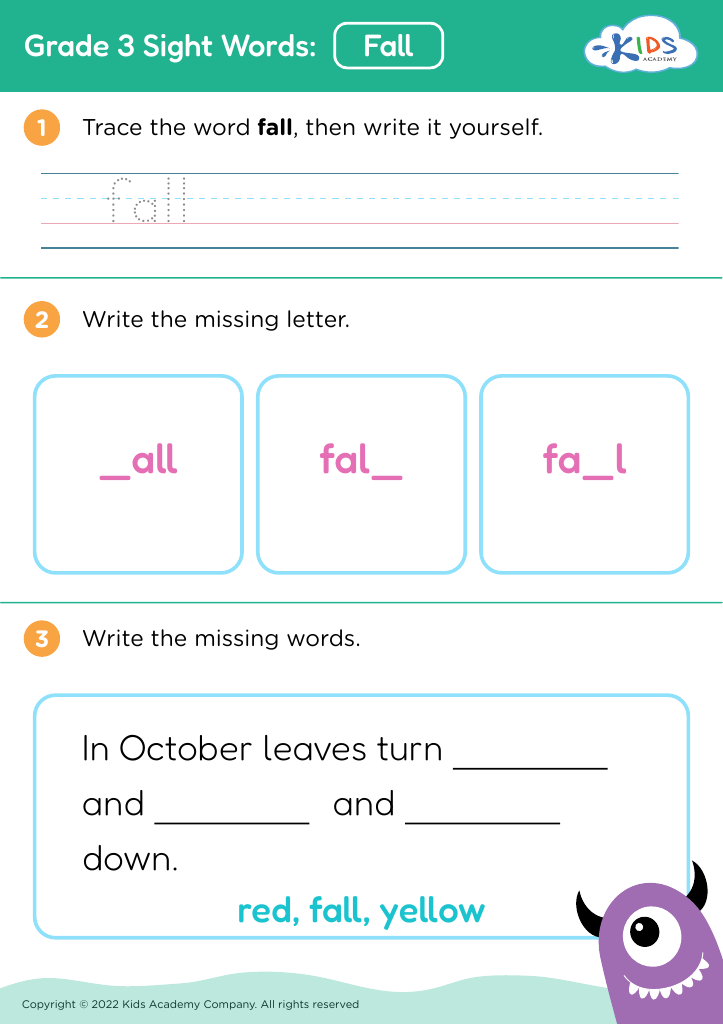
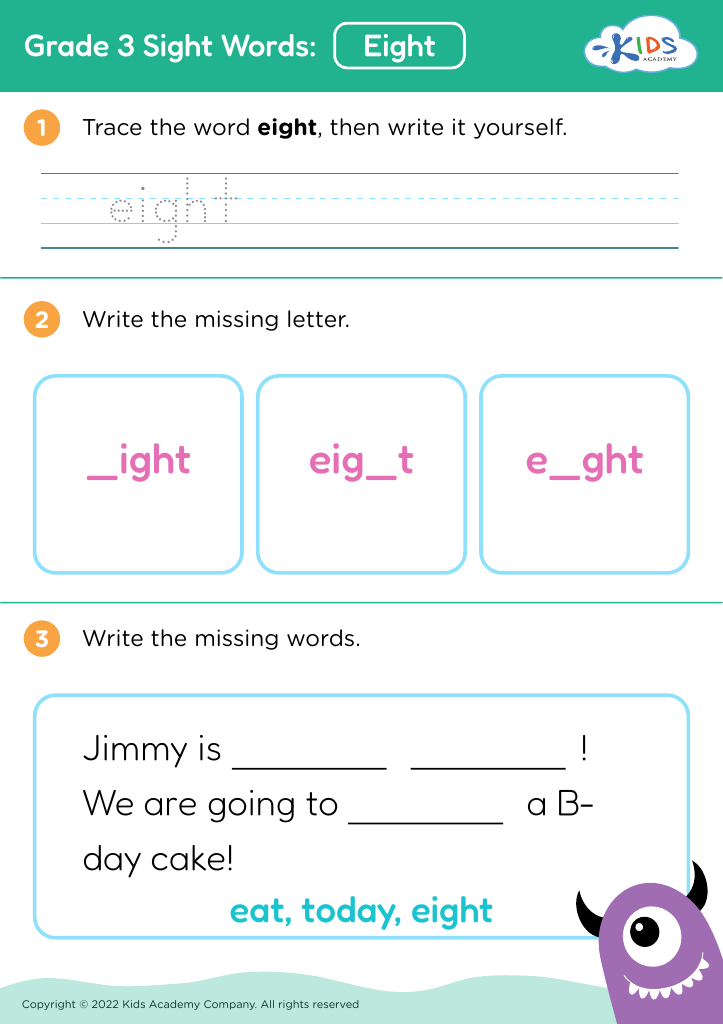
Our "Recognizing Shapes Grade 3 Reading Worksheets" are meticulously crafted to enhance your child's geometry skills through engaging and educational activities. Aligned with common core standards, these worksheets help third-graders identify and differentiate between various shapes, improving their visual comprehension and reasoning. Each worksheet combines reading and problem-solving tasks, making learning both fun and effective. Perfect for in-class exercises, homework, or additional practice, these resources ensure students grasp the essential concepts needed in geometry and beyond. Explore our collection and watch your child become a shape expert in no time!







Recognizing shapes and understanding their properties is a fundamental skill that greatly benefits third-grade students, serving as a foundational block for more advanced mathematical concepts in later years. For parents and teachers, nurturing this skill is crucial as it directly contributes to a child's spatial awareness, problem-solving capabilities, and logical reasoning. When students interact with shapes, they engage in activities that improve their cognitive development, allowing them to differentiate, categorize, and analyze various geometric figures, which supports critical thinking even beyond math.
Moreover, familiarizing children with shapes enhances their reading and writing aptitude because it strengthens their ability to discern visual patterns and structuring elements of letters and words. This recognition goes hand-in-hand with language development; as kids notice differences in shapes, they become better at understanding text structures, contributing to improved reading fluency and comprehension.
For teachers, integrating shape recognition into the curriculum can make lessons more interactive and stimulating, fostering a more engaging learning environment. For parents, it provides opportunities for enriching, everyday interactions that help reinforce class learnings at home, cultivating a collaborative and well-rounded educational experience. In essence, shape recognition is not just a mathematical skill but a multi-faceted tool that impacts all areas of a child's academic growth.