Analyzing data Grade 3 Science Worksheets
4 filtered results
Difficulty Level
Grade
Age
-
From - To
Subject
Activity
Standards
Explore our engaging Grade 3 Science Worksheets focused on analyzing data! These worksheets are designed to enhance critical thinking skills, encouraging students to interpret, compare, and draw conclusions from various types of data. Featuring fun graphics and relatable scenarios, the activities make learning enjoyable and interactive. Students will handle real-life data sets, promote their analytical abilities, and foster a deeper understanding of scientific concepts. Perfect for classroom or at-home learning, our worksheets align with educational standards, ensuring a comprehensive approach to science education for third graders. Download today and empower your students to become confident data analysts in science!
Favorites
With answer key
Interactive
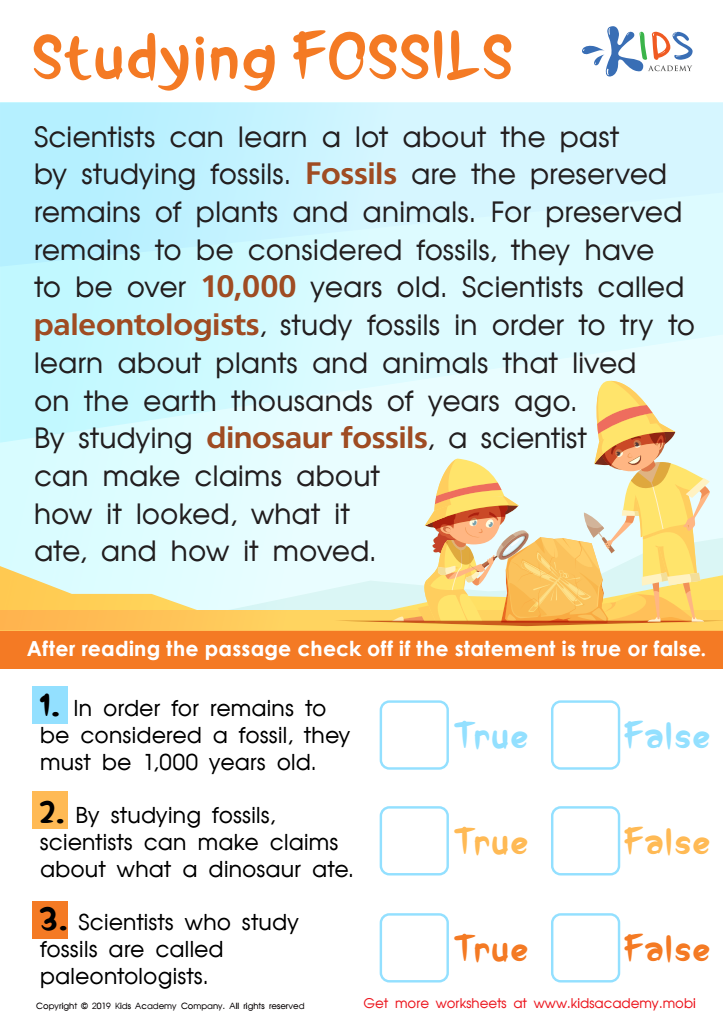
Studying Fossils Worksheet
Fossils captivate children! It's no wonder why; when we learn about them, we are getting a glimpse into history and uncovering old mysteries! With this free download, kids will understand what a paleontologist is and how they use fossils to learn about long-gone plants and animals. They'll discover that old bones are priceless and that exploring ancient history can be exciting!
 Assign to My Students
Studying Fossils Worksheet
Worksheet
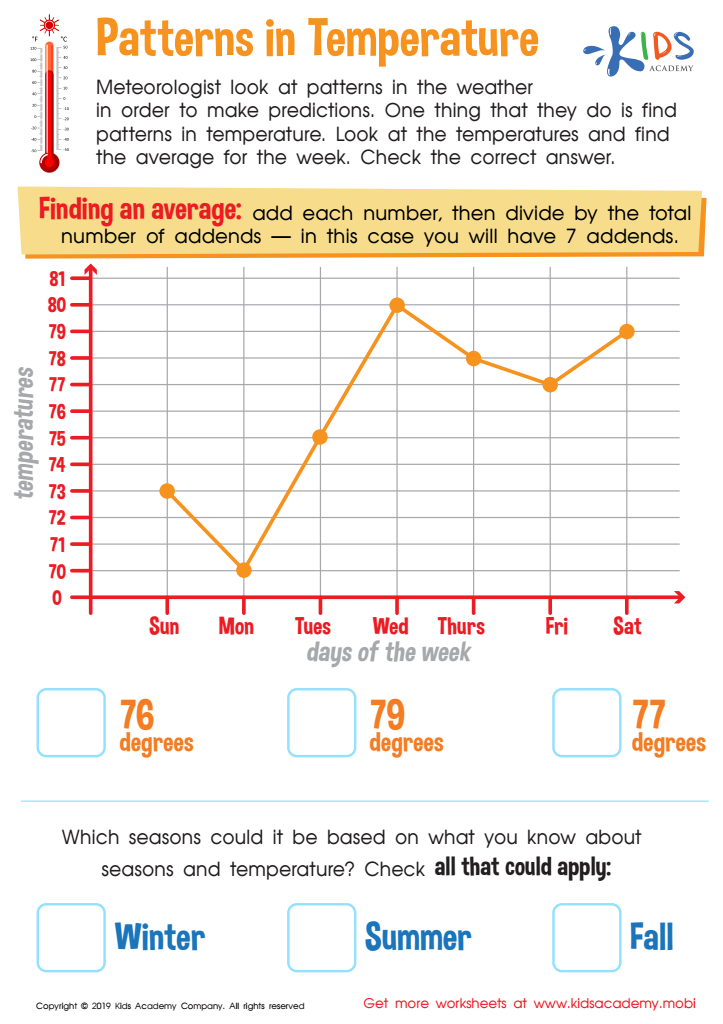
Patterns in Temperature Worksheet
Kids need to learn how to read and interpret data from graphs and charts. This free worksheet on temperature patterns helps them to do just that. They'll practice finding averages and answer questions in multiple-choice format. Plus, it provides a great learning experience!
Patterns in Temperature Worksheet
Worksheet
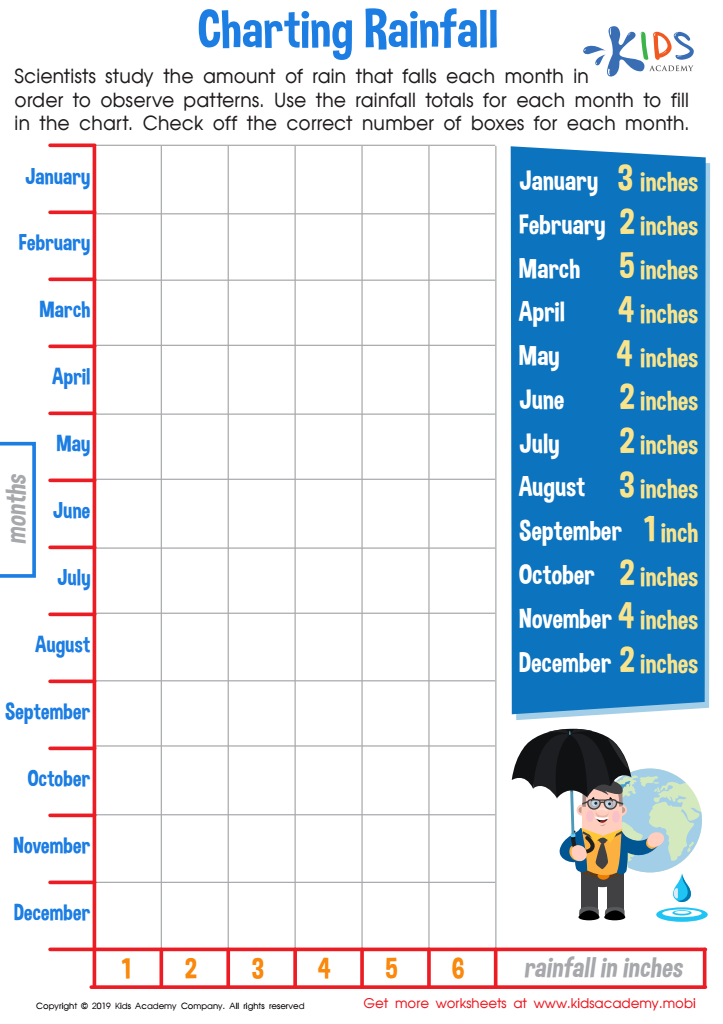
Charting Rainfall Worksheet
Kids need to learn how to graph info in order to understand the world. This rainfall worksheet gives them an opportunity to act as statisticians, charting the amount of rain each month. It also helps them practice data storage and analysis for future math concepts.
Charting Rainfall Worksheet
Worksheet
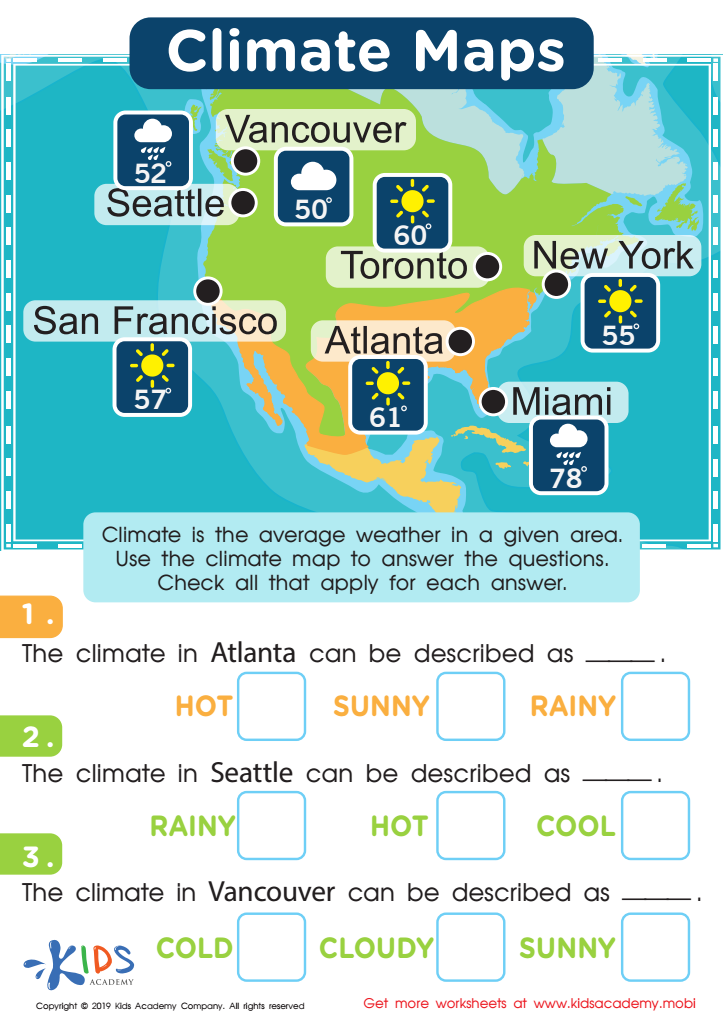
Climate Maps Worksheet
This map offers a fun way to teach kids about the varying climates across North America. They'll learn that Seattle and Miami have different temperatures, yet the same amount of rainfall. Plus other weather facts. This prepares them to answer reading comprehension questions with success!
Climate Maps Worksheet
Worksheet
Join Kids Academy for Free
Who is primarily going to use this learning content?







Analyzing data in Grade 3 Science is crucial for both parents and teachers as it lays the foundation for students’ scientific understanding and critical thinking skills. At this stage, children begin to ask questions about the world around them, making data analysis a purposeful tool for exploration. Through collecting and interpreting data, students learn to make observations, recognize patterns, and draw conclusions. This analytical process enhances their ability to think logically and reason scientifically, essential skills for any future learning.
For teachers, analyzing data helps in assessing student understanding and progress. By reviewing student data, educators can tailor their instruction to meet diverse learning needs, ensuring that each child comprehends essential scientific concepts. It also facilitates informed discussions about scientific topics, empowering students to engage actively in their learning.
For parents, understanding their child’s progress through data can help in fostering engagement at home. They can encourage curiosity and boost learning by discussing findings, conducting experiments together, or exploring concepts. Involving parents in this analytical process creates a cohesive learning environment where children feel supported both at home and in school. Ultimately, data analysis serves as a key resource for academic growth and lifelong skills development in young learners.