Historical Knowledge Grade 3 Science Worksheets
5 filtered results
Difficulty Level
Grade
Age
-
From - To
Subject
Activity
Standards
Dive into the past with our engaging Historical Knowledge Grade 3 Science Worksheets! Specially curated for budding historians, these worksheets encourages young learners to explore the wonders of historical knowledge. Packed with exciting activities, informative readings, and interactive exercises, kids will discover significant events, influential figures, and groundbreaking scientific inventions from history. Aligned with common core standards, these worksheets ensure educational progression while making learning fun. Perfect for classroom use or homeschooling, they help cement crucial science skills through engaging content. Embark on a journey through time and inspire a lasting appreciation for history and science today!
Favorites
With answer key
Interactive
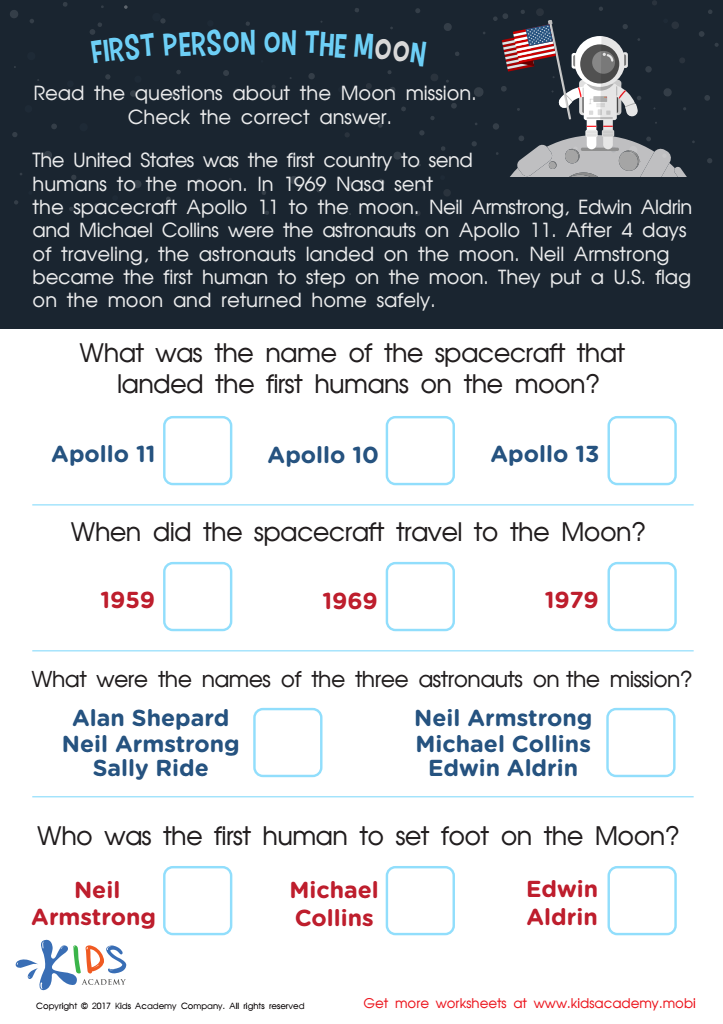
First Person on the Moon Worksheet
In 1969, Neil Armstrong made history by becoming the first person to step foot on the moon! With this fun worksheet, you can teach kids fascinating facts about the Apollo 11 mission. After reading, they can show off what they've learned with a quiz!
 Assign to My Students
First Person on the Moon Worksheet
Worksheet
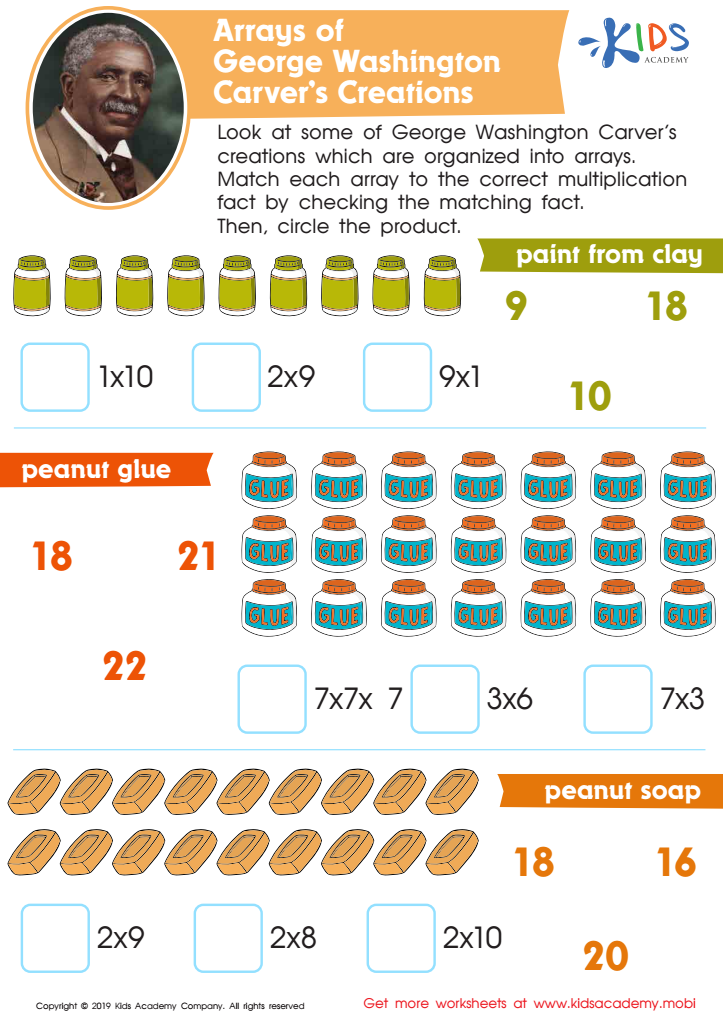
Arrays of George Washington Carver’s Creations Worksheet
Remind your child of what George Washington Carver created. Can they tell you? This worksheet has arrays with his creations. Match the array to the multiplication fact and help your child to circle the product.
Arrays of George Washington Carver’s Creations Worksheet
Worksheet
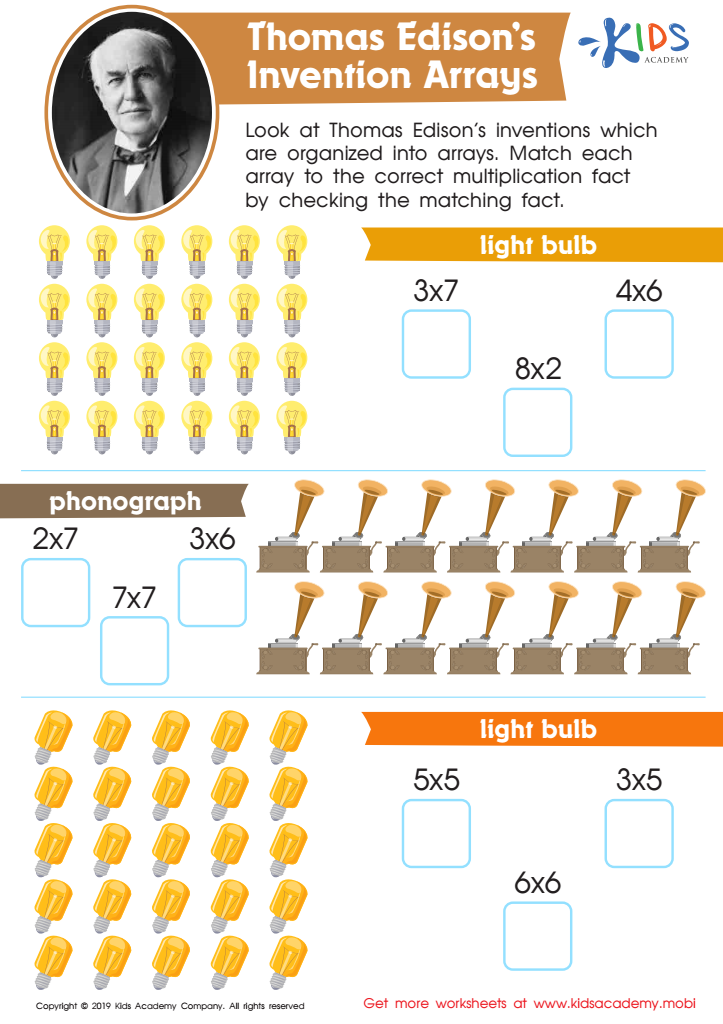
Thomas Edison’s Invention Arrays Worksheet
Test your students' knowledge on history by asking them what Thomas Edison invented. If they get the right answer, provide more information on other inventors. Check out this printout of Edison's light bulb inventions laid out in arrays. Get them to match each array to the correct multiplication fact.
Thomas Edison’s Invention Arrays Worksheet
Worksheet
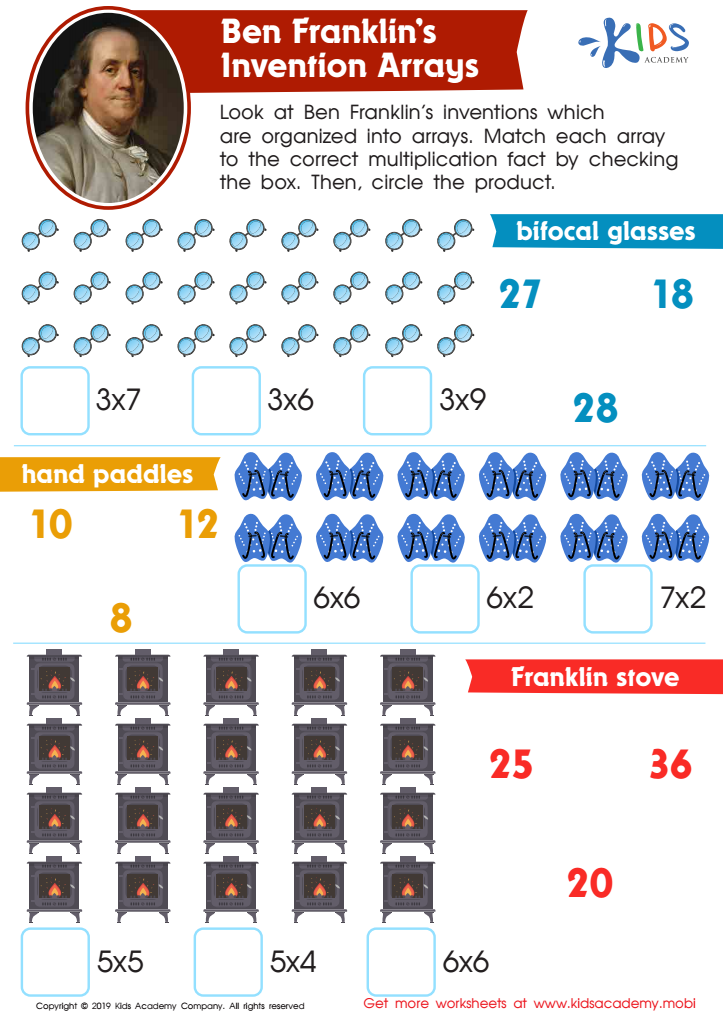
Ben Franklin’s Invention Arrays Worksheet
Have your child guess some of the inventors of the popular items we use today. For instance, the light bulb was invented by Thomas Edison. Look at Ben Franklin's inventions and help your kids match the arrays to the correct multiplication fact. Check the box and circle the product.
Ben Franklin’s Invention Arrays Worksheet
Worksheet
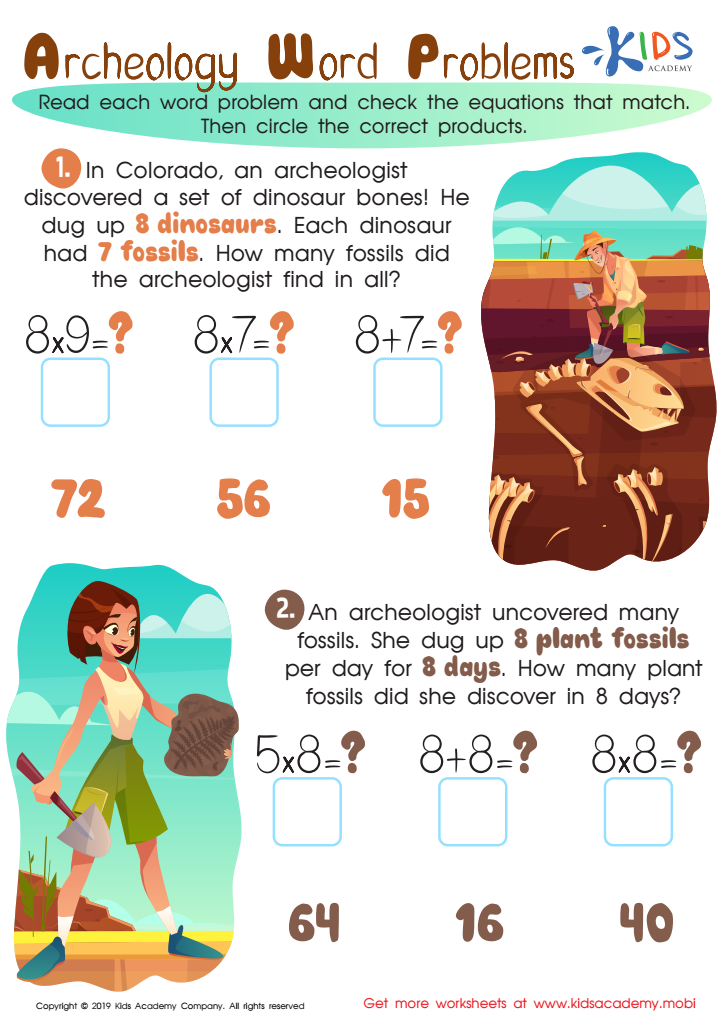
Archeology Word Problems Worksheet
Encourage your child to explore their career options! Show them an archeologist's job with this worksheet - featuring a picture of a dinosaur bone discovery. Read the accompanying text, then solve the word problems. Help your kids circle the correct answers to better understand this profession.
Archeology Word Problems Worksheet
Worksheet
Join Kids Academy for Free
Who is primarily going to use this learning content?






Parents and teachers should care about Grade 3 science with a strong emphasis on historical knowledge because it establishes a vital foundation for lifelong learning and critical thinking. At this developmental stage, students are naturally curious and eager to understand how the world works. By incorporating history into the science curriculum, young learners gain a broader context for scientific concepts, seeing them not as isolated facts, but as part of a continuous human quest for understanding.
Historical knowledge in science helps students appreciate the evolution of scientific thought and the key figures and experiments that have shaped our world. For example, learning about how early inventors and scientists like Benjamin Franklin and Marie Curie made their discoveries not only makes science more engaging but also humanizes it. Students learn that failures and perseverance are essential parts of innovation.
Furthermore, understanding the historical context of scientific advancements helps develop critical thinking and problem-solving skills. Children start recognizing patterns and cause-effect relationships, fostering an ability to evaluate current scientific issues within a historical framework. As a result, they become more informed and responsible future citizens, capable of making decisions grounded in knowledge and reason. This comprehensive approach ensures a well-rounded education, equipping students with the insight needed to navigate an ever-evolving world.