Understanding suffixes Grade 3 Writing Worksheets
3 filtered results
-
From - To
Dive into the fundamentals of word formation with our "Understanding Suffixes Grade 3 Writing Worksheets"! Designed to make learning fun, these engaging activities help third graders explore how suffixes change the meanings of root words. Each worksheet includes clear explanations, plenty of examples, and practice exercises to enhance students' writing and vocabulary skills. Perfect for classroom use or at-home learning, these worksheets promote a deeper understanding of language structure. Equip your learners with the tools they need to excel in writing with our meticulously crafted suffix resources!
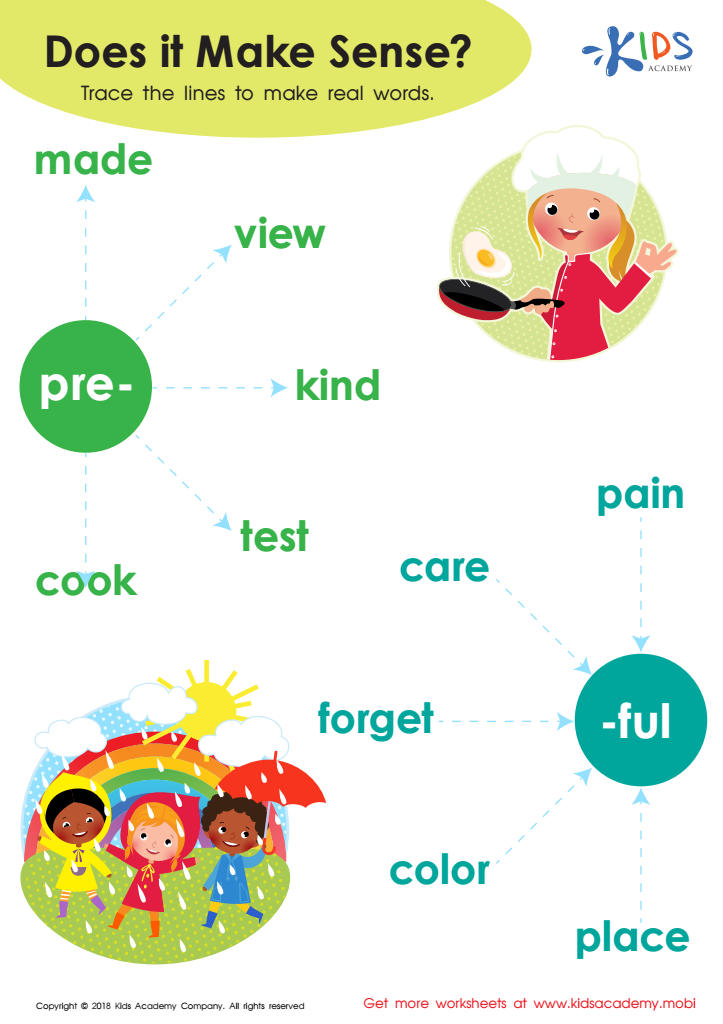
Prefix pre– and Suffix ful– Worksheet
 Assign to My Students
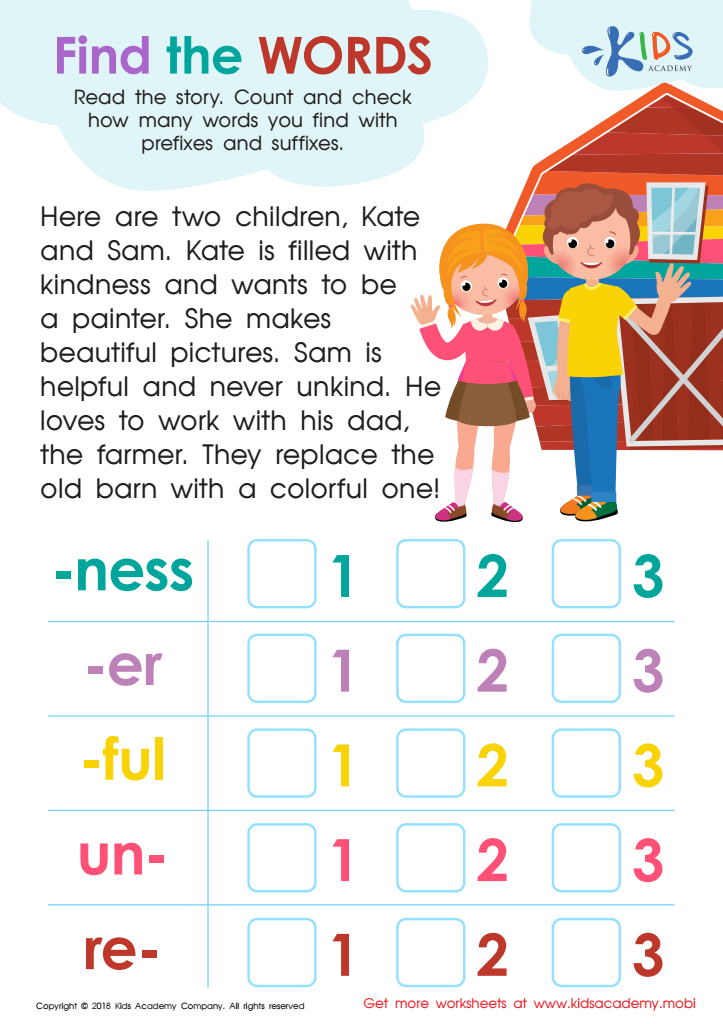
Prefix and Suffix Worksheet For Grade 3
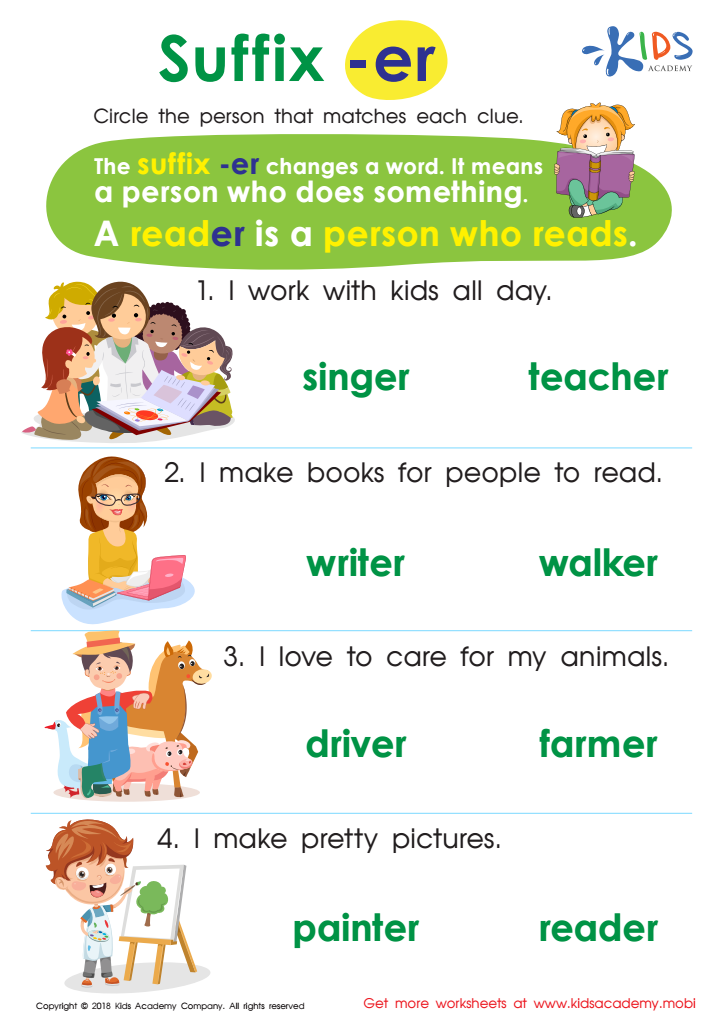
Suffix –er Printable Worksheet







Understanding suffixes is crucial for third graders, and parents and teachers should see its value in enhancing both reading and writing skills. Suffixes are word endings that can change the meaning or grammatical function of root words, helping students expand their vocabulary. When children understand how to use suffixes like "-ed," "-ing," "-s," "-er," and "-est," they gain tools to describe actions, compare objects, and form plurals and different verb tenses. This enriches their expressive capabilities in writing and helps them comprehend more complex texts when reading.
Furthermore, recognizing suffixes improves spelling and decoding abilities, making it easier to tackle unfamiliar words. This allows for greater independence in reading and more confidence in writing, contributing positively to overall academic performance. Teachers can guide students to identify patterns, while parents can reinforce this learning through practical activities and everyday conversations.
Additionally, grasping the concept of suffixes lays a foundational skill set for future learning. As students encounter more sophisticated material in higher grades, their early mastery of suffixes will support their understanding of advanced vocabulary and more intricate sentence structures. Thus, paying attention to this aspect of language arts contributes significantly to a child's literacy development, critical thinking, and self-expression abilities.