
Alphabet Recognition Grammar Worksheets
3 filtered results
Difficulty Level
Grade
Age
-
From - To
Subject
Activity
Standards
Enhance your child's literacy skills with our Alphabet Recognition Grammar Worksheets! Designed for early learners, these engaging worksheets help students identify letters and improve their writing abilities. Each activity focuses on recognizing uppercase and lowercase letters through fun exercises, including tracing, matching, and simple sentence formation. Our resources not only make learning enjoyable but also lay a strong foundation for future reading and writing success. These printable worksheets can be easily used at home or in the classroom, making them perfect for teachers and parents alike. Start nurturing your child's love for language today with our interactive alphabet recognition resources!
Favorites
With answer key
Interactive
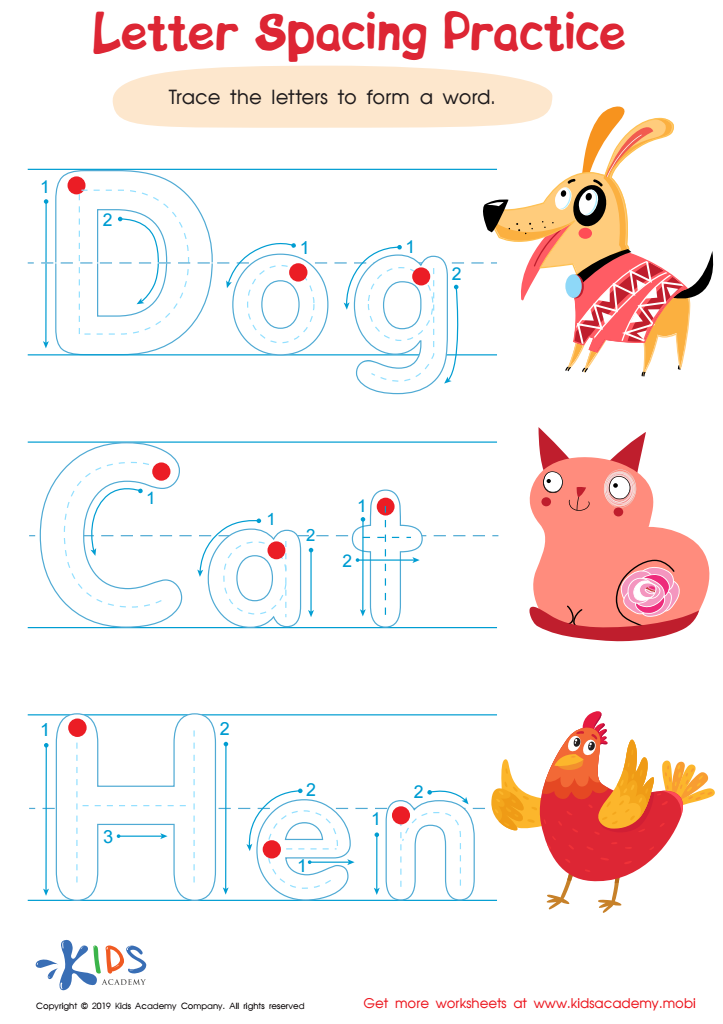
Letter Spacing Practice Worksheet
Encourage your preschoolers to practice writing with this worksheet. Ask them to identify the animals in the picture and help them trace the letters to form the words. It'll help develop their writing skills and even if they make mistakes, you can guide them with a helping hand.
 Assign to My Students
Letter Spacing Practice Worksheet
Worksheet
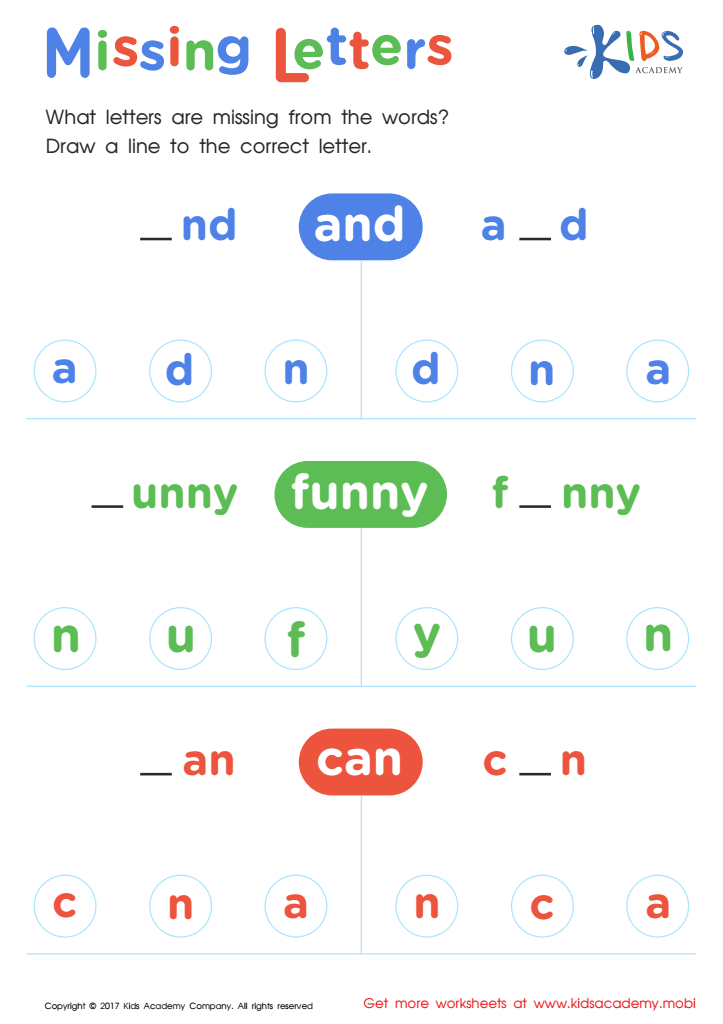
Missing Letters Worksheet
Review sight words with this fun matching worksheet from Kids Academy! Look at the sight words in the middle, read them aloud and find the missing letter on each side for each word. Draw a line to the correct letter to complete the sheet!
Missing Letters Worksheet
Worksheet
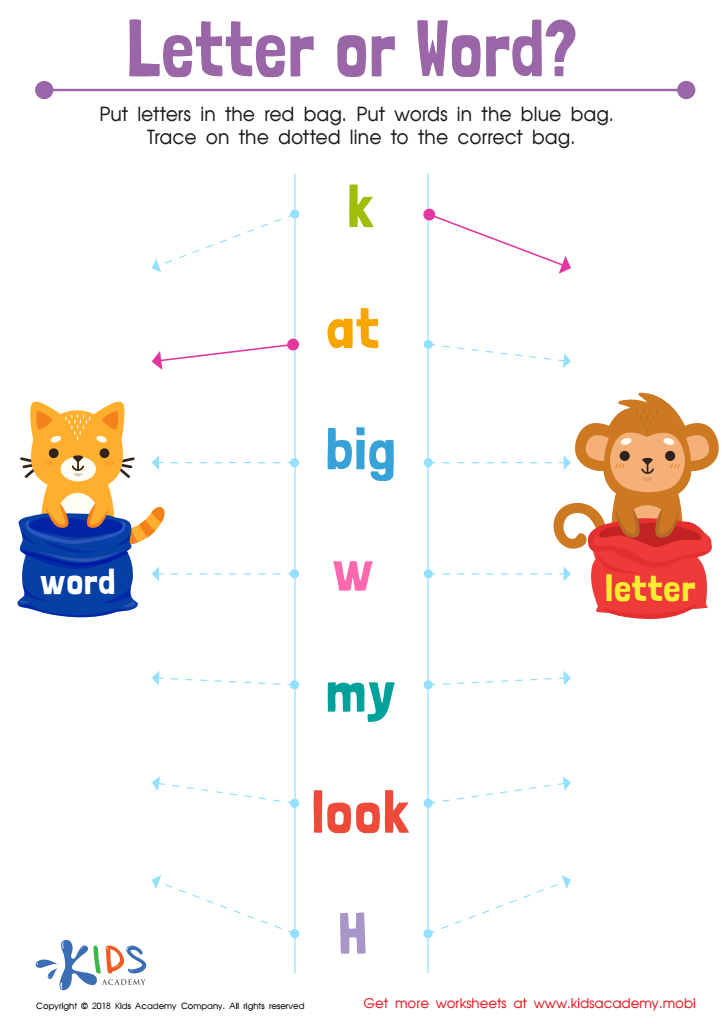
Letter or Word? Worksheet
Help your kids differentiate between words and letters. If they can recite their alphabets and identify common words, this tracing sheet will be a breeze. Have them trace on the dotted lines to place the letters in the red bag with the kitten, and the words in the blue bag with the monkey.
Letter or Word? Worksheet
Worksheet
Join Kids Academy for Free
Who is primarily going to use this learning content?







Alphabet recognition is a foundational skill essential for early literacy development, making it critical for parents and teachers to prioritize. Understanding that each letter has a unique shape and sound helps children decode words, which is vital for reading and writing. Early mastery of the alphabet not only supports literacy but also enhances cognitive development, as it teaches children to categorize and identify patterns.
When children can quickly recognize letters, they gain confidence in their reading abilities, allowing them to engage more actively in the learning process. This skill also fosters a love for reading, encouraging them to explore new ideas and stories, which is vital for overall educational growth.
Additionally, alphabet recognition plays a significant role in language development. It aids children in associating sounds with letters, an essential skill for phonemic awareness, which is a precursor to spelling and vocabulary acquisition. When parents and teachers emphasize letter recognition, they create a supportive environment that encourages exploration and curiosity.
Finally, strong alphabet recognition can lead to improved academic performance in the long run, benefiting students as they transition into higher grades. Floreinting these early skills sets the stage for lifelong learning and a greater love for reading.








